Tidal illusions fluid: architecture responding to rising sea levels
Tidal Illusions Fluid: Architecture Responding to Rising Sea Levels
As coastlines blur and tides encroach upon once-stable land, architecture finds itself at a pivotal juncture. The twenty-first century’s defining environmental challenge—rising sea levels—demands not only resilience but also poetic adaptability. Architects and designers are now crafting structures that do more than resist water; they converse with it. This new paradigm, which we might call tidal architecture, reimagines the built environment as a living, floating, and breathing entity, one that mirrors the fluidity of the oceans themselves.
The Age of Amphibious Design
According to the Intergovernmental Panel on Climate Change, global sea levels have risen by over 20 centimeters since 1900, with projections suggesting a further 30 to 60 centimeters by 2100. For coastal cities—from Jakarta to Miami—this shift is existential. Yet, rather than retreat, a new generation of architects is embracing amphibious design: structures that float, flex, and adapt.
Projects like the Floating Farm in Rotterdam and BIG’s Oceanix Busan prototype demonstrate how urban life can thrive atop water. These developments integrate modular buoyant platforms, renewable energy systems, and circular water management loops. The architecture doesn’t merely survive the sea; it symbiotically evolves with it. As seen in floating architecture, the dialogue between form and fluidity is no longer metaphorical—it’s structural.
Fluid Foundations: The Aesthetics of Adaptation
Visually, tidal architecture dissolves the boundary between land and sea. Buildings rise from mirrored surfaces, their façades rippling with reflections of sky and water. Materials like translucent polycarbonate, marine-grade aluminum, and recycled plastics evoke the translucency of waves. In Copenhagen’s Urban Rigger project, modular housing units float on concrete pontoons, their geometry inspired by coral reefs. Interiors feature light-filtering panels that mimic the play of sunlight beneath the surface, producing a serene, subaquatic calm.
Such designs are not merely aesthetic indulgences—they embody a new architectural language rooted in environmental empathy. As biophilic design principles remind us, connection to natural systems enhances human well-being. In tidal architecture, this connection becomes literal: occupants live in rhythm with the water’s ebb and flow, experiencing the subtle choreography of tides as part of daily life.
Resilience as a Design Ethos
In the face of climate volatility, resilience has evolved from a technical requirement into a design philosophy. Architects are now integrating adaptive infrastructures—movable foundations, retractable façades, and amphibious stilts—that respond dynamically to environmental shifts. The Netherlands’ Waterbuurt neighborhood exemplifies this ethos: its homes float on hollow concrete bases, tethered to flexible mooring posts that rise and fall with the water level. The result is a community that doesn’t fear flooding; it anticipates it.
Similarly, the resilient building design movement has inspired hybrid typologies that merge engineering precision with ecological intuition. Architects are drawing lessons from vernacular traditions—such as the stilt houses of Southeast Asia or the amphibious dwellings of Bangladesh—while employing advanced materials like self-healing concrete and carbon-fiber composites. The fusion of ancient wisdom and modern technology is redefining what it means to build sustainably in a liquid world.
Urban Futures: Cities That Float
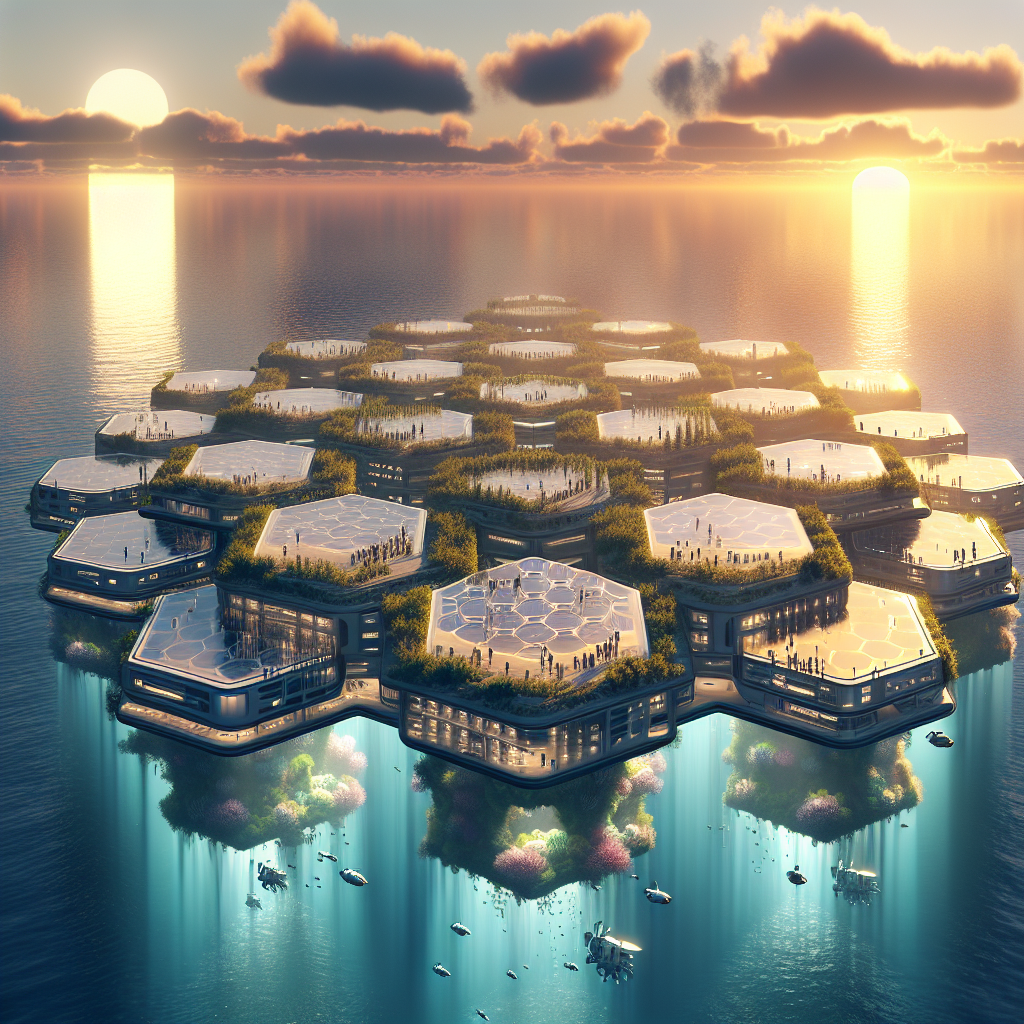
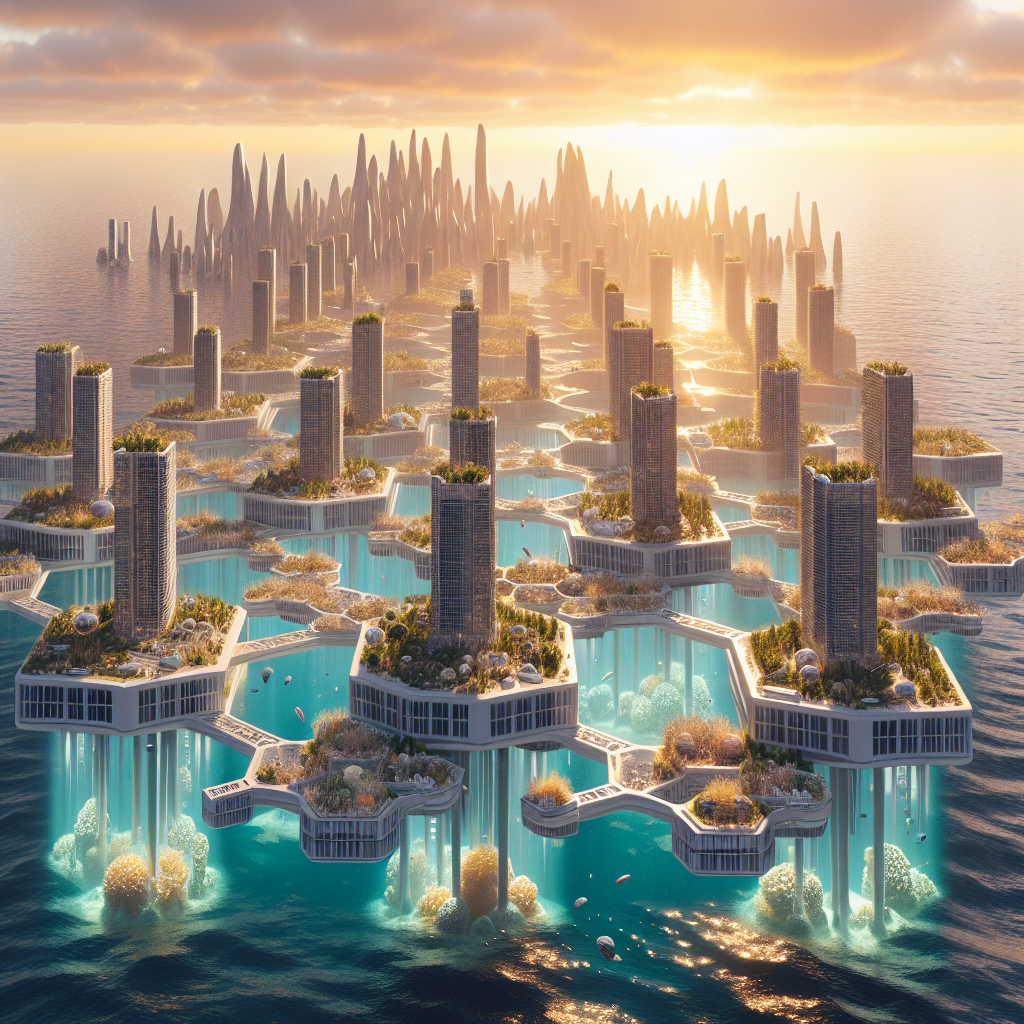
By 2050, nearly 800 million people may live in coastal zones vulnerable to flooding, according to the UN-Habitat. In response, architects are envisioning entire floating cities—modular, scalable, and self-sufficient ecosystems that drift atop the sea. Oceanix Busan, designed by Bjarke Ingels Group in collaboration with UN-Habitat, exemplifies this ambition. Its hexagonal platforms host housing, agriculture, and energy systems, forming a resilient network that can expand or contract as needed.
These projects echo the spirit of net-zero architecture, integrating solar arrays, tidal turbines, and closed-loop waste systems. The result is a choreography of sustainability—a city that breathes, grows, and floats in harmony with its environment. The aesthetic of these spaces is equally transformative: glass-walled dwellings reflect the horizon, while soft, biomorphic forms evoke the fluid geometry of marine life. The city becomes a living organism, a shimmering archipelago of possibility.
Material Innovations Beneath the Surface
As the architectural frontier extends into aquatic realms, material innovation becomes paramount. Traditional concrete, notorious for its carbon footprint, is being replaced by marine biocement—a material that uses bacteria to bind sand and shells into solid form. This process not only reduces emissions but also fosters coral growth, turning building foundations into artificial reefs. Similarly, designers are experimenting with hydrophobic coatings and bio-inspired membranes that mimic the self-cleaning properties of lotus leaves.
In interiors, designers are embracing translucency and reflection to echo the qualities of water. Polished terrazzo floors, iridescent tiles, and fiber-optic lighting simulate the movement of waves across surfaces. The interplay of light and shadow creates what might be called tidal illusions—spaces that feel perpetually in motion, suspended between solidity and liquidity. This sensorial approach aligns with the principles of biomimicry, where natural processes inspire human innovation.
Case Study: The Maldives’ Floating Future
Perhaps nowhere is the urgency of this architectural shift more visible than in the Maldives, where rising seas threaten to erase entire islands. The nation’s partnership with Dutch Docklands has produced the Maldives Floating City, a 200-hectare lagoon development composed of hexagonal modules resembling coral cells. Each unit is prefabricated onshore and assembled at sea, ensuring minimal ecological disruption. The city’s undulating streets and canals foster a seamless relationship between human habitation and marine ecosystems.
Here, architecture becomes both refuge and restoration. The floating city not only adapts to climate change but also regenerates biodiversity through artificial reefs and mangrove buffers. It is a living experiment in coexistence—a vision of how design can mediate between human ambition and planetary limits.
The Poetics of Fluidity
Beyond its technical ingenuity, tidal architecture carries profound cultural resonance. It challenges the modernist obsession with permanence, replacing it with an ethos of impermanence and flow. In this sense, it aligns with the Japanese concept of mujō—the beauty of transience. Buildings that float, shift, or submerge remind us that architecture, like nature, is in constant transformation.
In interior spaces, this philosophy manifests through kinetic elements: movable partitions, retractable decks, and responsive lighting that changes with the tide. The result is a sensory continuum between inside and outside, human and oceanic. It’s a poetic counterpoint to the static solidity of traditional architecture—a recognition that resilience can be graceful, and adaptation can be art.
Designing for a Liquid Planet
As climate realities intensify, the profession faces a moral and creative imperative. The future of architecture lies not in resisting water but in learning from it. The next generation of designers must think like oceanographers, engineers, and poets simultaneously—crafting spaces that float, flex, and feel alive. The emerging discipline of tidal architecture is not a niche; it’s a necessity.
From the shimmering reflections of Rotterdam’s floating farms to the coral-inspired geometries of the Maldives, these projects signal a profound shift in architectural consciousness. They suggest that the most visionary buildings of the coming decades will not be towers that pierce the sky, but platforms that dance with the sea.
In the end, the rise of the tides may not signify the drowning of cities, but the birth of a new architectural language—one that celebrates fluidity, resilience, and the enduring dialogue between humanity and the ocean.
Keywords: tidal architecture, floating cities, amphibious design, resilient architecture, climate-responsive design, rising sea levels, sustainable architecture, biomimicry in architecture, adaptive urbanism.