
#REF!
The Rise of Floating Architecture: Designing for a Planet in Flux
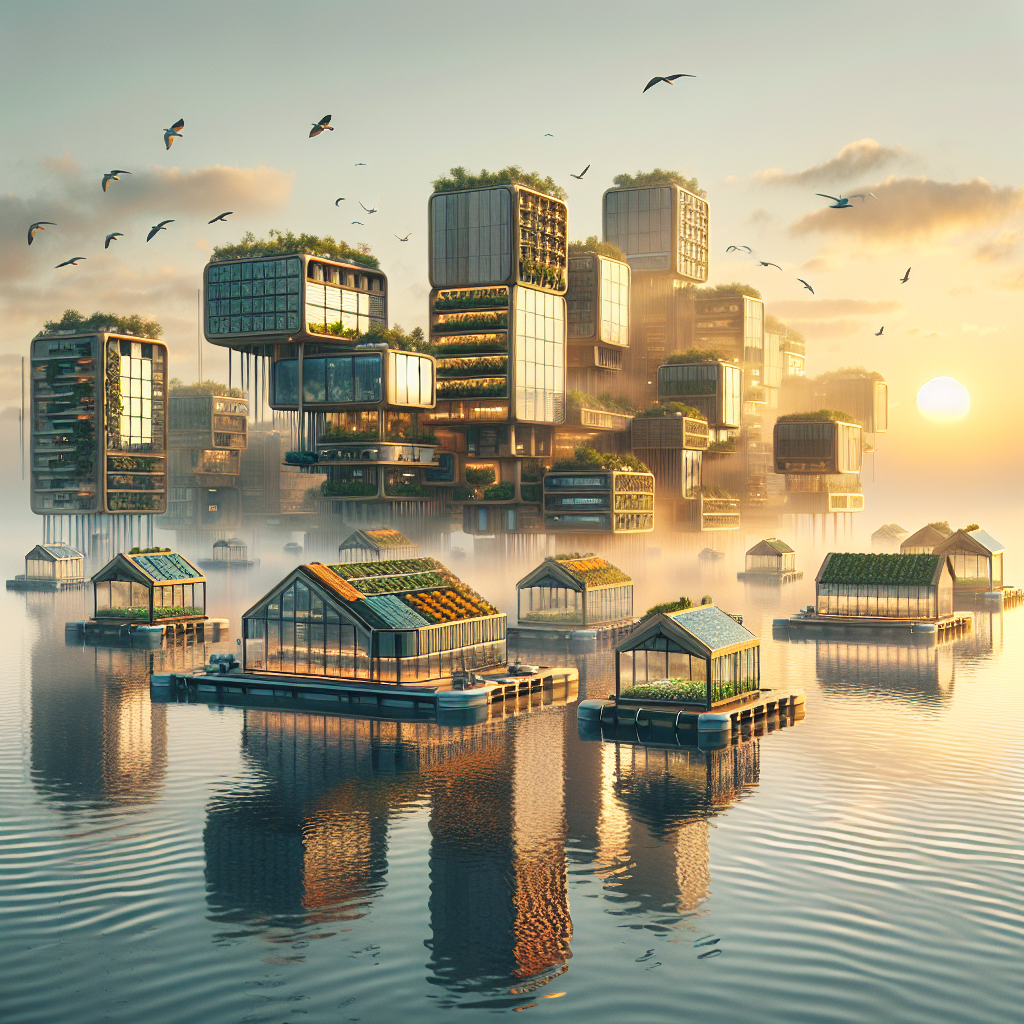
As coastlines retreat and tides advance, architects are no longer designing beside water—they are designing with it. Floating architecture, once a utopian fantasy, has become a pragmatic response to the realities of climate change and urban density. Across the globe, designers are reimagining the relationship between land, sea, and structure, crafting buoyant habitats that merge engineering precision with poetic vision.
From Amphibious Foundations to Floating Cities
The concept of living on water is not new. From the stilt villages of Cambodia’s Tonlé Sap to the canal houses of Amsterdam, humans have long adapted to aquatic environments. What’s different today is scale and intent. The new generation of floating architecture seeks not merely to survive water but to harmonize with it—creating adaptable ecosystems that evolve with rising sea levels.
Projects like the Floating City Squares initiative in Copenhagen and the Oceanix Busan prototype in South Korea exemplify this shift. These developments integrate renewable energy, aquaponic farming, and modular construction to create self-sustaining communities. According to the ArchDaily editorial board, such projects represent “a paradigm shift in how we define permanence in architecture.”
Engineering Buoyancy: The Science Beneath the Surface
Behind the serenity of a floating pavilion lies an intricate web of engineering. Modern floating structures rely on pontoon systems, air-filled concrete bases, or high-density polyethylene platforms designed to distribute weight evenly and resist corrosion. Research from the Institution of Civil Engineers underscores the importance of dynamic load modeling—anticipating not only static weight but also the rhythmic forces of waves, wind, and human movement.
In the Netherlands, the architectural firm Waterstudio.NL has pioneered amphibious housing that can rise several meters during floods without disconnecting from utilities. This innovation aligns with the principles of resilient building design, ensuring communities remain functional even under extreme environmental stress.
Material Innovation: Lightweight, Durable, and Sustainable
Material science is at the heart of floating architecture’s evolution. Traditional concrete, though durable, is heavy and carbon-intensive. Architects are now experimenting with hybrid composites, recycled plastics, and even bio-based materials like mycelium. The Materials Today journal reports a surge in research on “hydrophobic biopolymers” that repel water while maintaining structural integrity.
Some designers are turning to timber, inspired by the growing movement of wooden skyscrapers. Cross-laminated timber (CLT) offers a buoyant yet robust alternative to steel, reducing embodied carbon while enhancing aesthetic warmth. The combination of CLT decks with recycled aluminum frames has led to a new typology of floating homes that feel both futuristic and tactilely human.
Urban Integration: Beyond the Waterfront
Floating architecture is no longer confined to luxury retreats or experimental eco-villages. Cities are beginning to weave these structures into their urban fabric. In Rotterdam, floating offices host international climate organizations, symbolically and literally positioning policy above water. Meanwhile, in Bangkok, modular floating classrooms provide safe learning environments in flood-prone districts.
This integration mirrors the broader urban trend toward green infrastructure—using design to absorb, filter, and adapt to natural systems rather than resist them. Floating parks, for instance, act as both recreational spaces and stormwater buffers, blurring the boundary between architecture and landscape.
Design Language: Serenity, Reflection, and Movement
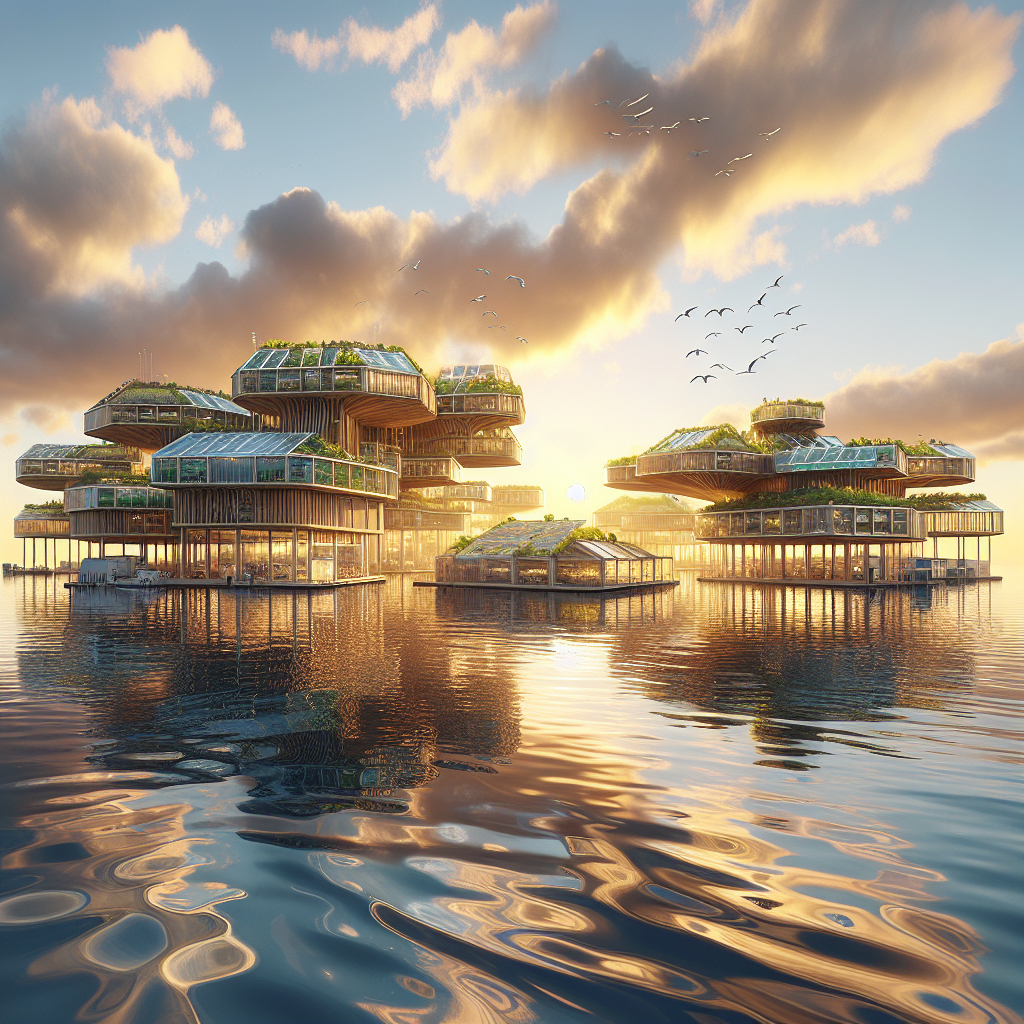
Visually, floating architecture embodies a quiet radicalism. Its forms are often low-slung and horizontal, echoing the calm of the water’s surface. Materials reflect light in shifting patterns, creating an ever-changing dialogue between structure and environment. The aesthetic leans toward minimalism, yet it’s a minimalism infused with motion—a choreography of ripples, reflections, and refracted sunlight.
Architects like Bjarke Ingels and Koichi Takada have described floating design as “liquid modernism,” where form follows fluidity. Interiors often feature panoramic glazing, retractable walls, and natural ventilation systems that invite the outdoors in. The result is an architecture that feels alive—responsive, breathing, and temporally aware.
Ecological Synergy: Architecture as Habitat
Beyond human habitation, floating structures can serve as ecological catalysts. Submerged foundations double as artificial reefs, encouraging marine biodiversity. Floating wetlands filter pollutants, while integrated solar panels and tidal turbines generate clean energy. These systems echo the principles of biophilic design, extending the connection between built and natural environments into the aquatic realm.
In Singapore, the “Blue Urbanism” initiative explores how floating developments can restore rather than deplete ecosystems. This aligns with the philosophy of regenerative design—creating architecture that gives back more than it takes.
Challenges and the Path Forward
Despite its promise, floating architecture faces regulatory, logistical, and social hurdles. Maritime zoning laws, insurance frameworks, and maintenance costs remain significant barriers. Moreover, the perception of floating living as a luxury lifestyle must evolve toward inclusivity and accessibility.
Yet, as cities like Jakarta and Miami confront existential threats from rising seas, the question is no longer whether we will build on water—but how gracefully we can do so. Floating architecture offers not an escape from climate change, but a conversation with it—a design dialogue between human ingenuity and planetary resilience.
A New Architectural Horizon
In the coming decade, floating architecture may redefine urbanism itself. It challenges the notion of fixed geography, proposing instead a nomadic, adaptive cityscape. As materials become lighter, energy systems more autonomous, and digital modeling more precise, the dream of amphibious living edges closer to mainstream reality.
Ultimately, the rise of floating architecture signals a philosophical shift: from domination to coexistence, from permanence to adaptability. It is architecture’s quiet rebellion against rigidity—a buoyant manifesto for a world in motion.
{
  "seo_title": "Floating Architecture: The Future of Living on Water",
  "meta_description": "Explore how floating architecture is redefining sustainable urban living and adapting to climate change through innovative design and materials.",
  "excerpt": "Could the future of cities float? Discover how floating architecture is reshaping urban life, merging sustainability, resilience, and poetic design.",
  "focus_keyphrase": "floating architecture"
}
AI Image Prompts
-
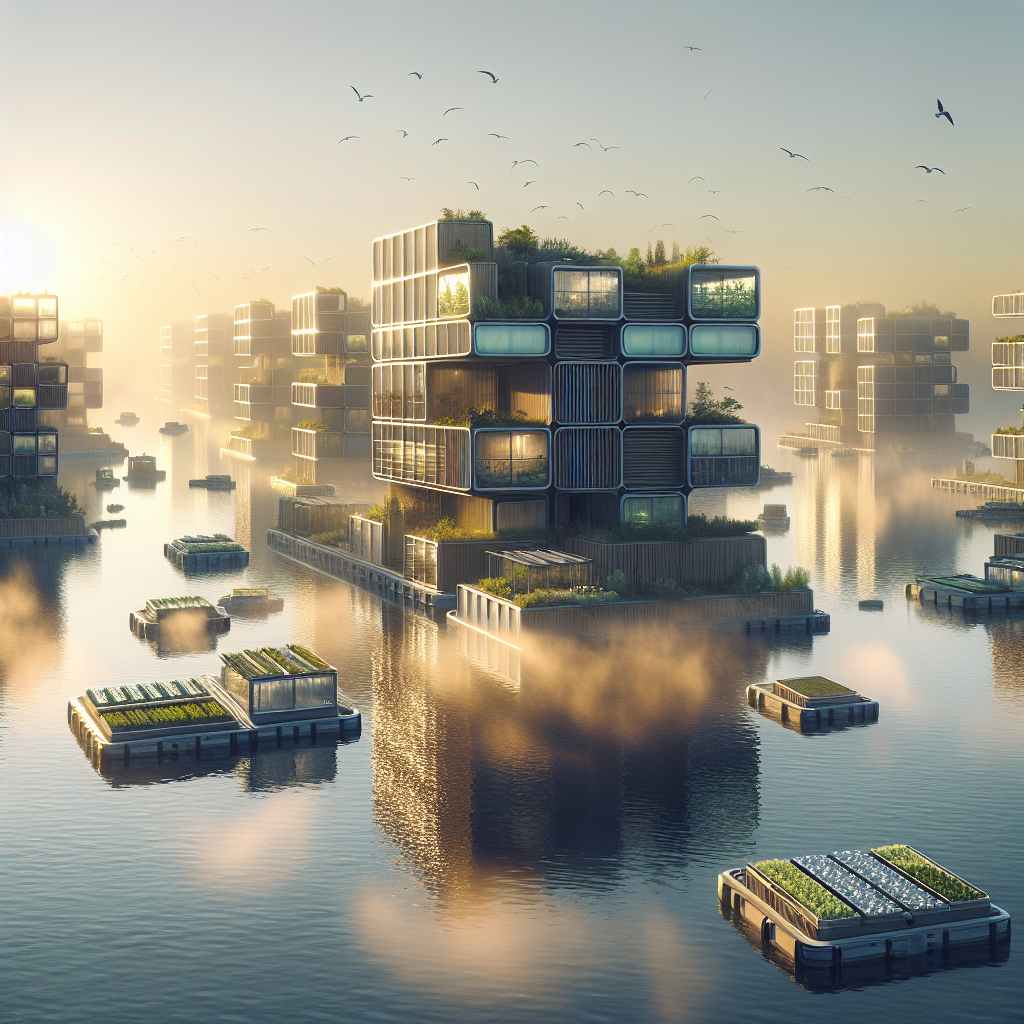
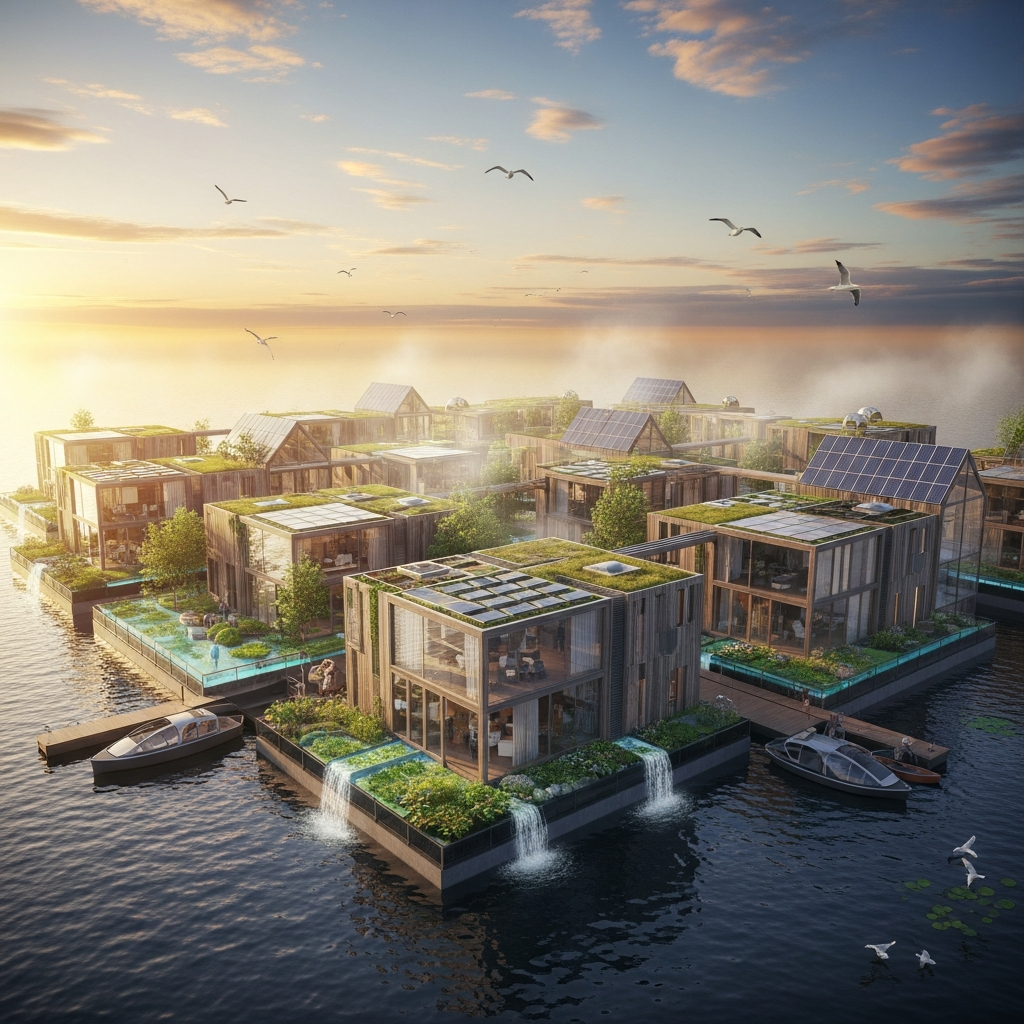
Prompt: Photorealistic image of a modern floating neighborhood at sunrise, featuring modular wooden homes with solar panels, calm reflective water, and soft morning mist, shot on a Hasselblad H6D.
Alt text: Floating eco-neighborhood with solar-powered wooden homes at sunrise.
Caption: Modular floating homes in a serene dawn light, symbolizing the balance between technology and tranquility. -
Prompt: Aerial view of a floating office complex in Rotterdam with green roofs and glass façades, surrounded by boats and canals, captured in crisp daylight on a Hasselblad X2D.
Alt text: Floating office complex with green roofs in Rotterdam.
Caption: The world’s first floating office demonstrates how architecture can adapt elegantly to rising waters. -
Prompt: Close-up of a floating pavilion’s underside showing hydrodynamic pontoons and marine life growing beneath, photographed underwater with a Hasselblad X1D II.
Alt text: Underwater view of floating pavilion pontoons with marine life.
Caption: Beneath the surface, floating architecture doubles as a living reef, nurturing biodiversity. -
Prompt: Twilight shot of a floating cultural center illuminated by warm LED lighting, with reflections shimmering across still water, captured on a Hasselblad H6D.
Alt text: Floating cultural center glowing at twilight.
Caption: A luminous beacon of design and community, the floating cultural center redefines waterfront life.
Social Media Strategy