
Geodesic living pods: Buckminster Fuller’s vision reimagined with 3D-printed joints
Geodesic Living Pods: Buckminster Fuller’s Vision Reimagined with 3D-Printed Joints
When Buckminster Fuller introduced the geodesic dome in the mid-20th century, he envisioned a future where architecture would harmonize with nature through efficiency, adaptability, and minimal material waste. Today, that vision is being reborn in the form of geodesic living pods—lightweight, modular habitats that merge Fuller’s structural genius with the precision of 3D printing technology. These contemporary reinterpretations are not only redefining off-grid living but also reshaping the conversation around sustainable, mobile, and resilient architecture.
The Return of the Geodesic Ideal
The geodesic dome, a structure composed of interlocking triangles forming a self-supporting sphere, remains one of the most efficient architectural forms ever conceived. Its strength-to-weight ratio, aerodynamic stability, and minimal surface area make it inherently sustainable. Fuller’s original domes were celebrated for their ability to enclose vast spaces without internal supports, inspiring generations of architects to explore geometry as a path to efficiency.
In the 2020s, this geometric logic has found new life in geodesic living pods—compact, prefabricated habitats designed for both permanence and mobility. These pods, often assembled from lightweight composite panels and 3D-printed joints, are emerging as a response to global housing challenges, environmental crises, and the growing desire for nomadic lifestyles. They are as much a technological statement as they are a philosophical one: a call to live lighter on the planet while embracing design as a tool for adaptability.
3D Printing: The Catalyst for a New Structural Language
Fuller’s domes were notoriously difficult to manufacture with precision in his time. Each joint required custom fabrication, and small errors could compromise the entire structure. The advent of digital fabrication and additive manufacturing has changed that equation entirely. Today, architects and engineers use 3D-printed connectors made from recycled polymers, bioplastics, or even sand-based composites to create precise, interlocking nodes that can be printed on-site or shipped flat-packed for rapid assembly.
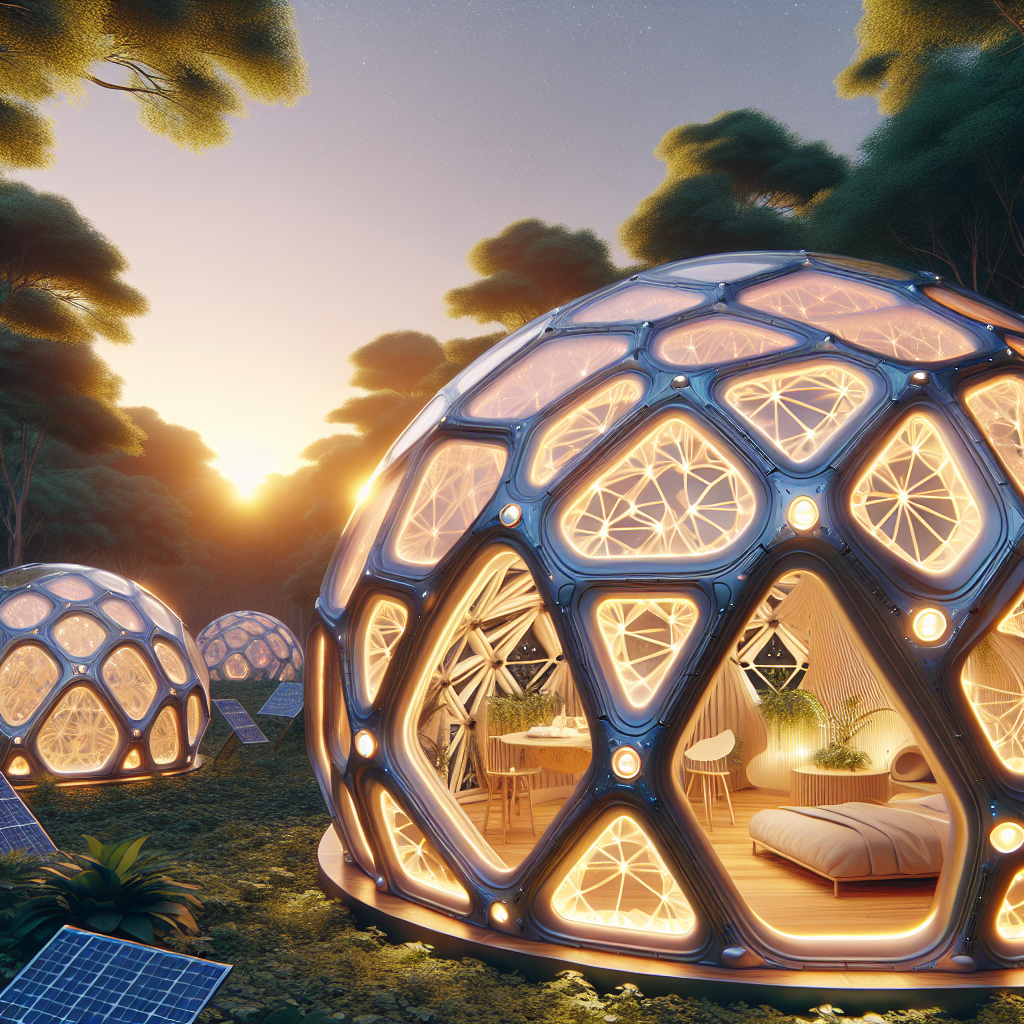
These joints are not merely functional; they are design statements in themselves. Some feature biomimetic patterns inspired by coral or bone structures, optimized through parametric design algorithms to balance strength and material efficiency. The result is a system that combines the elegance of natural geometry with the rigor of computational precision—an aesthetic that feels both futuristic and organic.
Designing for Mobility and Sustainability
Modern geodesic living pods are being designed with sustainability at their core. Many models integrate solar panels into their triangular panels, use biodegradable insulation, and rely on passive ventilation systems inspired by biomimicry. The modular nature of these pods allows them to be easily transported, assembled, and disassembled—ideal for remote research stations, eco-resorts, or disaster-relief housing.
Architectural studios such as AI SpaceFactory and Emerging Objects have experimented with 3D-printed domes using local materials like clay and basalt fiber, reducing the carbon footprint associated with transport. These innovations echo the principles explored in biodegradable architecture, where structures are designed to eventually return to the earth without leaving waste behind.
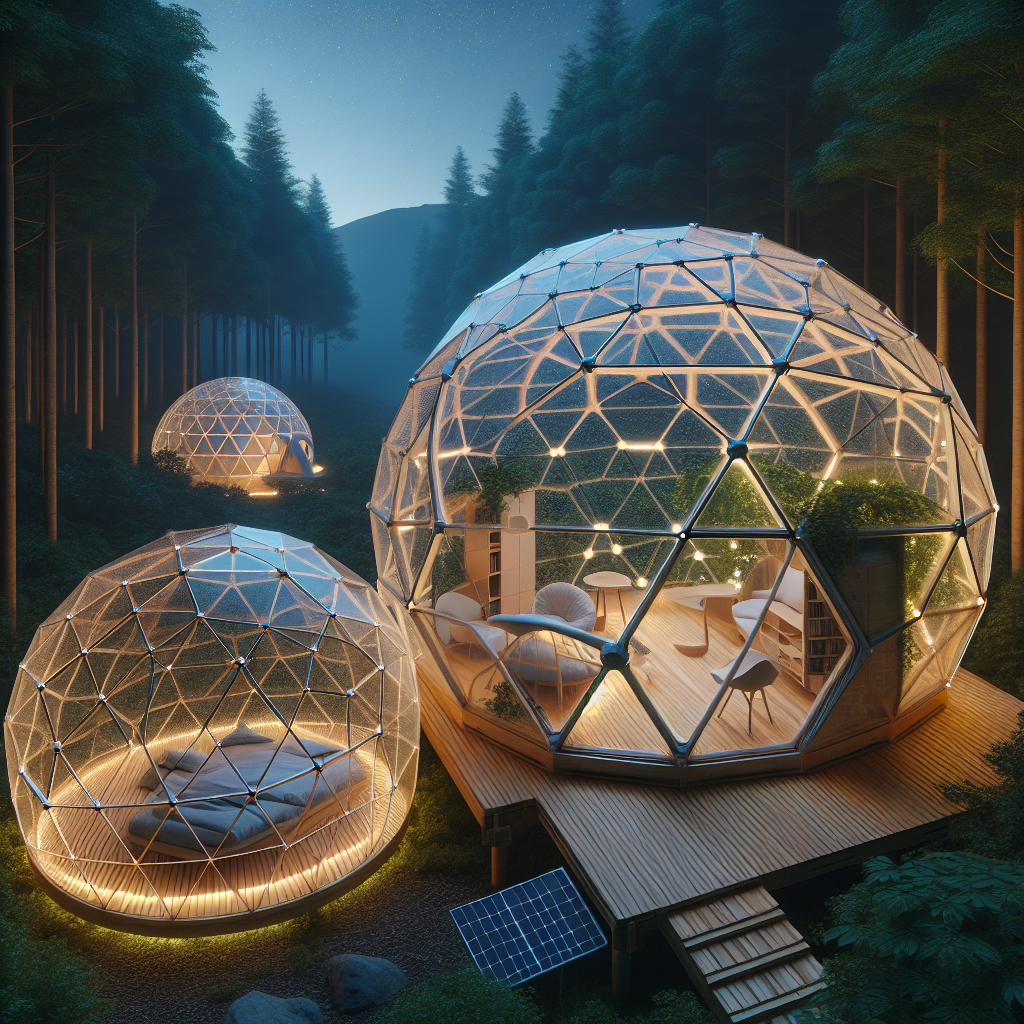
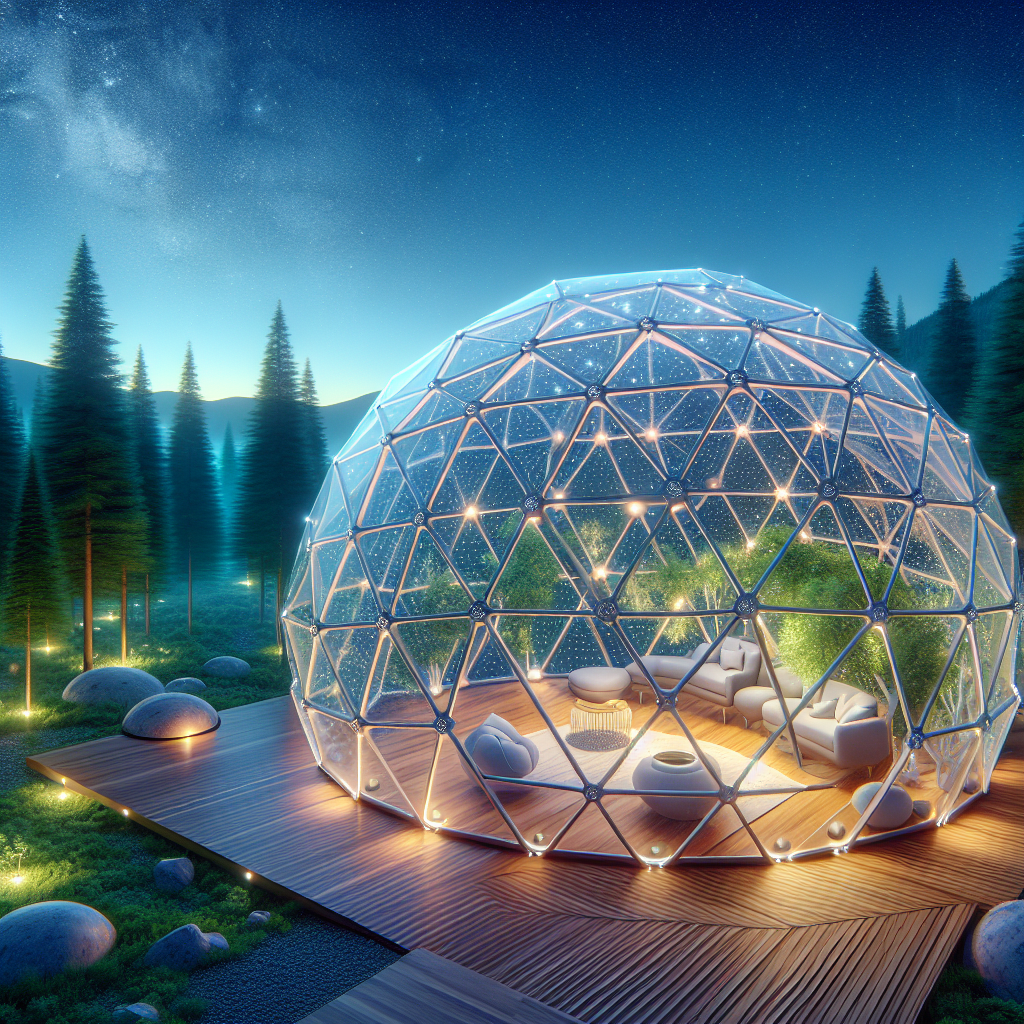
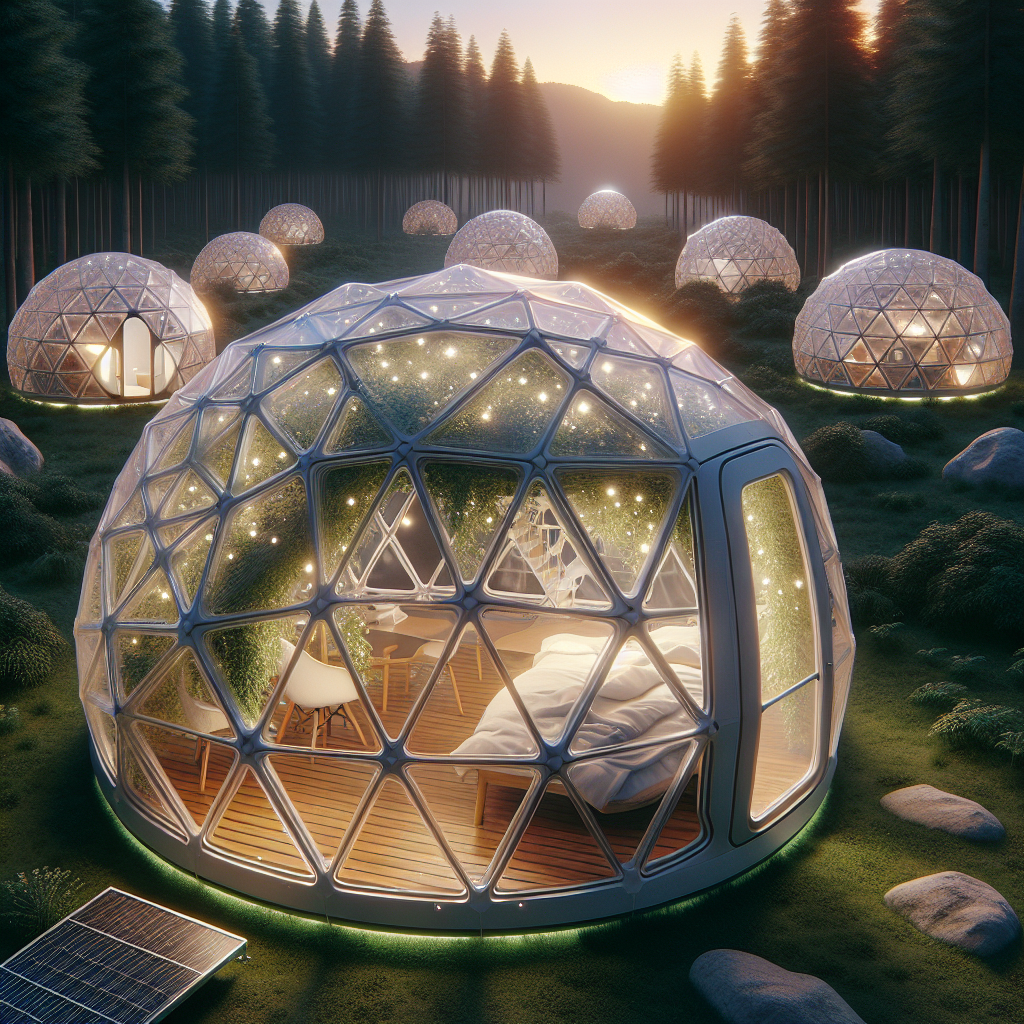
In visual terms, these pods are breathtaking. Imagine a cluster of translucent, honeycomb-like spheres nestled in a forest clearing, their panels glowing softly at dusk as integrated LEDs trace the geometric seams. Inside, the interiors are minimal yet warm—curved surfaces lined with natural fibers, built-in furniture following the arc of the dome, and skylights that frame the constellations above. It’s architecture as both refuge and sculpture.
Resilience in the Age of Climate Uncertainty
As climate volatility intensifies, architects are rethinking the relationship between structure and environment. Geodesic living pods, with their aerodynamic forms and structural redundancy, are inherently resistant to wind, snow, and seismic stress. This resilience makes them ideal for regions prone to natural disasters or extreme weather—an idea that aligns with the principles discussed in resilient building design.
In coastal areas, elevated geodesic pods are being tested as amphibious dwellings capable of floating during floods. In arid zones, reflective coatings and ventilated panels help regulate internal temperatures. The adaptability of the geodesic form, combined with smart materials and embedded sensors, transforms these pods into responsive micro-environments—structures that learn and adjust to their surroundings in real time.
Human-Centric Micro-Living
Beyond their technical sophistication, geodesic living pods are redefining the emotional and psychological dimensions of small-space living. The curvature of the dome creates a sense of enclosure without confinement, a spatial quality that fosters calm and introspection. Studies in environmental psychology suggest that curved environments can reduce stress and enhance well-being—an insight echoed in the growing popularity of biophilic design.
Inside, designers are experimenting with modular interiors that can morph according to need: a sleeping alcove that folds into a workspace, or a kitchen that retracts into the wall. Materials are tactile and natural—compressed bamboo flooring, hemp-based textiles, and clay-coated walls that regulate humidity. These interiors embody a quiet luxury, where simplicity and craftsmanship converge to create spaces that feel both futuristic and deeply human.
Case Studies: From Earth to Orbit
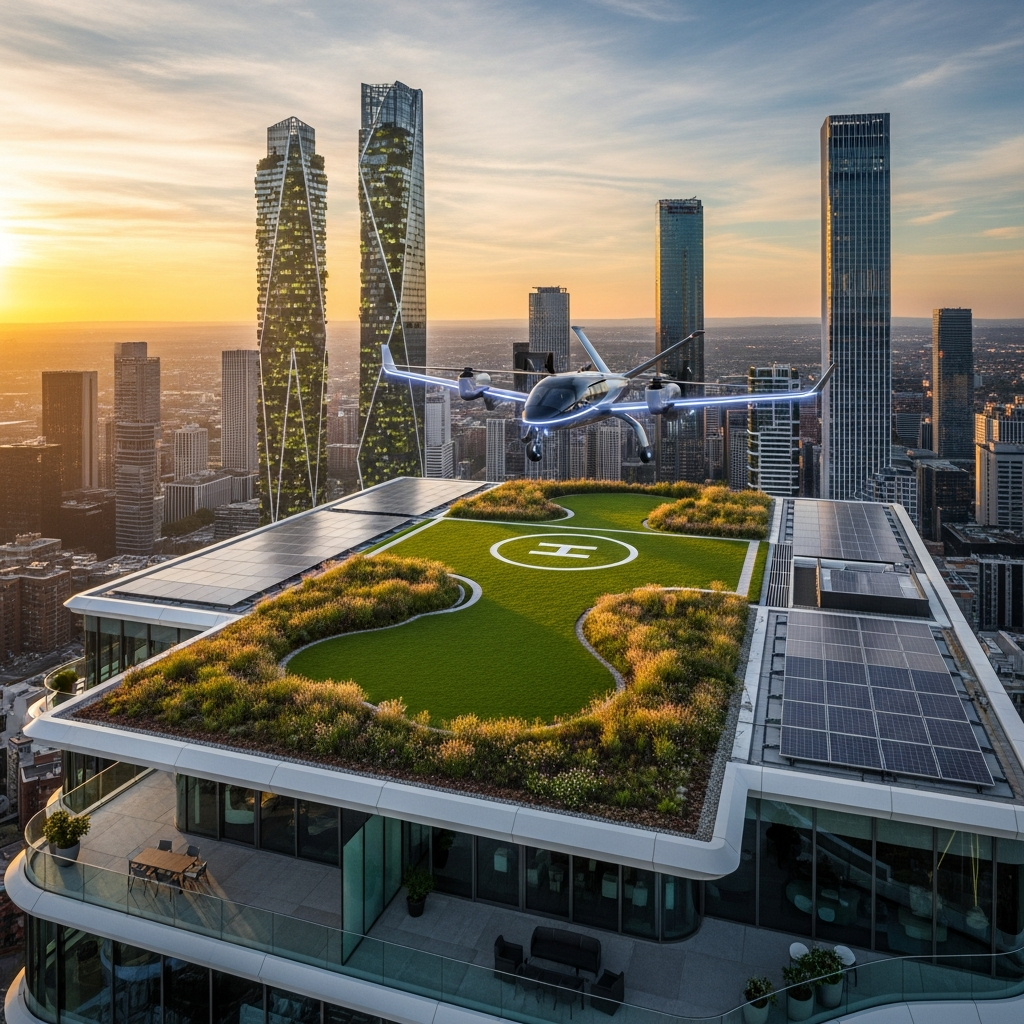
Several pioneering projects are pushing the boundaries of what geodesic living pods can achieve. In Iceland, the “Aurora Pods” project employs 3D-printed joints and insulated glass panels to create off-grid retreats that withstand subzero temperatures while offering panoramic views of the northern lights. In Japan, the startup Serendome has developed collapsible domes for urban rooftops, turning underused spaces into micro-habitats for meditation or remote work.
Perhaps most intriguingly, NASA’s research into extraterrestrial habitats has revived interest in Fuller’s geometry. The agency’s Mars Dune Alpha prototype—a 3D-printed habitat built from recycled polymer and basalt—draws directly from geodesic principles, demonstrating how this century-old idea might one day shelter humans on other planets. The connection between geodesic domes and space architecture underscores their timeless relevance.
The Future of Adaptive Architecture
As the boundaries between architecture, technology, and ecology continue to blur, geodesic living pods represent a powerful synthesis of these disciplines. They embody the spirit of experimentation that defines contemporary design while honoring Fuller’s enduring question: how can we do more with less?
In an era where cities are densifying and natural resources are depleting, the geodesic pod offers a poetic counterpoint—a vision of lightweight living that is both technologically advanced and ecologically sensitive. Whether perched on a mountainside, floating above a lake, or orbiting a distant planet, these spherical sanctuaries remind us that the future of architecture may not be about building bigger, but about building smarter, lighter, and more beautifully connected to the world around us.
Fuller once described his domes as “machines for living in harmony with the universe.” Today, with the aid of 3D printing, that harmony feels closer than ever—rendered not in utopian sketches, but in tangible, inhabitable forms that invite us to rethink what home can mean in the 21st century.
Keywords: geodesic living pods, Buckminster Fuller, 3D-printed joints, sustainable architecture, modular design, digital fabrication, parametric design, resilient housing, biophilic interiors