Chromatic illusions in: façade design thermochromic surfaces that evolve
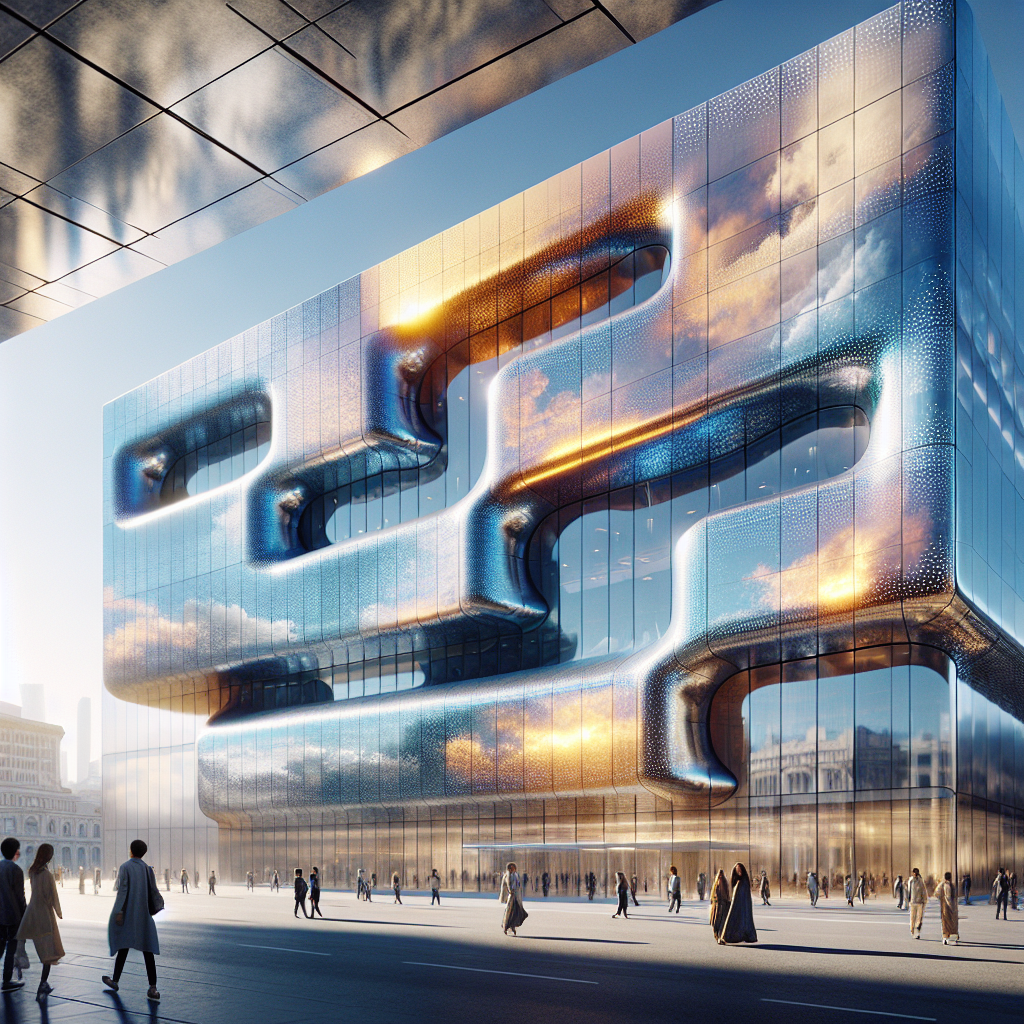
Chromatic Illusions in Façade Design: Thermochromic Surfaces That Evolve
Architecture has always been a dialogue between permanence and transformation. Yet, in the 21st century, this dialogue has become more fluid—literally. As cities grapple with climate adaptation and aesthetic innovation, thermochromic façades—surfaces that shift color in response to temperature—are redefining how buildings communicate with their environment. These dynamic skins are not mere visual spectacles; they are intelligent, responsive systems that blur the boundary between art, science, and sustainability.
The Science Behind the Spectrum
At the heart of thermochromic design lies a material that behaves like a living organism. Thermochromic pigments contain molecules that rearrange when exposed to temperature variations, altering their optical properties. This phenomenon, first studied in the mid-20th century and now refined through nanotechnology, allows surfaces to transition between hues—from deep indigo to pale silver, or from charcoal gray to luminous white—depending on the surrounding climate.
In architectural applications, these pigments are embedded into paints, glass coatings, or polymer films. When the temperature rises, the molecular structure changes, reflecting more sunlight and reducing heat absorption. When it cools, the surface darkens, absorbing warmth. The result is a façade that performs as a climate-responsive skin, adjusting its chromatic identity in real time.
According to research published by the American Chemical Society, thermochromic coatings can reduce a building’s cooling load by up to 20%, a significant figure in the era of net-zero architecture. This duality—where beauty meets efficiency—has made thermochromic façades a focal point for both avant-garde designers and environmental engineers.
Architecture in Flux: From Static to Kinetic Color
The notion of color as a fixed design element is being rewritten. In projects like the Media-TIC Building in Barcelona or the Bloom Pavilion in Los Angeles, façades are conceived as mutable membranes rather than static shells. These structures evolve with the sun’s trajectory, the season’s rhythm, and the city’s microclimate.
This evolution aligns with the broader trend of responsive architecture, where movement, light, and material behavior merge to create living systems. Thermochromic surfaces extend this logic beyond mechanics, introducing a subtler form of transformation—one that is perceptual, sensorial, and deeply poetic.
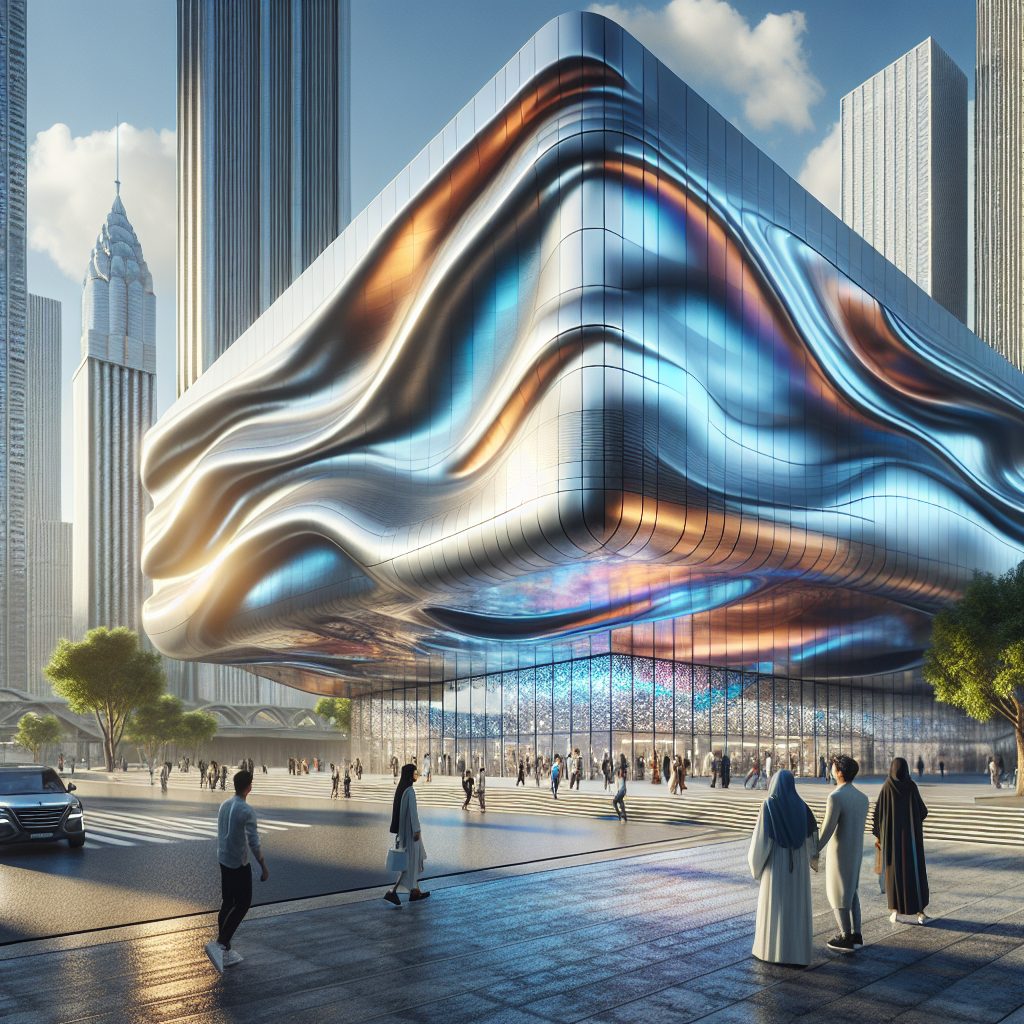
Imagine a civic building whose façade blushes from cool slate to warm amber as morning turns to afternoon, or a museum whose walls shimmer like a mirage under shifting weather. These chromatic illusions engage the public not just visually but emotionally, creating a sense of temporal connection between architecture and atmosphere.
Case Studies: When Color Becomes Climate
One of the most compelling explorations of thermochromic technology is “Thermochromic Pavilion” by the London-based studio ecoLogicStudio. The structure’s surface, coated with temperature-sensitive paint, reacts to the body heat of visitors and the ambient air, creating ephemeral patterns that fade and reappear throughout the day. The result is an architecture that feels alive—its façade a canvas of fluctuating energy.
Similarly, in Copenhagen, a research prototype developed by the Technical University of Denmark integrates thermochromic glazing into curtain walls. The glass panels transition from transparent to opaque as temperatures rise, reducing solar gain while creating a soft, gradient-like visual effect reminiscent of watercolor washes. This not only enhances energy performance but also introduces a meditative quality to the urban skyline.
These projects echo the principles explored in color theory in architectural design, where hue, saturation, and lightness are not static choices but dynamic forces shaping human perception. The thermochromic façade, in this sense, becomes a medium of storytelling—one that narrates the invisible interplay between environment and structure.
Material Innovation and Sustainability
Beyond aesthetics, thermochromic façades are integral to the conversation on sustainable architecture. As cities pursue decarbonization goals, adaptive materials offer a pathway to reduce reliance on mechanical systems. By passively regulating temperature, these surfaces contribute to lower energy consumption and enhance occupant comfort.
Recent studies by the International Energy Agency highlight that building envelopes account for nearly 40% of global energy use. Integrating thermochromic coatings could therefore represent a transformative step toward climate neutrality. When combined with other responsive technologies—such as solar-powered design or kinetic shading systems—the result is a multi-layered ecological strategy.
Manufacturers are also exploring hybrid materials that merge thermochromic pigments with photovoltaic cells, enabling façades that both adapt and generate energy. These innovations point toward a future where architecture is not only reactive but regenerative—a concept aligned with the principles of circular design.
Perception, Psychology, and the Poetics of Change
Color, as color psychology suggests, profoundly influences human emotion and spatial experience. In architecture, the shift from static palettes to dynamic chromatic systems introduces a new dimension of interaction. A façade that changes tone with the weather can evoke comfort, curiosity, or even empathy—qualities rarely associated with building exteriors.
This sensory engagement resonates with the human desire for environments that reflect natural rhythms. Just as leaves change with the seasons or skies deepen before rain, thermochromic façades mimic the living patterns of the planet. They invite occupants to observe, pause, and reconnect with the temporal flow of their surroundings.
In dense urban contexts, where architecture often feels detached from nature, such responsiveness can restore a sense of equilibrium. It transforms the façade from a barrier into a mediator—an interface between the human body and the climatic body of the Earth.
Challenges and the Path Forward
Despite their promise, thermochromic materials face challenges in durability, cost, and scalability. Prolonged UV exposure can degrade pigments, while production remains energy-intensive. Yet, ongoing research in nanostructured coatings and organic-inorganic hybrids is rapidly improving longevity and efficiency.
Architects and material scientists are also exploring ways to integrate thermochromic layers with digital monitoring systems, allowing façades to “learn” from environmental data. Such integration could lead to buildings that autonomously calibrate their color responses for optimal performance—an intersection of AI-driven design and material intelligence.
As these technologies mature, the architectural landscape may witness a paradigm shift akin to the introduction of glass curtain walls in the 20th century. The façades of tomorrow will not merely reflect the city—they will participate in it, visually and climatically.
A Living Canvas for the Future
Thermochromic façades invite us to reconsider what architecture can be: not a static monument, but a living organism that breathes, blushes, and responds. They merge science with artistry, sustainability with sensuality, and performance with poetry. In doing so, they echo the broader ethos of contemporary design—one that values adaptability, emotion, and ecological intelligence.
As climate-responsive materials become central to urban innovation, the chromatic illusion is no longer a trick of the eye. It is a statement of intent—a declaration that architecture, like nature, must evolve to survive.
In this new era of responsive design, façades are no longer façades at all. They are mirrors of the world’s shifting temperatures, reflections of our collective adaptability, and, perhaps most importantly, vibrant reminders that color itself is alive.