

Cognitive Architecture: Designing Spaces That Think and React

Cognitive Architecture: Designing Spaces That Think and React
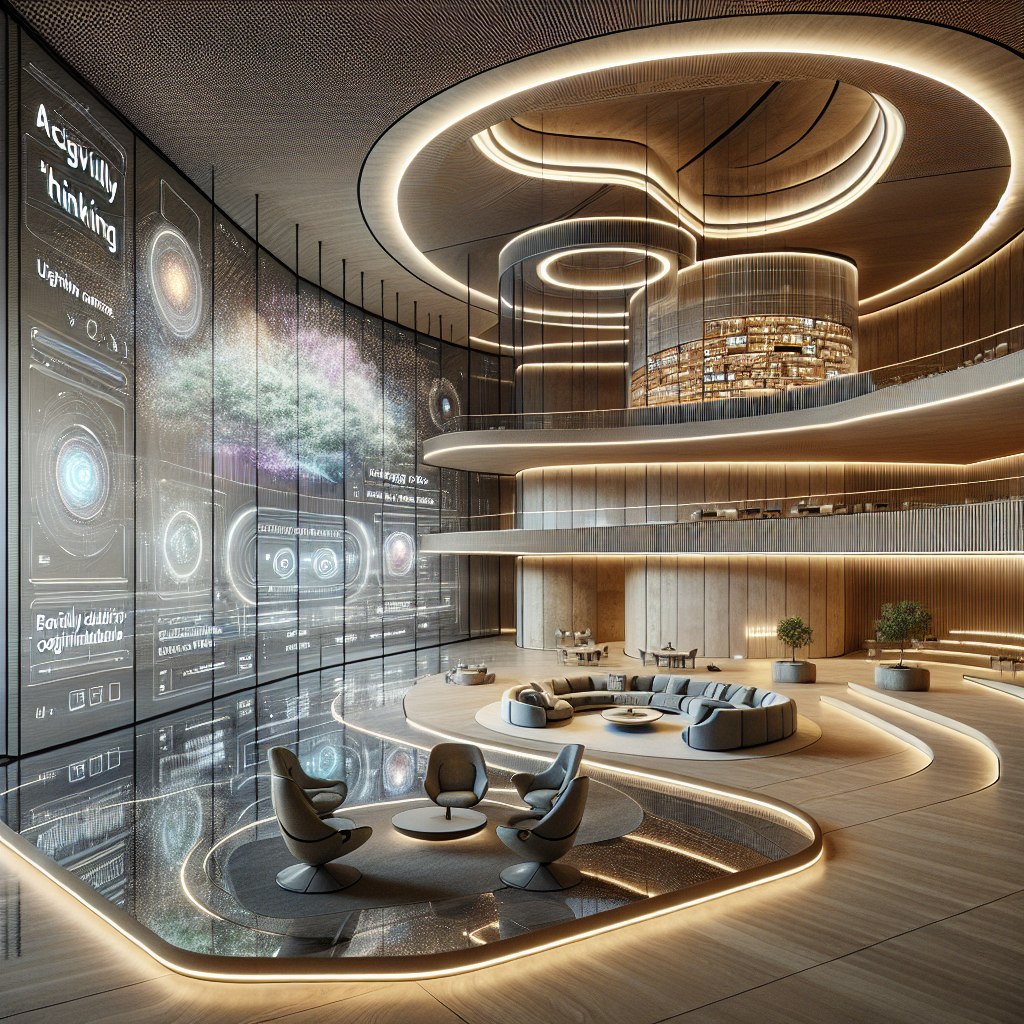
Imagine a building that senses your presence, adjusts its lighting to your mood, and modulates its acoustics to enhance concentration. This is not a scene from speculative fiction but the emerging reality of cognitive architecture—a discipline at the intersection of design, neuroscience, and artificial intelligence. As the boundaries between human cognition and spatial intelligence blur, architects and designers are beginning to craft environments that not only serve but also understand their inhabitants.
The Rise of Cognitive Architecture
The concept of cognitive architecture stems from the broader field of cognitive science, which studies how humans perceive, think, and interact with their surroundings. In architectural terms, it refers to spaces that are capable of sensing, processing, and responding to human behavior in real time. These are not merely “smart buildings” outfitted with sensors; they are adaptive ecosystems that evolve alongside their users.
In the past decade, the rise of AI-driven design and the Internet of Things (IoT) has transformed the built environment into a living network of data. From responsive façades that regulate temperature to interior lighting systems that synchronize with circadian rhythms, architecture is learning to think dynamically. The goal is not automation for its own sake, but a deeper, symbiotic relationship between people and place.
From Smart Buildings to Sentient Spaces
While smart buildings have been part of the architectural lexicon for years, cognitive architecture represents a profound shift—from reactive to proactive intelligence. A smart building might adjust lighting when someone enters a room; a cognitive building anticipates that person’s needs based on behavioral patterns, emotional cues, and environmental data.
Consider the Edge in Amsterdam, often cited as one of the world’s most intelligent office buildings. Its integrated digital ecosystem tracks occupancy, air quality, and energy use, allowing it to fine-tune conditions for comfort and efficiency. Yet the next frontier goes beyond optimization—it’s about empathy in design. Cognitive architecture aims to interpret human emotion and intention, creating environments that respond not just to what we do, but to how we feel.
Neuroscience Meets Design
At the heart of cognitive architecture lies a deep understanding of the human brain. Studies in environmental psychology and neuroarchitecture reveal that spatial conditions—light, texture, geometry, and sound—directly influence cognition and emotion. Architects are increasingly drawing on this research to design spaces that promote well-being, creativity, and focus.
For instance, curved forms and natural materials can lower stress levels, while rhythmic patterns and symmetry enhance cognitive clarity. The biophilic design movement—which integrates natural elements into built environments—has already demonstrated measurable benefits for mental health. Cognitive architecture extends this logic through technology, using sensors and AI to modulate these stimuli dynamically.
Imagine a workspace that detects signs of fatigue through subtle changes in posture or voice tone, then adjusts lighting to cooler hues and introduces gentle airflow to re-energize occupants. Such responsiveness transforms architecture from a static backdrop into an active participant in human experience.
Technological Frameworks for Thinking Spaces
The foundation of cognitive architecture lies in the convergence of several technological systems:
- Sensor Networks: Distributed arrays of environmental and biometric sensors collect data on temperature, humidity, motion, and even emotional state through facial recognition or voice analysis.
- Machine Learning Algorithms: These systems interpret data patterns to predict user needs and optimize environmental responses over time.
- Responsive Materials: Smart glass, shape-memory alloys, and kinetic façades enable physical adaptation to changing conditions, echoing principles explored in responsive architecture.
- Human–Machine Interfaces: Voice, gesture, and biometric inputs allow occupants to communicate intuitively with their surroundings.
When orchestrated effectively, these components create an architecture that is not merely automated but contextually aware. The result is a built environment that learns, evolves, and personalizes itself to its inhabitants.
Case Studies: Spaces That Learn
Several pioneering projects illustrate the promise of cognitive architecture. The Media Lab at MIT has been experimenting with “living labs” that use real-time data to shape spatial experience. In Singapore, the Nanyang Technological University’s Smart Campus integrates AI-driven environmental controls that adapt to weather patterns and human activity. Meanwhile, in Milan, experimental pavilions at Salone del Mobile have showcased kinetic installations that react to movement and sound, transforming the act of inhabiting space into a multisensory dialogue.
In residential contexts, cognitive architecture is beginning to merge with the evolution of smart home technology. AI-powered systems can now recognize routines, adjust ambient conditions, and even learn aesthetic preferences. A home that dims its lights when it senses relaxation or plays ambient music in response to heart rate is no longer a futuristic fantasy—it’s a prototype of emotionally intelligent living.
Ethics, Privacy, and the Human Touch
As architecture becomes more perceptive, questions of privacy and agency inevitably arise. Who owns the data that buildings collect? How can designers ensure that responsive environments enhance, rather than manipulate, human behavior? These concerns are not peripheral—they are central to the ethics of cognitive design.
Architects must balance technological sophistication with human dignity. Transparency in data use, opt-in systems, and user control are essential to maintaining trust. Moreover, the emotional intelligence of a space should never replace human empathy; it should amplify it. The ultimate goal is not to create autonomous buildings but to design collaborative environments that support human flourishing.
Designing for a Cognitive Future
As the built environment becomes increasingly sentient, the role of the architect is evolving. No longer a sole author of form, the architect becomes a choreographer of systems—balancing material, digital, and biological intelligence. This shift echoes the broader movement toward parametric and algorithmic design, where computational logic informs creative expression.
Future cognitive spaces may integrate biosensing materials that detect stress hormones, or façades that “breathe” in response to air quality. In this context, architecture becomes a living interface—a medium through which humans and machines co-create experience. The aesthetic of such spaces will likely favor fluidity, transparency, and adaptability, reflecting the dynamic nature of cognition itself.
As we move deeper into the 2020s, cognitive architecture represents not just a technological evolution but a philosophical one. It redefines what it means to inhabit space—transforming buildings from passive containers into active collaborators in our daily lives. The question is no longer whether architecture can think, but how we will choose to think with it.
In this emerging dialogue between mind and matter, the most compelling designs will be those that listen as much as they speak—spaces that learn, adapt, and, in their own quiet way, care.


Get the Mainifesto weekly — curated design debates, speculative ideas and the week's best articles every Saturday.