
AI City Planning: How Algorithms Are Designing the Cities of Tomorrow
AI City Planning: How Algorithms Are Designing the Cities of Tomorrow
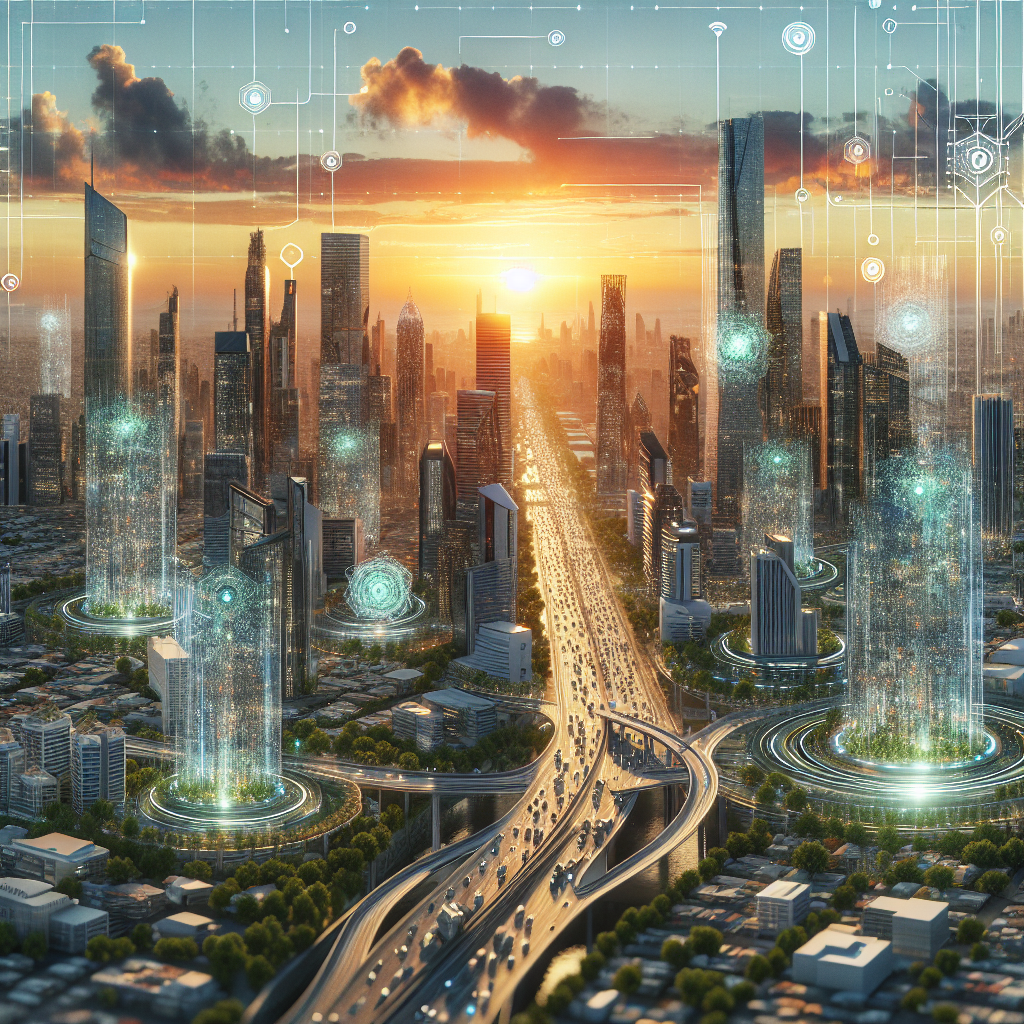
In the dawn of the algorithmic age, the urban landscape is being reimagined not by the hands of a single architect, but by the collective intelligence of data-driven systems. Artificial Intelligence (AI) is no longer confined to digital design studios or smart home devices—it is becoming the invisible urban planner shaping how we live, move, and interact within the built environment. As cities across the globe grapple with rapid urbanization, climate adaptation, and the pursuit of sustainability, AI city planning is emerging as the next frontier in architectural innovation.
The Algorithm as Urban Designer
AI city planning operates at the intersection of data science, architecture, and human behavior. Through machine learning models, urban planners can simulate thousands of potential scenarios—optimizing everything from traffic flow to energy distribution. Algorithms analyze real-time data from sensors, satellite imagery, and social media to identify inefficiencies invisible to the human eye. The result is a form of predictive urbanism, where cities evolve dynamically in response to their inhabitants’ needs.
Consider Singapore’s “Virtual Singapore” project, a digital twin of the entire city-state. This 3D model integrates geospatial data, environmental analytics, and demographic information, allowing planners to test new developments before a single brick is laid. The model predicts how a new high-rise might cast shadows on neighboring parks or how pedestrian circulation shifts during peak hours. Such simulations, powered by AI, are transforming city planning from reactive to proactive design.
From Smart Cities to Sentient Cities
While the term “smart city” has dominated discourse for over a decade, the next evolution is what researchers are calling the “sentient city”—an urban ecosystem that senses, learns, and adapts autonomously. In these environments, AI acts as both observer and orchestrator. Sensors embedded in streetlights, building façades, and transportation hubs feed data into neural networks that continuously refine the city’s operations.
Barcelona’s AI-driven waste management system, for instance, uses predictive algorithms to optimize collection routes, reducing fuel consumption and emissions. Meanwhile, Copenhagen employs machine learning to adjust traffic signals in real time, cutting congestion and improving air quality. These examples demonstrate how AI in urban design extends beyond efficiency—it redefines the rhythm of urban life itself.
Designing for Complexity: The Aesthetic of the Algorithm
AI’s influence is not limited to infrastructure; it is reshaping the aesthetic language of architecture. Generative design tools—powered by algorithms—allow architects to explore forms that were once unimaginable. These systems iterate through thousands of design permutations, optimizing for parameters such as daylight, airflow, and material efficiency. The resulting structures often exhibit organic geometries reminiscent of natural systems, echoing the principles of biomimicry in architecture.
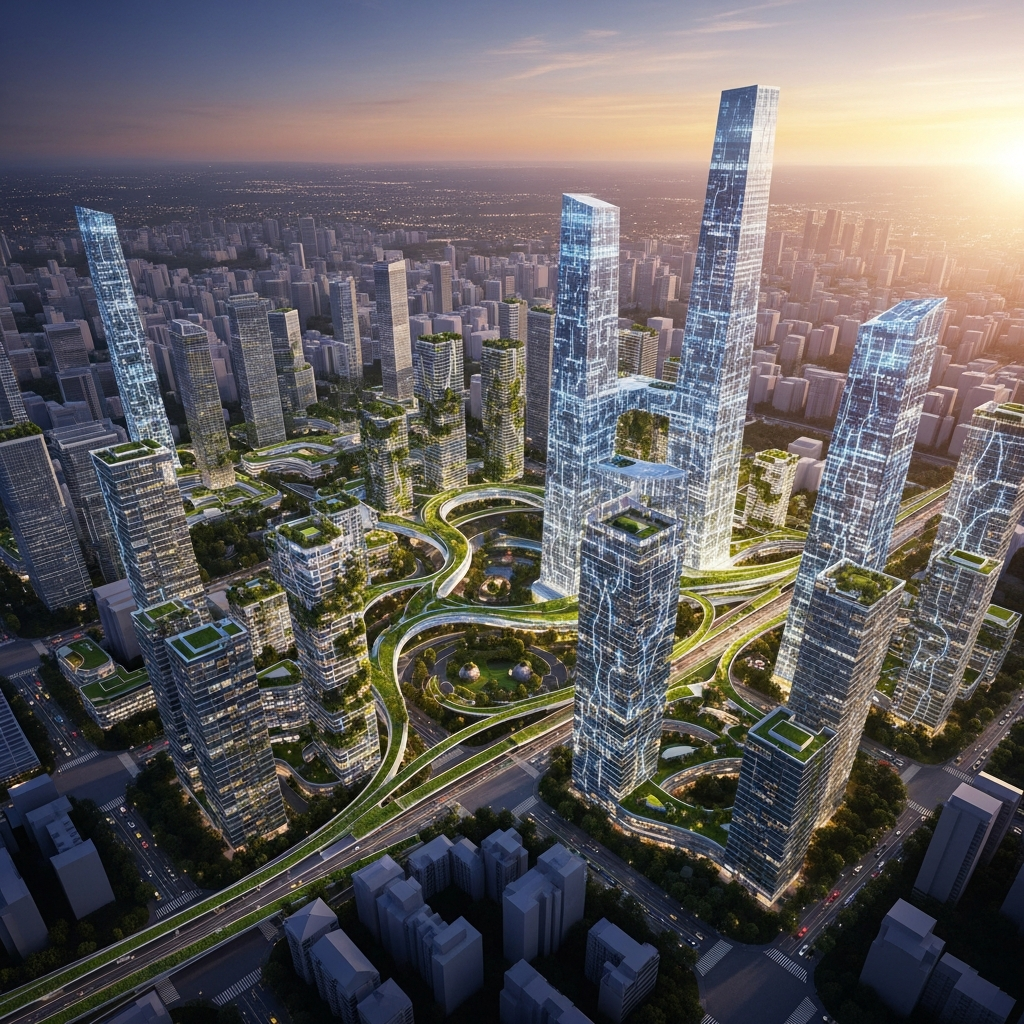
In China’s Xiong’an New Area, dubbed the “AI City,” planners are using generative algorithms to design neighborhoods that balance density with livability. The masterplan integrates green corridors, autonomous transit routes, and energy-positive buildings—all calibrated through AI simulations. The visual language of these cities is fluid and adaptive: façades ripple with responsive materials, and public spaces morph according to real-time occupancy data. The result is an architecture that feels alive, continuously learning from its users.
Data, Ethics, and the Human Element
Yet as cities become more intelligent, questions of data ethics and privacy loom large. Who owns the data that shapes our urban environments? How do we ensure that algorithmic decisions reflect human values rather than perpetuate bias? The challenge lies in balancing technological precision with social inclusivity. As seen in the discourse around algorithmic bias, data-driven systems can inadvertently reinforce inequality if not carefully designed.
Architects and planners are increasingly advocating for a human-centric AI approach—one that prioritizes transparency, accountability, and participation. The concept of community-driven architecture offers a valuable model: combining algorithmic insights with local knowledge to co-create spaces that resonate culturally and emotionally. In this hybrid model, AI becomes a collaborator rather than a dictator, amplifying human creativity instead of replacing it.
Resilience Through Prediction
As climate volatility intensifies, predictive modeling is becoming a cornerstone of resilient urban design. AI systems can forecast flooding patterns, heat islands, and energy demands with remarkable accuracy, enabling cities to adapt before crises occur. Projects like Amsterdam’s “Smart Heat Grid” use AI to balance renewable energy distribution across neighborhoods, while Tokyo’s earthquake simulations integrate AI to optimize evacuation routes and structural reinforcements.
These advancements align with the broader movement toward disaster-resistant architecture, where resilience is embedded into the DNA of the city. AI doesn’t merely respond to disasters—it anticipates them, crafting urban fabrics that bend without breaking.
AI and the Future of Urban Mobility
Mobility remains one of the most visible arenas for AI’s urban impact. Autonomous vehicles, drone deliveries, and adaptive traffic systems are converging to redefine how we navigate cities. According to McKinsey’s 2025 report on urban mobility, AI-driven optimization could reduce commuting times by up to 30% in major metropolitan areas. This transformation is already visible in pilot projects across Helsinki and Dubai, where autonomous shuttles and algorithmic route planning are seamlessly integrated into public transport networks.
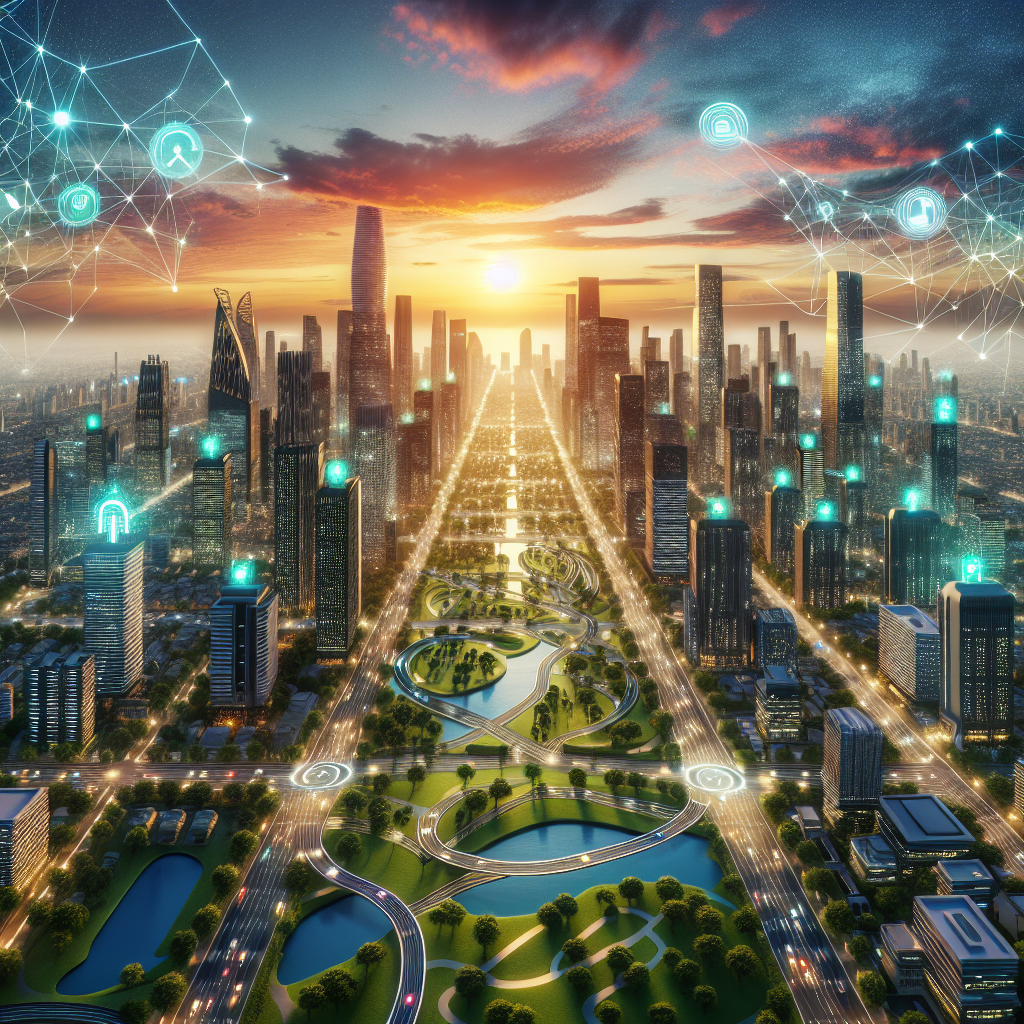
Beyond efficiency, these systems influence urban form itself. As self-driving cars reduce the need for parking spaces, architects are reimagining how to repurpose these vast concrete expanses into green corridors, housing, or cultural spaces—echoing the principles explored in adaptive reuse. The AI city, therefore, is not only smarter but also more spatially generous, reclaiming land for human experience.
Material Intelligence and Sustainable Construction
AI’s reach extends into the material realm. Machine learning algorithms are being used to predict the performance of sustainable materials, optimize supply chains, and minimize waste during construction. Startups like Spacemaker AI and CityFormLab are pioneering tools that integrate environmental data with architectural modeling, enabling designers to make decisions that are both aesthetically compelling and ecologically sound.
This aligns with the growing momentum toward circular economy design, where buildings are conceived as adaptable systems rather than static monuments. AI helps architects simulate the life cycle of materials, ensuring that tomorrow’s cities are not only intelligent but regenerative.
The Poetics of the Predictive City
In the most visionary sense, AI city planning is about crafting urban poetry through data. Imagine walking through a plaza whose lighting subtly adjusts to your pace, or a building façade that breathes in rhythm with the wind. These are not distant fantasies—they are emerging realities in cities experimenting with responsive architecture and kinetic design. The algorithm becomes an invisible composer, orchestrating the interplay of light, sound, and movement across the urban stage.
Yet amidst the code and computation, the essence of design remains profoundly human. The future city will not be defined solely by its intelligence, but by its empathy—its ability to anticipate not just our movements, but our moods, our needs, and our aspirations. AI, when guided by thoughtful design, has the potential to create cities that are not only efficient but deeply alive.
Reimagining the Urban Future
As we stand at the threshold of this new era, the role of the architect is evolving from master builder to systems thinker. The tools of the trade now include algorithms, datasets, and neural networks—but the goal remains timeless: to design spaces that elevate the human experience. The cities of tomorrow will be shaped not by rigid blueprints, but by adaptive intelligence—fluid, responsive, and perpetually learning.
In this transformation, AI is not replacing design intuition; it is expanding it. The architect of the future will collaborate with algorithms as naturally as with engineers or artists, co-authoring environments that reflect both logic and imagination. The AI city is not a dystopian grid of automation—it is a living organism, pulsing with data, creativity, and possibility.
As algorithms quietly redraw the maps of our urban existence, one truth becomes clear: the future of city planning
Get the Mainifesto weekly — curated design debates, speculative ideas and the week's best articles every Saturday.