Urban orchard towers: vertical fruit farms within apartment blocks
Urban Orchard Towers: Vertical Fruit Farms Within Apartment Blocks
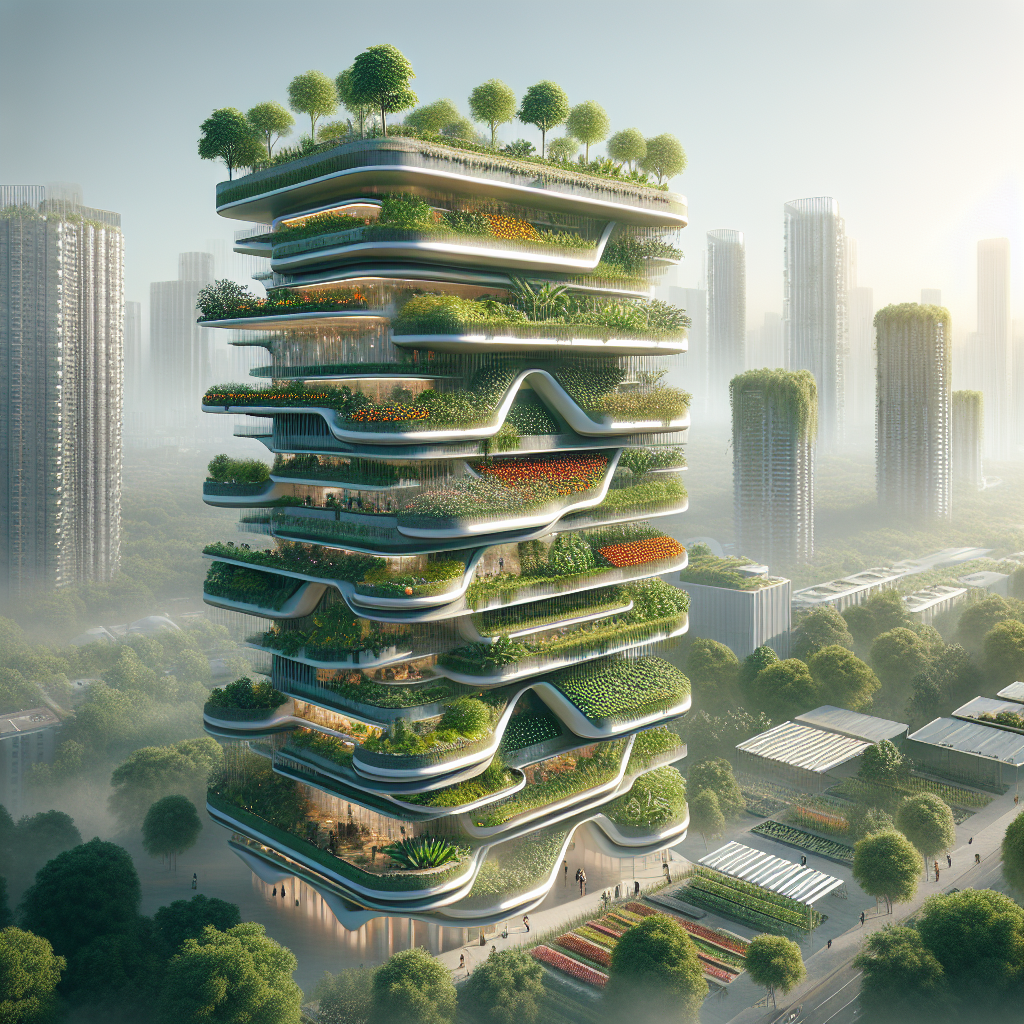
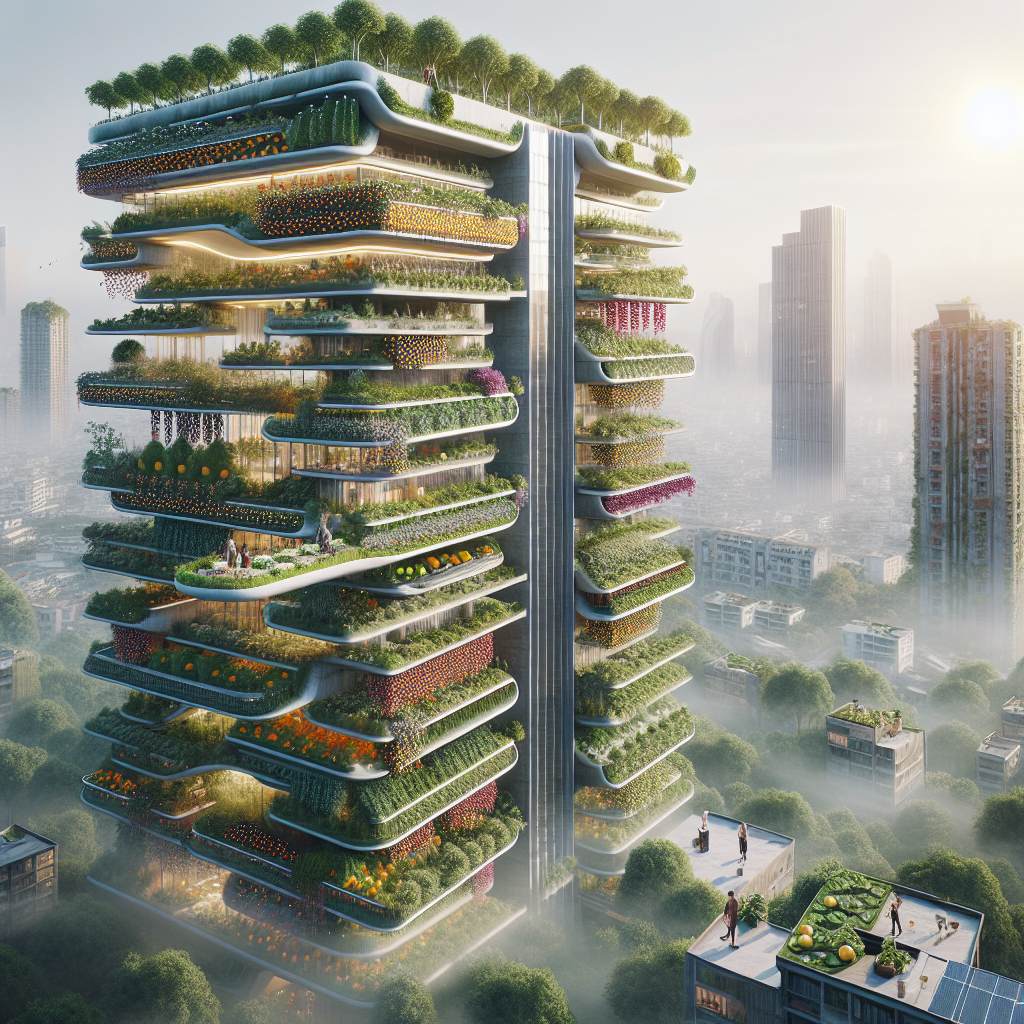
In the ever-tightening fabric of our cities, where glass towers rise like crystalline forests and every square meter of soil is contested, a quiet revolution is taking root—literally. Urban orchard towers, a fusion of vertical farming and residential architecture, are redefining what it means to live sustainably in dense urban environments. These hybrid structures integrate fruit-bearing trees and edible plants directly into the architecture of apartment blocks, turning façades, balconies, and atria into productive ecosystems. Beyond their aesthetic allure, they represent a radical rethinking of how architecture can nourish both body and city.
The Rise of Vertical Fruit Farms
The concept of vertical farming—the cultivation of crops in stacked layers within controlled environments—has matured from experimental greenhouses to large-scale urban infrastructures. According to the Wikipedia entry on vertical farming, the technique promises to reduce land use, cut transportation emissions, and ensure year-round yields. Yet, while leafy greens and herbs have dominated this space, fruit-bearing plants have lagged behind due to their size, weight, and light requirements. Recent advances in hydroponic and aeroponic systems, however, are changing that equation.
Architects and urban ecologists are now exploring how these systems can be integrated into high-rise living. The result is the urban orchard tower—a building that not only houses people but also produces food, filters air, and fosters biodiversity. It’s a vision aligned with the principles of biophilic design, which emphasizes human connection to nature within built environments.
Architecture That Grows
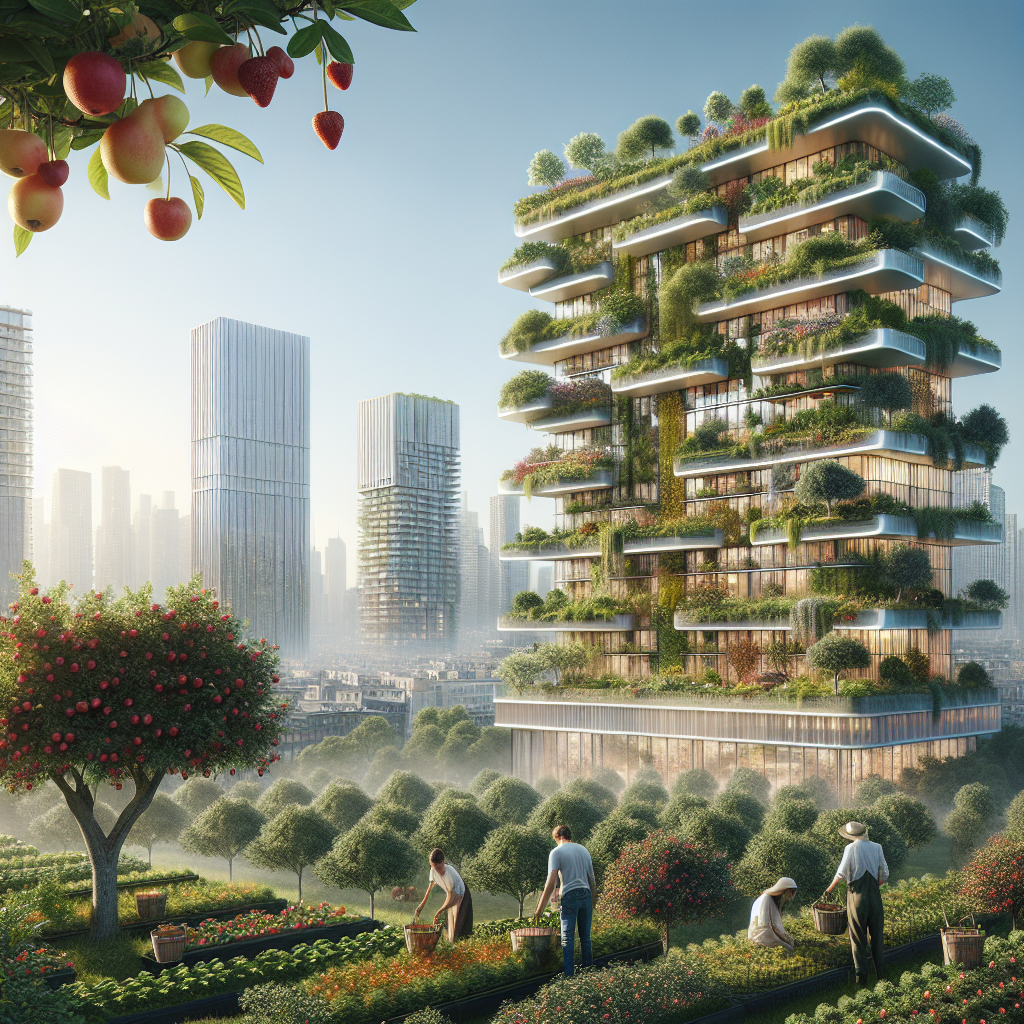
Imagine a 40-story residential tower where every fifth floor opens into a shared orchard terrace. Citrus trees line the walkways, their glossy leaves reflecting morning light; espaliered apple trees climb trellised façades; and hanging gardens of strawberries cascade from balcony edges. The air carries a faint sweetness, mingling with the scent of wet soil after irrigation. These are not decorative gestures—they are productive landscapes engineered into the building’s very structure.
In Singapore, Milan, and Tokyo, prototypes of such integrated systems are already emerging. The One Central Park in Sydney, designed by Jean Nouvel and Patrick Blanc, hinted at this direction with its vertical gardens. Now, new projects are taking the next step: replacing ornamental greenery with edible species. Architects are collaborating with agronomists to design façades that can bear the load of fruit trees while optimizing sunlight exposure and water distribution. The result is a living architecture that blurs the boundary between home and habitat.
Designing for Growth and Community
Beyond the technical challenge of integrating orchards into high-rises lies a social dimension. Urban orchard towers are not just about self-sufficiency—they are about community resilience. Shared harvesting terraces and rooftop fruit markets encourage residents to engage with one another, fostering a sense of collective stewardship. In a time when urban isolation is a growing concern, these spaces offer a tangible antidote: a return to shared rituals of cultivation and harvest.
Architectural firms are experimenting with modular systems that allow residents to participate in maintenance. Smart irrigation sensors, solar-powered grow lights, and nutrient recycling loops make these orchards efficient and low-maintenance. The concept resonates with the broader movement toward sustainable vertical farming and the idea of cities as self-sustaining ecosystems.
Material Innovation and Environmental Performance
Integrating orchards into buildings demands materials that can withstand moisture, biological growth, and fluctuating temperatures. Designers are turning to biocomposite panels, lightweight structural soils, and porous ceramics that regulate humidity. These materials not only support plant life but also enhance the building’s thermal performance, reducing energy consumption by up to 30% through natural shading and evaporative cooling.
Some projects are experimenting with kinetic façades that adjust to sunlight, ensuring optimal photosynthesis for the plants while maintaining comfort for residents. This adaptive approach recalls the principles explored in kinetic façade design, where architecture responds dynamically to environmental conditions. The orchards thus become both a climatic buffer and a visual statement—a living, breathing skin that evolves with the seasons.
Urban Food Security and Policy Implications
According to the United Nations’ definition of food security, sustainable access to nutritious food is a cornerstone of urban resilience. As cities expand, the distance between food production and consumption widens, increasing carbon footprints and vulnerability to supply chain disruptions. Urban orchard towers offer a localized solution, producing fresh fruit within walking distance of consumers.
Municipalities from Paris to Seoul are beginning to incentivize rooftop and façade farming through zoning bonuses and tax credits. The Paris Urban Agriculture Plan, for instance, aims to cultivate 100 hectares of green roofs and walls by 2030, a portion of which will include fruit-bearing plants. These policies align with the global shift toward urban farming as a key strategy for sustainable city planning.
Challenges and Future Directions
Despite their promise, urban orchard towers face significant hurdles. Fruit trees require pollination, pruning, and seasonal care—tasks that differ from maintaining ornamental greenery. Architects must design access systems that allow safe harvesting and maintenance without compromising aesthetics or safety. Moreover, the weight of mature trees and soil demands structural reinforcement, influencing both cost and design flexibility.
Some innovators are addressing these issues through hydroponic dwarf varieties and lightweight soil substitutes. Others are exploring symbiotic systems that integrate rooftop beekeeping, as seen in projects akin to symbiotic rooftop beekeeping, ensuring natural pollination cycles within the vertical ecosystem. These multi-layered designs transform buildings into complex, interdependent habitats rather than static structures.
The Aesthetic of Edibility
There is also an aesthetic revolution underway. The visual language of the urban orchard tower diverges from the sterile minimalism of early modernism. Instead, it embraces organic irregularity—branching patterns, seasonal color shifts, and the imperfect beauty of living systems. Architects are learning to choreograph growth, decay, and renewal as part of the design narrative. A façade that blushes with ripening cherries in June or glows gold with autumnal pears becomes a living artwork, a dynamic expression of time.
This sensorial richness recalls the philosophies of biophilic design and the Japanese concept of wabi-sabi, celebrating impermanence and natural cycles. In this sense, the urban orchard tower is not merely sustainable—it is poetic. It transforms the act of dwelling into an act of cultivation, reminding residents that architecture, at its best, is a dialogue with life itself.
Living Architecture for the 21st Century
As climate change accelerates and cities confront the dual pressures of population growth and resource scarcity, the integration of food production into residential architecture may soon shift from novelty to necessity. The urban orchard tower embodies a holistic vision of the future—one where buildings nourish, shade, and sustain their inhabitants. It merges technology with ecology, engineering with empathy.
In this emerging typology, architecture ceases to be a static backdrop and becomes an active participant in urban metabolism. The fruit-laden balconies and orchard atria of tomorrow’s towers will not only feed residents but also redefine what it means to live well in the city: to inhabit a space that gives back as much as it takes.
In the words of many forward-thinking architects, the city of the future will not be built against nature, but with it. The urban orchard tower is that philosophy made tangible—a vertical Eden rising from the concrete, where architecture and agriculture entwine in the pursuit of a more nourishing urban life.