
Transforming corners pivoting: walls for multifunctional home nooks
Transforming Corners Pivoting: Walls for Multifunctional Home Nooks
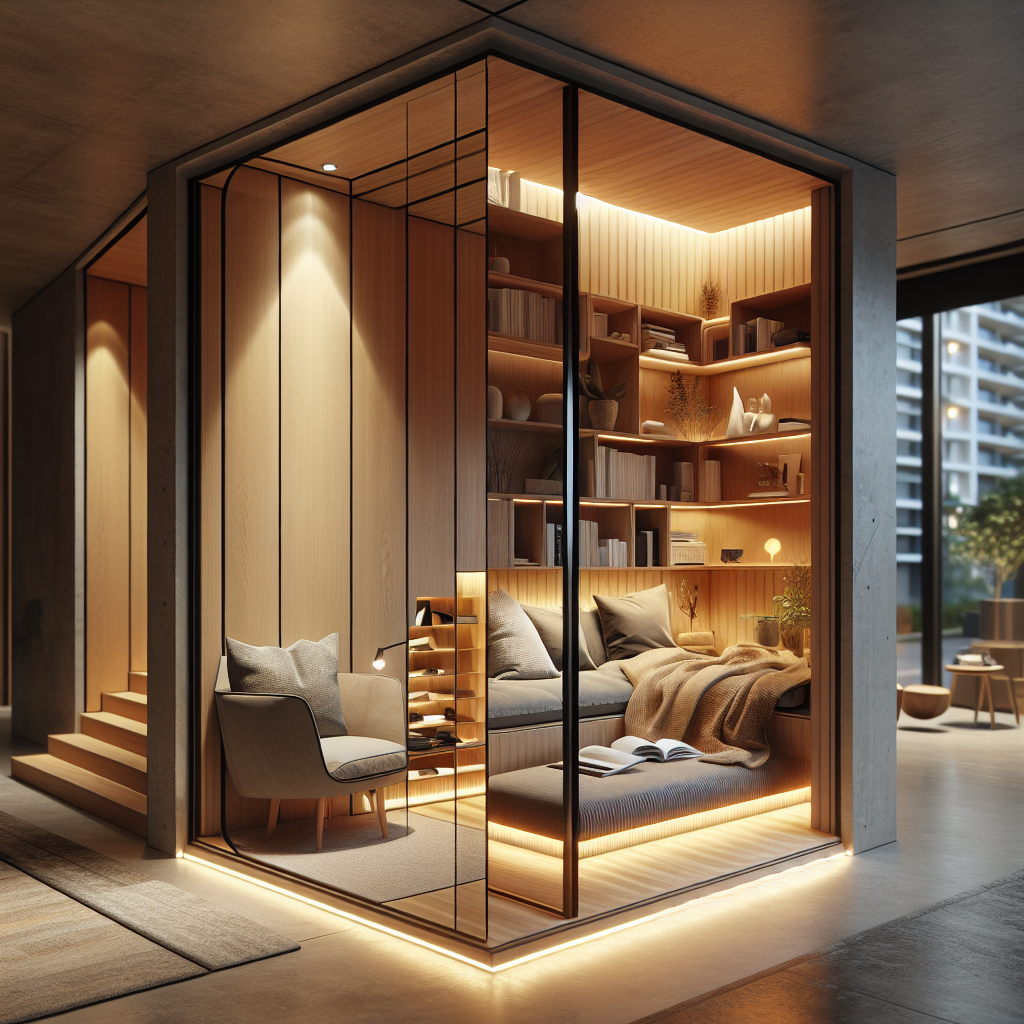
In the evolving landscape of contemporary living, the pivoting wall has emerged as one of the most ingenious spatial innovations of the decade. Once relegated to experimental architecture and avant-garde exhibitions, these transforming corners are now redefining the domestic environment—creating multifunctional home nooks that adapt to the rhythms of modern life. As urban density increases and the boundaries between work, leisure, and rest blur, architects and designers are reimagining how movement, flexibility, and intimacy can coexist within compact interiors.
The Pivot as a Design Philosophy
The concept of the pivoting wall is not merely mechanical—it is philosophical. It embodies the fluidity of contemporary life, where spaces must perform multiple roles with grace and precision. A pivoting wall can rotate, fold, or slide to reveal a hidden study, expand a living area, or enclose a quiet retreat. It transforms architecture from static composition into kinetic choreography.
Architects such as Shigeru Ban and Nendo have long explored the potential of movement in spatial design, yet the current wave of innovation is deeply tied to responsive design—a discipline that integrates mechanical systems, smart materials, and user behavior analytics to create spaces that adapt in real time. In this context, the pivoting wall becomes a living element, responsive to light, temperature, and even emotional cues.
Compact Living, Expansive Thinking
According to a 2024 report by the World Design Organization, over 60% of new urban housing developments globally are under 60 square meters. This spatial constraint has catalyzed a surge in modular and transformable architecture. Pivoting walls, in particular, allow a single area to serve as a home office by day, a dining room by evening, and a guest suite by night—without sacrificing aesthetic coherence.
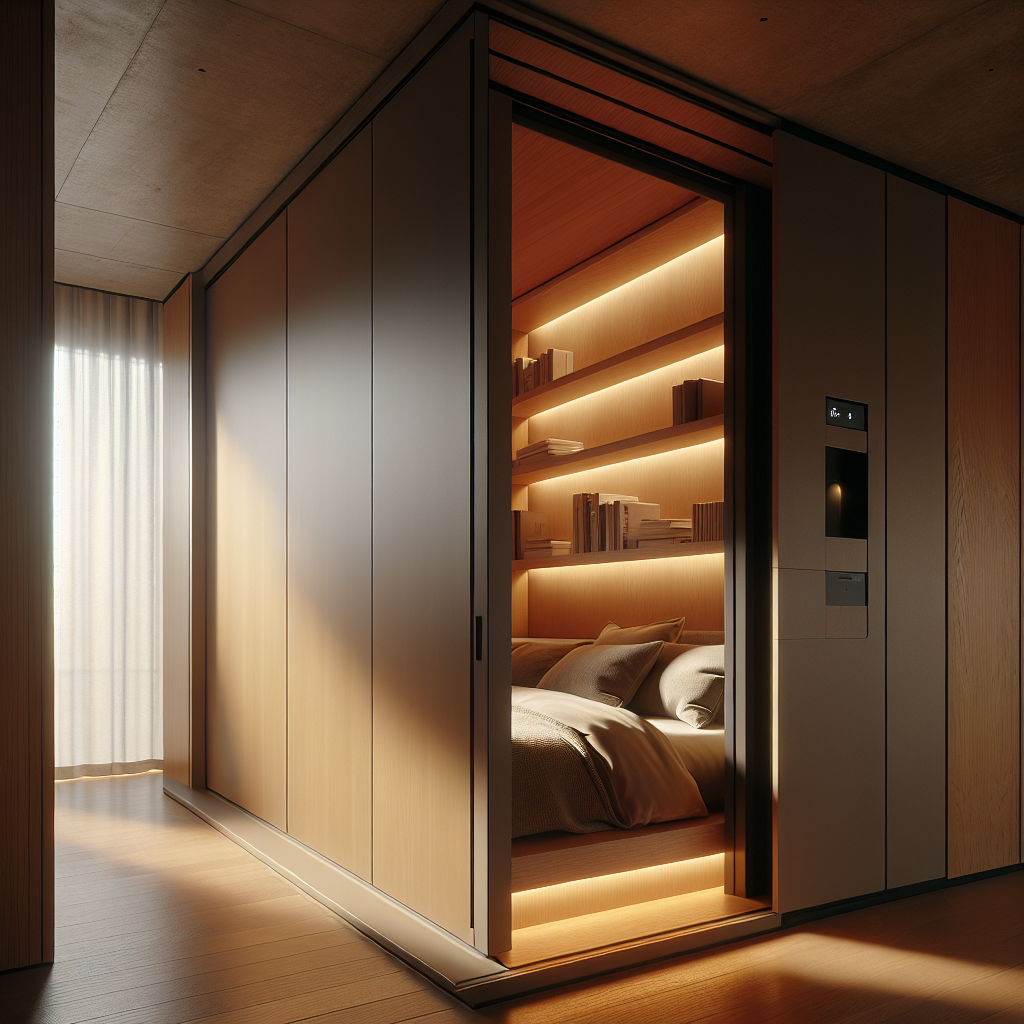
In Tokyo, for instance, the architectural firm Atelier Bow-Wow has pioneered micro-apartments where pivoting partitions redefine domestic rituals. A curved birch panel swings open to reveal a reading nook bathed in diffused light; another rotates to expose a compact kitchenette. The result is a choreography of motion that feels almost cinematic, where each rotation reveals a new narrative of living.
Engineering Elegance: The Mechanics Behind Movement
At the heart of these designs lies precision engineering. A pivoting wall typically operates on a central or offset axis, allowing it to rotate smoothly without the need for visible tracks or hinges. The hardware—often concealed within the floor and ceiling—is crafted from high-tensile steel or carbon composites to ensure stability and silence. The result is a seamless transformation that feels both effortless and magical.
Materiality plays a crucial role in the sensory experience of these moving walls. Designers are experimenting with acoustic laminates, light-diffusing glass, and reclaimed timber to balance functionality with warmth. The tactile pleasure of a pivoting oak panel or the soft glow of a frosted divider enhances the intimacy of small spaces, turning functional transitions into moments of delight.
In a similar spirit, the rise of modular design has introduced prefabricated pivoting systems that can be customized to individual layouts. These kits integrate wiring, lighting, and even ventilation within the moving wall itself, blurring the line between architecture and furniture.
Case Study: The Rotating Library Wall
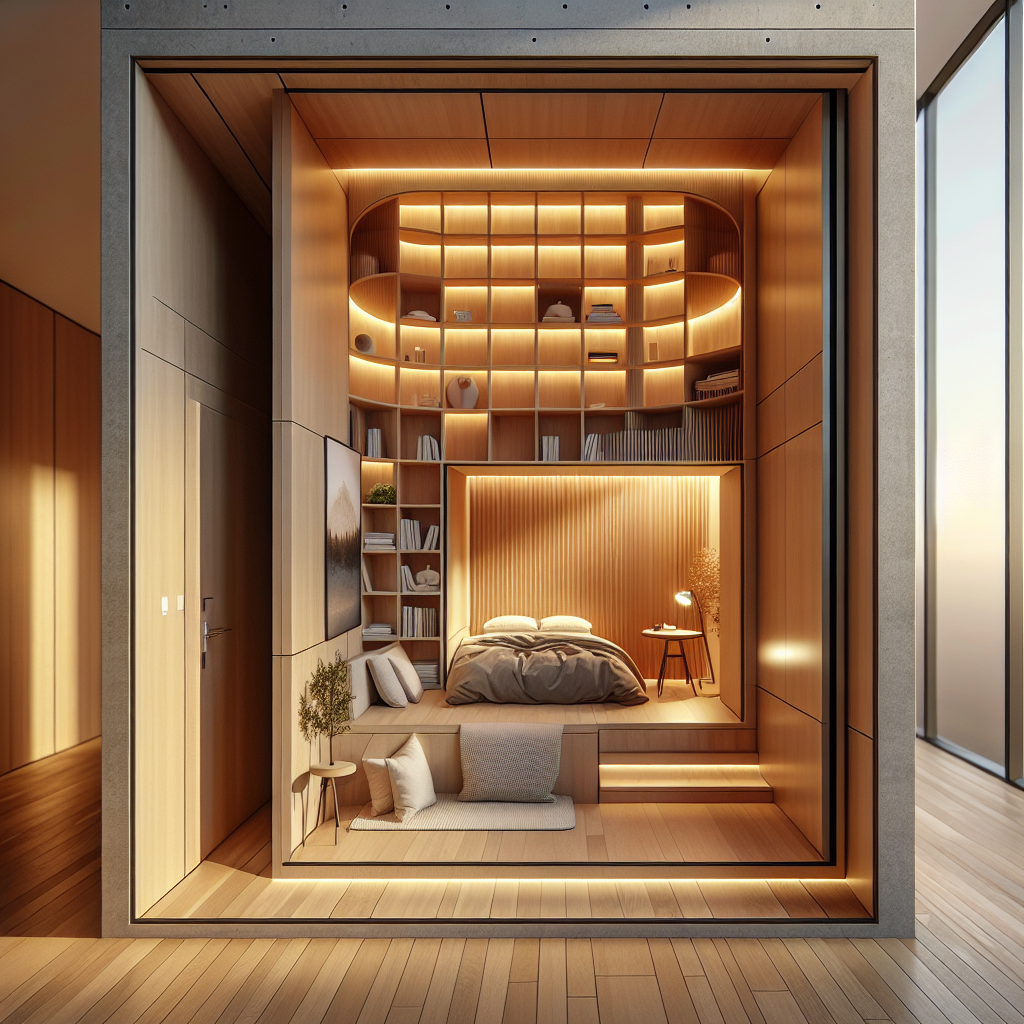
One of the most compelling examples of multifunctional pivoting design can be found in a Parisian apartment renovated by Studio Batiik. Here, a floor-to-ceiling bookshelf doubles as a rotating partition, dividing the living room from a compact bedroom. When closed, it forms a sculptural backdrop of books and ceramics; when opened, it reveals a private sleeping alcove lined with soft linen curtains. The pivoting mechanism is nearly invisible, creating a sense of quiet transformation that reflects the poetic restraint of French modernism.
This approach echoes the philosophy explored in transformative space design, where the boundary between architecture and object dissolves. The wall becomes a dynamic participant in daily life, not a static separator.
Human-Centric Flexibility
Beyond technical sophistication, the true success of pivoting walls lies in their human-centric adaptability. In a post-pandemic world where home has become both sanctuary and workspace, flexibility is no longer a luxury—it is a necessity. The ability to reconfigure one’s environment supports mental well-being, productivity, and a sense of control over one’s surroundings.
Research from the Harvard Graduate School of Design indicates that spatial adaptability directly correlates with occupant satisfaction in small dwellings. When users can modify their environment—through movable partitions, lighting, or acoustics—they report higher levels of comfort and reduced stress. This aligns with the principles of biophilic design, which emphasizes the importance of agency, natural materials, and sensory diversity in creating restorative spaces.
From Mechanism to Mood: The Aesthetics of Motion
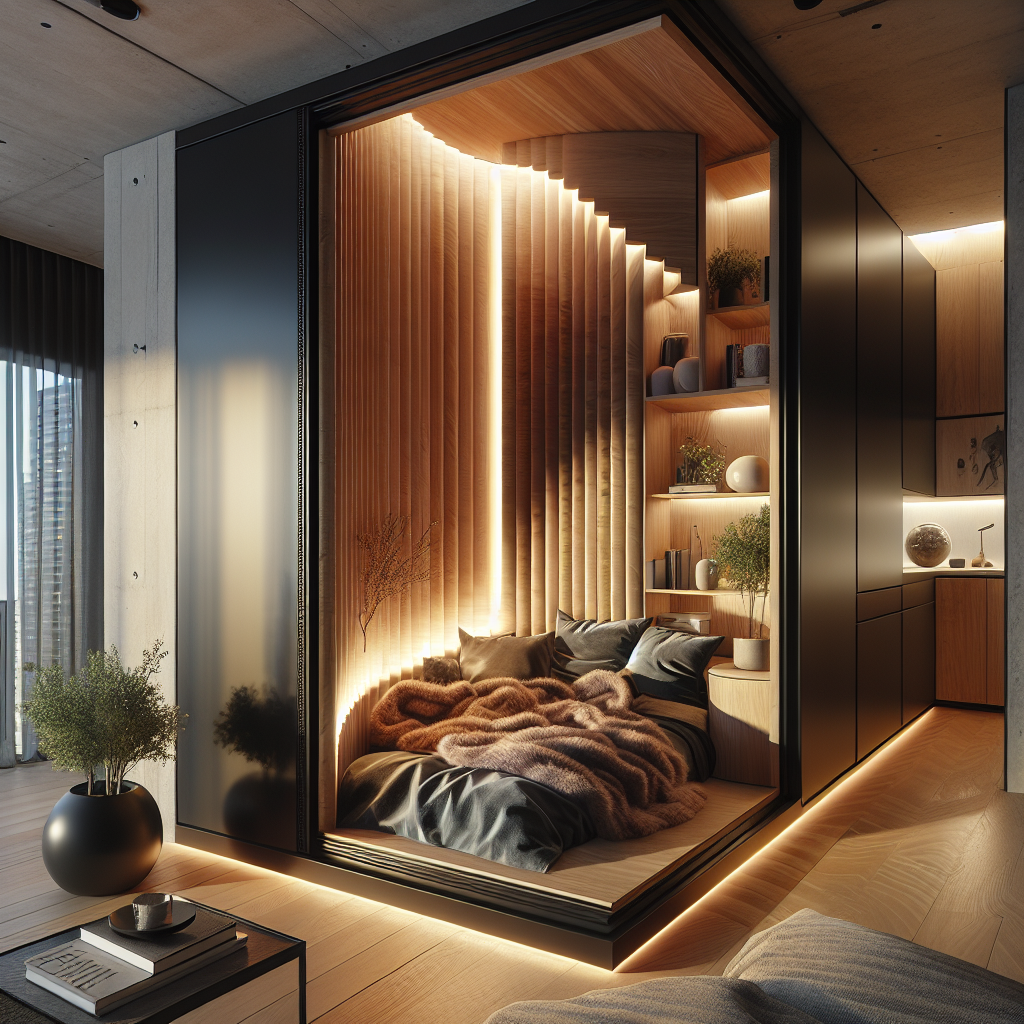
Pivoting walls are not merely practical; they are profoundly aesthetic. Their movement introduces rhythm and anticipation into domestic life. A matte black steel panel rotating to reveal a sunlit studio evokes the drama of stagecraft. A translucent resin divider that pivots to diffuse morning light creates a living painting of shadows and reflections. Designers are increasingly treating these transitions as performative gestures—moments that engage the senses and elevate the mundane.
In Milan’s latest design fairs, several studios showcased kinetic partitions integrated with ambient lighting and smart sensors. These walls adjust opacity and color temperature based on circadian rhythms, subtly guiding occupants through the day. The fusion of technology and craftsmanship recalls the balance explored in craftsmanship-driven modern interiors, where innovation serves emotion rather than spectacle.
Sustainability and the Circular Pivot
As sustainability becomes a non-negotiable in design, pivoting systems are being reimagined through the lens of the circular economy. Many contemporary manufacturers now produce modular pivoting panels using recycled aluminum frames and bio-based composites. These systems can be disassembled, repaired, and reused—aligning with the principles of circular design and reducing lifecycle waste.
Moreover, by enabling smaller living spaces to perform multiple functions, pivoting walls contribute to the broader sustainability narrative: they allow urban dwellers to live comfortably in compact footprints, reducing the demand for larger, resource-intensive homes. This micro-scale efficiency reflects a macro-scale ecological intelligence.
The Future of Adaptive Interiors
Looking ahead, the evolution of pivoting walls will likely intersect with advancements in robotics, AI, and material science. We are already witnessing prototypes of walls that respond to voice commands, adjust their angle for optimal daylight, or integrate OLED panels for immersive digital art displays. As homes become more intelligent, the pivoting wall may soon act as both a spatial and informational interface—a tactile screen that connects architecture to data.
Yet the enduring appeal of these systems lies not in their technology, but in their humanity. They offer a tangible expression of flexibility, intimacy, and curiosity—qualities that define the best of contemporary design. In a world where permanence feels increasingly elusive, the ability to pivot—both literally and metaphorically—has never been more relevant.
In the quiet revolution of domestic architecture, the pivoting wall stands as a symbol of transformation: a reminder that even the smallest corner can become a stage for infinite possibilities.
Keywords: pivoting walls, multifunctional home nooks, transforming corners, adaptive interiors, modular design, responsive architecture, kinetic partitions, sustainable design