
The Womb Room: Why 2026 Interiors Are Removing All Sharp Corners
The Womb Room: Why 2026 Interiors Are Removing All Sharp Corners
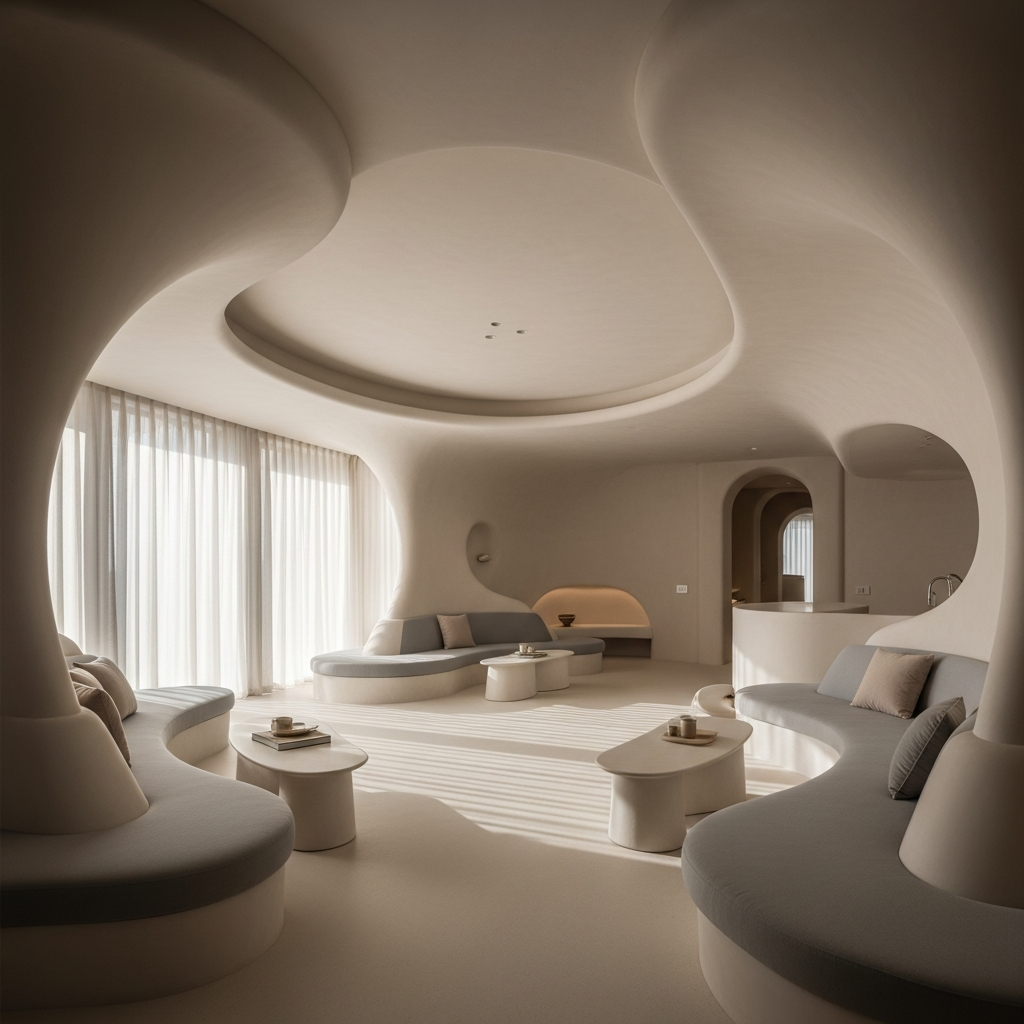
In 2026, the geometry of comfort has softened. Across luxury apartments in Copenhagen, wellness spas in Kyoto, and boutique offices in Los Angeles, the hard-edged minimalism that once defined contemporary interiors is giving way to something far more tactile and nurturing. Designers are rounding off corners, curving walls, and sculpting spaces that cocoon rather than confront. This new aesthetic—informally dubbed “The Womb Room”—marks a profound shift in how we perceive safety, intimacy, and sensory well-being within the built environment.
The Psychology of Curves
Neuroscientists have long known that humans instinctively respond to curvature. A 2013 study published in the Psychology of Aesthetics, Creativity, and the Arts found that people consistently rate curved spaces as more beautiful and emotionally calming than angular ones. The brain associates soft edges with safety—an evolutionary echo of organic forms found in nature and the human body. In 2026, interior designers are translating this biological preference into spatial form, creating environments that soothe overstimulated minds.
Architectural psychologist Dr. Helena Ortiz calls it “neuro-empathic design.” She explains, “After years of living in sharp, rectilinear spaces, people are craving environments that feel maternal—spaces that hold them rather than display them.” The Womb Room aesthetic, she argues, is not merely decorative but deeply psychological, responding to the collective fatigue of an anxious era.
Material Softness Meets Structural Innovation
Rounded interiors are not just about form—they’re about feel. Designers are experimenting with pliable materials that blur the line between architecture and upholstery. Foam-backed plaster, microcement with elastic polymers, and bio-based resins derived from algae are allowing walls to bend gently without cracking. The tactile dimension of these innovations recalls the biophilic design movement, which also sought to reconnect occupants with natural comfort through texture and form.
Meanwhile, advances in 3D printing and digital fabrication are enabling seamless transitions between surfaces. Curves flow uninterrupted from ceiling to wall to floor, erasing the traditional architectural hierarchy of planes. The result is a continuous, enveloping spatial experience—one that feels less like entering a room and more like being absorbed by it.
From Brutalism to Benevolence
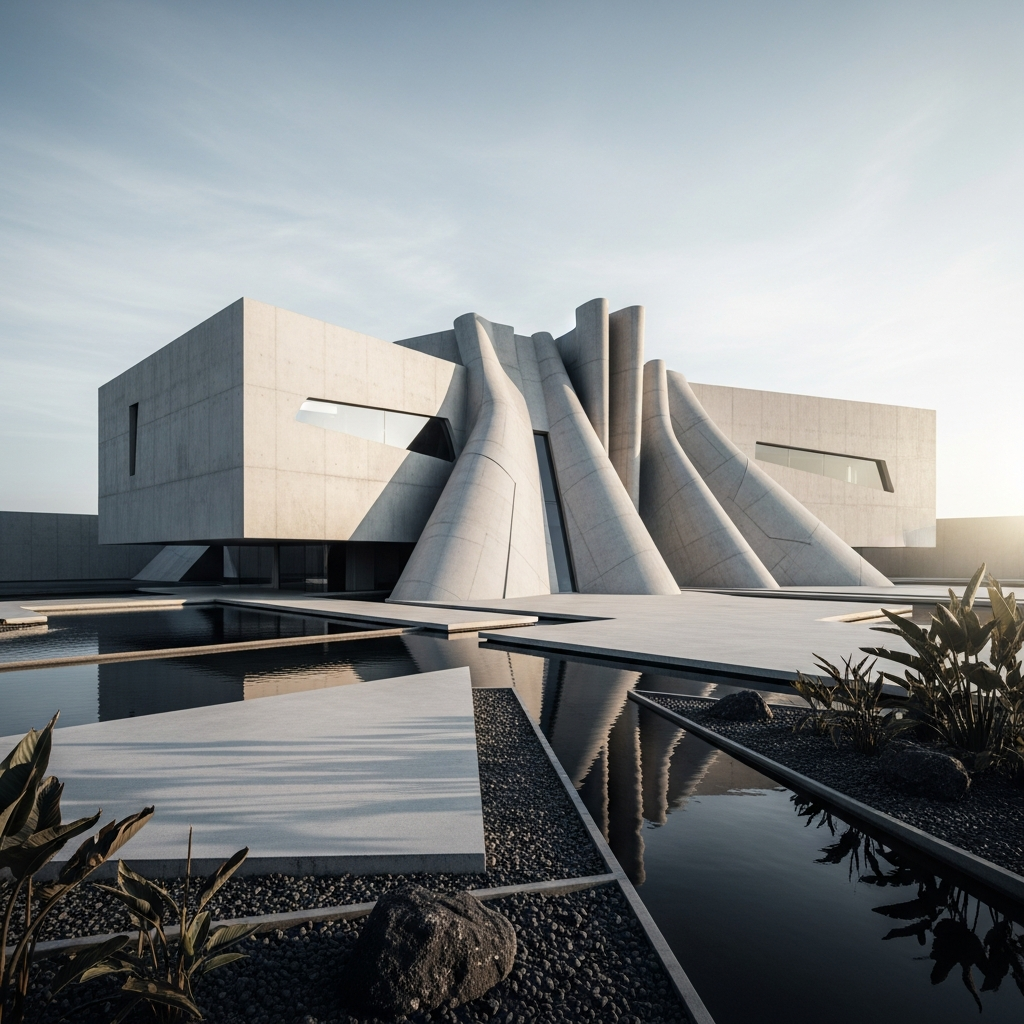
The shift toward softness represents a striking counterpoint to the hard geometries of the past century. The concrete austerity of Brutalism, once celebrated for its honesty and strength, now feels emotionally distant. Yet the new softness does not reject Brutalism entirely—it reinterprets it. The emerging “Soft Brutalism” movement, explored in recent architectural analyses, fuses the mass and materiality of concrete with the sensuality of rounded forms. The result is a dialogue between solidity and empathy, between monumentality and touch.
In Tokyo, architect Naoko Fujimoto’s “Cloud Capsule” apartment complex demonstrates this beautifully. Its concrete walls curve inward at the corners, and even door frames are softened into ovals. The building feels both futuristic and primal—a sanctuary designed for a species rediscovering its need for gentleness.
Wellness as Spatial Philosophy
As wellness architecture continues to evolve, the Womb Room aesthetic aligns perfectly with the growing emphasis on emotional ergonomics. Beyond lighting and air quality, designers are now considering how spatial geometry affects the nervous system. The Architectural Digest Wellness Report 2025 identified “curvilinear calm” as one of the top trends shaping post-pandemic interiors, noting that rounded environments reduce stress and promote slower, more mindful movement.
At the forefront of this movement are hybrid spaces—part spa, part home, part digital retreat. Designers are merging tactile minimalism with smart technologies that respond to mood and motion. This echoes the principles discussed in smart home innovation, where adaptive systems enhance comfort without intruding on the sensory harmony of a space.
Crafting Calm: The Return of the Artisan
Curves demand craftsmanship. Unlike the modular precision of right angles, organic forms require a sculptor’s touch. Artisans are once again central to the design process, hand-finishing plaster, bending wood veneers, and weaving textiles that follow the flow of architecture. This revival of tactile making recalls the ethos of the Bauhaus, yet reinterprets it for an age that values emotion as much as efficiency.
In Milan, designer Sofia Bianchi’s atelier produces custom “soft joinery”—furniture that merges seamlessly with walls, eliminating visual clutter. Her pieces embody what she calls “spatial empathy,” a philosophy that prioritizes the body’s comfort over visual spectacle. It’s a sentiment shared by many in the sustainable design community, who see the elimination of sharp corners as both an aesthetic and ethical gesture: a move toward spaces that care for their inhabitants.
Curves in the Age of Climate Consciousness
There’s also a sustainability argument behind the curve. Rounded forms distribute structural stress more efficiently, allowing for thinner walls and less material waste. When paired with natural materials—like compressed earth, hempcrete, or reclaimed timber—the result is both energy-efficient and emotionally restorative. This aligns with the broader movement toward biodegradable architecture, where design and ecology merge into a single, regenerative system.
According to the Royal Institute of British Architects, circular design principles are increasingly influencing interior geometry. Curves, they note, not only reduce material stress but also encourage natural airflow and acoustic balance—two factors that significantly improve indoor environmental quality.
The Future Is Soft
By 2026, the hard-edged aesthetic of the early 21st century feels like a relic of a more anxious, performative time. The Womb Room is not just a design trend—it’s a cultural recalibration. It speaks to a generation seeking refuge from overstimulation, from digital glare, from the angular pace of modern life. In its place, we find a new domestic sensuality: rooms that breathe, bend, and embrace.
As interiors continue to evolve, one truth emerges: the future of design is not sharper, faster, or colder—it’s softer, slower, and infinitely more human.
{
  "seo_title": "The Womb Room: Soft Interiors of 2026",
  "meta_description": "Discover why 2026 interiors are removing sharp corners. Explore the Womb Room trend and its impact on wellness and design psychology.",
  "excerpt": "What happens when architecture learns to embrace us? The Womb Room trend of 2026 replaces sharp corners with soft, soothing curves for mindful living.",
  "focus_keyphrase": "2026 interiors removing sharp corners"
}
AI Image Prompts
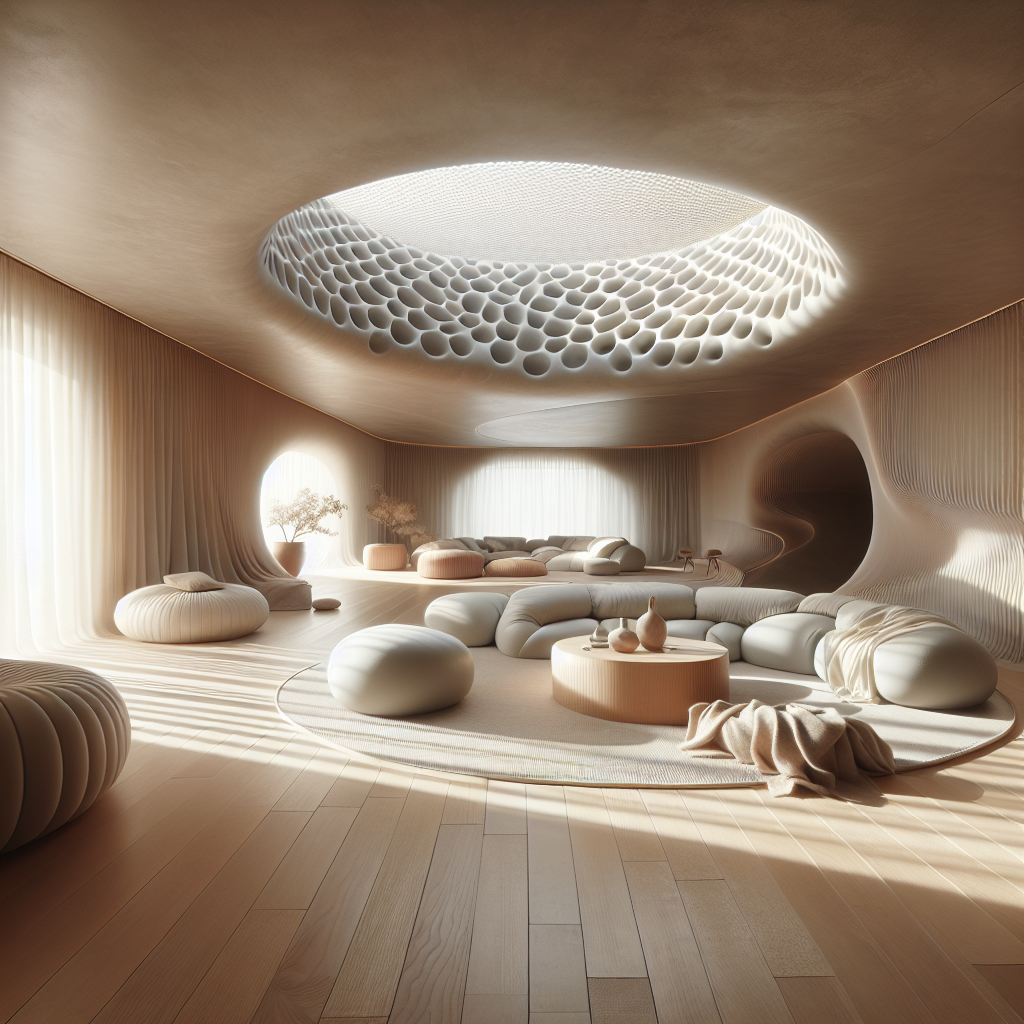
- Prompt: Photorealistic interior of a minimalist living room with rounded walls, seamless curved ceiling, and soft neutral tones, shot on a Hasselblad H6D, natural morning light filtering through sheer curtains.
Alt text: Curved minimalist living room with soft neutral palette and rounded architecture.
Caption: The new geometry of comfort—curves replacing corners in serene 2026 interiors. - Prompt: High-end spa corridor with continuous curved walls, indirect lighting, and organic textures, captured in ultra-high resolution on a Hasselblad X2D.
Alt text: Curved spa corridor with ambient lighting and organic textures.
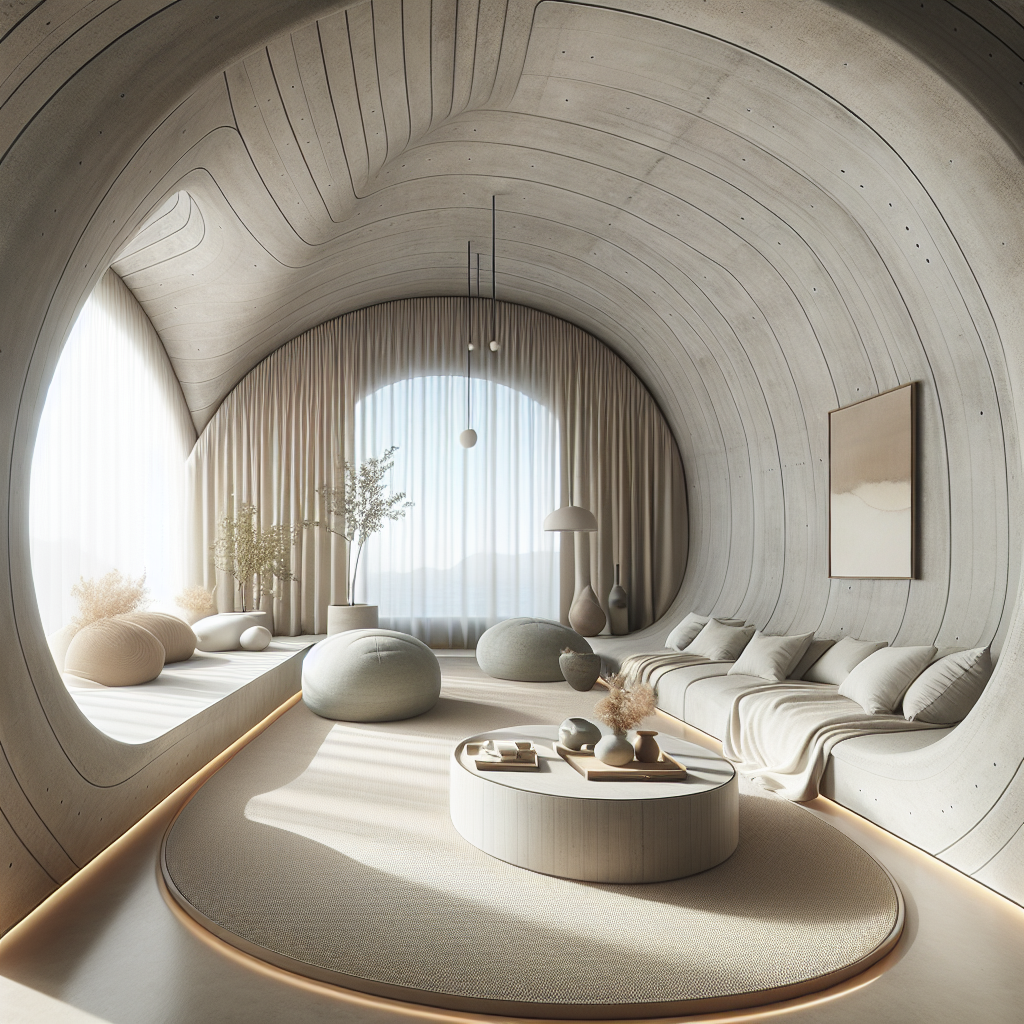
Caption: Wellness redefined: a passage that soothes both body and mind. - Prompt: Cozy reading nook integrated into a rounded alcove, upholstered in boucle fabric, with a sculptural lamp and low natural light, photographed on a Hasselblad H5D.
Alt text: Rounded reading nook with boucle upholstery and soft lighting.
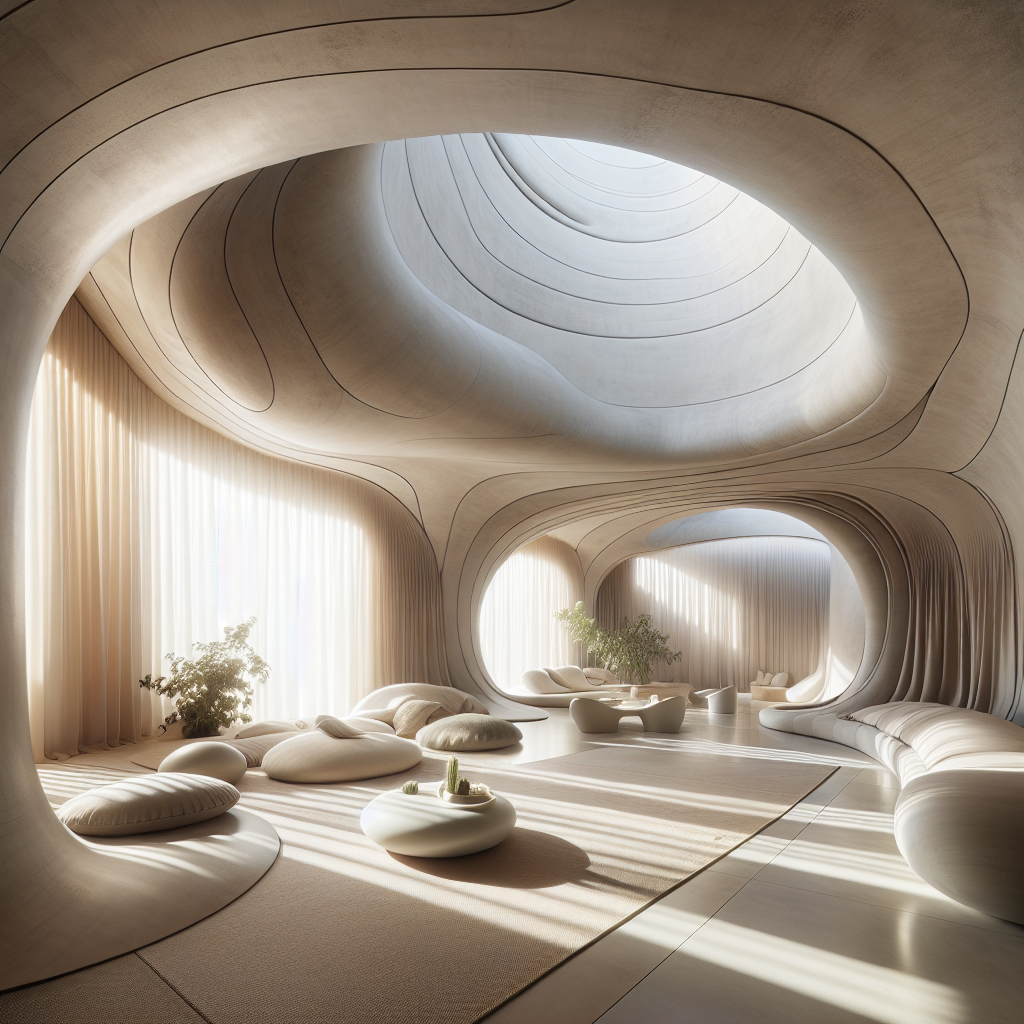
Caption: Intimacy through design—spaces that hold rather than display. - Prompt: Futuristic office pod with curved glass partitions, matte concrete floors, and warm ambient lighting, captured on a Hasselblad X1D II 50C.
 ×
×❮ ❯