
The Rise of Smart Street Furniture: Benches, Lights, and Bins That Think
The Rise of Smart Street Furniture: Benches, Lights, and Bins That Think
Once a static backdrop to urban life, street furniture—benches, lights, bins, and bus shelters—has evolved into a dynamic interface between citizens and the city itself. In the age of the smart city, these once-mundane objects are being reimagined as intelligent, responsive, and sustainable infrastructures that not only serve but also communicate, collect data, and even generate energy. This quiet revolution in urban design is transforming how we experience public space, blending technology, architecture, and social innovation into a seamless urban fabric.
From Passive Objects to Active Systems
Street furniture has long been an indicator of civic pride and design sophistication. From the cast-iron benches of 19th-century Paris to the sleek aluminum bus stops of mid-century Los Angeles, these fixtures have mirrored the aesthetic and technological aspirations of their time. Today, the integration of Internet of Things (IoT) technologies is redefining their purpose entirely. According to a 2025 report by the Smart City Council, over 60% of major global cities have begun implementing connected street furniture as part of their urban infrastructure strategies.
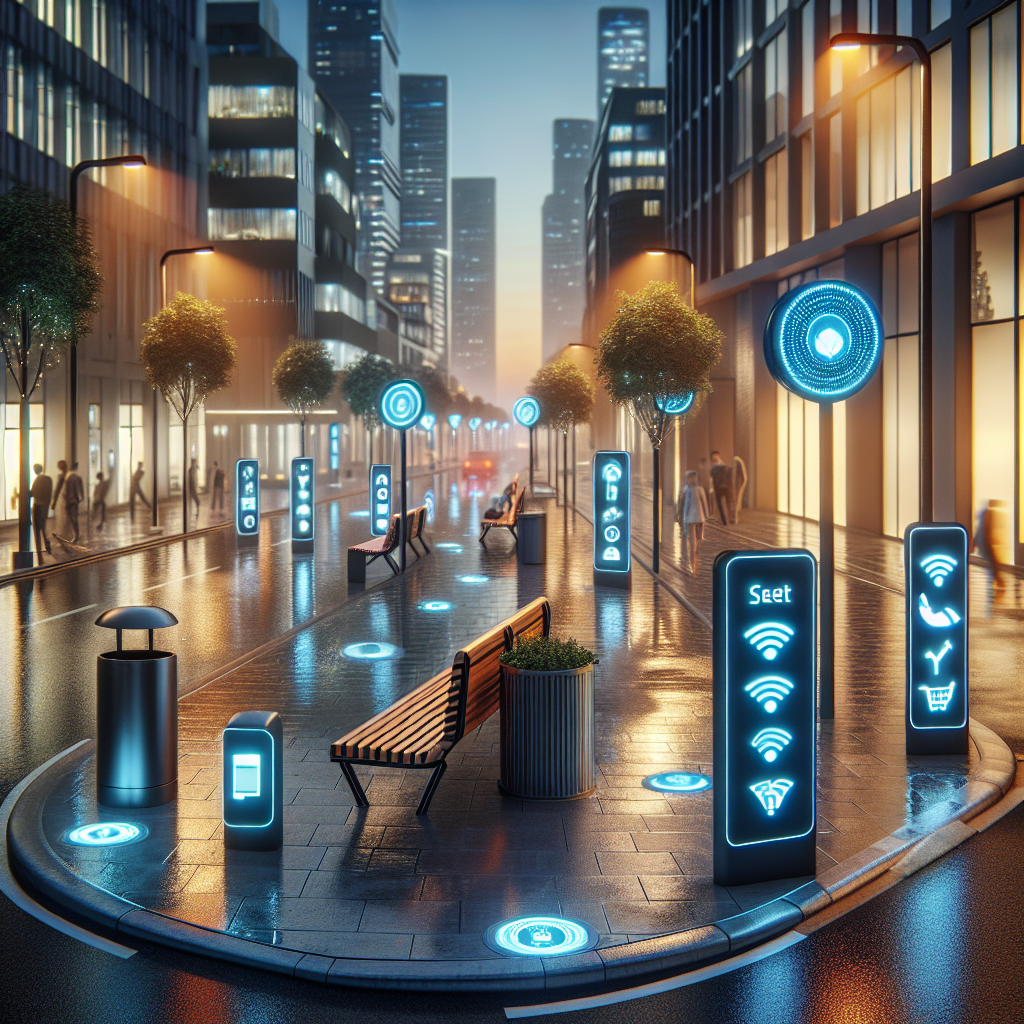
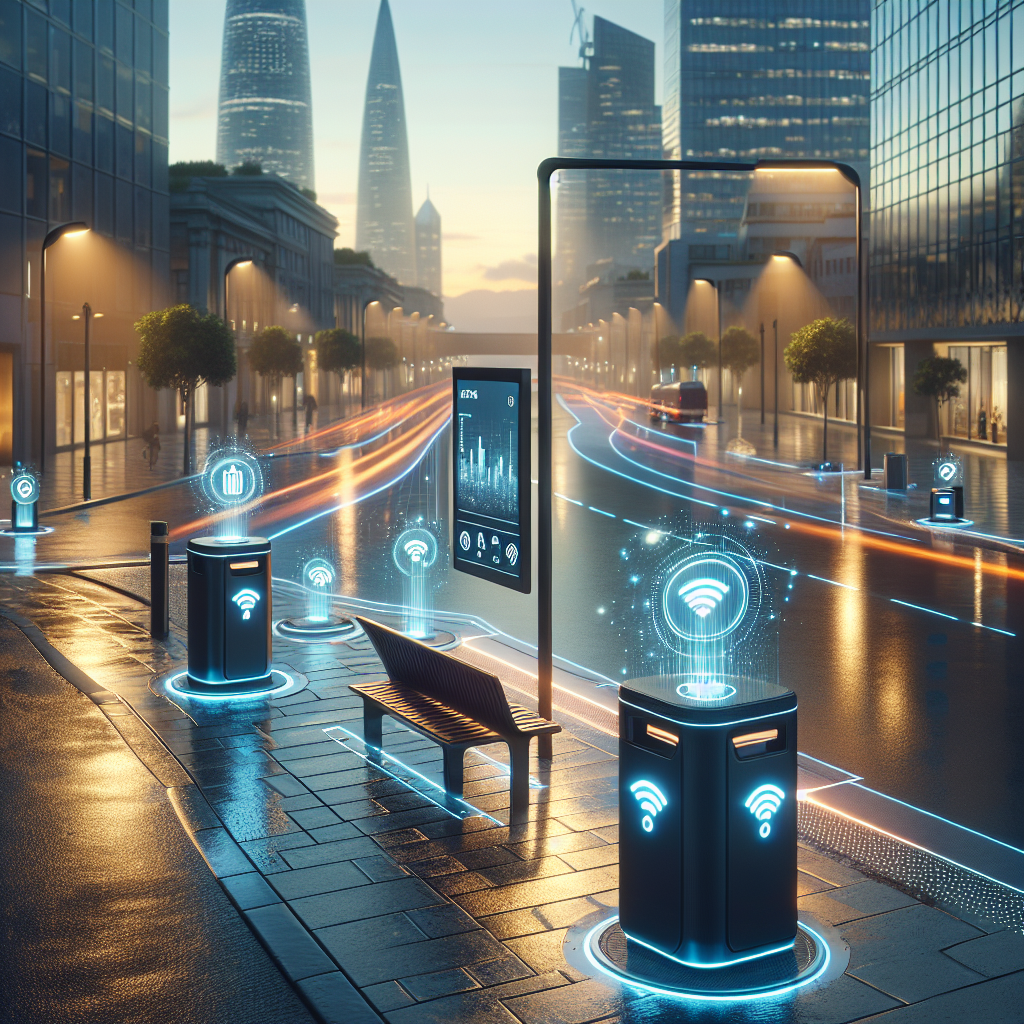
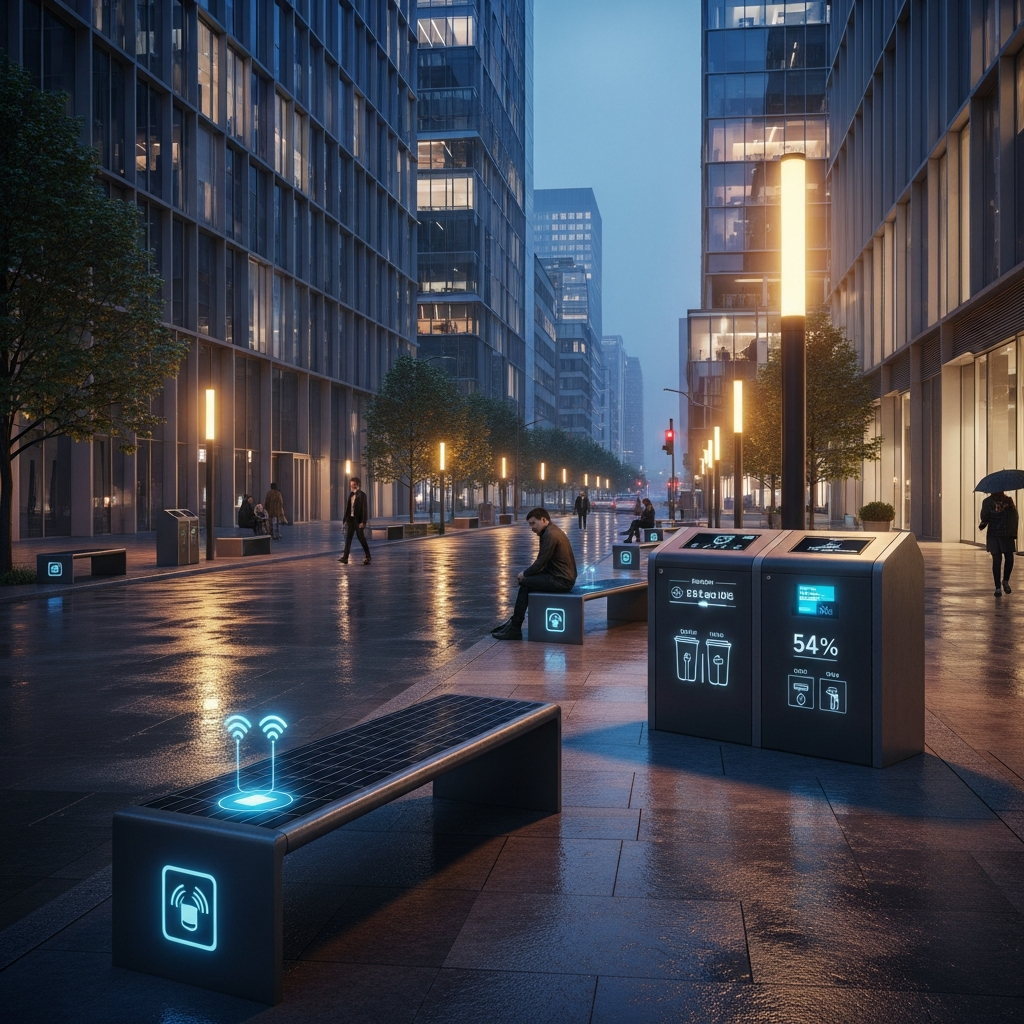
These objects now act as micro-nodes in a vast urban network—collecting environmental data, optimizing energy use, and enhancing public safety. Smart benches can charge phones using solar power, while bins monitor their own fill levels and alert waste management systems when they need emptying. Even streetlights, once purely functional, now adjust brightness based on pedestrian movement, reducing energy consumption and light pollution.
Design Meets Data: The Aesthetics of Intelligence
For architects and designers, the challenge lies in merging technology with urban aesthetics. The best examples of smart street furniture design don’t flaunt their intelligence—they integrate it subtly. Consider the Steora bench by Include, a Croatian company whose solar-powered benches feature wireless charging, Wi-Fi, and environmental sensors, all housed within a minimalist, weather-resistant form. Its smooth, monolithic silhouette recalls the quiet confidence of contemporary architectural trends that value restraint and material honesty.
Similarly, the Philips Intellistreets lighting system transforms traditional lampposts into multifunctional urban devices. These poles can broadcast public announcements, monitor air quality, and even serve as emergency communication points. Yet visually, they remain understated—slender metallic spines that blend effortlessly into the cityscape. The fusion of form and function here echoes the Bauhaus principle that design should serve both beauty and utility, a lineage explored in our analysis of the Bauhaus movement.
Urban Sustainability and the Power of Self-Sufficiency
Beyond connectivity, the new generation of smart street furniture is increasingly self-sustaining. Solar panels, kinetic energy harvesters, and rainwater collection systems are turning public installations into micro power plants. This aligns with the broader architectural movement toward net-zero design, where structures generate as much energy as they consume. A recent study by the International Energy Agency revealed that integrating renewable energy into urban infrastructure could reduce municipal energy costs by up to 40% by 2030.
In Copenhagen, the “Smart Urban Furniture” initiative combines photovoltaic panels with modular design, creating benches and shelters that not only power themselves but also feed surplus energy back into the grid. The concept resonates with the principles discussed in our exploration of net-zero pathways in design—where innovation and sustainability are not opposing forces but mutually reinforcing ambitions.
Smart Bins and the Circular City
Among the most transformative innovations are smart waste systems. In cities like Singapore and Amsterdam, bins equipped with sensors and compactors have drastically improved waste collection efficiency. These bins communicate in real time with municipal services, optimizing collection routes and reducing unnecessary fuel consumption. Some even use AI-driven analytics to predict waste patterns based on time of day or event schedules.
Beyond efficiency, these systems contribute to the emerging concept of the circular city—an urban ecosystem designed to minimize waste and maximize resource reuse. This philosophy parallels the ethos of zero-waste architecture, where materials and systems are conceived for perpetual regeneration. In this context, the humble bin becomes a symbol of systemic intelligence—a node in a network that redefines urban metabolism.
Streetlights That Sense and Respond
Lighting has always shaped the emotional tone of a city. The golden glow of sodium lamps once lent streets a cinematic warmth, while today’s LEDs bring precision and control. Smart lighting takes this further by integrating sensors, cameras, and adaptive algorithms. In Barcelona, for instance, the city’s Sentilo platform connects thousands of streetlights that dim or brighten based on pedestrian flow, weather conditions, and even lunar cycles. The result is not only energy efficiency but also a more humane urban rhythm—streets that breathe with the life around them.
Some designers are experimenting with bioluminescent or kinetic lighting concepts, merging technology with nature and movement. These ideas recall the organic interplay between light and architecture explored in bioluminescent design research, where illumination becomes both functional and poetic. Imagine a lamppost that glows softly as you approach, then fades as you leave—a choreography of light and presence that redefines public intimacy.
Human-Centered Design in the Age of the Smart City
While the technological potential of smart street furniture is vast, its true success depends on human experience. Designers must ensure that these systems enhance, rather than alienate, urban life. A bench that charges your phone is useful; a bench that invites conversation, rest, and reflection is transformative. The best projects merge digital intelligence with emotional intelligence—they sense not only data but also human need.
Take London’s “Hello Lamp Post” initiative, which allows citizens to interact with street furniture via text message. A lamppost might share local history, or a bench might ask how your day is going. It’s a whimsical yet profound experiment in urban empathy, suggesting that technology can foster connection rather than isolation. Such projects hint at a future where public infrastructure becomes a medium for storytelling, dialogue, and shared identity.
Challenges and Ethical Dimensions
As with all connected systems, smart street furniture raises questions about privacy, data ownership, and long-term maintenance. Who controls the data collected by these objects? How do we ensure that surveillance doesn’t overshadow service? The General Data Protection Regulation (GDPR) in Europe has already prompted cities to adopt stricter data governance models, ensuring transparency and citizen consent. Ethical design frameworks are becoming as essential as aesthetic ones.
Moreover, the durability and reparability of these installations are critical. As cities embrace high-tech infrastructure, designers must avoid creating future e-waste. Modular components, open-source software, and standardized parts can ensure longevity and adaptability—principles already influencing sustainable product design worldwide.
The Future of Urban Intelligence
Smart street furniture represents more than a technological upgrade—it signals a paradigm shift in how we conceive public space. The city is no longer a static environment but a living organism, capable of sensing, learning, and evolving. As architects and designers, we stand at the threshold of a new urban renaissance, where the boundary between the built environment and digital intelligence dissolves into a seamless continuum.
In this emerging landscape, every bench, light, and bin becomes a storyteller, a sensor, and a steward of sustainability. The streets of tomorrow will not only serve us—they will know us, adapt to us, and perhaps even care for us. And in that reciprocity lies the true promise of design: a city that thinks, feels, and grows alongside its people.
By merging data with design, intelligence with empathy, and technology with beauty, smart street furniture is quietly scripting the next chapter of urban life—one where the city itself becomes the ultimate designer.
Keywords: smart street furniture, smart city design, urban innovation, intelligent benches, adaptive lighting, IoT architecture, sustainable urban design