
The healing library: integrating therapy rooms among reading nooks
The Healing Library: Integrating Therapy Rooms Among Reading Nooks
Once a quiet refuge for the mind, the library is evolving into a sanctuary for the whole self. Across the world, architects and interior designers are reimagining these civic and private spaces as healing environments—places where reading, reflection, and therapy coexist. The “healing library” is not a metaphor; it’s a tangible design movement that merges bibliotherapy, spatial psychology, and wellness architecture into a single, cohesive typology. As mental health becomes a central concern in contemporary design, the library’s hushed corridors are being redefined as immersive zones for emotional restoration.
From Silent Study to Sensory Sanctuary
Historically, libraries have always been associated with introspection. Yet, their architecture often prioritized silence over comfort, and order over emotion. The 21st-century reinterpretation shifts this paradigm. The new healing library blends biophilic design, acoustic modulation, and sensory zoning to create spaces that nurture both intellectual and psychological well-being. It’s a natural evolution of the biophilic design movement, which has already demonstrated measurable benefits for stress reduction and cognitive function.
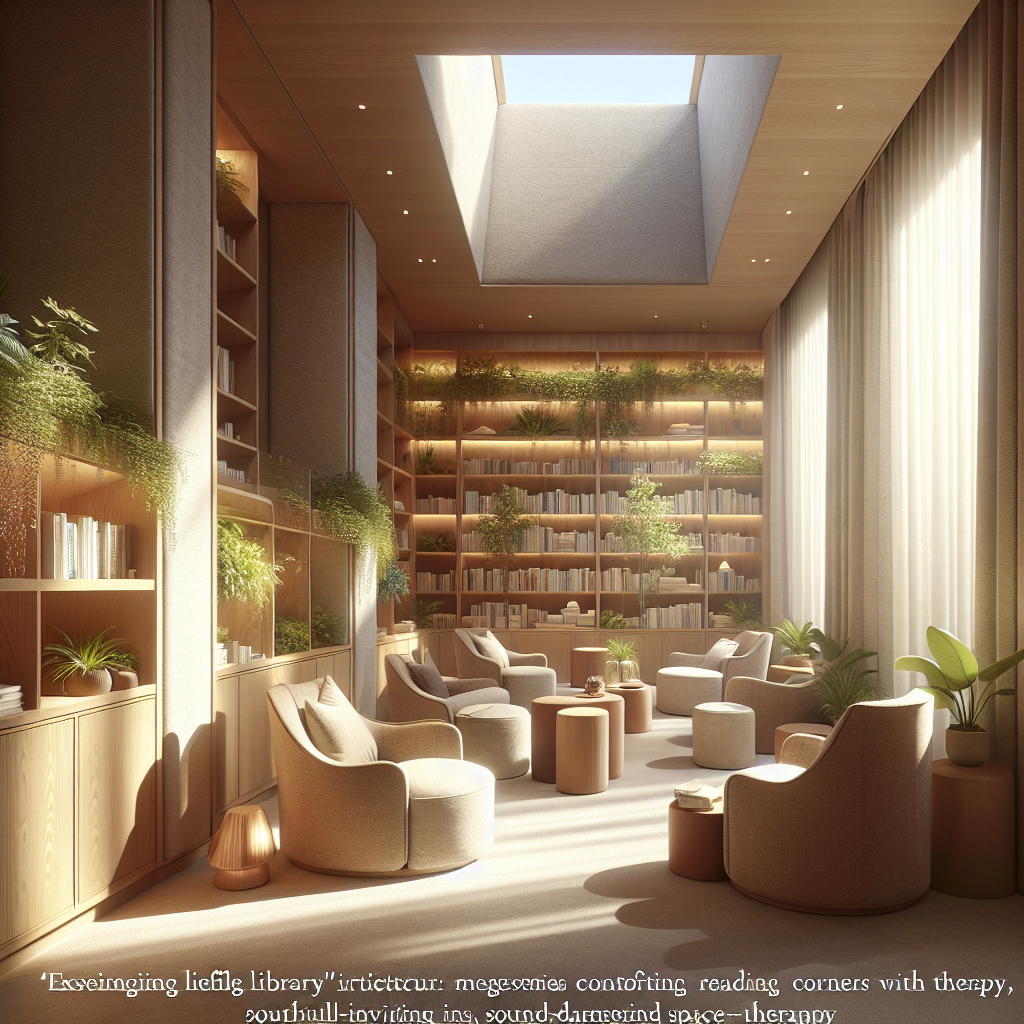
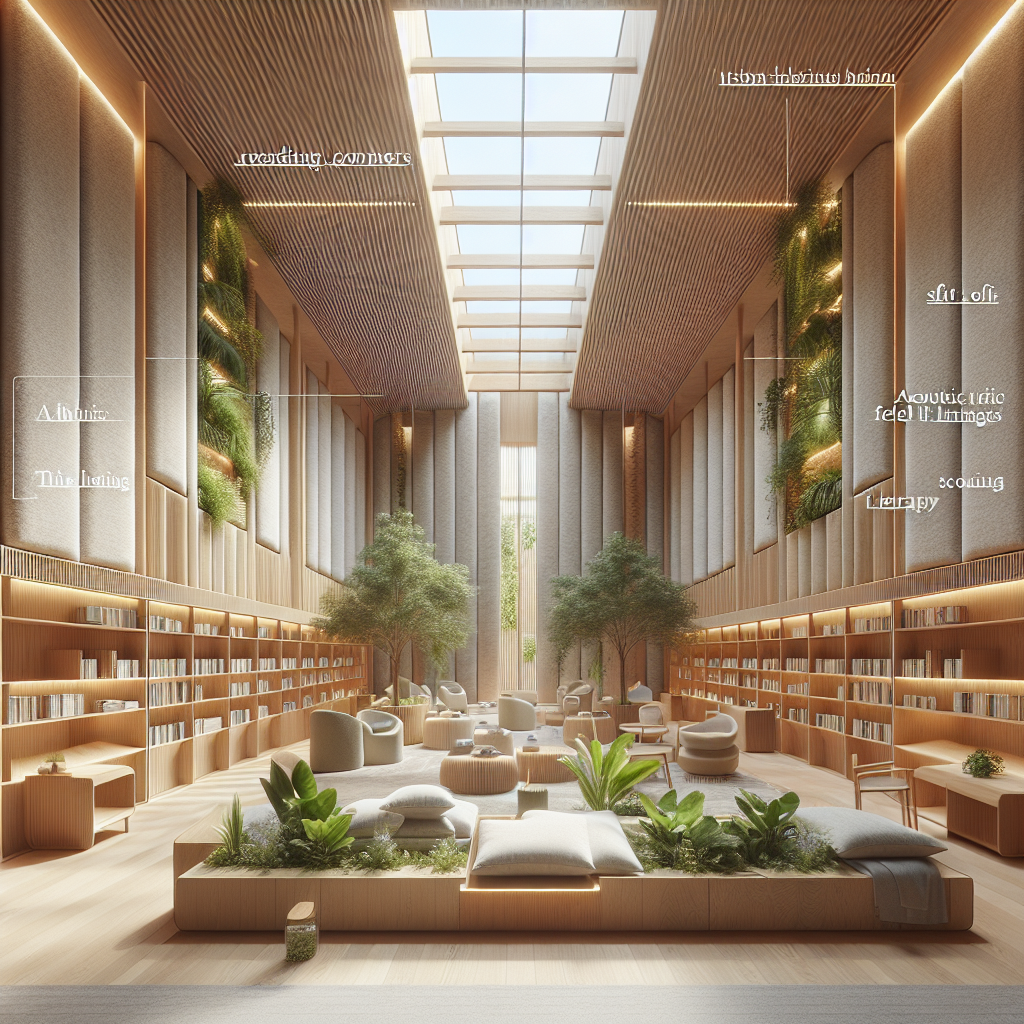
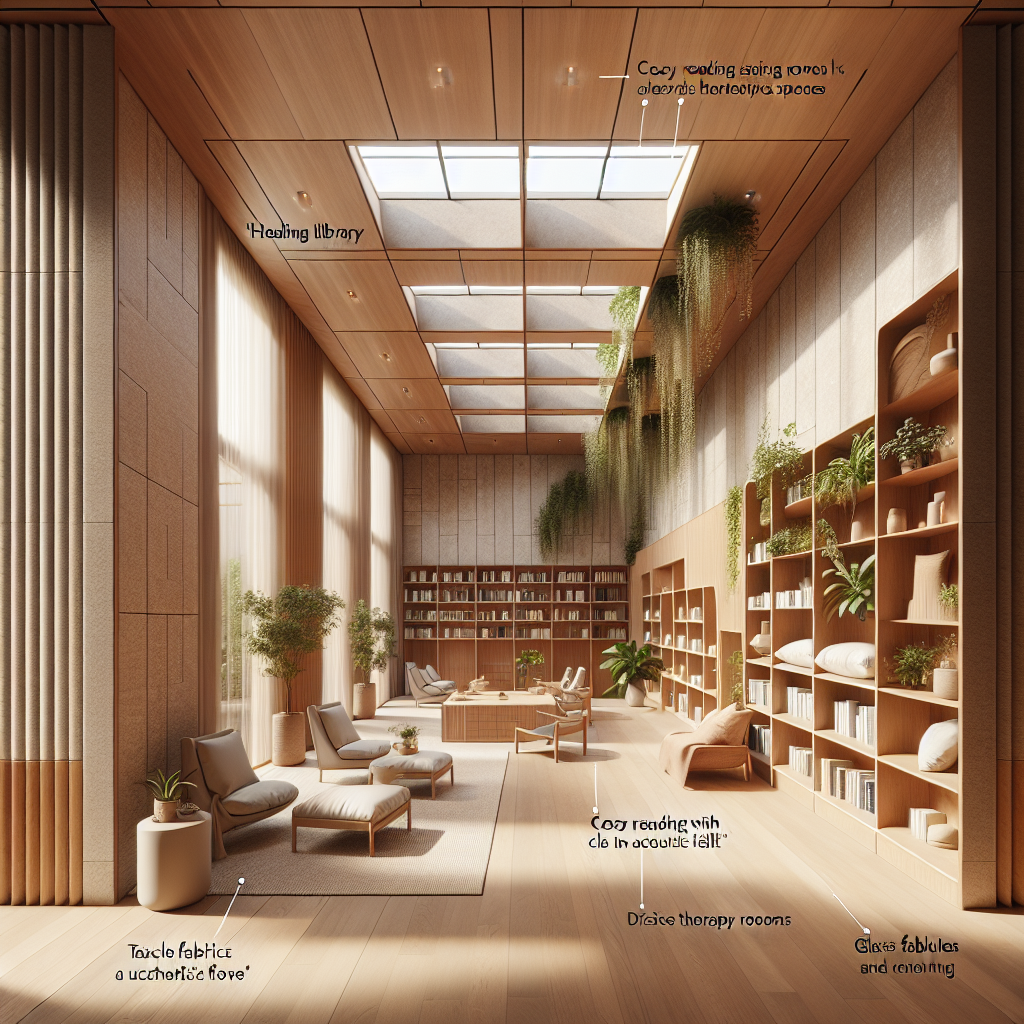
In this new model, reading nooks are not merely functional alcoves—they are micro-sanctuaries. Imagine alcoves lined with warm oak panels, diffused daylight filtering through translucent skylights, and low, rhythmic soundscapes that emulate the rustle of leaves. Adjacent to these nooks, therapy rooms are discreetly integrated, offering privacy without isolation. The transition between the two zones is seamless, guided by subtle material changes—perhaps a shift from tactile wool carpeting to smooth terrazzo flooring, or from vertical timber slats to soft acoustic felt walls.
Architectural Strategies for Emotional Well-Being
Designing a healing library requires more than aesthetic sensitivity; it demands a deep understanding of environmental psychology. According to research published by the Environmental Psychology discipline, spatial layout, lighting, and materiality directly influence emotional states. Architects are now leveraging these insights to create spaces that modulate mood and foster mindfulness.
One emerging strategy is the use of progressive spatial intimacy. Visitors move from open, communal reading areas into progressively quieter, cocoon-like rooms. These transitions are orchestrated through architectural gradients—lower ceiling heights, dimmer lighting, and increasingly tactile materials. The effect is almost cinematic: a gradual descent into calm.
Another key principle is multi-sensory layering. Designers integrate olfactory and auditory cues—such as essential oil diffusers or sound-absorbing panels shaped like leaves—to evoke tranquility. In some libraries, therapy rooms are equipped with circadian lighting systems that adjust color temperature throughout the day, aligning with the body’s natural rhythms. This mirrors the kind of responsive design seen in adaptive architectural environments where spaces evolve in real time to support human needs.
Case Studies: Healing Through Design
In Copenhagen, the recently completed “Mindful Library” by Studio Kjaerholm redefines the civic library as a therapeutic commons. Its layout intersperses reading pods with counseling rooms and meditation alcoves. The design’s palette—muted clay tones, untreated wood, and linen upholstery—creates a tactile warmth that encourages relaxation. The architects describe it as “a building that listens.”
Meanwhile, in Tokyo, the “Bibliotherapy Pavilion” by Nendo takes a more experimental approach. Here, therapy rooms are hidden behind movable bookshelves that pivot open like secret doors. Each therapy pod is acoustically isolated yet visually connected through translucent shoji-inspired partitions. The result is a balance between openness and privacy—a spatial metaphor for vulnerability and trust.
These projects align with a broader global trend toward wellness-oriented architecture. The same principles are influencing hospitals, offices, and even residential design. As seen in projects like polygonal meditation spaces, architecture is increasingly being used as a therapeutic tool rather than a mere backdrop for therapy.
Materiality and Light: The Language of Calm
Material selection plays a pivotal role in the emotional resonance of a healing library. Natural materials—wood, stone, linen, and clay—anchor the user in a tactile reality that feels grounded and safe. In contrast, synthetic surfaces tend to amplify sterility and detachment. Designers are turning to biodegradable materials and low-VOC finishes to ensure that the air itself contributes to well-being, echoing the sustainable ethos explored in biodegradable architecture.
Lighting, too, is treated as a form of therapy. Soft, indirect illumination replaces harsh overhead fixtures. Skylights are strategically positioned to capture the golden hours of morning and late afternoon, when sunlight is most restorative. In some libraries, dynamic glass facades adjust transparency based on weather conditions, ensuring a consistent balance between privacy and openness. This interplay of light and shadow transforms the act of reading into a meditative ritual.
Technology Meets Tranquility
Contrary to assumptions, the healing library is not anti-technology. Rather, it embraces smart systems that enhance sensory comfort without intrusion. Integrated acoustic sensors monitor ambient noise and automatically adjust sound levels. Digital catalogues are projected subtly onto tabletops, eliminating the need for glowing screens. Some therapy rooms employ virtual skylights—LED panels simulating natural daylight—to maintain circadian balance in windowless zones.
These innovations are part of a larger conversation about how AI and architecture can collaborate to create emotionally intelligent environments. The goal is not to automate serenity but to support it—to let technology fade into the background while the human experience takes center stage.
Libraries as Civic Healing Infrastructure
Beyond their architectural innovation, healing libraries carry profound social implications. They democratize access to mental health resources by embedding therapy within familiar, stigma-free environments. According to the bibliotherapy approach, reading itself can be a therapeutic act, offering cognitive reframing and emotional catharsis. When paired with spatial design that supports introspection, the library becomes a civic instrument of care.
Municipalities in Scandinavia and Canada are already piloting such models, integrating licensed therapists into library staff. The architecture supports this shift: modular therapy pods can be reconfigured for group sessions, workshops, or one-on-one consultations. The result is a hybrid typology—part cultural center, part wellness clinic—that reflects a more holistic understanding of public health.
The Future of Healing Spaces
As we approach the mid-2020s, the convergence of architecture, psychology, and wellness is reshaping how we conceive of public interiors. The healing library stands at the forefront of this evolution. It suggests that design can do more than inspire; it can actively heal. By merging the intellectual nourishment of reading with the emotional restoration of therapy, these spaces embody a new paradigm of care-driven architecture.
In an era marked by overstimulation and digital fatigue, the healing library offers a counterpoint—a sanctuary where the mind can wander, the body can rest, and the spirit can recalibrate. It is both a return to the essence of the library and a bold reimagining of its future: a place where knowledge and kindness share the same shelves.