
The black house phenomenon: exploring dramatic exteriors with charred timber
The Black House Phenomenon: Exploring Dramatic Exteriors with Charred Timber
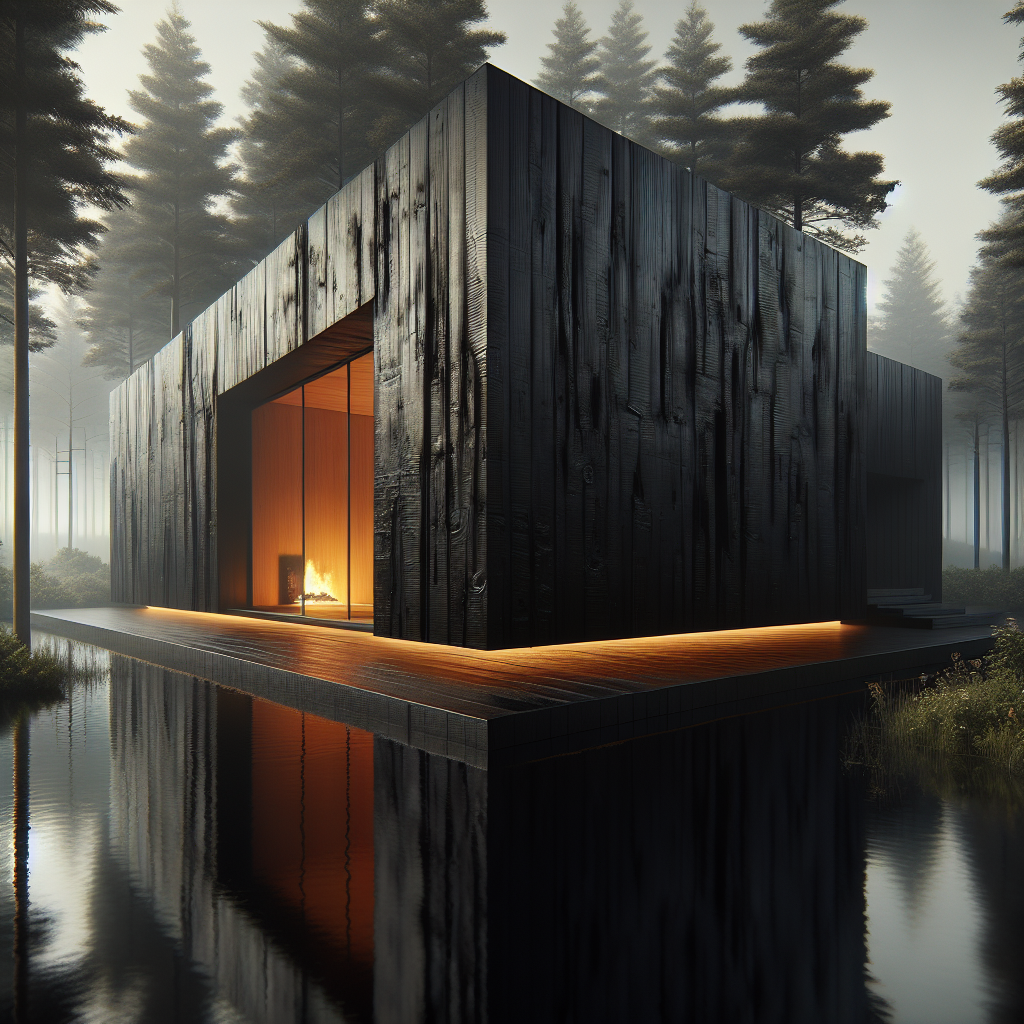
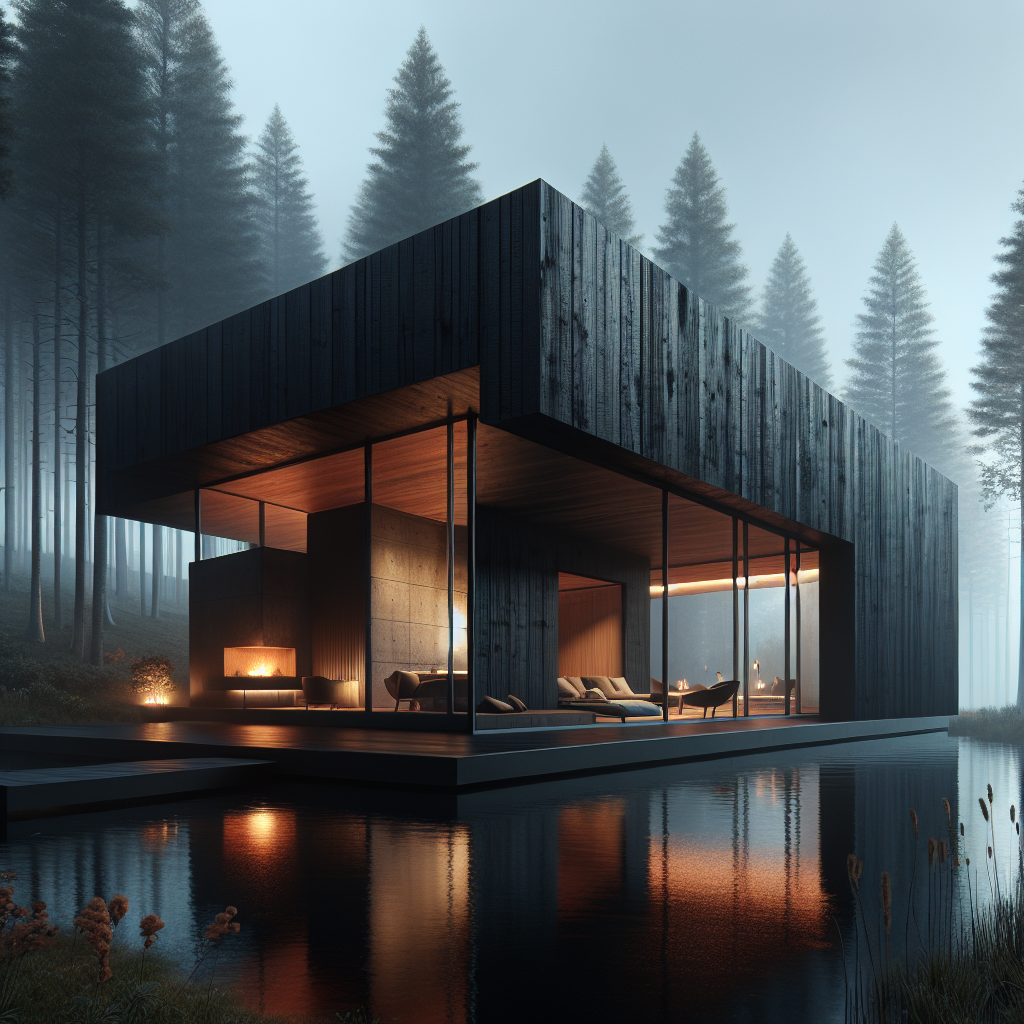
Across the world’s design capitals—from Copenhagen to Kyoto, from the Pacific Northwest to the Scottish Highlands—a striking architectural trend has emerged: the black house. These structures, cloaked in darkened timber, stand as bold silhouettes against their natural surroundings. Their allure lies not only in their sculptural presence but also in their material intelligence. At the heart of this aesthetic revolution is charred timber cladding, a technique rooted in ancient Japanese craftsmanship yet perfectly attuned to the values of contemporary sustainable design.
The Origins: From Shou Sugi Ban to Global Minimalism
The practice of charring wood, known in Japan as Yakisugi or Shou Sugi Ban, dates back to the 18th century. Traditionally used to preserve cedar siding from weather, insects, and fire, the process involves carefully burning the wood surface, cooling it, and then brushing and oiling it to reveal a rich, tactile finish. The result is a material that is simultaneously ancient and avant-garde—imbued with depth, texture, and resilience.
In the 21st century, architects have rediscovered this method as both a sustainable and aesthetic choice. The technique aligns with the growing movement toward biodegradable and low-impact architecture, offering longevity without chemical treatments. The carbonized layer naturally resists decay, meaning fewer maintenance cycles and reduced environmental cost over time.
Why Black? The Emotional and Visual Power of Darkness
Black architecture carries an undeniable drama. It reframes how we perceive light, landscape, and volume. A black façade absorbs sunlight, accentuating shadows and creating an interplay of reflection and absorption that transforms throughout the day. Against snow, sand, or forest, these homes command attention while paradoxically blending into their environments.
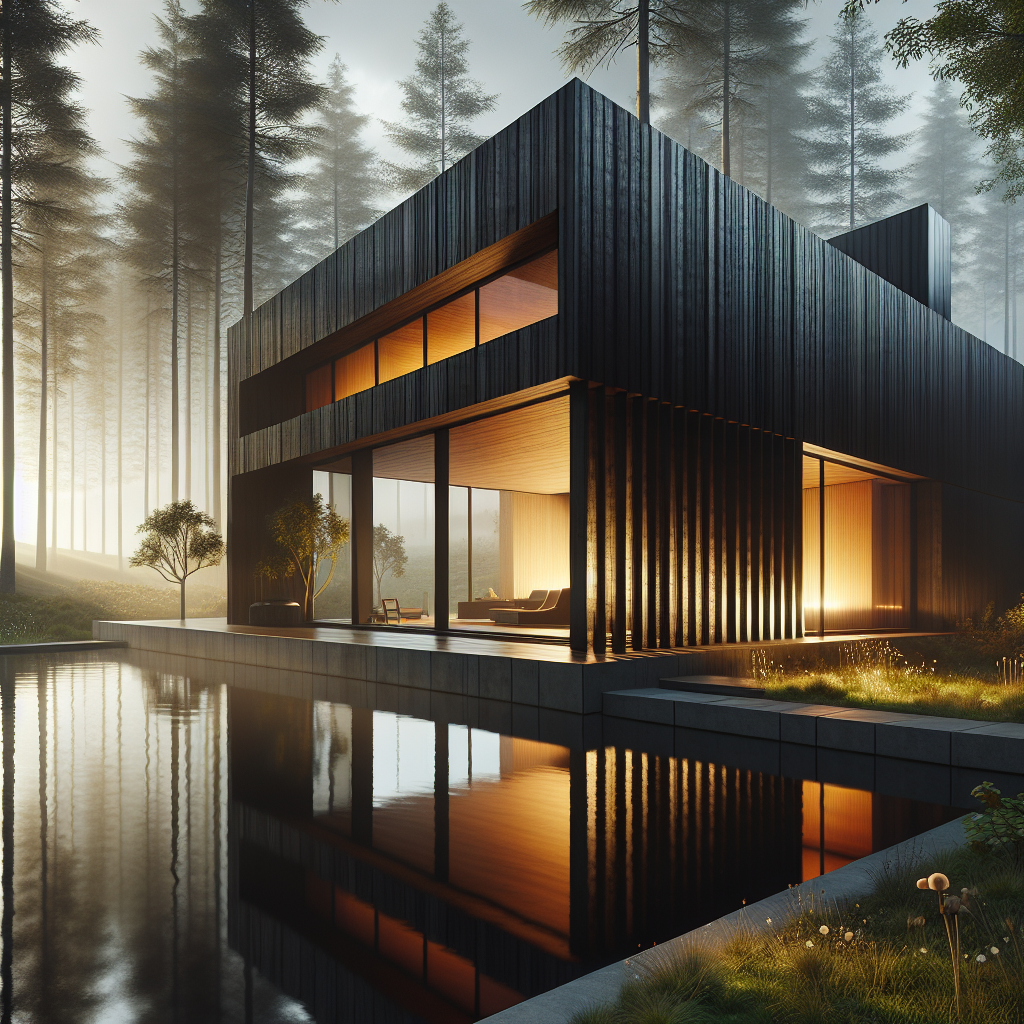
Designers often describe the effect as quietly monumental. The matte finish of charred timber softens the intensity of black, giving it a velvety tactility. When paired with glass, steel, or concrete, the contrast becomes architectural poetry—minimal yet expressive. The black house is not merely a stylistic statement; it’s a meditation on impermanence, echoing the Wabi-Sabi philosophy that celebrates natural wear and transformation.
Material Innovation: Sustainability Meets Performance
Charred timber’s resurgence coincides with architecture’s shift toward carbon-conscious design. According to a 2025 report by the World Green Building Council, timber construction can reduce embodied carbon by up to 75% compared to steel or concrete. When wood is locally sourced and treated through charring rather than chemical sealing, its environmental footprint diminishes even further.
Architects such as Norway’s Reiulf Ramstad and Japan’s Kengo Kuma have championed this approach, integrating charred wood into both residential and public projects. The technique’s compatibility with mass timber construction has expanded its relevance beyond small-scale dwellings to larger, urban typologies. The material’s durability and weather resistance make it suitable for coastal and alpine climates alike.
Case Studies: Global Interpretations of the Black House
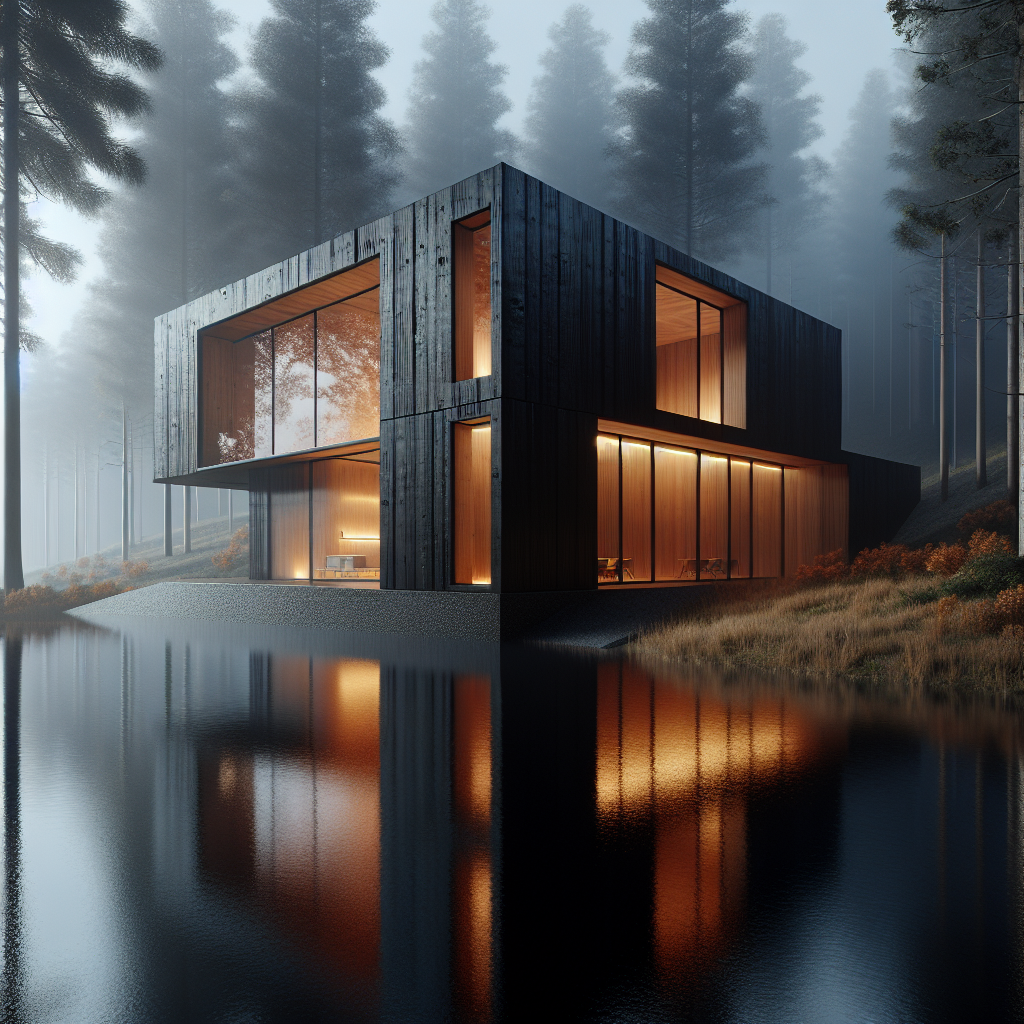
1. The Vipp Shelter, Sweden – Perched beside a lake in the Swedish wilderness, this prefabricated retreat uses blackened steel and charred pine to merge industrial precision with Nordic restraint. The structure’s mirrored glass panels dissolve the boundary between interior and exterior, allowing the dark shell to recede into the forest’s shadow.
2. House in Karuizawa, Japan – Kengo Kuma’s reinterpretation of Yakisugi cladding turns tradition into texture. The charred boards are layered in a rhythmic pattern, their uneven surfaces catching light like brushstrokes. Inside, pale cedar contrasts with the dark exterior, embodying the Japanese concept of ma—the space between things.
3. The Black Barn, United Kingdom – A contemporary take on agrarian architecture, this rural dwelling by Studio Bark employs charred larch to echo the soot-stained barns of the English countryside. The result is both nostalgic and forward-looking, a model for sustainable rural regeneration.
Craftsmanship and Technique: The Art of Controlled Fire
Creating charred timber is as much an art as a science. The process involves torching the wood until its surface carbonizes, forming a protective crust. Depending on the desired aesthetic—ranging from a subtle toast to a deep, alligator-skin texture—architects and artisans adjust the intensity and duration of the burn. Once cooled, the wood is brushed to remove loose soot and sealed with natural oils to enhance its sheen and longevity.
Beyond its beauty, this carbonized layer serves as a natural armor. It resists UV degradation, deters insects, and even offers mild fire resistance by reducing the oxygen available to ignite deeper layers. The tactile surface invites touch, connecting users to the elemental origins of the material—fire, wood, and time.
Interior Continuity: From Exterior Drama to Interior Calm
While the black house’s exterior often commands attention, its interiors tend toward serenity. Architects frequently offset the dark façade with light-filled spaces, pale timber floors, and minimalist furnishings. The result is a chiaroscuro experience—where exterior austerity gives way to interior warmth.
Designers are increasingly integrating biophilic principles within these dark shells. Large apertures frame views of nature, and natural materials like linen, stone, and untreated oak soften the spatial experience. The juxtaposition of dark exteriors and luminous interiors mirrors the human need for both refuge and openness.
Climate Responsiveness and Passive Performance
Beyond aesthetics, the black house performs intelligently. In colder climates, the dark façade absorbs solar heat, contributing to passive warming. When combined with high-performance insulation and cross-ventilation strategies, it supports energy efficiency without reliance on mechanical systems. This aligns with the architectural movement toward net-zero energy buildings, where design and performance converge seamlessly.
In warmer regions, architects adapt the technique by using lighter charring or ventilated façades that prevent heat buildup. The versatility of charred timber makes it adaptable across geographies—a rare balance of aesthetic consistency and climatic sensitivity.
The Cultural Resonance of Black Architecture
Black architecture transcends trend. It speaks to a deeper cultural shift toward authenticity, restraint, and material honesty. In a world saturated with digital gloss, the tactile imperfection of charred wood feels grounding. It evokes the primordial—fire as both destructive and creative force—and repositions architecture as a dialogue with nature rather than a conquest of it.
As societies grapple with climate anxiety and resource scarcity, the black house becomes a symbol of resilience. It embodies the idea that beauty can emerge from transformation, that burning can lead to preservation. In this sense, charred timber architecture resonates with the broader ethos of sustainable design: regeneration through adaptation.
Looking Ahead: The Enduring Legacy of the Black House
As we move deeper into the 2020s, the black house phenomenon shows no sign of fading. Its fusion of craft, sustainability, and emotional depth positions it as a lasting archetype in contemporary architecture. From mountain retreats to urban infill projects, the language of charred timber continues to evolve—bridging the tactile traditions of the past with the technological ambitions of the future.
In the end, the black house is not merely a color choice; it’s a philosophy. It celebrates the beauty of contrast, the wisdom of imperfection, and the quiet power of materials that tell their own story. In its darkness, it reflects a luminous truth: that architecture, at its best, is both shelter and statement—a vessel for memory, material, and meaning.