
Sinuous geometry wave-like: designs dissolving rectilinear norms
Sinuous Geometry, Wave-Like: Designs Dissolving Rectilinear Norms
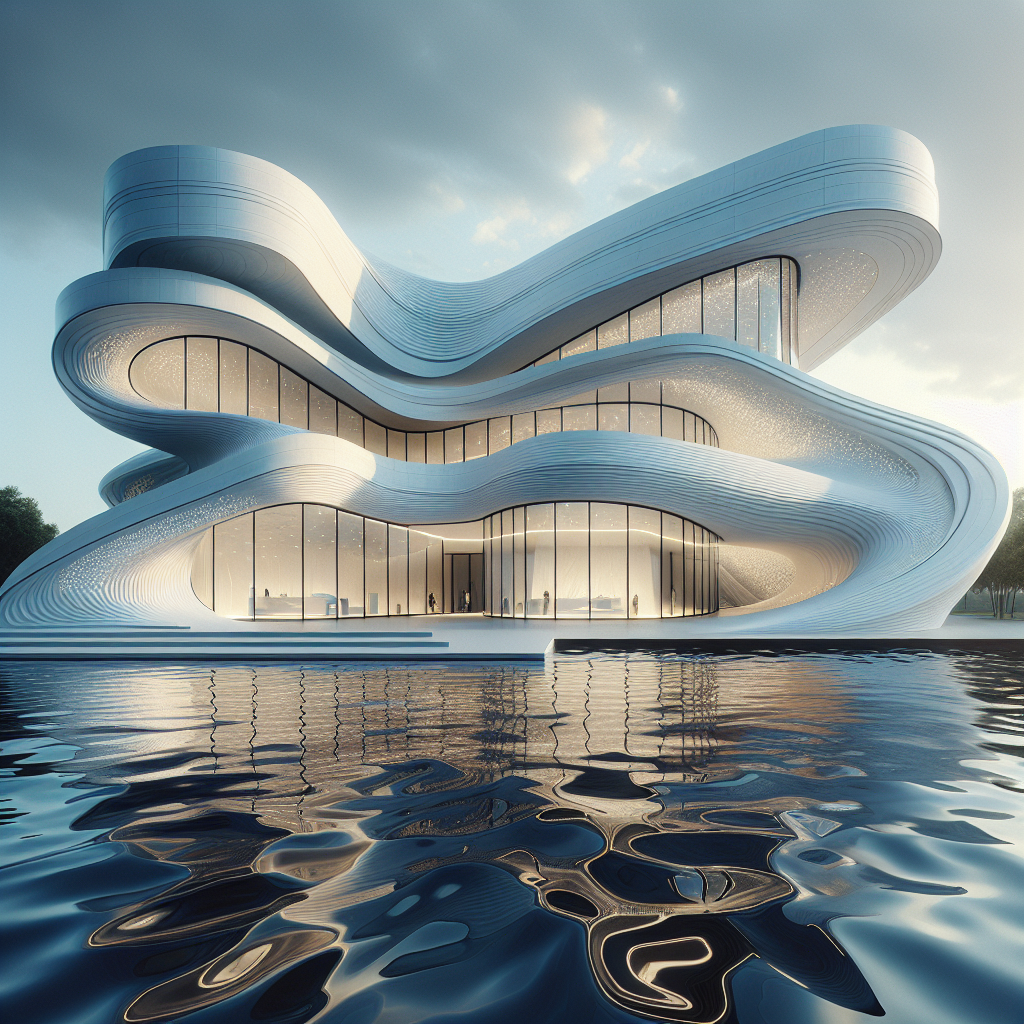
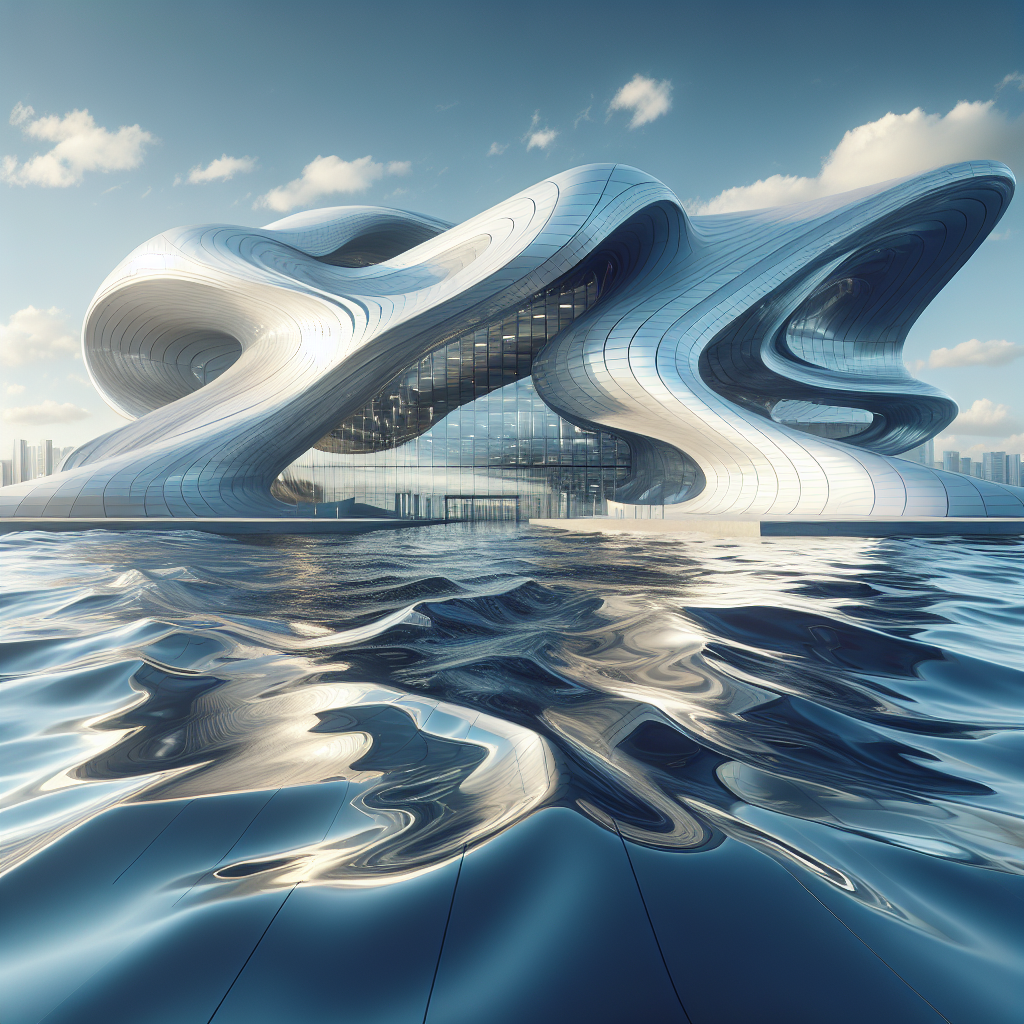
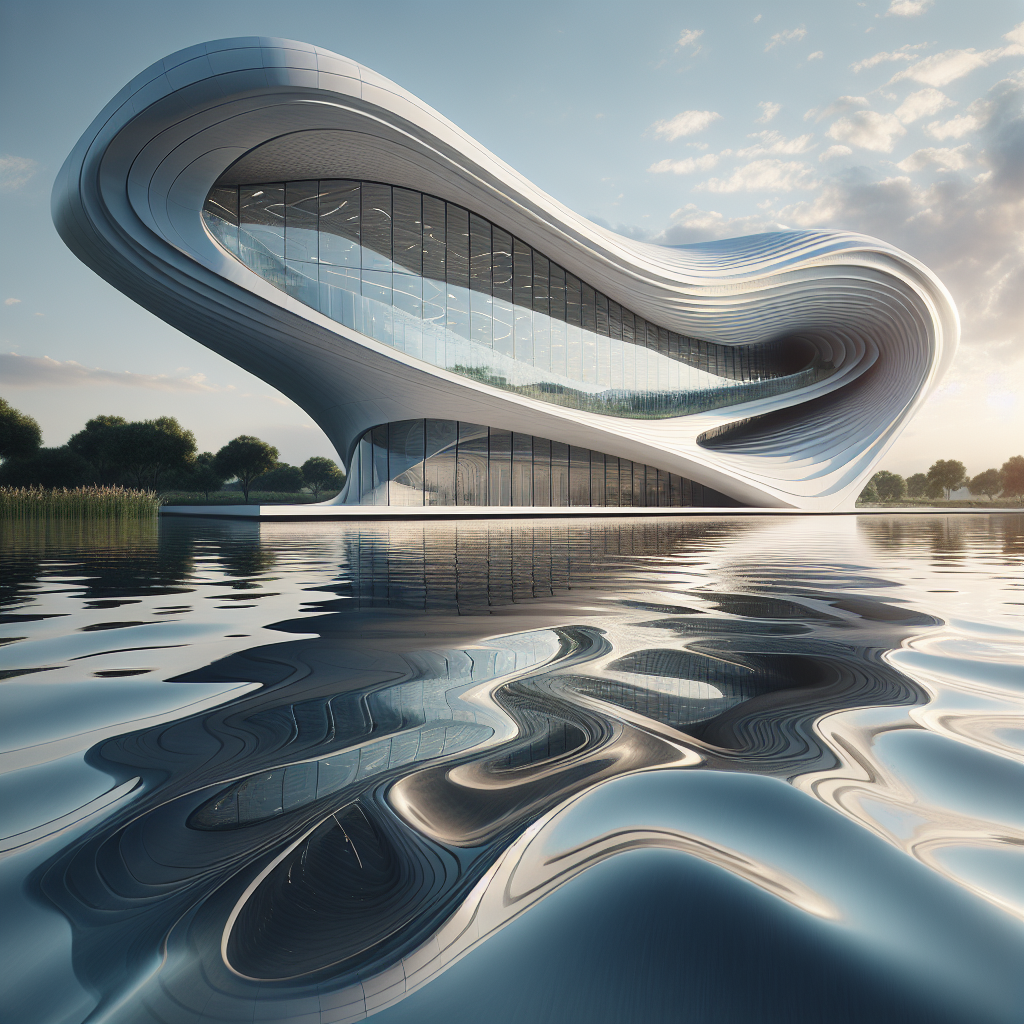
In the evolving lexicon of contemporary architecture and design, sinuous geometry has emerged as both a visual language and a philosophical stance. The rigid orthogonality that once defined modernism is being replaced by fluid, wave-like forms that emulate the undulating rhythms of nature. From coastal museums to urban pavilions, these designs dissolve rectilinear norms, inviting a more organic, sensory engagement with space. This movement—part aesthetic rebellion, part technological triumph—marks a profound shift in how we conceive of structure, material, and human experience.
The Rise of the Curve: A Counterpoint to Modernist Rigidity
For much of the 20th century, architecture was dominated by the modernist grid: a rational, efficient, and orthogonal system that reflected industrial precision. Yet as digital tools expanded the designer’s toolkit, the straight line began to lose its monopoly. Parametric modeling, pioneered by firms like Zaha Hadid Architects and UNStudio, liberated geometry from Euclidean constraint. The result was a new era of fluid form-making—buildings that ripple, twist, and flow as if sculpted by wind or water.
“The curve,” as Oscar Niemeyer once remarked, “is the line of beauty.” Today, that sentiment resonates more than ever. Architects are embracing curvature not merely for its aesthetic grace but for its capacity to express movement, emotion, and ecological harmony. These wave-like geometries evoke the natural world, echoing dunes, waves, and the organic morphologies of living systems.
Digital Craftsmanship: The Algorithm as Artisan
The resurgence of curvilinear design owes much to computational design technologies. Parametric design and digital fabrication have made once-impossible geometries feasible, translating complex algorithms into tangible structures. Architects now “grow” buildings through iterative modeling, allowing forms to evolve based on environmental, structural, or social parameters.
Consider the Heydar Aliyev Center in Baku by Zaha Hadid Architects—a continuous, flowing surface that blurs the boundary between wall and roof. Its seamless skin, composed of thousands of unique panels, exemplifies how digital precision can produce an almost biological softness. Similarly, MAD Architects’ Harbin Opera House in China appears as a snowdrift sculpted by wind, its white aluminum panels reflecting the surrounding landscape in a dialogue of form and context.
These projects reveal a new kind of craftsmanship—one where code and material collaborate. The algorithm becomes the artisan, shaping forms that are simultaneously mathematical and sensual. The fusion of technology and tactility defines this era of sinuous geometry, where computation serves the poetic rather than the purely functional.
Material Fluidity: From Concrete Waves to Wooden Ribbons
Advances in material science have further enabled the realization of fluid geometries. Concrete, once synonymous with brutalist rigidity, now flows like liquid through 3D-printed molds. Projects such as ETH Zurich’s Smart Slab demonstrate how ultra-thin, digitally fabricated concrete panels can achieve both strength and curvature. Meanwhile, timber—long celebrated for its warmth and sustainability—is being reimagined as a pliable medium for sculptural expression. The rise of wooden skyscrapers underscores how natural materials can embody both ecological responsibility and formal innovation.
In interiors, designers are exploring biomorphic continuity through materials like laminated wood, resin composites, and flexible ceramics. Furniture pieces appear to melt into floors; walls ripple like fabric caught in motion. This sensorial tactility recalls the Art Nouveau movement’s fascination with organic ornamentation, yet it is reinterpreted through a digital lens—less decorative, more immersive.
Fluid Interiors: The Psychology of the Curve
Beyond aesthetics, the turn toward sinuous geometry reflects a deeper psychological and emotional logic. Research in environmental psychology suggests that humans respond positively to curved forms, associating them with safety, softness, and approachability. A 2013 study published in the journal Psychological Science found that people consistently rated curvilinear spaces as more beautiful and calming than rectilinear ones.
Designers are translating these insights into practice. In hospitality and wellness spaces, wave-like ceilings and serpentine corridors guide movement intuitively, reducing stress and enhancing spatial flow. The interiors of the Amanyangyun Resort near Shanghai, for instance, integrate curved timber screens and fluid lighting to evoke a sense of continuous calm. Similarly, the biophilic design movement aligns naturally with this trend, as both prioritize organic forms that resonate with the rhythms of nature.
Urban Fluidity: Cities in Motion
At the urban scale, sinuous geometry is reshaping skylines and public spaces. Santiago Calatrava’s World Trade Center Transportation Hub in New York, with its ribbed, wing-like structure, captures the dynamism of motion in static form. In Copenhagen, BIG’s Amager Bakke power plant doubles as a ski slope, its sloping surface transforming infrastructure into landscape. These projects exemplify how fluid architecture can dissolve the boundaries between function, form, and experience.
Urban planners are also exploring how wave-like geometries can foster more inclusive, adaptable environments. Curved pathways encourage meandering rather than direct transit, promoting discovery and social interaction. This principle echoes the organic planning of medieval towns—an idea explored in Mainifesto’s analysis of ancient urban renewal—where irregular geometries created intimate, human-scaled experiences.
Ecological Resonance: The Wave as a Sustainable Metaphor
The wave is not merely a visual motif—it is an ecological metaphor. Its continuous motion mirrors the cycles of energy, matter, and life. Architects are increasingly designing with this metaphor in mind, integrating fluid geometries with sustainable systems. Buildings with curved facades can optimize solar gain, reduce wind resistance, and enhance natural ventilation. The Al Janoub Stadium in Qatar, designed by Zaha Hadid Architects, uses its aerodynamic shell to manage desert airflow efficiently, reducing cooling loads.
In coastal regions, wave-inspired structures are being engineered to adapt to rising sea levels, echoing ideas explored in floating architecture. These adaptive designs embody resilience, suggesting that the future of sustainability lies not in static solutions but in dynamic equilibrium—architecture that moves, breathes, and evolves with its environment.
The Future of Form: From Static to Sentient
As digital technologies continue to advance, the next frontier of sinuous geometry may lie in responsive and kinetic architecture. Buildings could one day flex, twist, or breathe in real time, adjusting to environmental conditions or human presence. Already, projects like Heatherwick Studio’s UK Pavilion at Expo 2010 and the responsive design movement hint at this possibility. The wave, once a static symbol, is becoming a living system—a form that embodies both motion and emotion.
In this context, the dissolution of rectilinear norms is not a rejection of order but an evolution toward complexity. The straight line, once a symbol of progress, now yields to the curve as a symbol of connection—between technology and nature, structure and soul, designer and inhabitant.
Conclusion: The Poetics of the Curve
To embrace sinuous geometry is to embrace uncertainty, fluidity, and transformation. It is an architectural language that speaks not in grids but in gradients, not in corners but in continuities. In a world increasingly defined by digital abstraction and environmental flux, these wave-like designs remind us of our innate affinity for the organic and the mutable. They dissolve the hard edges of modernity, offering instead a vision of architecture as a living, breathing art form—one that flows, like water, toward a more human future.
In the words of Finnish master Alvar Aalto, whose work often danced between line and curve, “Architecture belongs to culture, not to civilization.” The current wave of sinuous design reaffirms that truth: culture, like water, finds its own path—always bending, never breaking.
Keywords: sinuous geometry, wave-like design, fluid architecture, curvilinear forms, parametric design,