Retro illusions trompe-l’oeil: wallpapers echoing 1970s aesthetics
Retro Illusions Trompe-l’œil: Wallpapers Echoing 1970s Aesthetics
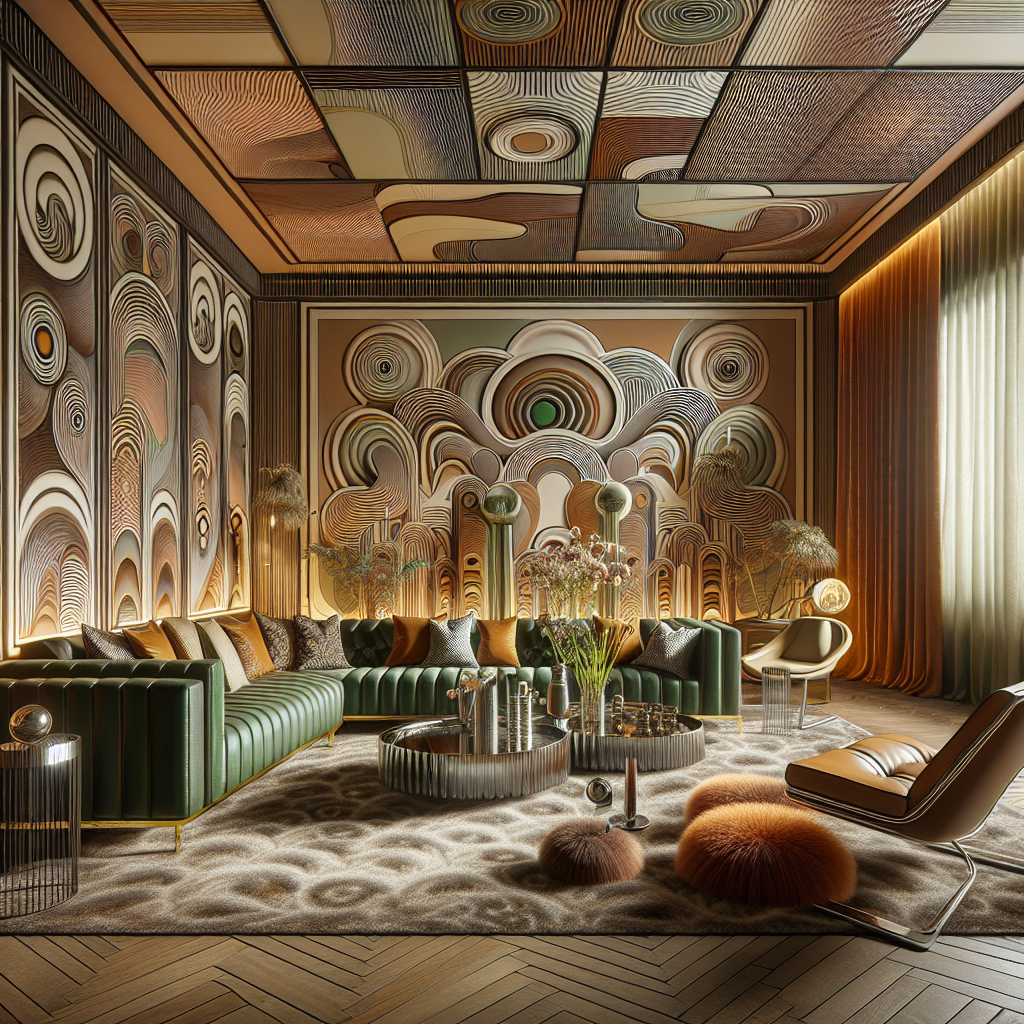
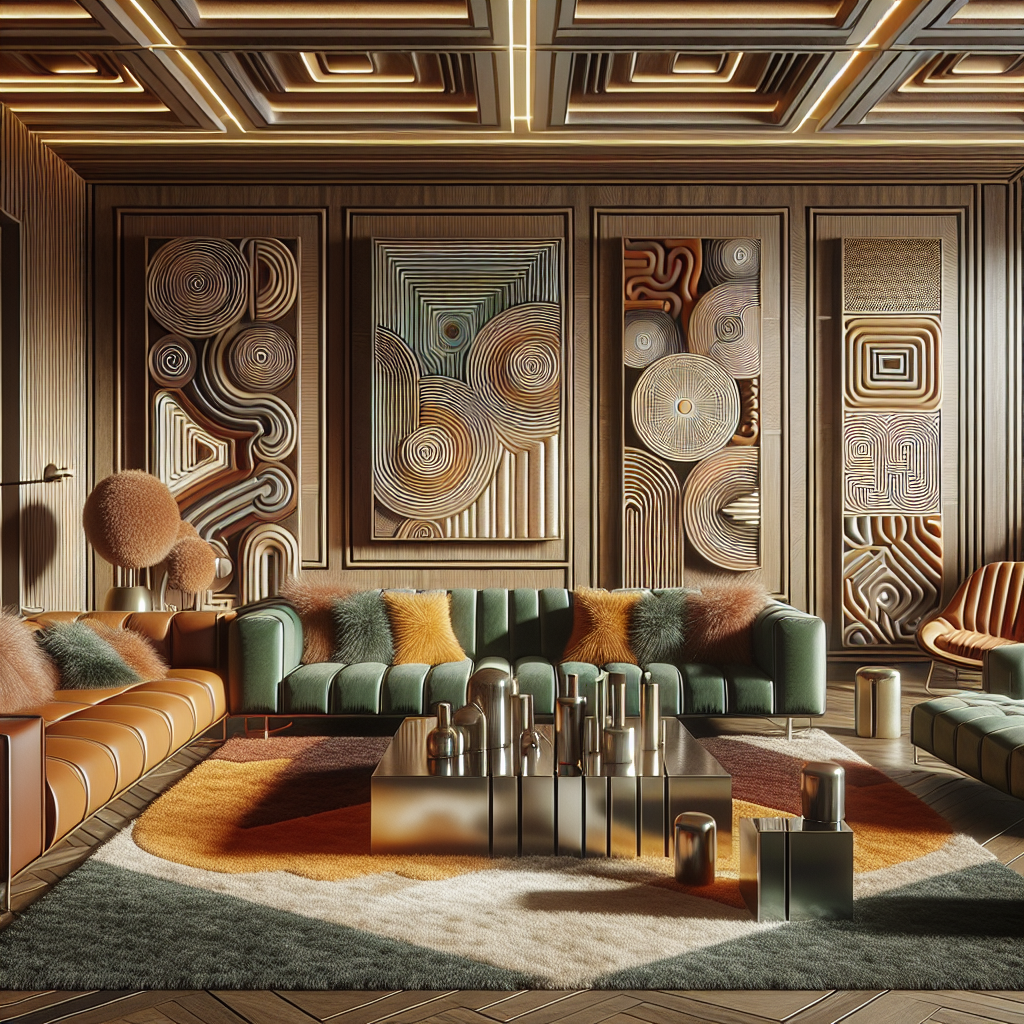
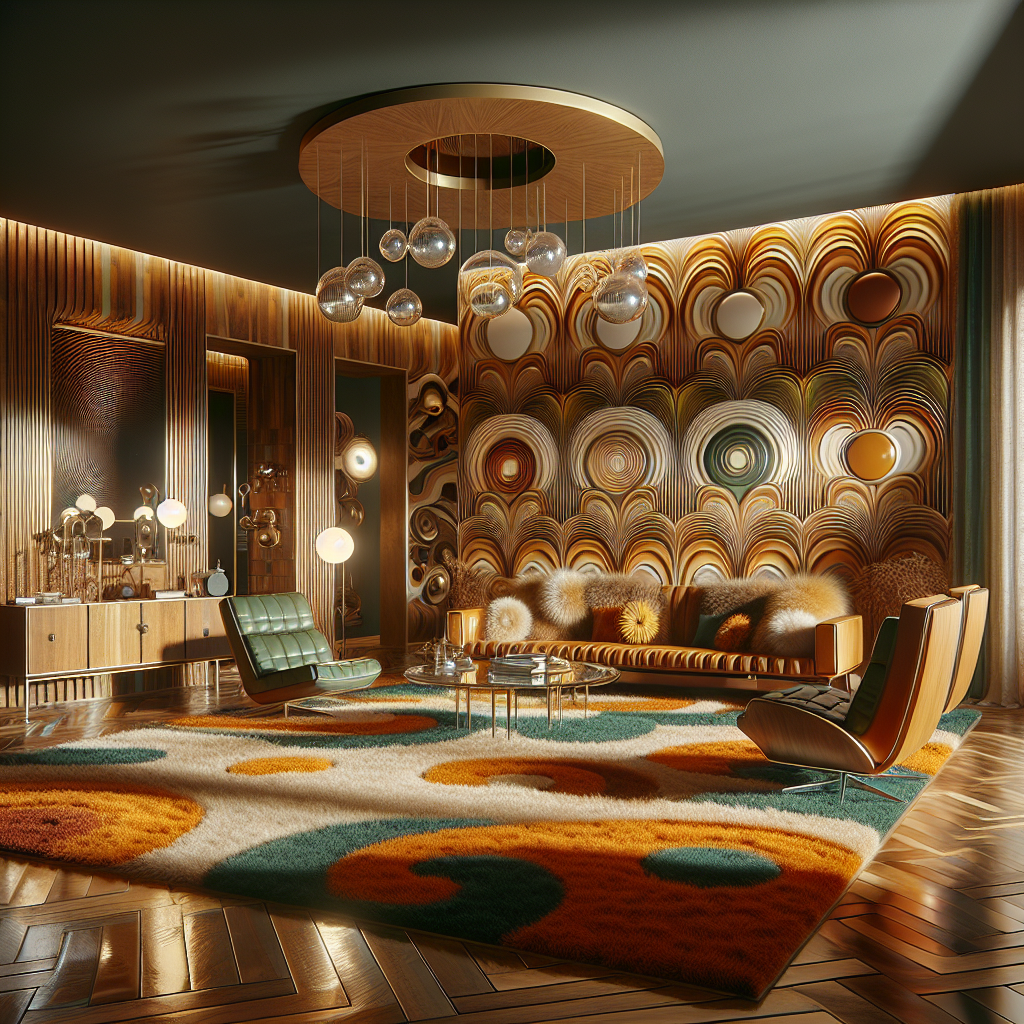
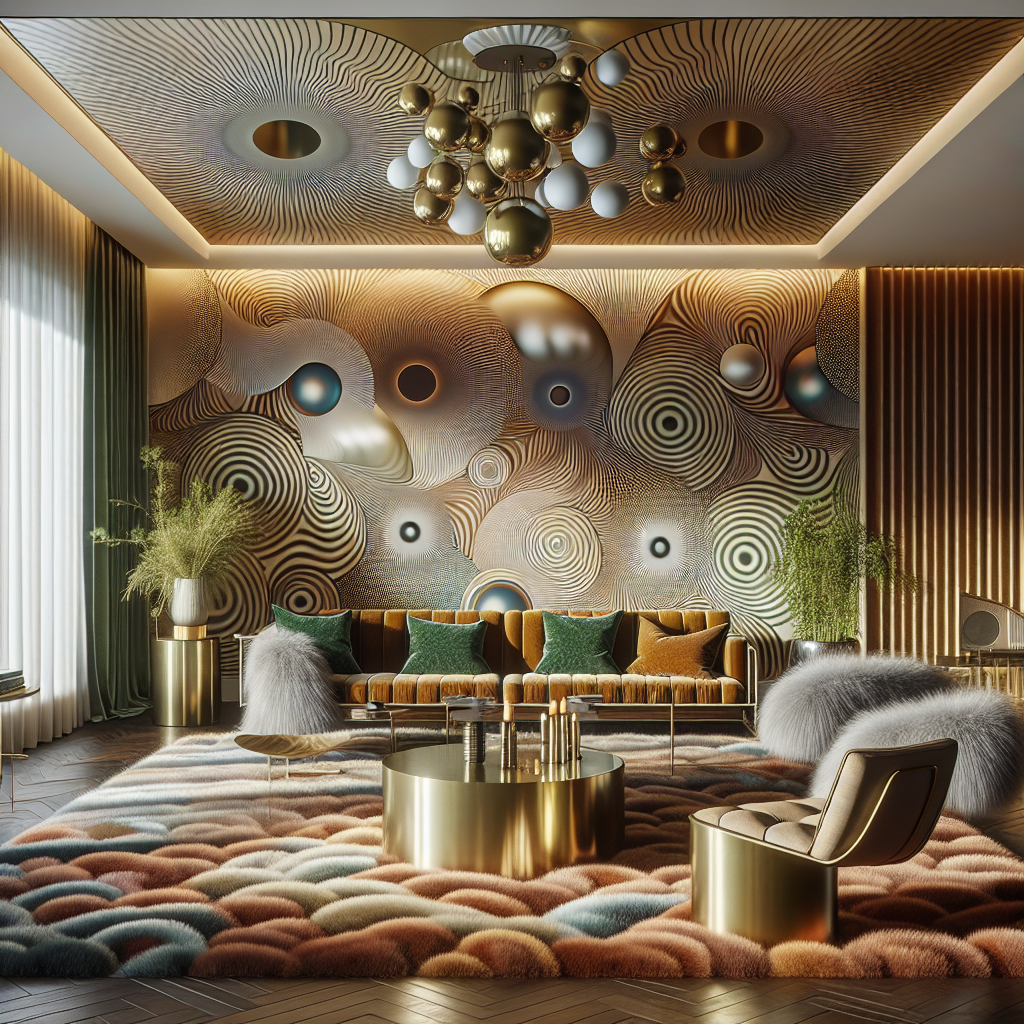
In the realm of contemporary interior design, the return of trompe-l’œil wallpapers marks a fascinating intersection between nostalgia and digital precision. These optical illusions—once hand-painted on aristocratic walls or mid-century foyers—are now being reimagined through advanced printing technologies and a renewed fascination with the 1970s aesthetic. The decade’s visual language—psychedelic swirls, faux wood panels, shag textures, and surreal geometries—has found new life in the twenty-first century, not as kitsch revival, but as retro-futurist sophistication.
The 1970s Revisited: A Decade of Visual Excess
The 1970s were a paradoxical period in design history. While minimalism began to shape architecture, interiors reveled in pattern, texture, and illusion. Trompe-l’œil—literally “deceive the eye” in French—was a perfect metaphor for the era’s playful subversion of perception. Designers experimented with surfaces that appeared to be three-dimensional, often mimicking marble, brick, or even tufted leather. This was the age of Op Art and psychedelic art, where visual trickery became a cultural statement.
Today’s revival of 1970s-inspired trompe-l’œil wallpapers taps into that same spirit of experimentation, but with contemporary restraint. Instead of overwhelming interiors, these designs are curated to evoke atmosphere—a nod to the past filtered through modern sensibilities. The result is a balance between nostalgia and innovation, where the illusion serves both as ornament and as conceptual commentary.
Digital Craftsmanship: The New Trompe-l’œil
Advancements in digital printing have transformed wallpaper production into a high-precision art form. Modern trompe-l’œil designs are created using 3D modeling software and high-resolution scans of real materials, producing hyperrealistic effects that rival hand-painted murals. The tactile illusion of depth—whether it’s the shadow of a fluted column or the gleam of lacquered wood—can now be achieved with remarkable fidelity.
This technological shift mirrors broader transformations in design, where digital tools are reshaping traditional craftsmanship. As explored in digital fabrication, the fusion of artisanal skill and algorithmic precision has become a defining feature of twenty-first-century design. Trompe-l’œil wallpapers, once labor-intensive and exclusive, are now accessible to a wider audience while retaining their aura of artistry.
Retro-Futurism and the Psychology of Illusion
The resurgence of trompe-l’œil also reflects a psychological dimension. In an age dominated by screens and virtual experiences, interiors that play with perception offer a tactile antidote to digital flatness. The 1970s’ fascination with illusion resonates anew in our era of virtual reality and augmented environments. By integrating optical depth into physical spaces, designers create rooms that feel simultaneously nostalgic and forward-looking.
Color plays a crucial role in this revival. Earthy oranges, avocado greens, and ochres—hallmarks of the 1970s palette—are being reinterpreted in muted, contemporary tones. When paired with metallic sheens or matte finishes, these hues create an interplay of light and shadow that enhances the illusion of dimensionality. The result is an interior that feels immersive, almost cinematic—an echo of the analog warmth that many crave in an increasingly digital world.
Case Studies: From Milan to Tokyo
In Milan, Studiopepe’s recent installation for Salone del Mobile 2025 reimagined 1970s optical motifs through a contemporary lens. Their wallpaper collection featured geometric gradients that shifted with ambient light, producing a dynamic sense of movement across static walls. The designers described their approach as “visual jazz”—a rhythm of repetition and disruption that invites the eye to dance.
Meanwhile, in Tokyo, the boutique hotel Neon Mirage collaborated with local artist Haruka Sato to create trompe-l’œil corridors that mimic infinite reflections. Inspired by infinity mirrors, the design merges retro illusionism with futuristic lighting, offering guests a surreal spatial experience. These projects demonstrate how the 1970s aesthetic—once dismissed as ornamental excess—has evolved into a sophisticated tool for spatial storytelling.
Materiality and Sustainability
Beyond aesthetics, the new wave of trompe-l’œil wallpapers aligns with the growing emphasis on sustainable materials. Many manufacturers now use eco-certified inks, recycled substrates, and low-VOC finishes, ensuring that visual indulgence does not come at environmental cost. This shift parallels the sustainable ethos explored in reclaimed materials and biodegradable architecture, where innovation and responsibility coexist.
Interestingly, the illusion of materiality—wood, stone, or fabric—can itself be a sustainable choice. By simulating these textures rather than sourcing them, designers reduce the demand for natural resources while achieving the same sensory richness. In this sense, trompe-l’œil becomes a green deception: an ethical illusion that replaces extraction with imagination.
Commercial and Residential Applications
In commercial interiors, trompe-l’œil wallpapers are being used to create immersive brand environments. Luxury boutiques employ faux architectural motifs—arched niches, paneled corridors, or mirrored vaults—to enhance spatial drama without structural alteration. In residential settings, designers are rediscovering the power of illusion to expand perceived space. A narrow hallway might appear to open into a sunlit atrium; a small dining room might seem enveloped by sculptural reliefs.
These applications echo the psychological principles of spatial perception, where the manipulation of depth and pattern influences emotional response. A well-executed trompe-l’œil not only beautifies but also transforms how inhabitants experience their surroundings—inviting curiosity, contemplation, and delight.
The New Luxury: Craft, Context, and Concept
In the high-end design market, luxury is increasingly defined not by opulence but by conceptual depth. Trompe-l’œil wallpapers, when thoughtfully curated, embody this shift. They offer a dialogue between past and present, between surface and meaning. A wall that appears to ripple, fold, or recede becomes more than decoration—it becomes narrative architecture.
This narrative quality aligns with the growing trend of experiential interiors, where every surface tells a story. Whether in a Parisian apartment layered with faux marble columns or a minimalist Tokyo loft adorned with abstracted woodgrain illusions, the trompe-l’œil becomes a subtle act of rebellion against the flatness of modern minimalism. It reintroduces wonder into the everyday.
Looking Ahead: The Future of Retro Illusions
As we move deeper into the 2020s, the fascination with retro illusions shows no sign of fading. Designers are experimenting with interactive wallpapers that respond to light, motion, or temperature—blurring the line between analog illusion and digital responsiveness. This convergence recalls the spirit of the 1970s, when design was both playful and utopian, grounded in optimism about technology’s potential to reshape perception.
In a world where the boundaries between physical and virtual continue to dissolve, trompe-l’œil wallpapers stand as poetic reminders of the power of the eye—and the imagination—to construct reality. The 1970s may have given us the first wave of visual illusionism, but today’s designers are giving it purpose, sustainability, and emotional resonance. The walls, it seems, are once again alive with stories—half real, half imagined, and entirely mesmerizing.
—Published on 01/06/2026