
#REF!
The €3,000 3D-Printed House Proposed by AI to Combat the Housing Crisis
In a world where urban density, material scarcity, and economic inequality converge, the idea of a €3,000 home sounds almost utopian. Yet, a new wave of AI-driven design is making that vision tangible. This is not a speculative art project or a conceptual rendering destined for museum walls—it’s a pragmatic, data-informed proposal that could redefine the architecture of affordability. The AI-generated €3,000 3D-printed house is a blueprint for how technology might reconcile the need for shelter with the urgency of sustainability.
Algorithmic Architecture: The New Social Housing Vanguard
At the heart of this innovation lies a sophisticated generative design algorithm trained on millions of architectural datasets—ranging from vernacular housing typologies to passive cooling systems. The AI doesn’t merely replicate; it optimizes. It calculates structural efficiency, minimizes waste, and proposes material compositions that balance cost with resilience. The result is a dwelling that can be printed in under 48 hours using locally sourced composites such as clay, recycled polymers, or even bio-based concrete.
According to the ArchDaily database, 3D printing in construction has reduced material waste by up to 60% compared to traditional methods. When paired with AI’s predictive modeling, the potential for scalable, low-cost housing becomes not just feasible but inevitable.
From Prototype to Policy: A Blueprint for Global Affordability
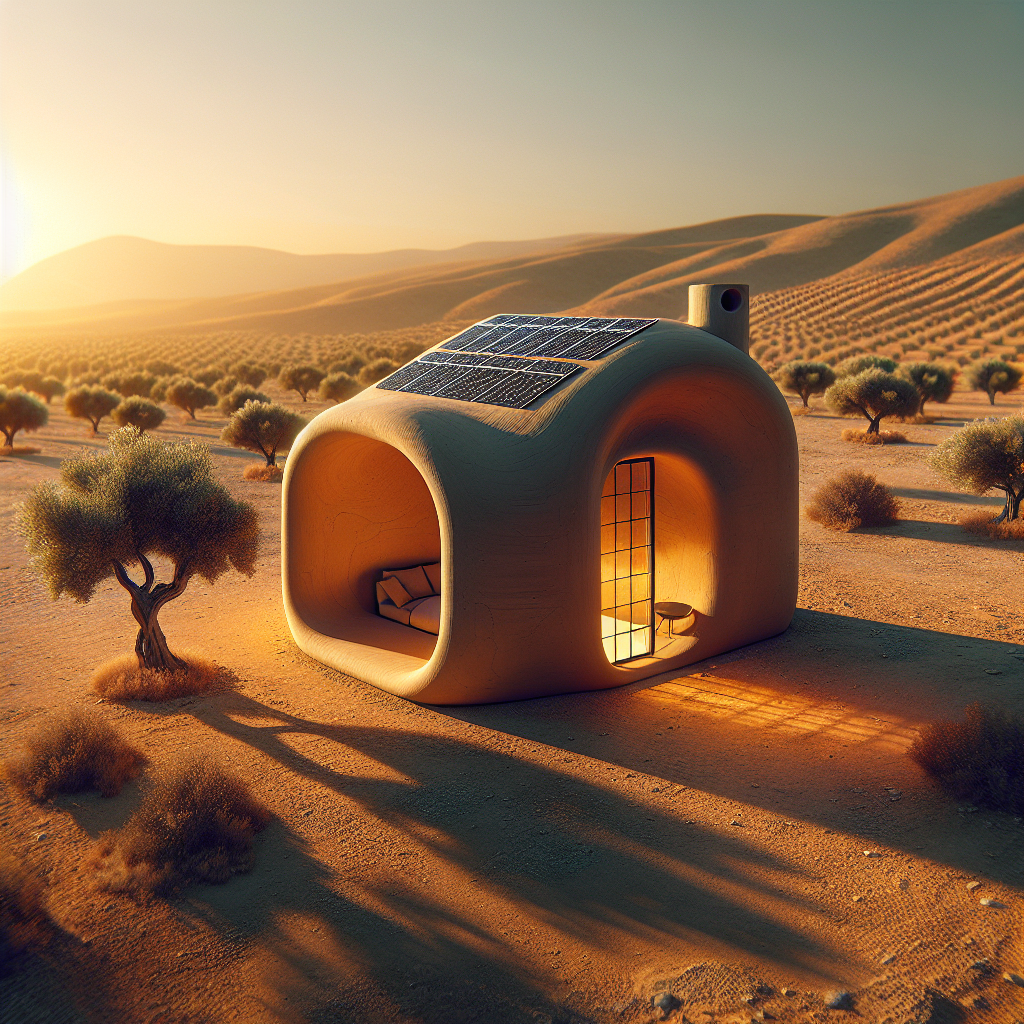
The €3,000 house is more than a structure—it’s a statement. It proposes a model of decentralized, locally adaptable housing that could address global shortages without replicating the mistakes of mass-produced, uniform social housing of the 20th century. Its modular design allows for customization according to climate, culture, and community needs. A desert variant might integrate evaporative cooling walls inspired by ancient desert architecture, while a coastal version could employ salt-resistant biopolymers.
Policy integration is the next frontier. Governments and NGOs are already exploring partnerships with AI design platforms to create rapid-deployment housing for displaced populations. This intersects with ongoing research in emergency housing innovation, where speed, cost, and resilience are paramount.
Material Intelligence: Building with Data, Not Just Matter
Material science is the silent partner in this revolution. The AI’s material library draws from the latest findings in sustainable composites, referencing research from the Materials Today Journal. By simulating structural stress, thermal performance, and lifecycle impact, the system can recommend optimal blends—such as hempcrete reinforced with recycled glass fibers—that meet both ecological and economic criteria.
This approach echoes the principles of biodegradable architecture, where the end of a building’s life is as thoughtfully designed as its beginning. The AI doesn’t just design for construction—it designs for disassembly, reuse, and regeneration.
Automation Meets Craft: The Human Touch in Machine Design
While the process is automated, the aesthetic is anything but sterile. The AI’s algorithmic logic produces forms that are curvilinear, organic, and surprisingly human. The printed walls ripple like fabric; the apertures are sculpted to channel light and air in ways reminiscent of vernacular clay dwellings. This is architecture that feels alive—crafted by code, yet deeply tactile.
Architectural theorists have long debated whether AI can possess a sense of beauty. The answer may lie in how these systems interpret environmental data as design input. By optimizing for light diffusion, airflow, and thermal comfort, the resulting spaces inherently embody a form of beauty grounded in function. As the American Institute of Architects notes, the future of design lies in the symbiosis between technology and human empathy.
Energy Autonomy and Circular Living
Each €3,000 house is conceived as an autonomous micro-ecosystem. Solar panels, rainwater harvesting systems, and composting modules are integrated into the structure’s geometry. AI-driven home management systems monitor energy consumption, optimizing it in real time. This aligns with the principles explored in net-zero energy building design, where the home becomes both consumer and producer of energy.
By embedding circular economy principles into its DNA, the AI-designed home challenges the throwaway culture of modern construction. Every component is traceable, replaceable, and recyclable—a digital passport ensures transparency from raw material to end-of-life recovery.
Global Impact: From Urban Margins to Martian Colonies
The implications extend far beyond Earth’s urban peripheries. The same AI systems that design low-cost housing for informal settlements are being adapted for extraterrestrial habitats. NASA’s recent interest in 3D-printed regolith structures mirrors the same logic: minimal material transport, maximum adaptability. The €3,000 house thus becomes a prototype not only for affordable living on Earth but for sustainable colonization elsewhere.
Yet, the most immediate impact remains human. For families priced out of traditional housing markets, this technology represents dignity restored—a safe, sustainable, and beautiful home within reach.
Conclusion: The Democratization of Design
The €3,000 3D-printed house is not a miracle; it’s a method. It reframes architecture as a service rather than a luxury, where AI acts as both architect and economist. As cities grapple with housing shortages and environmental collapse, this model offers a rare convergence of efficiency, empathy, and elegance. It suggests a future where design is not dictated by wealth but by wisdom—where every line of code contributes to the human right to shelter.
{
  "seo_title": "The €3,000 3D-Printed House by AI",
  "meta_description": "Discover how AI-designed €3,000 3D-printed houses could solve the housing crisis through sustainable, affordable architecture.",
  "excerpt": "Could a €3,000 3D-printed house redefine the future of affordable living? AI-driven design is making sustainable housing accessible to all.",
  "focus_keyphrase": "€3,000 3D-printed house"
}
AI Image Prompts
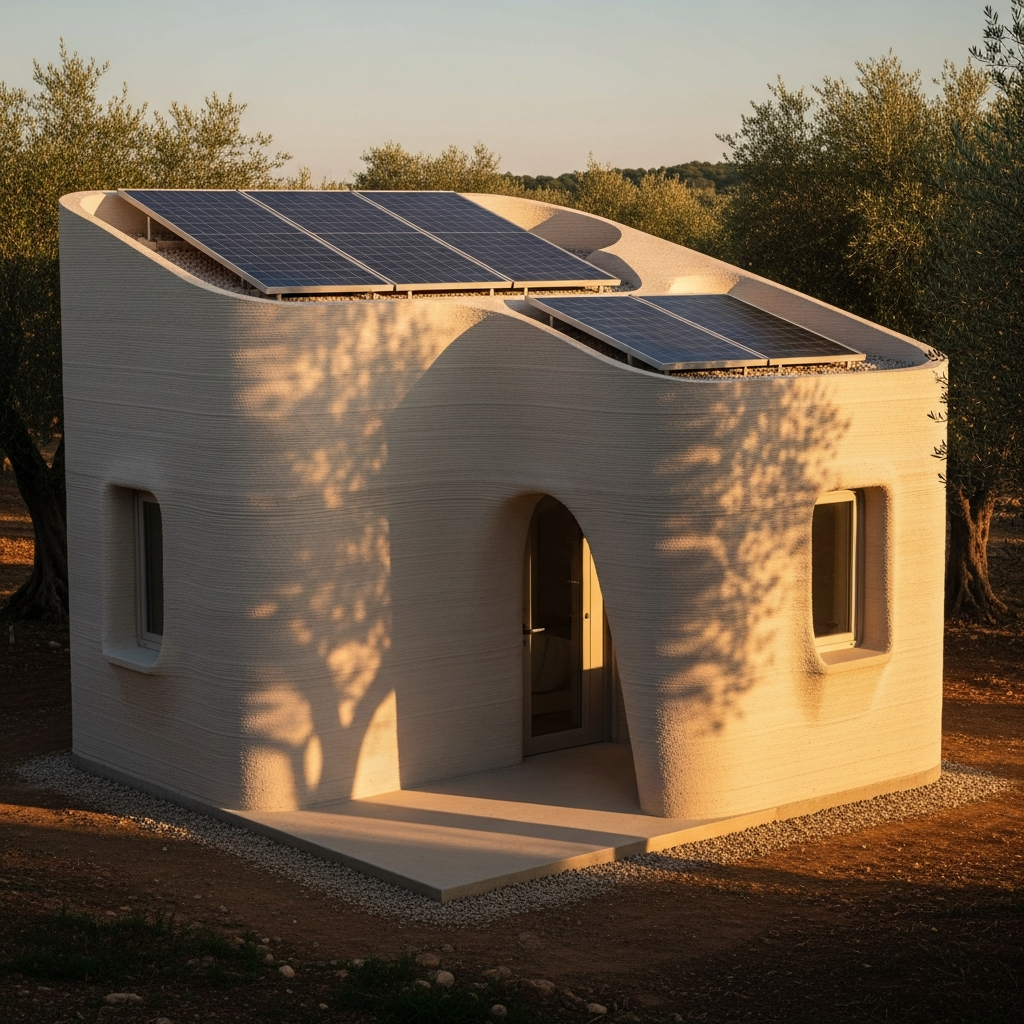
- Prompt: Photorealistic image of a compact 3D-printed house in a Mediterranean setting, made of light clay composite, solar panels on roof, shot on Hasselblad H6D at golden hour.
Alt text: AI-designed €3,000 3D-printed house in a sunlit Mediterranean landscape.
Caption: The AI-generated €3,000 home blends affordability with Mediterranean warmth and sustainable materials. - Prompt: Interior view of a minimalist 3D-printed living space with curved clay walls, natural light filtering through organic apertures, Hasselblad H6D, soft daylight.
Alt text: Minimalist interior of AI-designed 3D-printed home with organic walls.
Caption: Inside the AI-printed home, natural geometry meets digital precision for serene, efficient living. - Prompt: Aerial shot of a small community of 3D-printed homes surrounded by greenery, modular layout, solar roofs, Hasselblad H6D drone capture.
Alt text: Aerial view of sustainable 3D-printed housing community.
Caption: Entire neighborhoods could be printed in days—sustainable, modular, and community-focused. - Prompt: Close-up of robotic arm printing a wall layer with eco-friendly composite material, Hasselblad macro lens, industrial lighting.
Alt text: Robotic arm 3D-printing eco-friendly housing material.
Caption: Automation meets craft: precision robotics lay the foundation for a new era of affordable architecture.
Social Media Strategy
Main Post Caption:
What if your next home cost less than your car? 🏡💡 The €3,000 AI-designed 3D-printed house is redefining what “affordable” means—sustainable, beautiful, and built in 48 hours. Explore how technology is rewriting the blueprint for global housing. Link in bio.
Call to Action: Tap to see how AI is building the future of living.
Hashtags


❮
❯