
#REF!
Underwater Glass Wine Cellars: Super-Luxury Renders That Break the Laws of Physics
There is a quiet revolution taking place beneath the surface—literally. The latest frontier in luxury architecture is not skyward but submerged, where glass-encased wine cellars rest beneath the waves, merging the allure of deep-sea serenity with the indulgence of fine oenology. These underwater glass wine cellars, rendered with surreal precision by visionary designers, seem to defy both gravity and common sense. They exist at the intersection of dream and engineering, where architecture flirts with impossibility.
The Allure of the Impossible
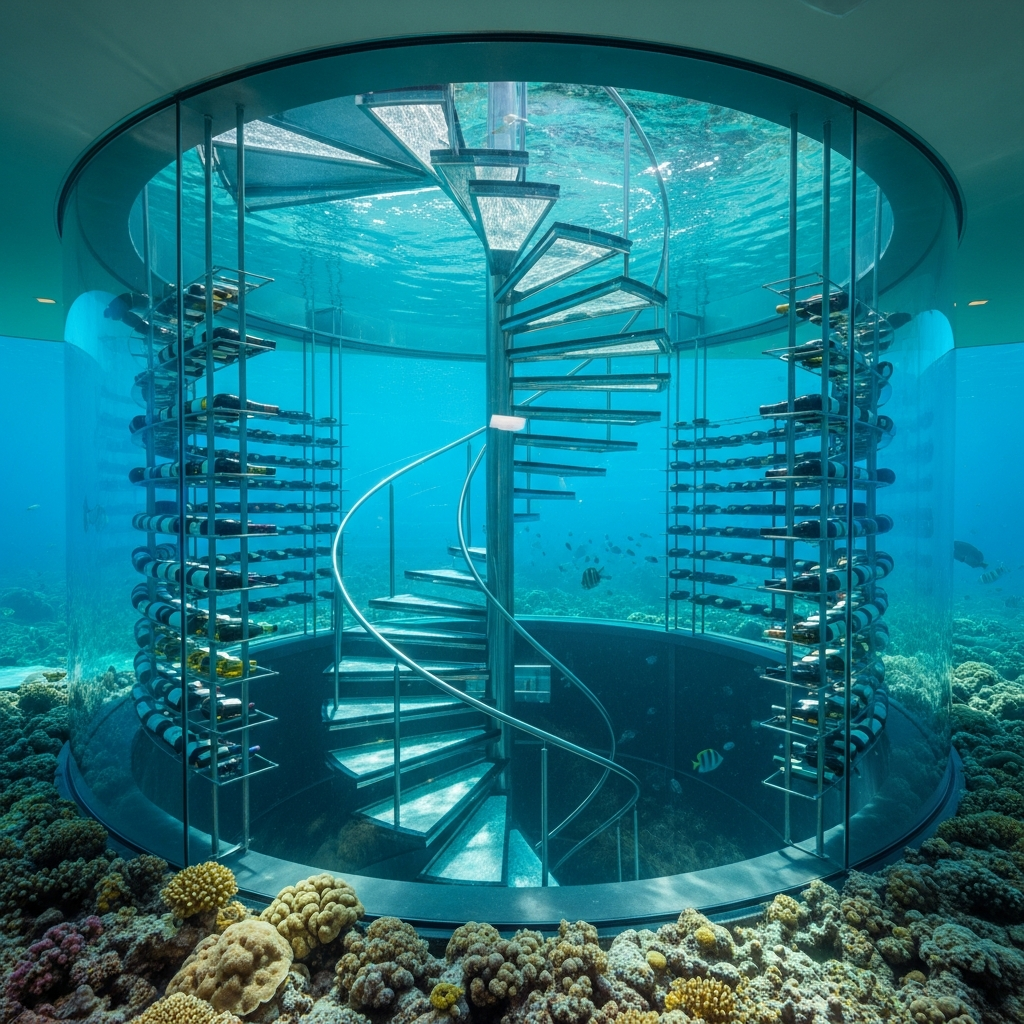
In the age of experiential luxury, where private islands and floating villas have become almost conventional, the underwater wine cellar emerges as the next symbol of ultimate exclusivity. Imagine descending a spiral staircase that vanishes into the ocean’s blue depths, your path illuminated by refracted sunlight dancing across curved glass walls. Rows of Bordeaux and Barolo bottles glimmer like treasure, suspended in a space that feels more like a dream sequence than a storage room.
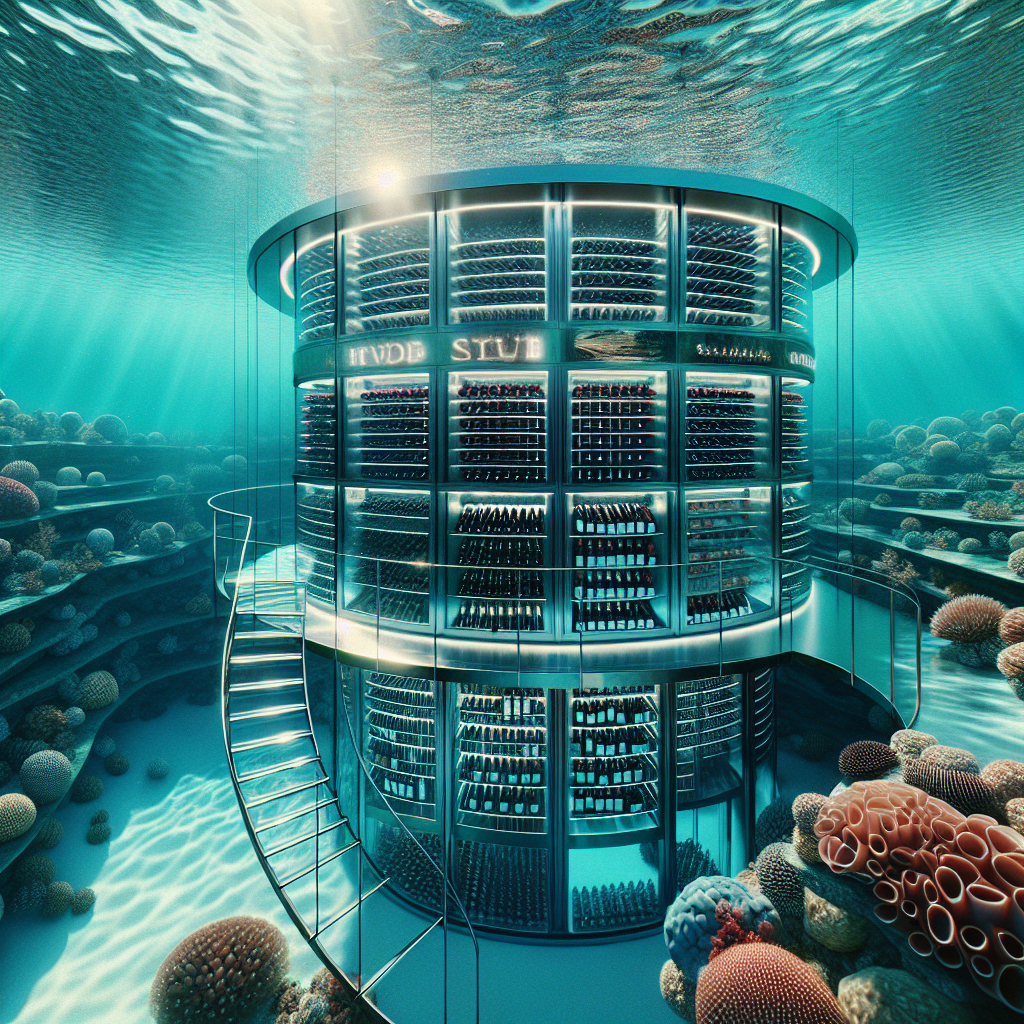
Designers are using hyperrealistic renderings to visualize these subaquatic sanctuaries. Some are conceptually anchored to coral reefs, others to the foundations of coastal villas or even underwater architectural resorts. The effect is both cinematic and meditative—architecture as a form of slow breathing, where the rhythm of the sea dictates the atmosphere within.
Engineering the Unreal
To build beneath the sea is to challenge physics itself. Pressure, temperature, and light behave differently underwater, demanding materials and technologies that are still largely experimental. Structural engineers and marine architects collaborate to create transparent shells capable of withstanding immense pressure while maintaining optical clarity. According to the Architectural Institute of America, the development of laminated, pressure-resistant glass composites has opened new possibilities for submerged design, though full-scale construction remains rare and prohibitively expensive.
In render form, however, the imagination is unbound. Designers can simulate impossible refractions, weightless staircases, and floating bottle racks. The renders are less about feasibility and more about exploring the boundaries of perception—what happens when architecture becomes a form of speculative fiction? The answer lies in the mesmerizing tension between realism and fantasy, a visual paradox that invites both admiration and disbelief.
Material Alchemy Beneath the Waves
At the heart of these designs is glass—transparent, reflective, and fragile, yet reimagined as a material of strength and permanence. Advanced composites, often inspired by biomimicry, mimic the resilience of seashells or the elasticity of jellyfish membranes. Research from the Journal of Non-Crystalline Solids highlights how nanostructured glass can resist cracking under pressure, paving the way for architectural applications once deemed impossible.
Some designers integrate responsive lighting systems that adjust to the ocean’s shifting hues, creating a living, breathing ambiance. Others propose self-cleaning glass surfaces that use microcurrents to repel algae and sediment. The aesthetic is minimal yet otherworldly—where the cellar becomes a luminous cocoon, suspended in the vastness of the sea.
From Render to Reality: The Precedents
While many of these projects remain digital fantasies, a few pioneering examples have materialized. Resorts in the Maldives and Dubai have experimented with submerged dining rooms and lounges, proving that underwater architecture can move beyond concept art. These early projects, however, are shallow-water constructions, relying on reinforced acrylic rather than true structural glass.
Architectural futurists see these cellars as a natural evolution of floating architecture—a response to rising sea levels and the human desire to coexist with water rather than resist it. As coastal cities adapt to climate realities, submerged spaces could shift from luxury novelties to experimental laboratories for aquatic living.
The Psychological Dimension of Submersion
Beyond aesthetics and engineering, there is a psychological fascination with the underwater world. The ocean evokes both calm and awe, a reminder of nature’s immensity and our fragility within it. Submerged spaces amplify this duality: the comfort of enclosure juxtaposed with the infinite unknown just beyond the glass. It’s an experience that borders on the spiritual—an architectural meditation on transparency, vulnerability, and control.
In this sense, underwater wine cellars are less about consumption and more about contemplation. They are sanctuaries for reflection, where the ritual of selecting a bottle becomes a dialogue with the deep. The space invites silence, encouraging visitors to slow down, breathe, and listen to the muted symphony of the sea.
Digital Fantasy as Design Catalyst
The rise of hyperrealistic rendering tools has democratized the act of dreaming. Architects can now visualize spaces that defy gravity, time, and material constraints. These underwater cellars exemplify how digital design can inspire material innovation. As seen in hyperrealistic architectural visualization, the line between concept and construction continues to blur, challenging both clients and creators to rethink what is possible.
External institutions such as the Royal Institute of British Architects have begun acknowledging digital renderings as legitimate architectural artifacts—visual essays that shape discourse even before a single brick is laid. In this light, the underwater glass wine cellar becomes not just a luxury fantasy but a philosophical statement about the evolving nature of design itself.
Luxury, Sustainability, and the Future of Depth
Ironically, while these designs exude extravagance, they also engage with sustainability narratives. The controlled underwater environment offers natural cooling, reducing energy consumption for wine preservation. Some proposals even integrate marine biodiversity programs, using the cellar’s structure as an artificial reef to support coral regeneration. This echoes the principles explored in biodegradable architecture, where design serves both human and ecological needs.
As the world redefines luxury in ecological terms, the idea of an underwater cellar may evolve from indulgence to innovation—a poetic coexistence of human craft and natural rhythm. The renders we see today may one day inform the sustainable habitats of tomorrow, where living beneath the surface becomes as natural as living above it.
Conclusion: The Depths of Desire
Underwater glass wine cellars represent more than architectural spectacle. They are metaphors for human ambition—the urge to inhabit the impossible, to bring light into darkness, to transform pressure into beauty. Whether they remain digital dreams or evolve into built marvels, they remind us that architecture is not merely about shelter but about imagination. Beneath the waves, amid the play of light and silence, the future of design glimmers—fragile, reflective, and profoundly human.
—{
"seo_title": "Underwater Glass Wine Cellars",
"meta_description": "Explore underwater glass wine cellars—luxury architectural renders that defy physics and redefine design innovation.",
"excerpt": "Could the next frontier of luxury design lie beneath the waves? Discover how underwater glass wine cellars are redefining architectural imagination.",
"focus_keyphrase": "underwater glass wine cellars"
}
AI Image Prompts
- Prompt: Photorealistic image of a submerged glass wine cellar beneath a coastal villa, illuminated by refracted sunlight, viewed through clear turquoise water, shot on a Hasselblad H6D.
Alt text: Underwater glass wine cellar beneath a luxury villa with refracted sunlight.
Caption: A visionary glimpse into subaquatic luxury—where architecture meets the ocean’s rhythm. - Prompt: Interior view of an underwater wine cellar with curved glass walls, floating bottle racks, and soft ambient lighting, photorealistic, Hasselblad medium format.
Alt text: Interior of curved glass underwater wine cellar with floating racks.
Caption: Inside the cellar, light bends and shimmers—turning storage into spectacle. - Prompt: A diver inspecting the exterior of a submerged glass structure surrounded by coral and marine life, cinematic lighting, Hasselblad 100MP.
Alt text: Diver exploring underwater glass architecture surrounded by coral.
Caption: The architecture becomes part of the ecosystem—an artificial reef of refinement. - Prompt: Minimalist render of a spiral staircase descending into an underwater glass dome filled with wine bottles, photorealistic lighting, Hasselblad lens clarity.
Alt text: Spiral staircase leading into an underwater glass dome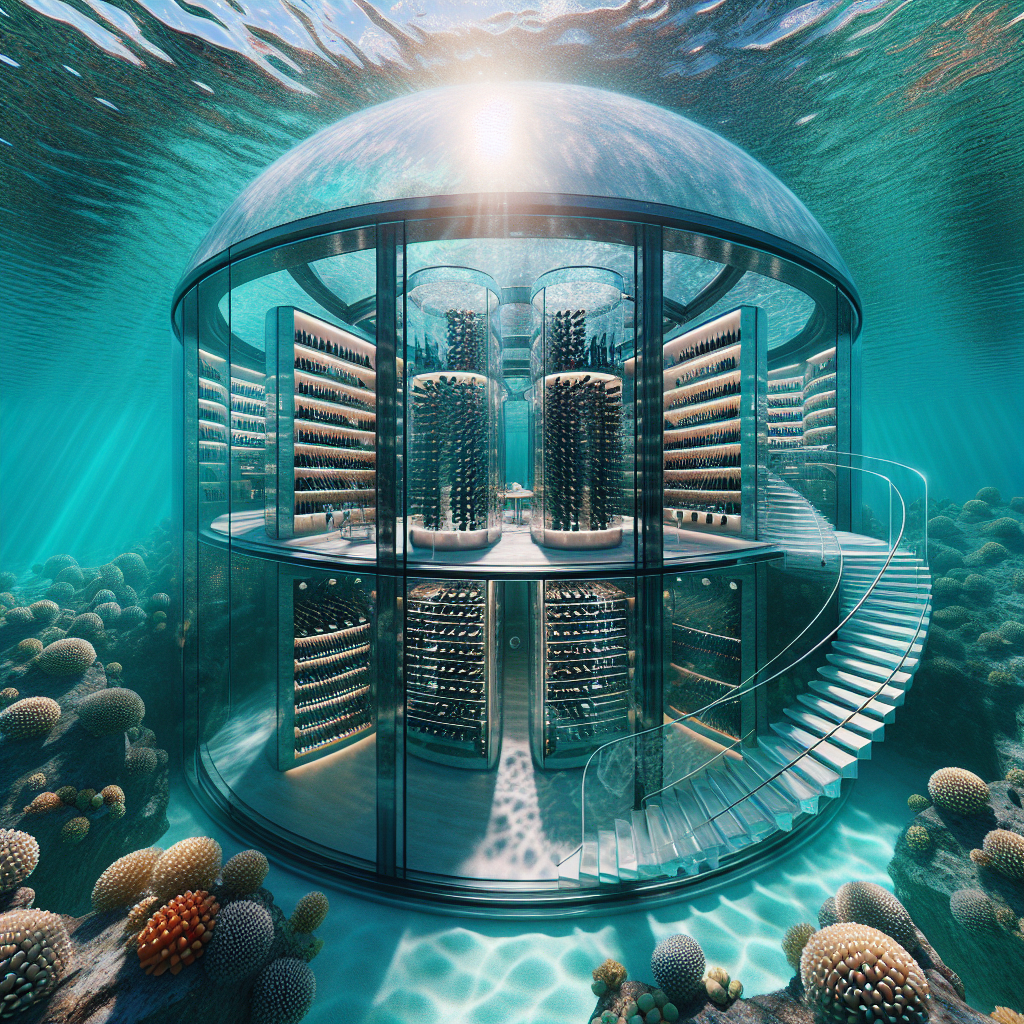

 ×
×❮ ❯