
#REF!
Gummy Skyscrapers: The Willy Wonka-Inspired Impossible Designs That Went Viral
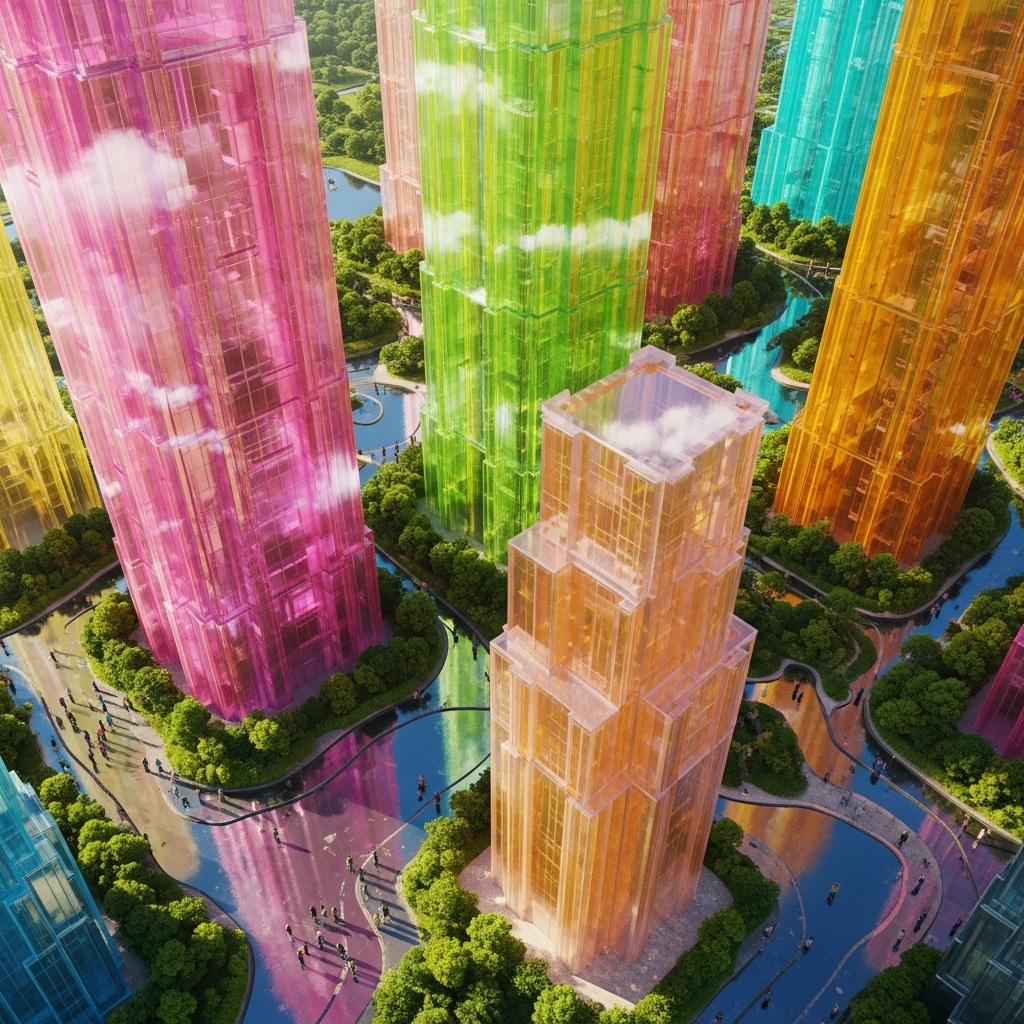
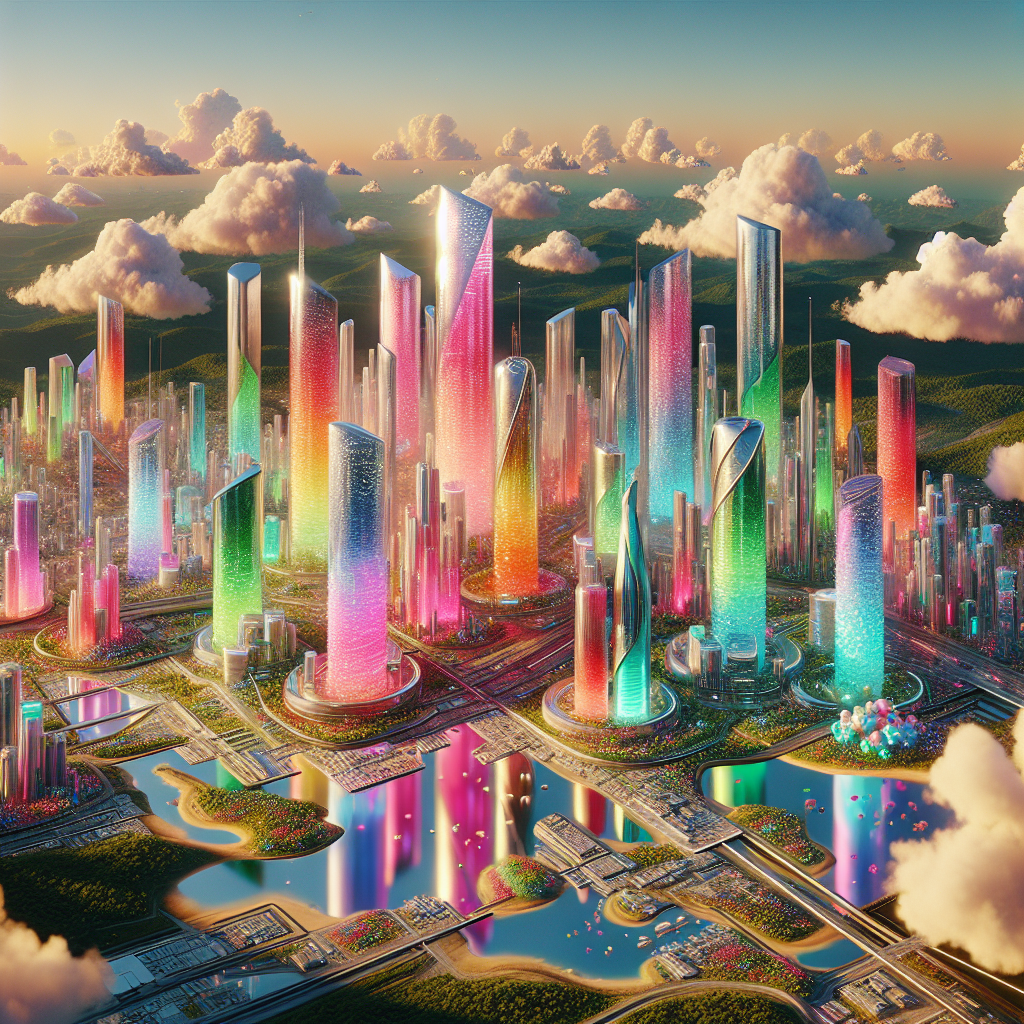
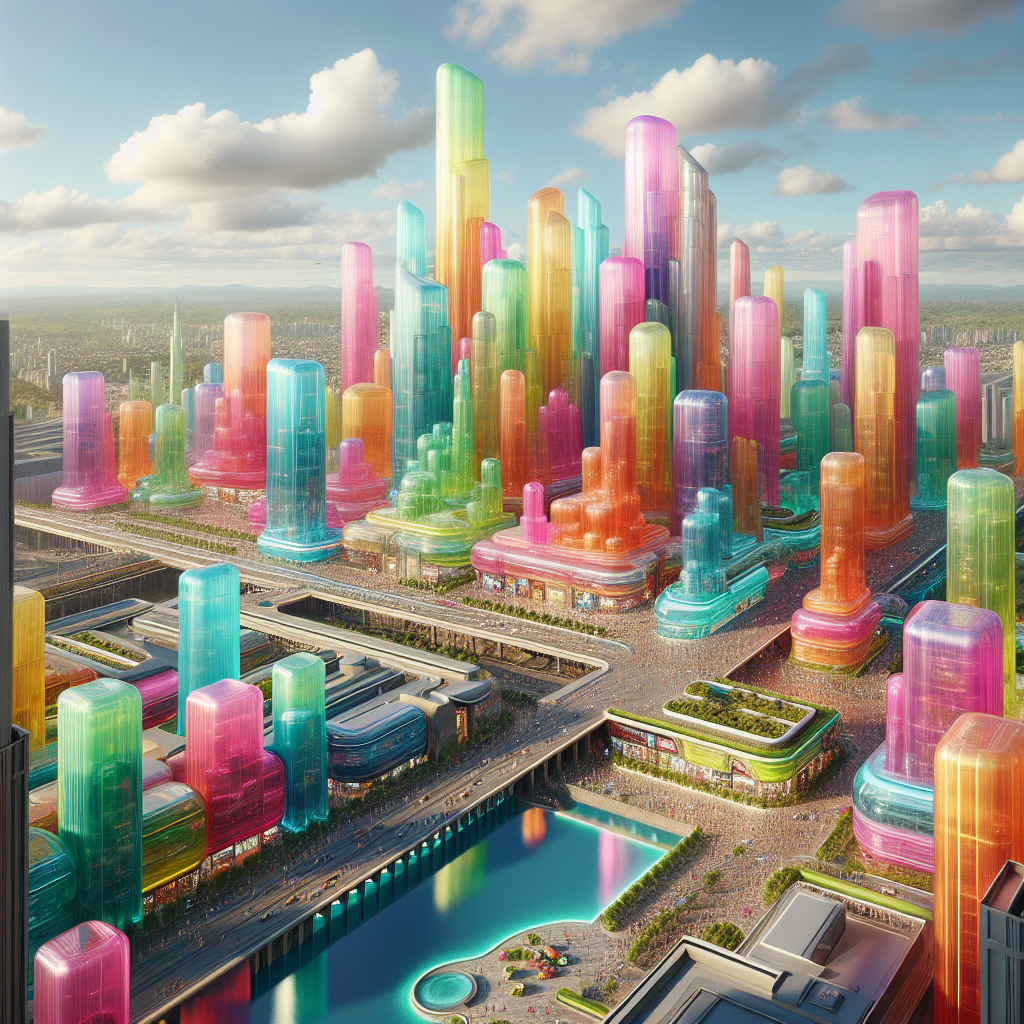
When the first images of “gummy skyscrapers” began circulating online in early 2026, they seemed like a fever dream — a collision between architectural fantasy and confectionery imagination. Towering forms in translucent pinks, ambers, and greens appeared to ooze and shimmer like gelatinous candy under the sun. Yet, behind the viral aesthetics lies a deeper conversation about material experimentation, sensory design, and the role of play in architecture’s future.
The Rise of the Candy-Colored Megastructure
These fantastical renderings, initially shared by a collective of digital artists and architects, drew inspiration from the whimsical worlds of Roald Dahl and the chromatic exuberance of postmodern design. The concept: skyscrapers made of “edible” or at least edible-looking materials — façades resembling sugar glass, structural cores that mimic gummy elasticity, and interiors that glow like fruit-flavored translucence. The effect was both surreal and oddly inviting, a rebellion against the grayscale austerity of contemporary urbanism.
In a world where AI-driven architecture often prioritizes efficiency and optimization, the gummy skyscraper stands as a counterpoint — an act of architectural mischief. It’s a reminder that design can still surprise, amuse, and even unsettle. As one critic from the Royal Institute of British Architects noted, “It’s less about feasibility and more about the return of wonder.”
Material Fantasy Meets Digital Fabrication
While the gummy skyscraper remains conceptual, its underlying principles intersect with real material science. Researchers at ETH Zurich and MIT’s Self-Assembly Lab have been exploring adaptive polymers and translucent composites that respond to light and temperature — materials that could, in theory, mimic the pliable, luminous qualities of candy. The gummy aesthetic, then, becomes a metaphor for flexibility and transformation in architecture.
It also aligns with the growing movement toward biodegradable architecture, where structures are designed to decompose or evolve over time. Imagine a skyscraper whose outer layer slowly melts away with the seasons, revealing new textures beneath — a living building that changes flavor, so to speak, with its environment. The gummy skyscraper’s viral appeal may be playful, but its implications touch on sustainability, temporality, and the emotional resonance of color.
The Psychology of Sweetness in Design
Color psychologists have long studied how saturated hues affect human perception. Candy tones — from cherry reds to lime greens — trigger associations with childhood, indulgence, and joy. In urban design, such palettes can act as antidotes to monotony. According to a 2025 study published in the Journal of Environmental Psychology, environments rich in playful color gradients can reduce stress and enhance creative thinking. The gummy skyscraper, in this sense, is more than eye candy; it’s a sensory intervention.
Some architects are already experimenting with similar principles. In Tokyo, the “Soft City” project integrates pastel-tinted, semi-transparent panels that shift hues throughout the day. In Copenhagen, a series of student housing blocks feature resin-coated façades that glow like hard candy at dusk. These projects, while grounded in practicality, share the same DNA as the viral gummy towers — an insistence that architecture can be emotional, edible-looking, and even humorous.
From Meme to Manifesto
What began as a meme has evolved into a manifesto for the next generation of designers. The gummy skyscraper movement reflects a broader cultural appetite for tactility and sensory engagement in digital times. As our lives become increasingly mediated by screens, the desire for touchable, taste-evoking architecture grows stronger. This parallels the resurgence of biophilic design, which reintroduces organic forms and natural materials into built environments to restore human connection with the physical world.
In this context, the gummy skyscraper becomes a symbol of “biophilic absurdism” — a term coined by design theorist Clara Jensen to describe architecture that merges natural impulses with artificial exaggeration. “It’s not about realism,” Jensen explains. “It’s about reawakening the senses through exaggeration. The gummy skyscraper doesn’t pretend to be edible; it reminds us what appetite feels like.”
Engineering the Impossible
Could such a structure ever exist? Materially, perhaps not in the literal sense. But the technologies that could bring it closer are already in motion. Advances in sand-printing technology and translucent biopolymers are redefining how façades interact with light. Some experimental studios are using hydrogel-based panels that shift opacity based on humidity, producing a gummy-like sheen that changes with the weather.
Meanwhile, 3D printing firms are developing edible architectural prototypes for exhibitions and events — temporary pavilions made from sugar, gelatin, and fruit pectin. The line between culinary art and architecture blurs further each year. The gummy skyscraper, though still fictional, may be a preview of a world where material science and sensory design coalesce into edible architecture — ephemeral, fragrant, and alive.
The Cultural Resonance of Whimsy
In an era dominated by climate anxiety and algorithmic precision, whimsy has become a radical act. The gummy skyscraper’s viral success underscores a collective yearning for optimism in design. Its glossy surfaces and improbable physics offer escapism, but also critique — a sugary mirror reflecting our hunger for delight in an increasingly data-driven world.
Architectural historian Dr. Leon Martens likens the phenomenon to the Pop Art movement of the 1960s. “It’s the same spirit of rebellion,” he says. “When everything becomes too serious, design finds its way back to humor.” Indeed, the gummy skyscraper could be read as a continuation of postmodern playfulness — a digital-age reinterpretation of Ettore Sottsass’s Memphis aesthetic, updated for the metaverse generation.
Beyond the Screen: Toward Tangible Fantasy
As digital renderings continue to dominate architectural discourse, the gummy skyscraper invites a reconsideration of tactility. Its viral presence online is paradoxical: a celebration of physicality that exists only in pixels. Yet, this paradox is precisely what makes it powerful. It reminds us that the future of architecture may not lie solely in realism or functionality, but in emotional provocation — in the ability to make us feel something, even if that feeling is absurd delight.
Whether these towers ever rise from the ground is almost irrelevant. Their cultural impact is already built — in the conversations they’ve sparked, the student projects they’ve inspired, and the renewed interest in color, texture, and joy as legitimate architectural tools. The gummy skyscraper may be impossible, but its message is not: architecture should taste like imagination.
{
"seo_title": "Gummy Skyscrapers: Viral Candy Architecture",
"meta_description": "Explore the viral gummy skyscrapers trend — Willy Wonka-inspired designs redefining architecture through color, texture, and imagination.",
"excerpt": "Could the future of architecture be sweet? The viral gummy skyscrapers prove that playfulness and material fantasy can reshape our cities.",
"focus_keyphrase": "gummy skyscrapers"
}
AI Image Prompts
- Prompt: Photorealistic image of a translucent pink and amber skyscraper resembling gummy candy, set in a futuristic cityscape under golden light, shot on a Hasselblad H6D.
Alt text: Gummy skyscraper glowing in sunset hues within a futuristic skyline.
Caption: A surreal vision of candy-inspired architecture that blurs the line between fantasy and urban design. - Prompt: Close-up of a building façade made of jelly-like panels reflecting neon lights at night, pedestrians below with umbrellas, Hasselblad medium format.
Alt text: Jelly-textured building façade reflecting neon lights in a rainy city.
Caption: The tactile illusion of a “soft” skyscraper — architecture that looks almost edible. - Prompt: Interior atrium of a gummy skyscraper with translucent walls and glowing pastel corridors, people walking through, photographed with natural light on Hasselblad.
Alt text: Interior of a pastel-lit gummy skyscraper with glowing translucent corridors.
Caption: Inside the imagined world of the gummy skyscraper — a kaleidoscope of color and translucence. - Prompt: Aerial view of multiple candy-colored towers surrounded by greenery and reflective water,
 ×
×❮ ❯