Paper-thin concrete roofs: new physics redefining lightness and solidity
Paper-Thin Concrete Roofs: New Physics Redefining Lightness and Solidity
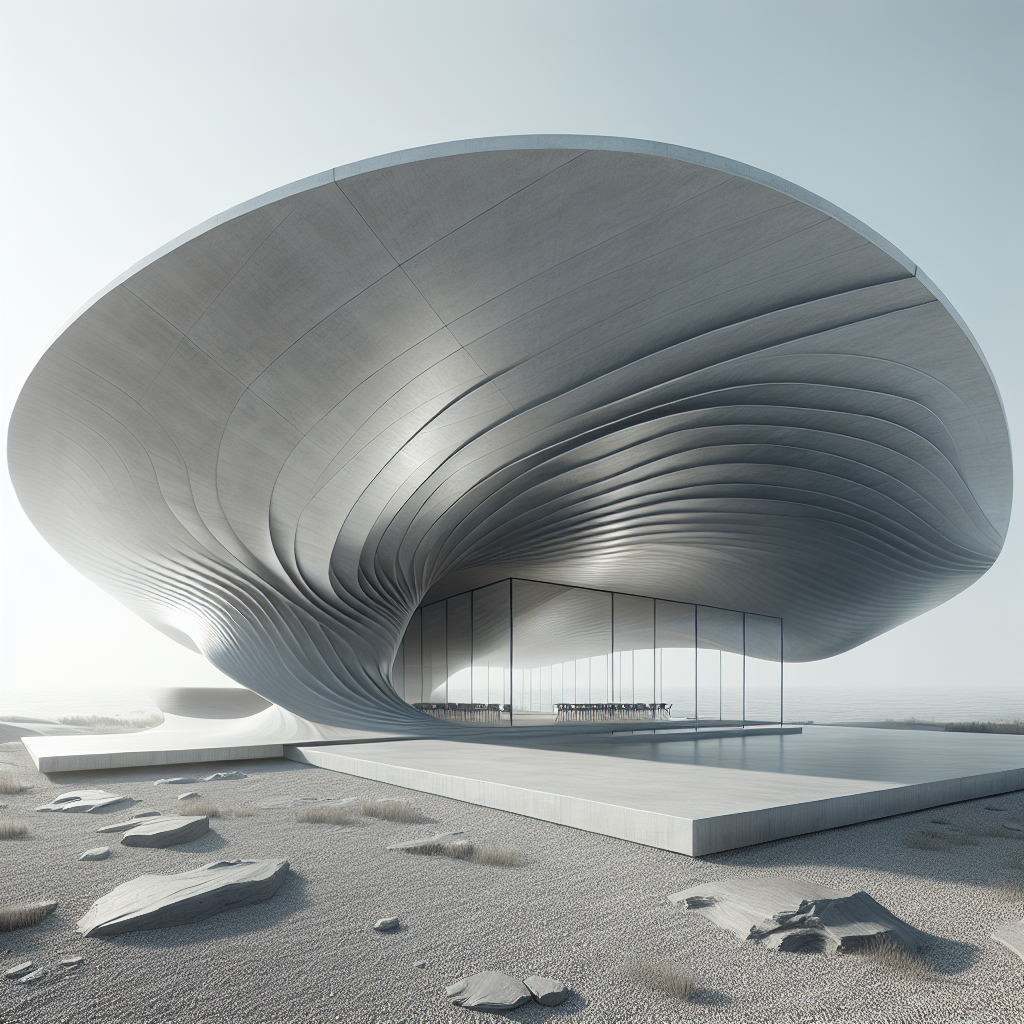
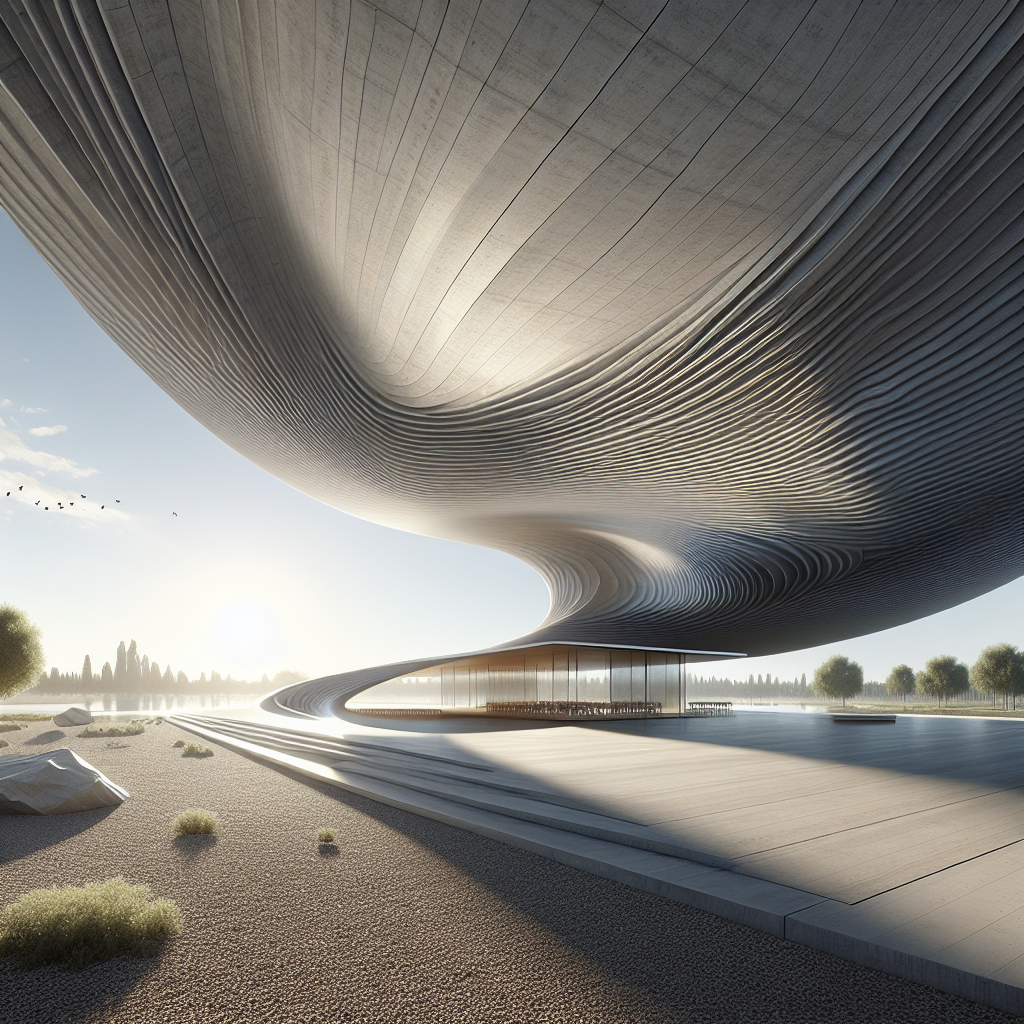
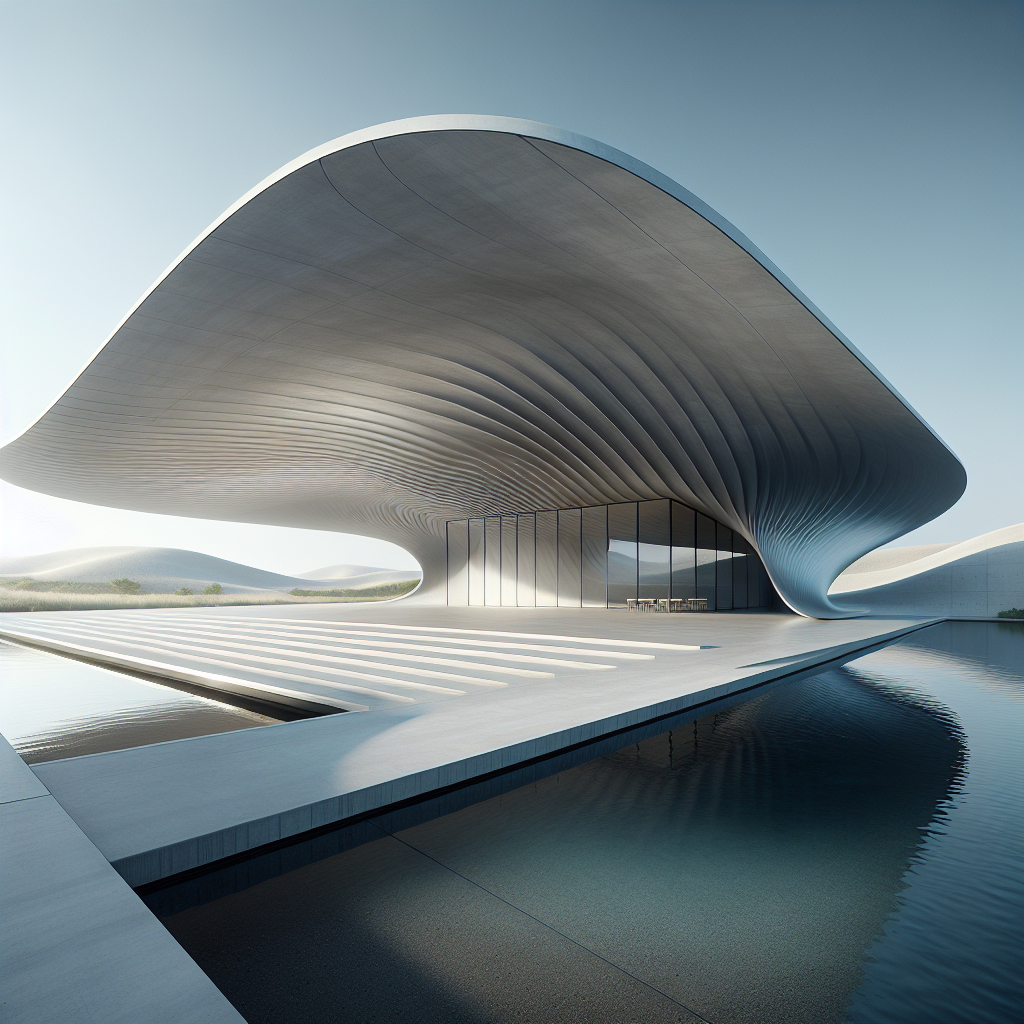
In the ever-evolving dialogue between architecture and engineering, few materials have been as paradoxical—or as poetic—as concrete. Once synonymous with mass and permanence, concrete is now being reimagined as a medium of lightness, flexibility, and fluidity. The rise of paper-thin concrete roofs—structures so slender they appear to defy gravity—marks a profound shift in how architects conceive the relationship between material, form, and physics. These ultra-thin shells, some measuring less than two centimeters thick, are not only feats of structural ingenuity but also aesthetic statements redefining what solidity can mean in the 21st century.
The Science of Lightness: A New Material Paradigm
At the heart of this revolution lies a confluence of advanced material science and computational design. Concrete, traditionally a heavy and brittle composite, has been reengineered through the use of ultra-high-performance concrete (UHPC)—a material with compressive strengths up to ten times greater than conventional mixes. By incorporating fine steel fibers, nano-silica, and optimized particle packing, UHPC achieves extraordinary tensile resilience, allowing architects to create shells and roofs that are astonishingly thin yet structurally robust.
These developments build upon the pioneering work of 20th-century masters such as Félix Candela and Pier Luigi Nervi, who explored the expressive potential of thin-shell concrete long before digital modeling existed. Today, parametric software and finite element analysis enable designers to simulate complex stress distributions, optimizing every curve and contour for maximum efficiency. The result is a new generation of roofs that combine minimal material use with maximum spatial drama.
From Brutalism to Featherweight Modernity
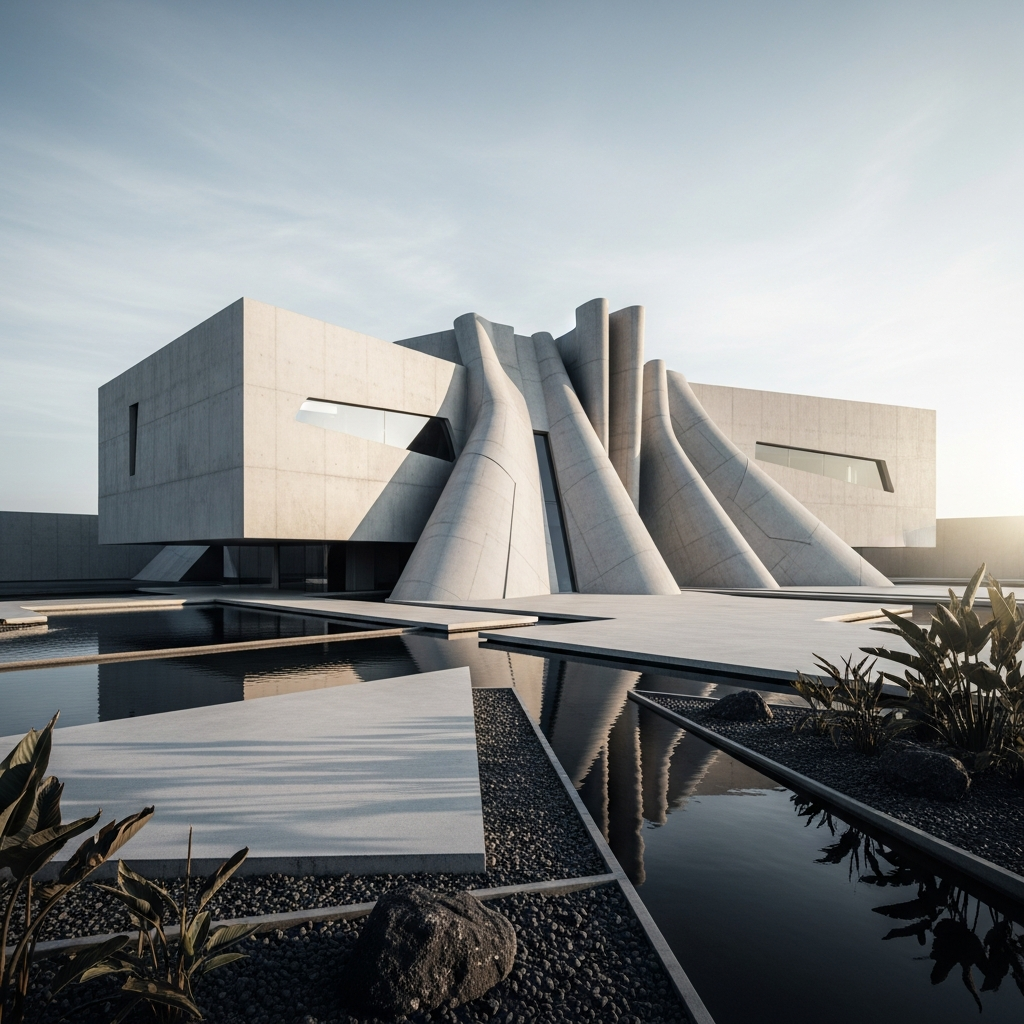
Concrete’s visual identity has undergone a radical transformation. Once celebrated for its raw, monolithic presence—as seen in the Brutalist revival—it is now being sculpted into ethereal membranes that seem to float above the landscape. The aesthetic of these paper-thin roofs evokes a sense of levitation, dissolving the boundary between structure and sky. They echo the ambitions of floating architecture, where lightness is both a visual and environmental pursuit.
Architectural firms across Europe and Asia are leading this movement. In Switzerland, ETH Zurich’s HiLo Roof project—a doubly curved concrete shell only 20 millimeters thick—demonstrates how robotic formwork and tensioned cable nets can replace traditional molds. The roof’s undulating surface captures light like silk, while its self-supporting geometry eliminates the need for internal columns. In Japan, Kengo Kuma’s experiments with fiber-reinforced concrete panels push the material toward a textile-like delicacy, merging tactile softness with structural rigor.
Physics Meets Poetics: The Art of the Thin Shell
What makes these roofs extraordinary is not just their engineering precision but their architectural emotion. They express a new kind of tectonic honesty—one that acknowledges the invisible forces of tension, compression, and curvature as aesthetic elements in their own right. The curvature of a paper-thin concrete roof is not ornamental; it is a direct response to the flow of forces within the material. Every fold, ridge, and dip is an embodiment of structural logic turned into art.
In many ways, this evolution mirrors the broader shift toward parametric design, where form emerges from performance rather than arbitrary composition. The roofs’ geometry is often derived from algorithmic optimization—digital scripts that calculate the most efficient distribution of stress. This fusion of physics and aesthetics results in structures that are both materially frugal and visually transcendent.
Sustainability Through Efficiency
Beyond their visual allure, paper-thin concrete roofs embody a powerful environmental argument. By drastically reducing material consumption, they cut down on the embodied carbon associated with cement production—one of the largest contributors to global CO₂ emissions. According to a 2024 report by the International Union of Architects, innovations in thin-shell concrete could reduce structural material use by up to 60% compared to conventional slabs.
Moreover, these roofs often integrate passive environmental strategies. Their curved profiles enhance natural ventilation, promote rainwater harvesting, and optimize solar exposure. When combined with green roof systems or photovoltaic membranes, they become multifunctional environmental devices—simultaneously shading, cooling, and generating energy. The thinness of the concrete also accelerates thermal response, allowing for more precise climate control in adaptive buildings.
Digital Fabrication and the Future of Formwork
One of the key enablers of this new era is the revolution in digital fabrication. Traditional formwork—responsible for much of the cost and waste in concrete construction—is being replaced by flexible, reusable systems. Techniques such as fabric formwork, 3D-printed molds, and robotic extrusion allow for complex geometries without excessive material waste. ETH Zurich’s Smart Slab project, for instance, used 3D-printed sand molds to cast a 20-square-meter roof segment with millimeter precision, reducing waste by 70%.
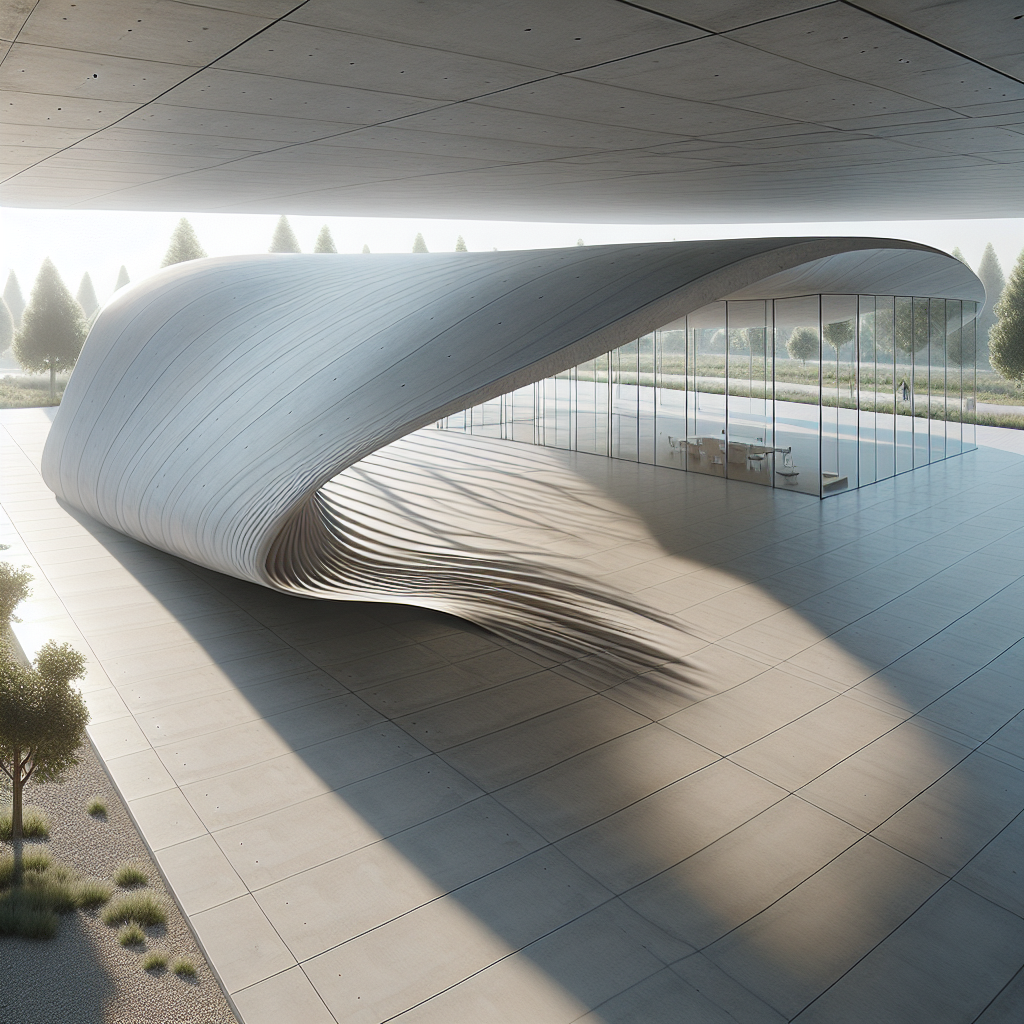
These innovations resonate with the broader trend toward digital fabrication in architecture, where computation and robotics merge to produce forms that were once impossible to realize. The tactile irregularities of these new concrete surfaces—subtle ripples, fine striations, and gradient textures—add a sensual dimension that challenges the material’s industrial reputation.
Case Studies: Lightness as a Structural Ethos
In Spain, the Casa del Loto by Estudio ALA employs a roof so thin it appears to hover above its glass walls. The shell’s parabolic curvature channels rainwater into a central courtyard, creating a microclimate that cools the interior naturally. In Mexico City, the Pabellón de la Gravedad by Taller Estilo Arquitectura uses a folded concrete canopy to create shaded communal spaces, demonstrating how thinness can coexist with civic generosity.
Meanwhile, in the Netherlands, the Light Pavilion by Studio RAP explores the intersection of biomimicry and material science. Inspired by the exoskeletons of beetles, its concrete shell is layered with microfibers that mimic natural bone structures, achieving both lightness and resilience. The result is a roof that seems to breathe—an architectural organism in dialogue with its environment.
Redefining Solidity in the Age of Transparency
Perhaps the most profound implication of paper-thin concrete roofs is philosophical. They challenge the modernist equation of solidity with permanence. In their near-weightless presence, these structures embody a new kind of permanence—one rooted in adaptability, precision, and environmental intelligence. Concrete, once the emblem of static monumentality, now becomes a medium of responsive minimalism.
As architects increasingly seek to balance material efficiency with experiential richness, the lessons of these roofs extend far beyond their physical form. They invite us to reconsider the emotional and ecological dimensions of building. They remind us that lightness is not the absence of matter, but the mastery of it.
The Future: Toward a Material Renaissance
Looking ahead, the integration of AI-driven optimization and bio-based additives promises to push the boundaries of thin concrete even further. Researchers are experimenting with bacterial self-healing agents and carbon-sequestering aggregates, transforming concrete from a passive medium into an active participant in environmental regeneration. The synergy between computation, sustainability, and craftsmanship suggests a future where concrete roofs are not just lighter, but smarter.
In this emerging landscape, the paper-thin concrete roof stands as both a technological triumph and a poetic gesture—a testament to