
Nomadic offices: collapsible work pods for mobile professionals
Nomadic Offices: Collapsible Work Pods for Mobile Professionals
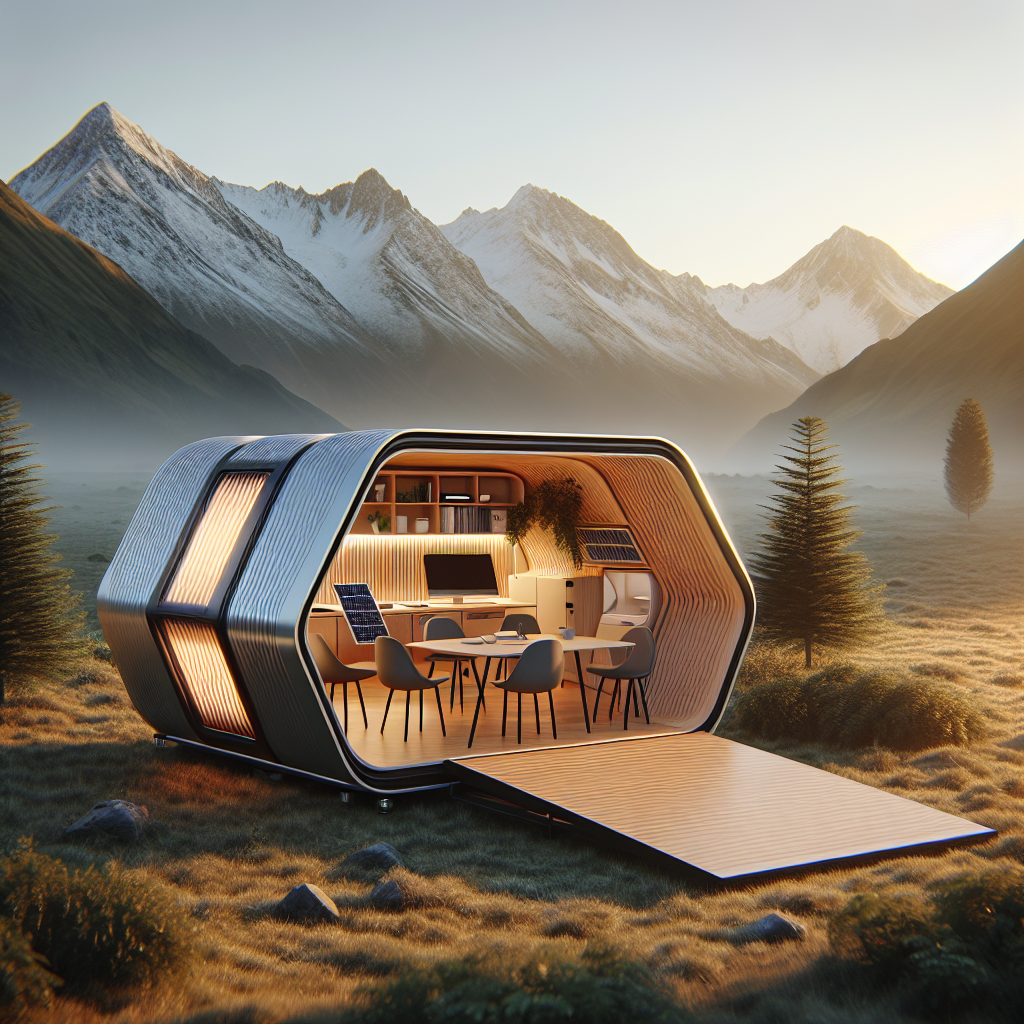
In a world where mobility defines modern work culture, the office has become less of a fixed location and more of a fluid concept. The rise of nomadic offices—compact, collapsible work pods designed for professionals on the move—signals a profound shift in how we conceive workspace design. These mobile micro-environments blend architecture, technology, and psychology to create adaptable sanctuaries for focus and creativity, wherever one may roam.
The Rise of the Nomadic Professional
According to a 2024 report by McKinsey & Company, over 35% of the global workforce now operates remotely at least part-time. The pandemic accelerated this trend, but its persistence is rooted in a deeper cultural transformation—one that values freedom, flexibility, and autonomy over traditional corporate infrastructure. Architects and designers have responded with a new typology: the collapsible work pod.
These pods are more than portable offices; they are expressions of a lifestyle that merges mobility with mindfulness. Inspired by modular design principles explored in projects like modular design and flexible architecture, they embody a future where workspaces are as transient and adaptable as the people who use them.
Designing for Mobility: The Architecture of Adaptability
At the heart of the nomadic office movement lies a question of design ethics: how can architecture serve a population that refuses to stay still? The answer lies in lightweight, collapsible structures that can be deployed and dismantled in minutes. These pods, often made from advanced composites, recycled aluminum, or tensile fabrics, balance durability with portability.
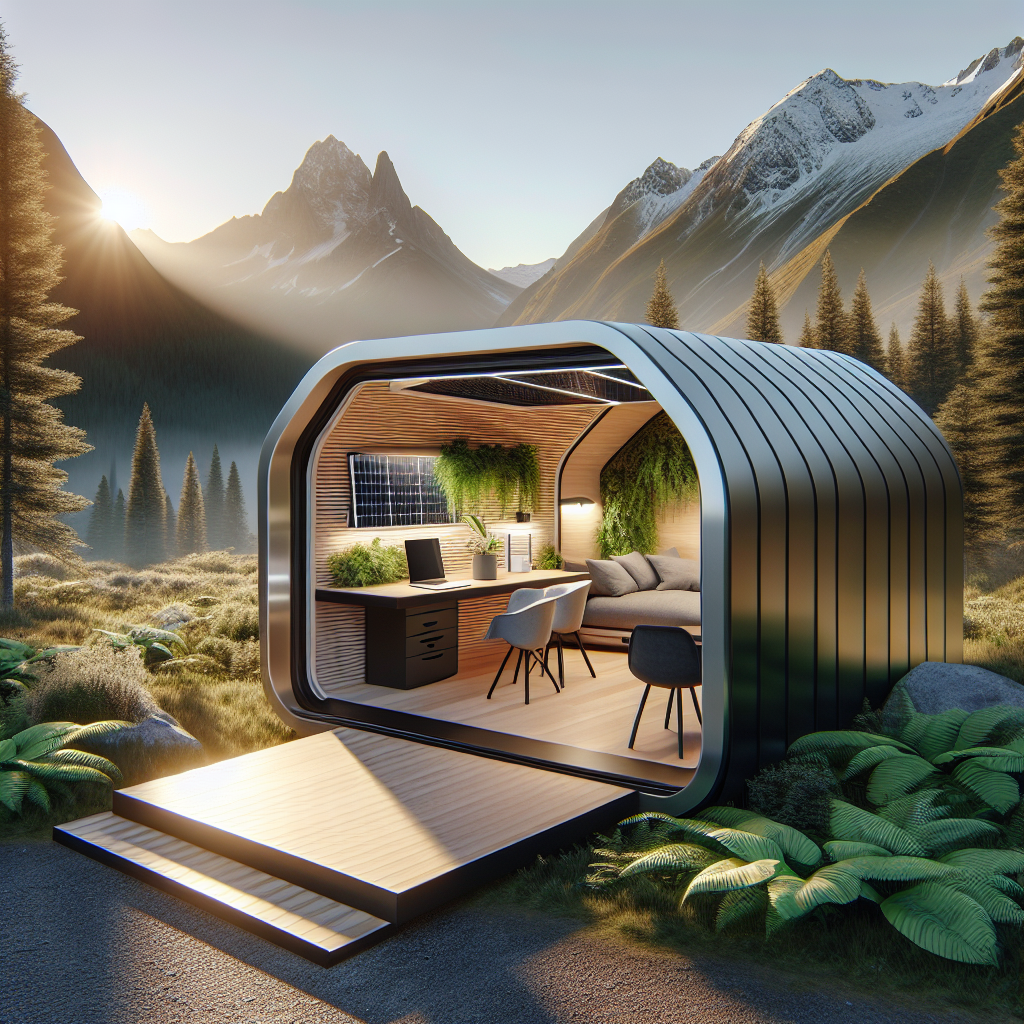
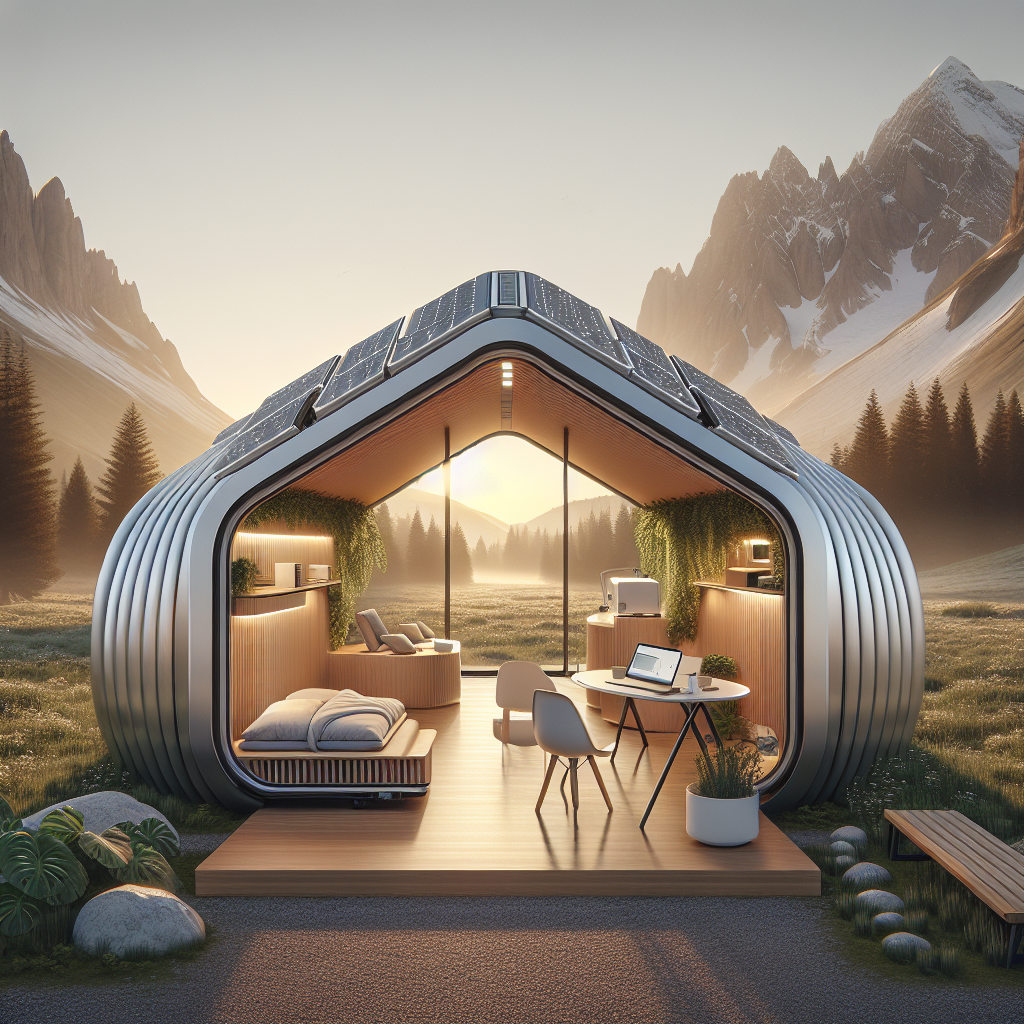
Some models, such as the “FoldHaus” prototype exhibited at design fairs in 2024, feature accordion-like shells that expand into a full workstation complete with integrated solar panels and acoustic insulation. Others, like the “Nomad Desk Capsule” by Studio Boon, unfold from a suitcase-sized unit into a micro-office with ergonomic seating, adjustable lighting, and soundproof panels.
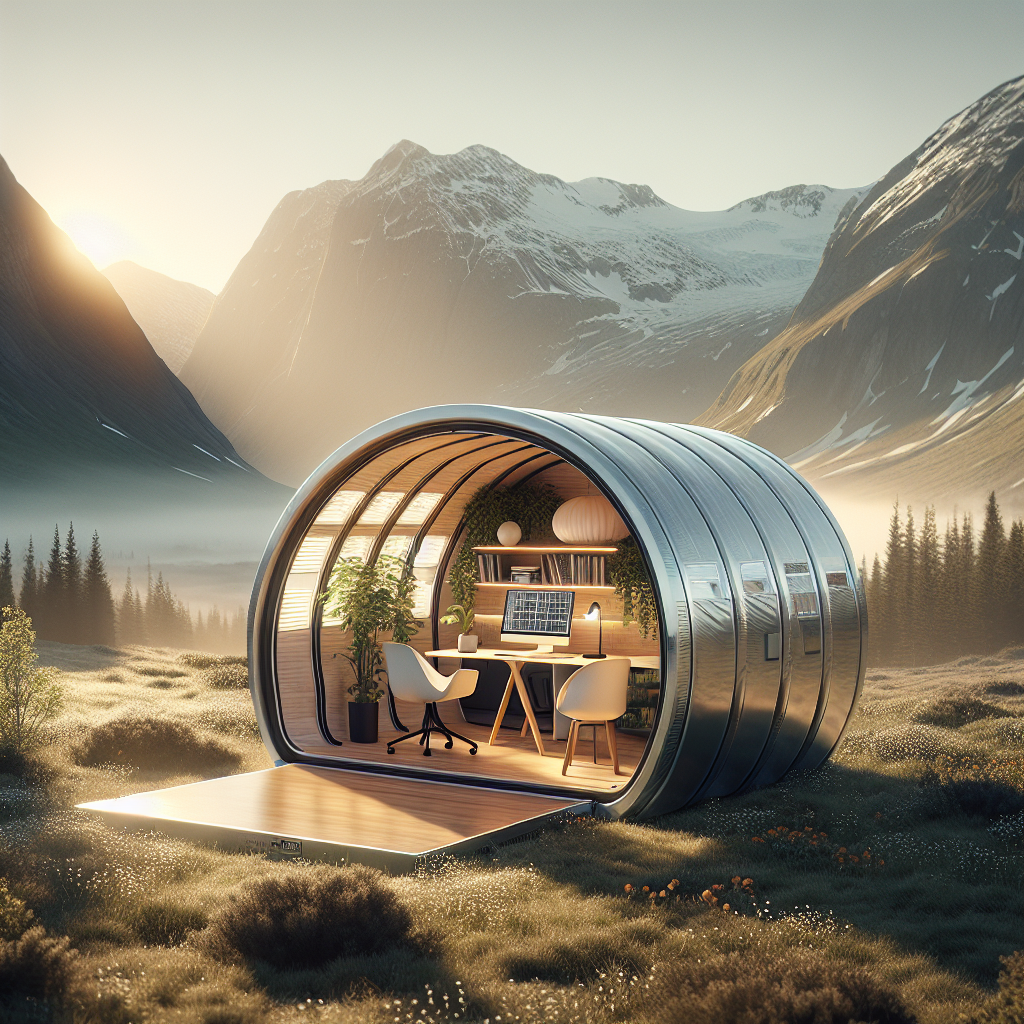
These innovations echo the ephemeral architecture movement, where temporality becomes a design virtue rather than a limitation. The aesthetic is minimal yet tactile—smooth polymer surfaces paired with warm wood veneers, translucent partitions filtering natural light, and soft, foldable textiles that cocoon the user in calm.
Technology as the Invisible Partner
While the physical form of the pod is critical, its technological integration defines its functionality. The most advanced models incorporate IoT-enabled systems that regulate temperature, lighting, and air quality automatically. Some even feature AI-driven acoustic mapping to optimize sound levels for concentration, a concept reminiscent of smart home technology applied to micro-workspaces.
These pods often rely on solar power and battery storage, ensuring off-grid independence. Wireless connectivity, embedded projectors, and fold-out screens transform them into full-fledged creative studios. The result is a seamless fusion of architecture and digital infrastructure—a mobile environment that feels both intimate and infinite.
Biophilic Principles in Portable Form
Designers are increasingly incorporating biophilic design principles into these pods, recognizing the psychological need for connection with nature even in transient spaces. Foldable panels may open to reveal living moss walls, while integrated planters bring greenery into confined environments. Natural materials—bamboo laminates, cork flooring, and wool felt—soften the technological edge, creating a sensory balance between innovation and organic comfort.
In essence, these pods act as microcosms of sustainable design. They minimize environmental impact through modular construction, recyclable materials, and low-energy systems. Some even employ passive solar design strategies, orienting panels to maximize daylight and reduce artificial lighting needs.
Case Studies: Redefining the Future of Work Anywhere
One of the most compelling examples comes from the Finnish design collective AaltoNomad, whose “WorkNest” pod debuted in Helsinki in late 2024. The structure unfolds from a compact trailer into a 9-square-meter workspace, complete with integrated heating, adjustable LED panels, and a panoramic skylight. Its interior—lined with pale birch and acoustic wool—evokes the serenity of Nordic minimalism while offering full digital connectivity.
In Japan, the “Shinkansen Office Pod” initiative allows professionals to rent collapsible work units that attach to train carriages, transforming high-speed travel into productive time. This project merges the efficiency of urban mobility with the intimacy of private workspace design, echoing the principles of urban mobility innovation explored in contemporary city planning.
Meanwhile, in California, eco-startup RoamSpace has introduced a series of solar-powered work pods for digital nomads. Each pod can be assembled in under an hour and includes composting toilets, water filtration, and retractable awnings for shade. The design philosophy aligns with the broader movement toward biodegradable architecture, emphasizing low-impact living without sacrificing aesthetic refinement.
The Psychology of Portable Privacy
Beyond form and function, the success of nomadic offices lies in their ability to create a sense of psychological enclosure. In an era of overstimulation, these pods offer controlled environments where professionals can retreat, reflect, and refocus. The tactile intimacy of their interiors—soft acoustic panels, dimmable lighting, and customizable scents—transforms them into sanctuaries of solitude amid constant motion.
Designers have begun to treat these pods as personal ecosystems, where sensory design and ergonomics converge. This mirrors the evolution of responsive architecture, where spaces dynamically adjust to human behavior rather than dictating it. The result is a workspace that feels less like a product and more like a companion.
Challenges and the Road Ahead
Despite their promise, nomadic offices face logistical and cultural challenges. Portability demands compromises in insulation, soundproofing, and spatial generosity. Moreover, zoning regulations and infrastructure limitations in urban areas can restrict deployment. Yet, as remote work becomes a permanent fixture of global economies, the demand for flexible, mobile workspaces will only intensify.
Architects are now exploring hybrid models—semi-permanent pods that can cluster into temporary co-working villages or integrate with existing public infrastructure. The vision is not merely to design portable offices but to redefine the geography of work itself. In this emerging landscape, architecture becomes a tool for liberation rather than confinement.
A New Nomadism
The nomadic office encapsulates a paradox of our time: the desire for both movement and belonging. It reflects a generation that seeks stability not in place, but in design intelligence—spaces that travel with us, adapt to us, and sustain us. As the boundaries between home, office, and world dissolve, the collapsible work pod stands as a symbol of design’s evolving role: not to anchor us, but to accompany us.
In this fluid future, architecture becomes less about permanence and more about presence. The nomadic office, with its blend of mobility, sustainability, and serenity, offers a glimpse into a world where design moves at the speed of life itself.
Keywords: nomadic offices, collapsible work pods, mobile workspace design, modular architecture, portable office design, sustainable work pods, digital nomad design, adaptive architecture