
Nomad’s delight: portable glamping huts with foldable decks
Nomad’s Delight: Portable Glamping Huts with Foldable Decks
In an era where mobility, sustainability, and design sophistication converge, portable glamping huts with foldable decks have emerged as the architectural embodiment of the modern nomadic dream. These compact, transportable sanctuaries redefine the relationship between luxury and nature, offering a refined escape that balances minimal environmental impact with maximal aesthetic pleasure. For architects, designers, and developers, they represent not merely a lifestyle trend but a blueprint for the future of modular, off-grid living.
The Rise of Nomadic Architecture
The notion of a home that moves with its inhabitant is not new. From the Mongolian yurt to the Airstream trailer, nomadic architecture has long reflected humanity’s instinct to wander while maintaining a sense of belonging. Yet, today’s portable glamping huts elevate this tradition through advanced materials, intelligent design, and a sensitivity to landscape integration. They are not simply shelters; they are micro-architectural statements—compact yet expressive, efficient yet indulgent.
According to a 2024 report by Allied Market Research, the global glamping market is projected to surpass $7 billion by 2030, driven by a growing appetite for sustainable tourism and experiential travel. This surge has catalyzed innovation in mobile architecture, prompting designers to explore how luxury can coexist with transience.
Design Innovation: The Foldable Deck Revolution
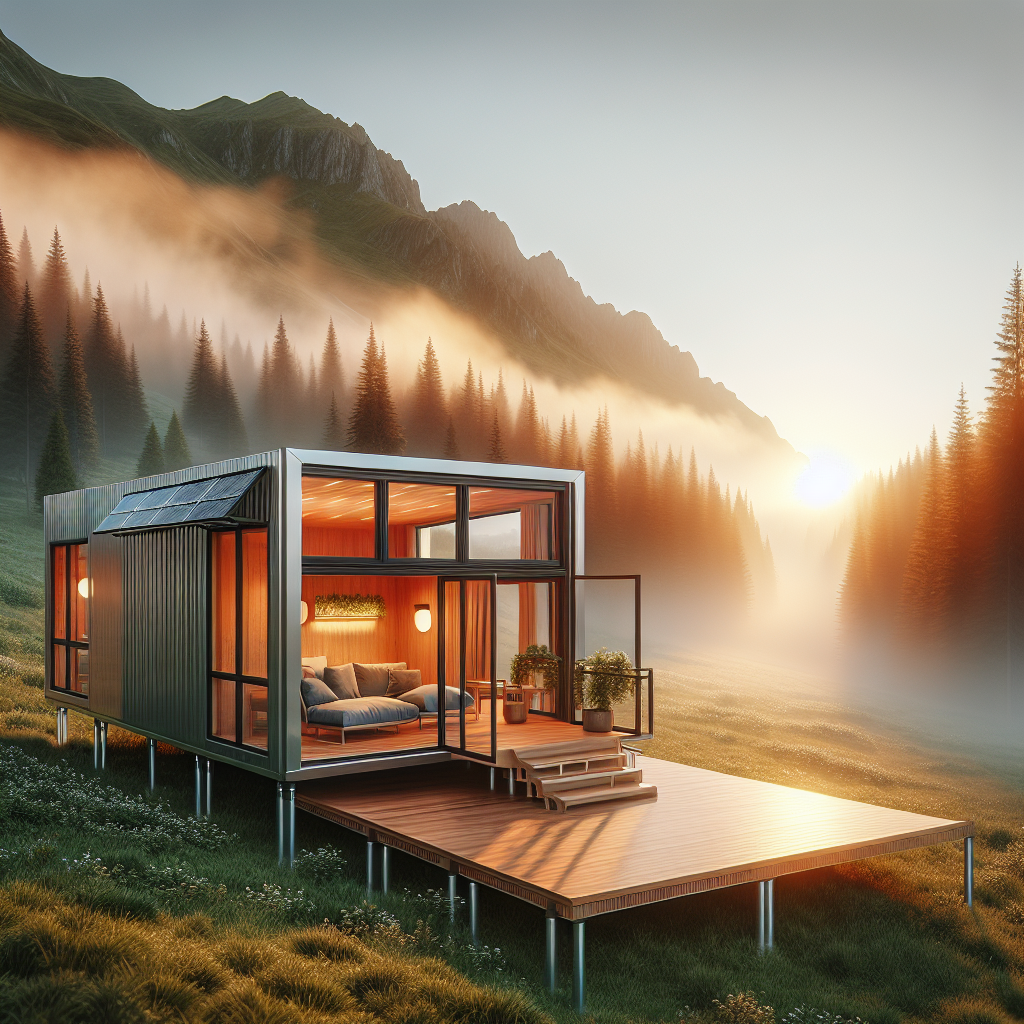
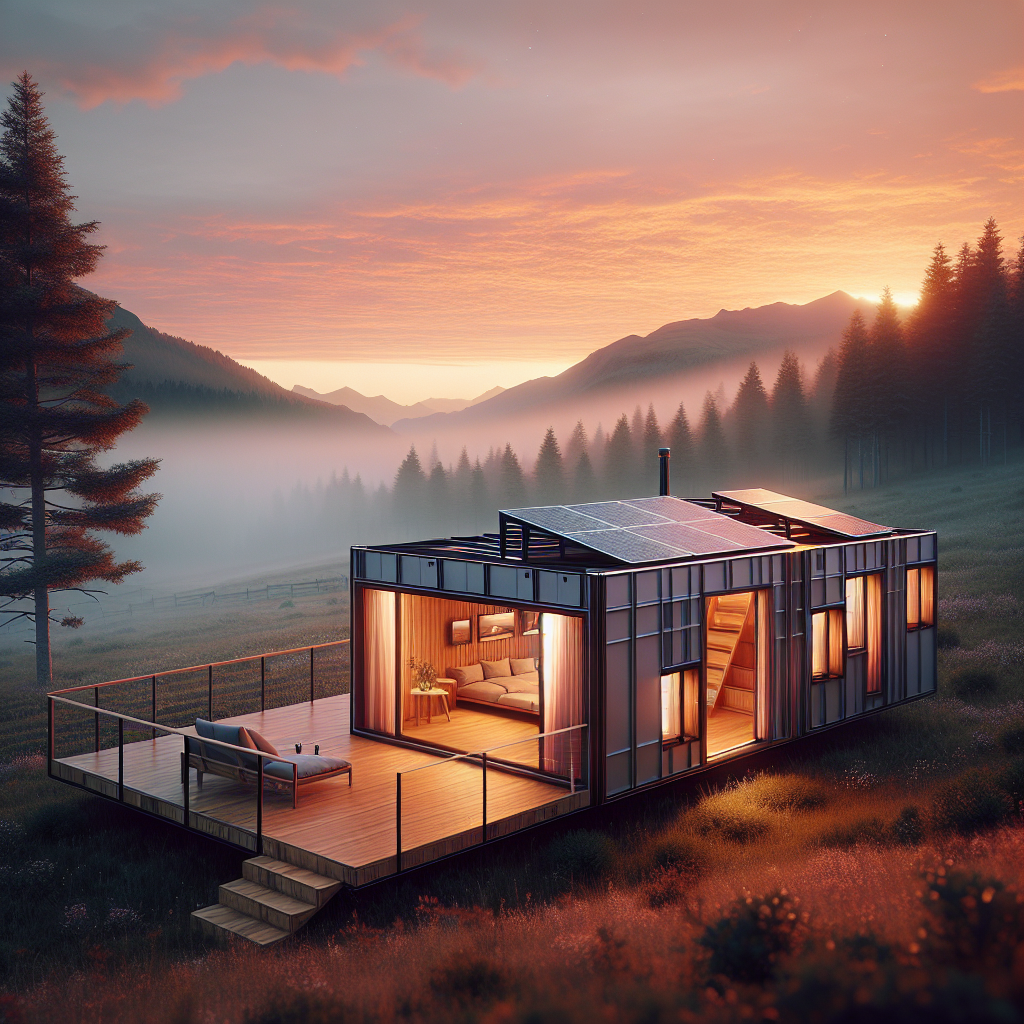
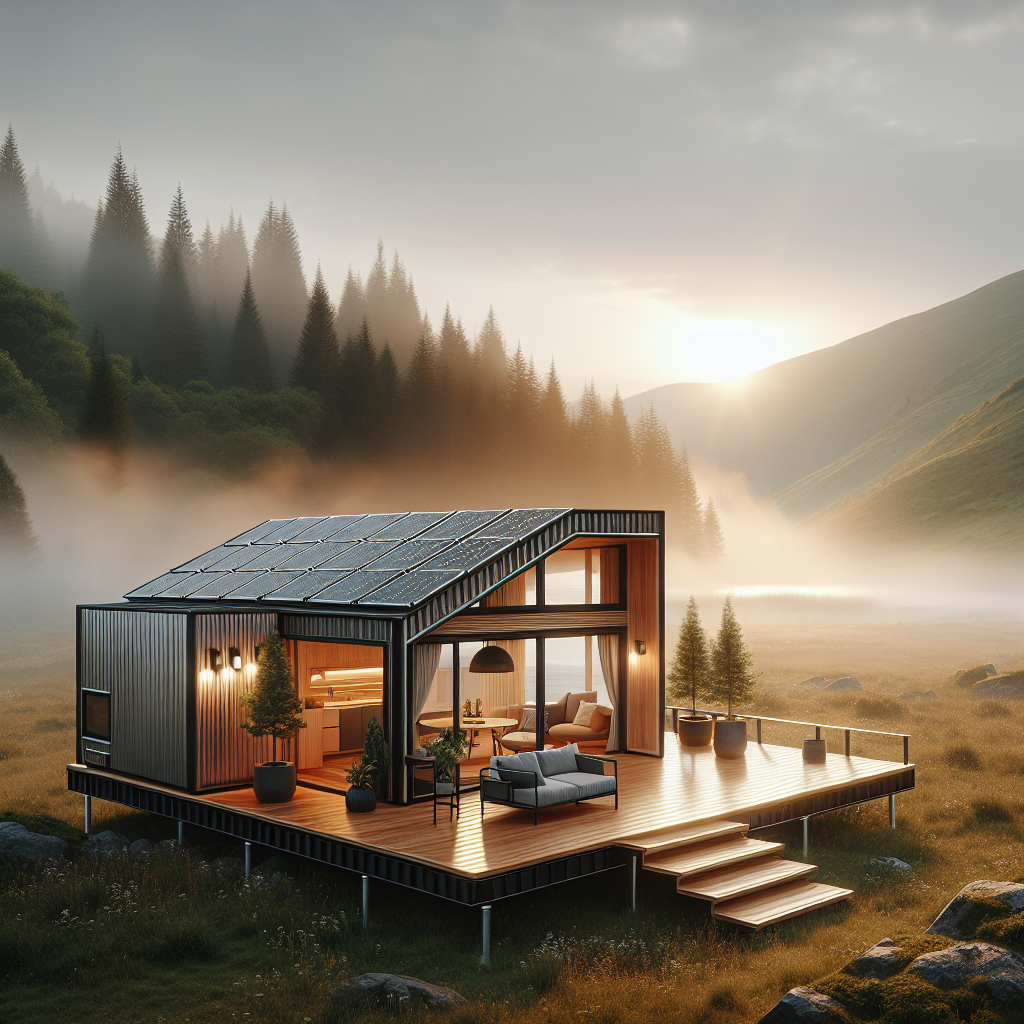
At the heart of this movement lies the foldable deck—a transformative feature that blurs the boundary between interior and exterior. When deployed, it unfurls like a stage, extending the living space into the surrounding environment. When folded, it compacts seamlessly into the hut’s façade, ensuring ease of transport and protection during transit.
Architectural studios across Europe and Asia have been experimenting with these mechanisms, drawing inspiration from origami engineering and kinetic architecture. The result is a new typology of adaptable dwellings that respond to context—opening toward mountain vistas, forest clearings, or coastal horizons with theatrical precision.
For instance, the Danish firm LUMO Design’s “Nomad Pod” integrates a hydraulically assisted folding deck made from cross-laminated timber (CLT). The structure’s lightweight aluminum frame ensures portability, while solar-integrated panels power its minimal energy needs. The deck, when unfolded, doubles the usable area, creating a fluid continuum between the cabin’s glazed interior and the natural terrain beyond.
Materiality and Sustainability
Material innovation is central to the appeal of these mobile sanctuaries. Many contemporary glamping huts utilize biodegradable composites, recycled aluminum, and thermally modified wood—materials that balance durability with ecological responsibility. This approach aligns with the broader movement toward biodegradable architecture, where structures are designed to leave minimal trace once decommissioned.
Some designers have even begun experimenting with sand-printed components, leveraging additive manufacturing to produce lightweight, customizable panels that echo the hues and textures of their surroundings—a concept explored in depth in sand printing technology for design and architecture. The result is a seamless aesthetic integration between built form and landscape, reinforcing the ethos of low-impact luxury.
Spatial Efficiency and Interior Craft
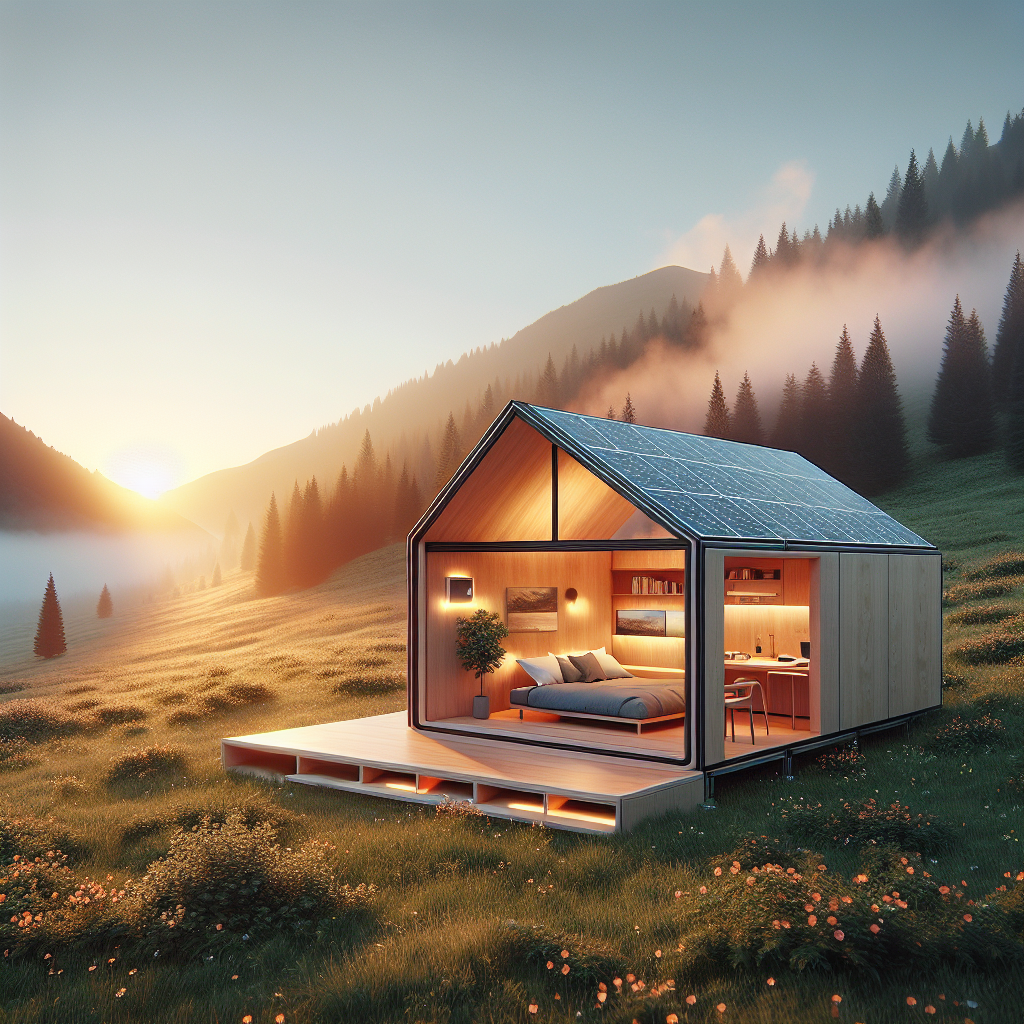
Inside, these huts are a masterclass in spatial economy. Every cubic centimeter is considered, every surface multitasks. Foldaway beds, modular storage, and retractable kitchen units transform compact interiors into versatile living environments. Designers often employ warm, tactile materials—oak veneers, wool textiles, and brushed brass accents—to offset the technical precision of the exterior shell.
Lighting plays a pivotal role in amplifying spatial perception. Strategically placed skylights and panoramic glazing dissolve boundaries, while integrated LED systems adjust color temperature to mirror natural circadian rhythms. This human-centric approach echoes the principles of biophilic design, emphasizing emotional well-being through sensory harmony.
Mobility Meets Modularity
Beyond aesthetics, the engineering of these huts is a triumph of modular thinking. Prefabricated components allow for rapid assembly and disassembly, while compact transport dimensions make them suitable for remote or off-grid deployment. Many models are designed to fit within standard shipping containers, facilitating global mobility without the logistical burden of traditional construction.
This modularity aligns with the growing demand for flexible design solutions that adapt to shifting lifestyles and climates. Whether used as seasonal retreats, eco-resorts, or mobile workspaces, portable glamping huts exemplify how architecture can evolve in tandem with human mobility.
Case Studies: From Alpine Peaks to Desert Plains
Across the globe, architects are experimenting with context-responsive iterations of the glamping hut. In the Swiss Alps, Atelier Schmid’s “FoldHaus” employs insulated panels and a telescopic deck system that retracts during snowstorms. In contrast, the Australian studio TreadLight’s “Desert Bloom Cabin” uses reflective coatings and operable shading fins to mitigate heat gain in arid environments.
Meanwhile, in Japan, minimalist designer Kengo Tanaka has reinterpreted the concept through a cultural lens. His “Shinrin Pod” features a tatami-lined interior and a bamboo-clad deck that folds outward like a ceremonial platform, embodying both restraint and reverence for nature. Each project underscores how local materials and climatic intelligence can inform portable architecture without sacrificing luxury.
Technology and Autonomy
Today’s portable huts are not merely physical constructs—they are intelligent ecosystems. Many integrate smart home technologies such as solar tracking systems, water recycling units, and IoT-based environmental controls. Through smartphone interfaces, occupants can monitor energy use, adjust ventilation, or fold the deck remotely.
This convergence of design and technology reflects a broader shift toward smart home automation in off-grid contexts. The result is a self-sufficient habitat that offers autonomy without isolation—a delicate balance between digital convenience and natural immersion.
Experiential Luxury and Emotional Resonance
What distinguishes these portable glamping huts from conventional cabins is their emotional intelligence. They invite occupants to slow down, to engage with the rhythm of their surroundings. The foldable deck becomes a stage for contemplation—a place to watch dawn unfold or to share a meal under starlight. This experiential quality, rooted in sensory design, transforms the hut from a shelter into a sanctuary.
Architectural theorists have begun to describe this phenomenon as “nomadic serenity”—a state where mobility and mindfulness coexist. It’s a concept that resonates deeply in a post-pandemic world, where the desire for freedom is tempered by a longing for groundedness.
The Future of Portable Luxury
As environmental consciousness and remote lifestyles continue to shape consumer behavior, the market for portable glamping huts is poised for exponential growth. Designers are exploring hybrid typologies that merge biophilic principles with advanced fabrication methods, envisioning huts that can adapt to diverse ecosystems—from tundra to tropics.
Emerging prototypes incorporate energy-generating façades, rainwater harvesting decks, and even foldable green roofs. These innovations not only extend the functional lifespan of the structures but also reinforce architecture’s evolving role as a regenerative force within the environment.
Ultimately, the allure of the portable glamping hut lies in its paradox: it is both transient and timeless, minimalist yet indulgent. It captures the essence of contemporary design’s most pressing challenge—how to live lightly on the earth without compromising on beauty, comfort, or meaning.
For the design professional, this typology offers fertile ground for experimentation—a canvas where engineering precision meets poetic restraint. For the traveler, it offers something rarer still: the freedom to carry one’s sense of home wherever the horizon leads.
Keywords: portable glamping huts, foldable decks, modular architecture, sustainable travel, nomadic design, off-grid living, biophilic design, smart home technology, luxury glamping, eco-friendly architecture