
Moss-bound privacy screens: living partitions that thrive in humid indoor spaces

Moss-Bound Privacy Screens: Living Partitions That Thrive in Humid Indoor Spaces
In the evolving landscape of interior architecture, the boundary between the built and the botanical continues to blur. Among the most compelling manifestations of this fusion are moss-bound privacy screens—living partitions that transform the concept of spatial division into an act of ecological artistry. These verdant structures are more than decorative; they are self-sustaining micro-ecosystems designed to thrive in humid indoor environments, offering a sensorial antidote to sterile modern interiors.
The Rise of Living Partitions in Contemporary Design
Over the past decade, the movement toward biophilic design has redefined how architects and designers approach interior environments. As urban dwellers spend nearly 90% of their time indoors, according to the World Health Organization, the psychological and physiological benefits of integrating natural elements into architecture have become undeniable. Moss walls and partitions, in particular, have emerged as a favored medium for designers seeking to balance privacy, acoustics, and wellness.
Unlike traditional green walls that rely on complex irrigation systems, moss-bound screens utilize preserved or naturally thriving moss species that require minimal maintenance. Their ability to absorb humidity directly from the air makes them ideal for spas, bathrooms, wellness centers, and tropical climate interiors—spaces where moisture is not a problem but a resource.
Material Ecology: The Science Behind Moss Resilience
Moss, a non-vascular plant, has existed for over 400 million years, predating most terrestrial flora. Its resilience lies in its ability to absorb water and nutrients directly through its leaves, bypassing the need for roots. This unique physiology allows moss to flourish in low-light, high-humidity environments—conditions often found in contemporary wellness architecture or subterranean design concepts.
Designers have capitalized on this biological advantage, embedding moss within modular panels composed of recycled felt, cork, or bio-resin frameworks. These substrates maintain optimal moisture levels while providing structural integrity. Some studios, such as the Copenhagen-based Natural Environments Lab, have even experimented with capillary irrigation membranes that mimic the natural water absorption patterns of forest floors.
According to a 2025 report by the International WELL Building Institute, interiors that integrate living plant systems—particularly moss-based installations—can reduce airborne particulate matter by up to 30% and improve occupant satisfaction by 40%. The data reinforces what designers have long intuited: living materials are not merely aesthetic but performative.
Design Language: Privacy, Acoustics, and Atmosphere
In open-plan offices, co-working hubs, and hospitality venues, the need for privacy has never been more pressing. Yet the traditional solutions—glass partitions, acoustic panels, or opaque dividers—often feel antithetical to the fluidity of contemporary design. Moss-bound privacy screens offer a poetic alternative. Their porous, organic surfaces diffuse sound, soften light, and create a tactile sense of enclosure without visual heaviness.
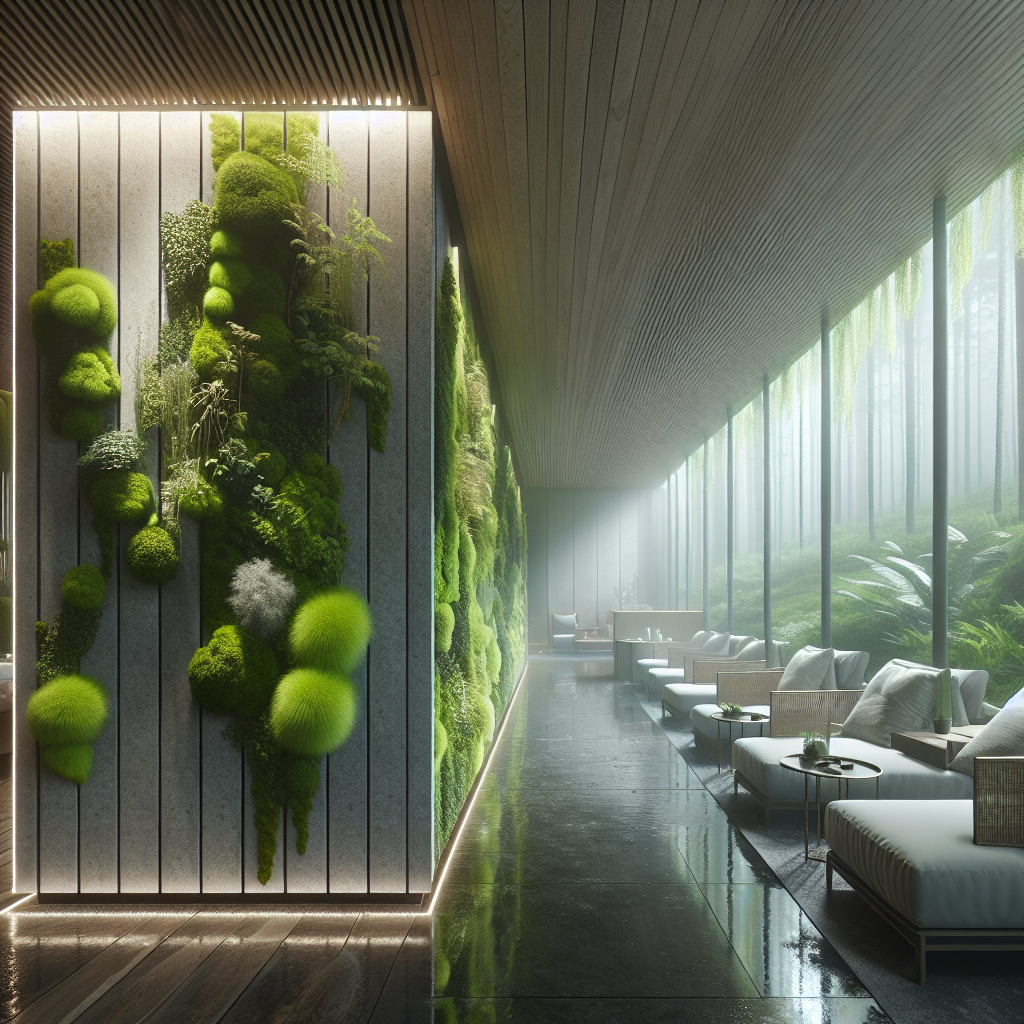
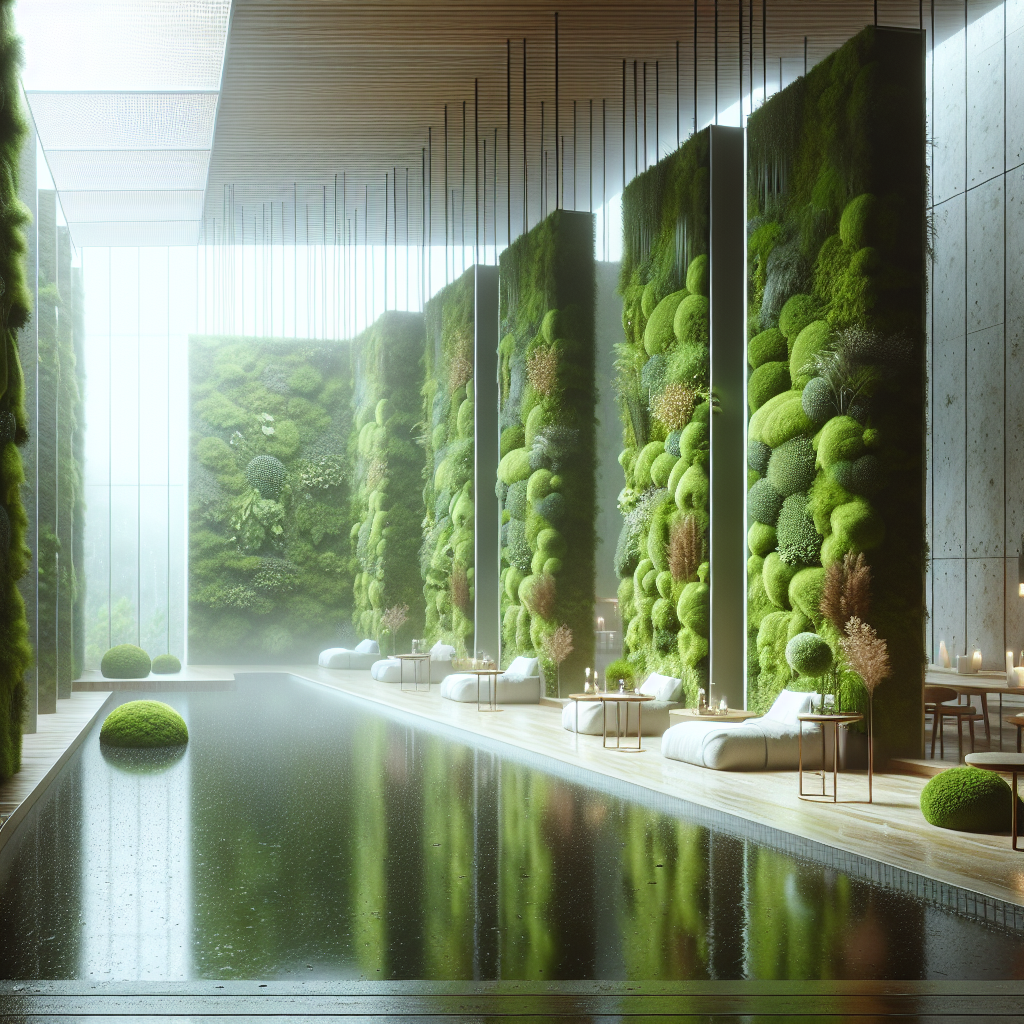
Imagine a hotel lobby where freestanding moss partitions delineate lounge zones, their velvety surfaces catching the glow of pendant lighting. Or a spa corridor where walls of emerald green absorb echoes, replacing the sterile silence of tile with a hushed, natural calm. The aesthetic impact is immediate: the air feels denser, the acoustics more intimate, the atmosphere alive.
In residential contexts, designers are increasingly integrating moss panels into sliding partitions or pivoting walls—echoing the spatial flexibility explored in transformative interior design. The result is a dynamic architecture that breathes, adapts, and responds to human rhythms.
Case Studies: From Boutique Hotels to Wellness Sanctuaries
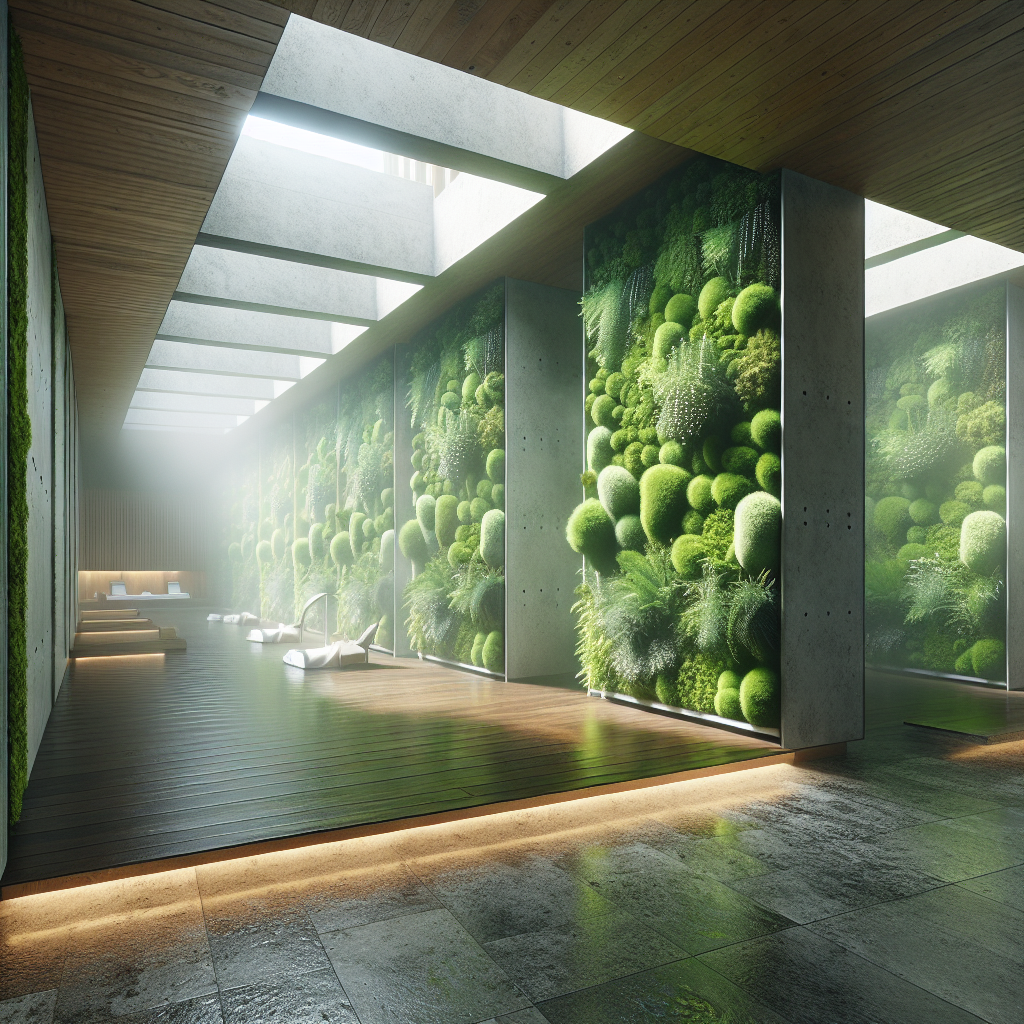
One of the most striking applications of moss-bound partitions can be found in the Aman Kyoto resort, where Japanese architect Kerry Hill employed moss as a living carpet and vertical screen throughout the spa’s bathing pavilions. The partitions not only enhance privacy but also modulate humidity, maintaining a consistent microclimate that complements the natural hot springs.
In Milan, the design studio VerdeForma collaborated with acoustic engineers to develop a series of moss-clad panels for coworking spaces. Each screen combines Scandinavian lichen moss with recycled wool felt, achieving a noise reduction coefficient (NRC) of 0.85—comparable to high-performance acoustic foam. The project demonstrates how living materials can meet technical demands without compromising aesthetics.
Similarly, in Singapore’s humid climate, the architecture firm WOHA has integrated moss walls into its tropical high-rise interiors, aligning with its long-standing commitment to green architecture. The moss installations serve as both visual relief and natural humidity regulators, reducing the need for mechanical ventilation in semi-open corridors.
Crafting the Future of Indoor Ecosystems
The growing interest in moss-bound partitions aligns with a broader shift toward biodegradable architecture and regenerative design. These living systems challenge the static nature of traditional building materials, inviting designers to think of interiors as evolving habitats rather than fixed compositions.
Technological innovations are accelerating this transformation. Some research groups are experimenting with sensors embedded within moss panels to monitor air quality, humidity, and CO₂ absorption in real time. This integration of biofeedback systems transforms moss installations into living instruments of environmental intelligence—responsive, measurable, and adaptive.
Furthermore, advances in biomimicry are inspiring new substrate materials that replicate the natural sponginess of forest soil, enhancing moss vitality while reducing maintenance. These developments point toward a future where interior ecosystems are not ornamental add-ons but integral components of building performance.
Aesthetic Narratives: From Minimalism to Lush Expressionism
Designers are interpreting moss-bound screens through diverse aesthetic lenses. In minimalist interiors, they appear as restrained, monochromatic surfaces—soft planes of green that contrast with polished concrete or pale timber. In more expressive environments, designers experiment with gradients of moss species, integrating textures and hues that evoke forest canopies or alpine slopes.
Lighting plays a crucial role in shaping these atmospheres. Indirect LED illumination accentuates the depth of moss textures, creating chiaroscuro effects reminiscent of early modernist interiors. The interplay of shadow and moisture imbues spaces with a subtle theatricality, echoing the sensorial layering explored in sensory design.
Beyond aesthetics, moss-bound partitions symbolize a philosophical return to slowness and tactility in design. They invite touch, encourage observation, and remind occupants of the living processes that sustain their environment. In an era dominated by screens and synthetic surfaces, their presence feels almost radical.
Practical Considerations: Maintenance and Sustainability
While moss-bound partitions are low-maintenance, they are not maintenance-free. Designers must consider species selection carefully—reindeer moss, bun moss, and pillow moss each have distinct moisture and light requirements. Preserved moss, treated with natural glycerin, offers longevity and color stability, while live moss requires consistent humidity and indirect light.
Installation typically involves modular panels that can be easily replaced or rehydrated. For commercial applications, integrated misting systems or passive humidifiers can maintain optimal conditions. The sustainability credentials are strong: moss cultivation requires no soil, minimal water, and zero pesticides, aligning with the principles of circular and low-impact design.
Redefining Privacy in the Age of Transparency
As architecture continues to embrace openness and transparency, the notion of privacy is being reimagined. Moss-bound screens offer a new vocabulary for seclusion—one that is porous, organic, and emotionally resonant. They soften the boundaries between people and place, between architecture and nature.
In the words of Finnish architect Juhani Pallasmaa, “The door handle is the handshake of the building.” By extension, the moss partition becomes its breath—a living gesture that mediates between the human and the environmental. It embodies a quiet revolution in how we conceive of walls: not as barriers, but as living membranes.
As designers look toward the next frontier of sustainable interiors, moss-bound privacy screens stand as both a symbol and a solution. They encapsulate the essence of 21st-century design: sensory, sustainable, and profoundly human.
Keywords: moss-bound privacy screens, living partitions, biophilic design, sustainable interiors, acoustic design, humid indoor spaces, green architecture, wellness design, indoor ecosystems.