
Modular ephemeral amphitheaters: pop-up performance spaces constructed in hours
Modular Ephemeral Amphitheaters: Pop-Up Performance Spaces Constructed in Hours
In the fast-evolving landscape of temporary architecture, a new phenomenon is reshaping how cities host culture, art, and community gatherings: modular ephemeral amphitheaters. These pop-up performance spaces—assembled in mere hours and dismantled just as swiftly—are redefining the boundaries between architecture, technology, and live experience. They are not only feats of engineering agility but also reflections of a cultural shift toward flexibility, sustainability, and immediacy in design.
The Rise of Ephemeral Architecture
Ephemeral architecture has long been part of human history, from nomadic tents to traveling circuses. Yet, the 21st century has given it a new identity—one that merges digital fabrication, lightweight materials, and modular design principles. According to the Wikipedia entry on temporary architecture, this field is increasingly driven by sustainability goals and rapid urban adaptability. Modular amphitheaters epitomize this evolution: they are designed to appear overnight in plazas, waterfronts, or university courtyards, offering a full-scale performance venue without permanent footprint.
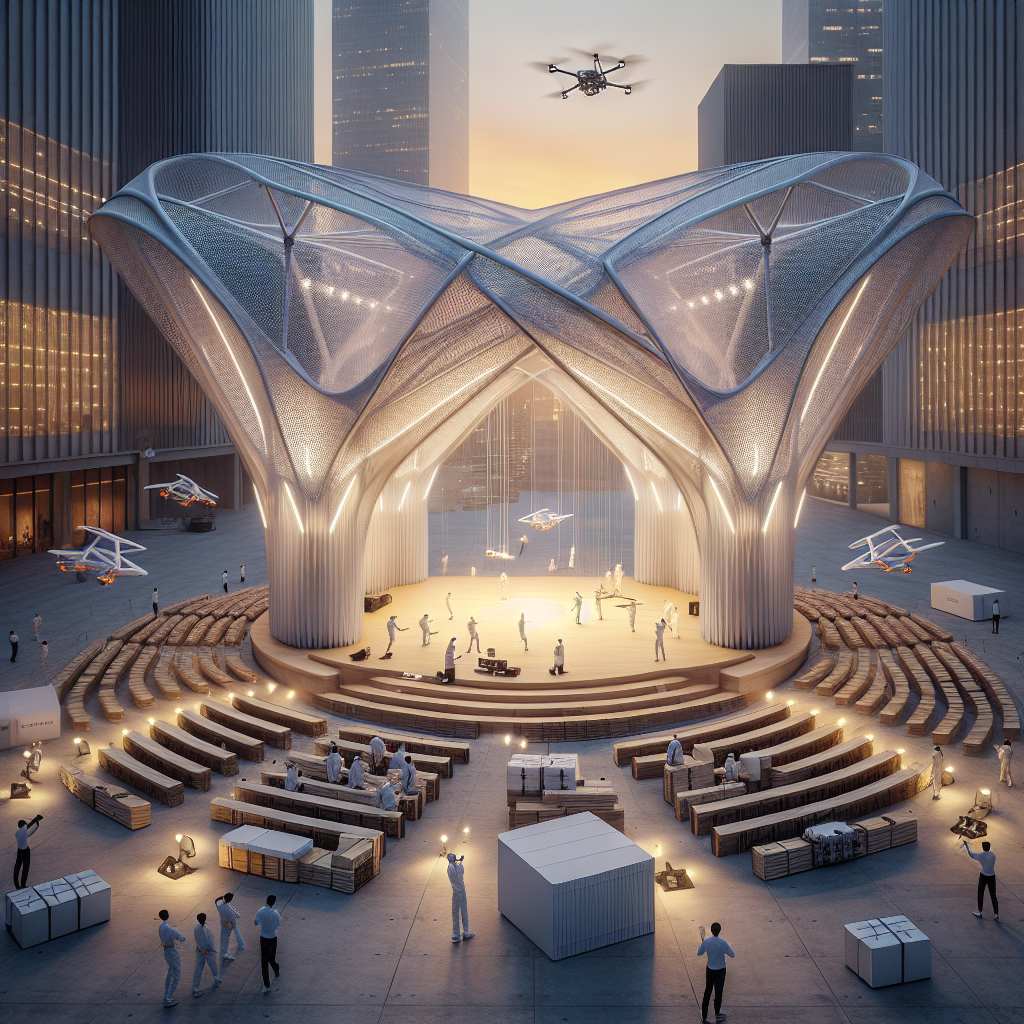
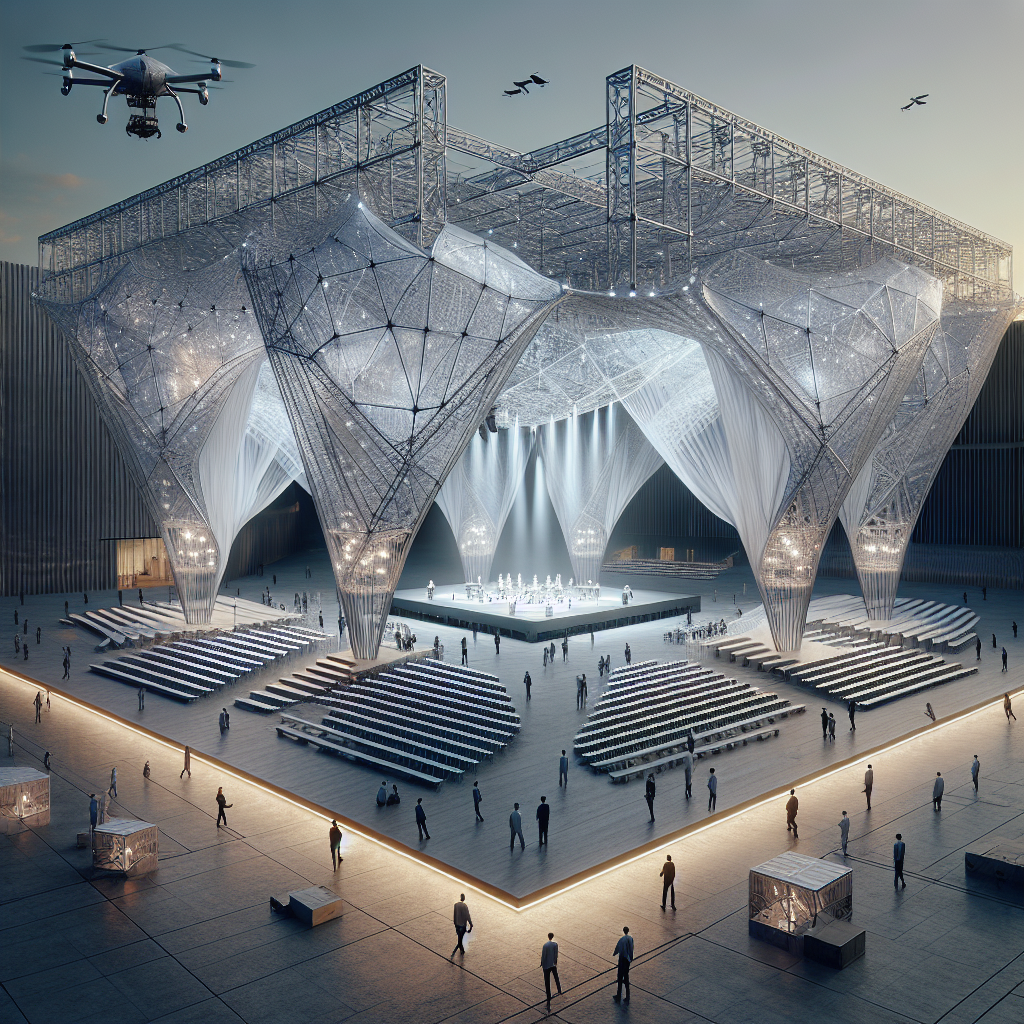
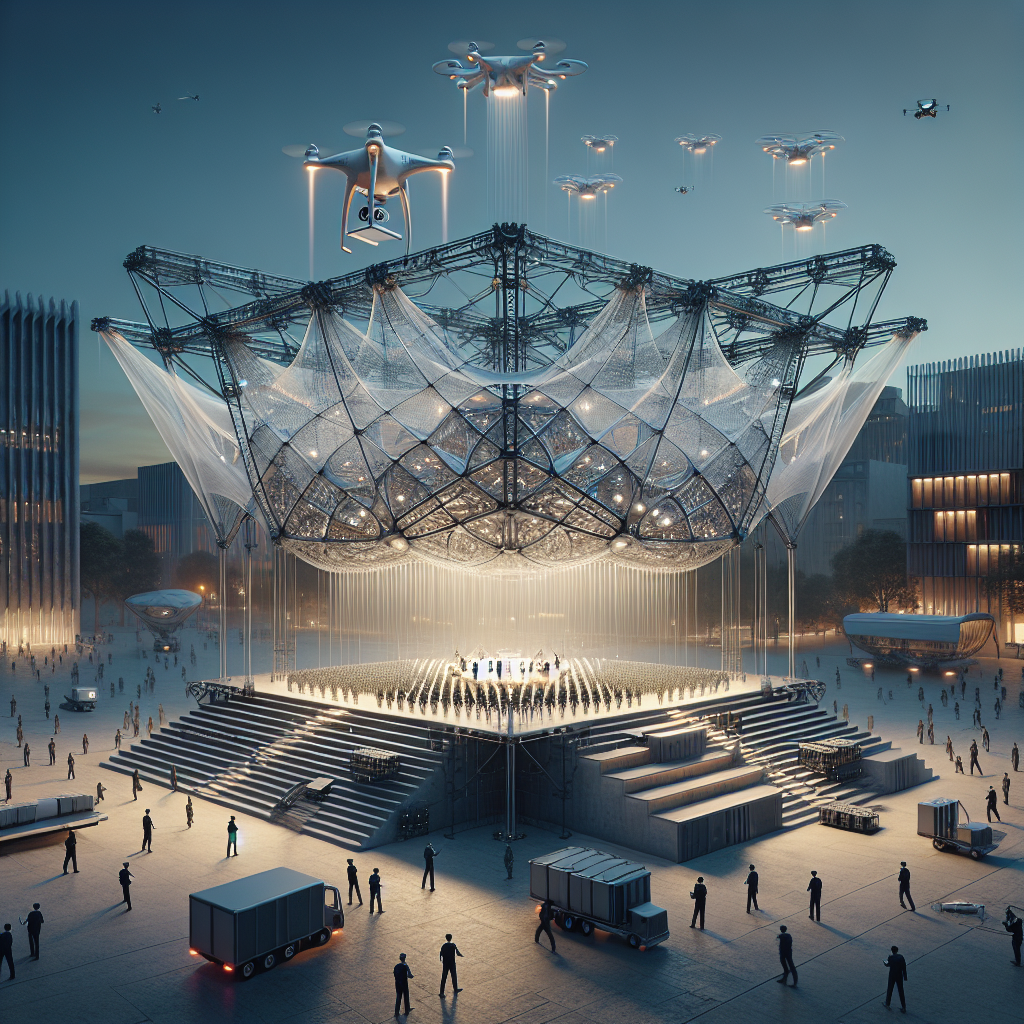
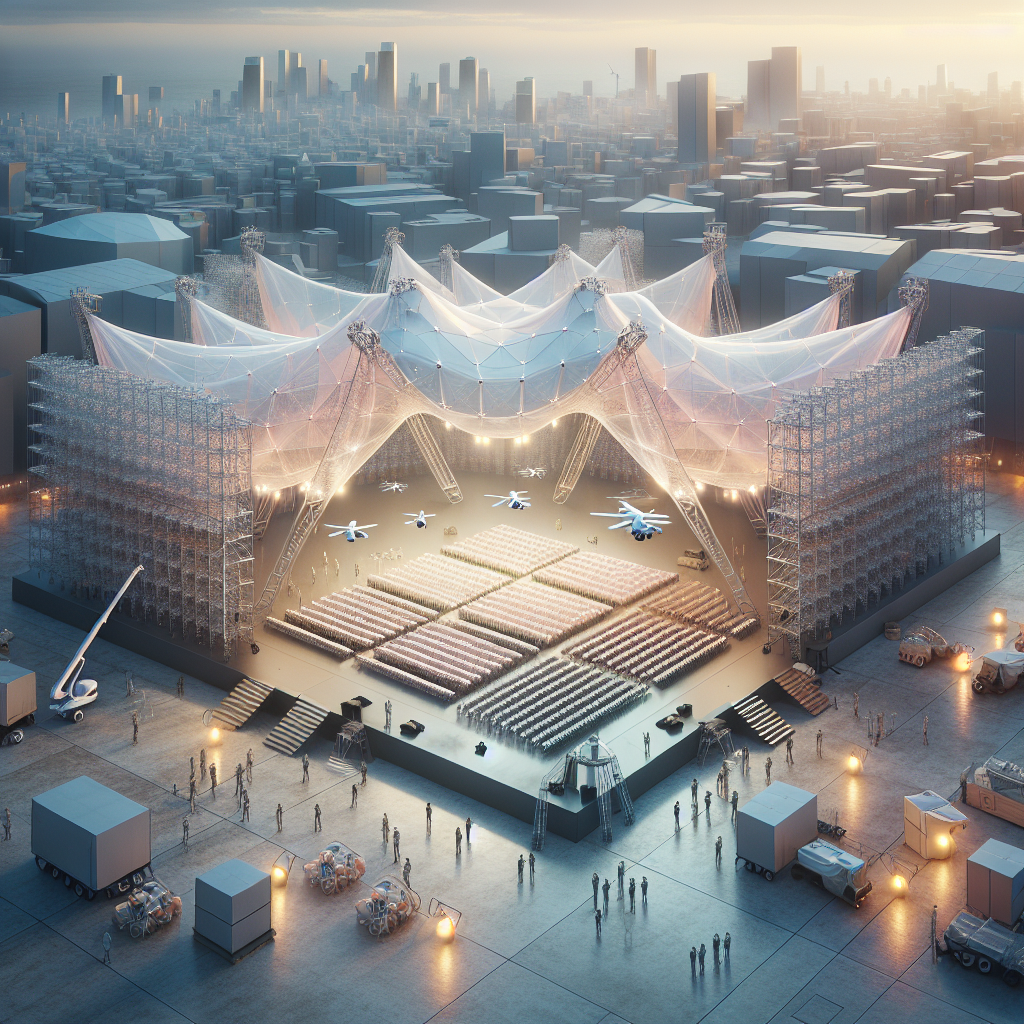
Architects and designers are leveraging prefabricated aluminum trusses, tensile membranes, and recycled composite panels to create structures that balance strength and portability. Some can be packed into a single truck, deployed by a small crew, and fully operational within six hours. The result is a spatial choreography of speed, precision, and aesthetic clarity—an architecture that performs as dynamically as the artists it hosts.
Designing for Impermanence
Designing a structure meant to vanish is paradoxically one of the most complex challenges in contemporary architecture. Unlike permanent theaters, modular ephemeral amphitheaters must achieve acoustic excellence, audience comfort, and visual drama—all within a lightweight, collapsible framework. The geometry of these venues often borrows from parametric design logic, similar to what is explored in parametric architecture, where algorithmic modeling ensures that every panel, joint, and curve contributes to both form and function.
Recent prototypes, such as the “Nomad Stage” by Atelier Nomadic, use interlocking carbon-fiber ribs that unfold like origami. When illuminated at night, the translucent canopy glows softly, echoing the fluid lines of natural shells. Inside, acoustic baffles made from mycelium-based composites absorb sound while maintaining a breathable, organic texture. The entire structure weighs less than a grand piano yet accommodates 300 spectators.
Technology as the Enabler
The success of modular amphitheaters lies in the synergy between digital design tools and on-site assembly technologies. Using digital fabrication methods, architects can pre-cut components with millimeter precision, ensuring seamless assembly. Drones and robotic arms are increasingly used for lifting and alignment, reducing labor costs and human error. This integration of robotics and architecture mirrors the trends seen in AI-driven design processes, where computational intelligence optimizes not only the form but also the logistics of construction.
Moreover, augmented reality overlays now guide on-site teams during setup, displaying assembly sequences in real time through AR headsets. This innovation minimizes the need for printed blueprints and allows for rapid reconfiguration—turning a concert stage into a lecture amphitheater or open-air cinema within minutes.
Material Innovation and Sustainability
In an era increasingly defined by environmental consciousness, the materials used in ephemeral amphitheaters are as significant as their form. Designers are experimenting with biodegradable textiles, recycled aluminum, and bio-resins derived from algae. These choices align with the principles of biodegradable architecture, ensuring that even temporary structures leave minimal ecological trace.
Some projects integrate solar fabrics—flexible photovoltaic membranes that power lighting and sound systems. Others employ modular flooring made from reclaimed wood or recycled rubber, enhancing both comfort and sustainability. The aesthetic is not one of austerity but of poetic impermanence: surfaces shimmer under daylight, structures breathe with the wind, and at night, programmable LEDs transform them into living sculptures of light.
Urban Flexibility and Cultural Impact
As cities grapple with limited space and shifting cultural demands, modular amphitheaters offer a compelling solution. They can transform underused plazas into cultural hubs, parking lots into theaters, and waterfronts into concert venues. Their ephemeral nature allows for spontaneous programming—pop-up operas, community debates, or experimental dance performances—without the bureaucratic inertia of permanent construction.
Urban planners see them as tools for cultural democratization. By lowering the barriers to access and mobility, these amphitheaters bring high-quality performance experiences to communities often excluded from traditional cultural circuits. This approach resonates with the participatory design ethos discussed in public space reimagination, where architecture becomes a medium for inclusion and engagement.
Case Studies: Architecture in Motion
One of the most celebrated examples is the “Orbit Pavilion” by Studio KCA, originally commissioned by NASA. Its shell-like structure, composed of 180 aluminum panels, was designed to be assembled in less than a day. The pavilion translated satellite data into immersive soundscapes, enveloping visitors in a symphony of orbital movement. The project demonstrated how temporary architecture can merge art, science, and technology into a single sensory experience.
In Europe, the “Agora Nomade” initiative has introduced a series of modular amphitheaters across France and Spain. Each unit can be transported by a single truck and reassembled in public squares within hours. The design features modular seating tiers that double as urban furniture when the stage is not in use, embodying the principles of adaptive reuse and community-driven design.
Meanwhile, in Japan, the “Kinetic Canopy Theater” by Shigeru Ban Architects employs retractable paper tubes and fabric membranes. Its structure responds to weather conditions, opening for ventilation or closing to create an intimate acoustic chamber. This design not only highlights the elegance of lightweight construction but also underscores the potential of ephemeral architecture to adapt to environmental contexts.
Acoustics, Light, and the Sensory Dimension
Beyond structural ingenuity, modular amphitheaters are laboratories for sensory design. The interplay of light, sound, and texture is meticulously choreographed to enhance audience immersion. Translucent membranes diffuse sunlight into soft gradients, while integrated LED systems can simulate moonlight or dynamic color transitions. Acoustic panels, often made from natural fibers or 3D-printed biopolymers, shape the soundscape with remarkable precision.
Some designers are even experimenting with sonic architecture—spaces designed based on rhythmic vibrations, a concept explored in sound-responsive architecture. These amphitheaters become instruments themselves, resonating with the performances they host, blurring the line between structure and stagecraft.
The Future of Pop-Up Performance Spaces
As urban life becomes increasingly fluid, the demand for temporary cultural infrastructure will only grow. The global events industry, valued at over $1.1 trillion in 2024 according to Statista, is rapidly embracing modularity as a strategy for cost efficiency and environmental responsibility. Architects are now envisioning networks of mobile amphitheaters that travel from city to city, creating a new typology of nomadic cultural architecture.
These structures symbolize more than technical prowess—they embody a philosophical shift. In a world where permanence is no longer the measure of success, architecture’s ability to adapt, disappear, and reappear becomes its most profound strength. The modular ephemeral amphitheater stands as a testament to that transformation: a stage for the present moment, built for both performance and impermanence.
In the words of one architect involved in the Agora Nomade project, “We are designing not monuments, but moments.” That sentiment captures the essence of this movement—architecture that celebrates the fleeting, the flexible, and the profoundly human desire to gather, share, and create, wherever space allows.
Published on 12/15/2025