Invisible Architecture: Mirror Houses That Disappear into Nature
The Allure of the Vanishing Home
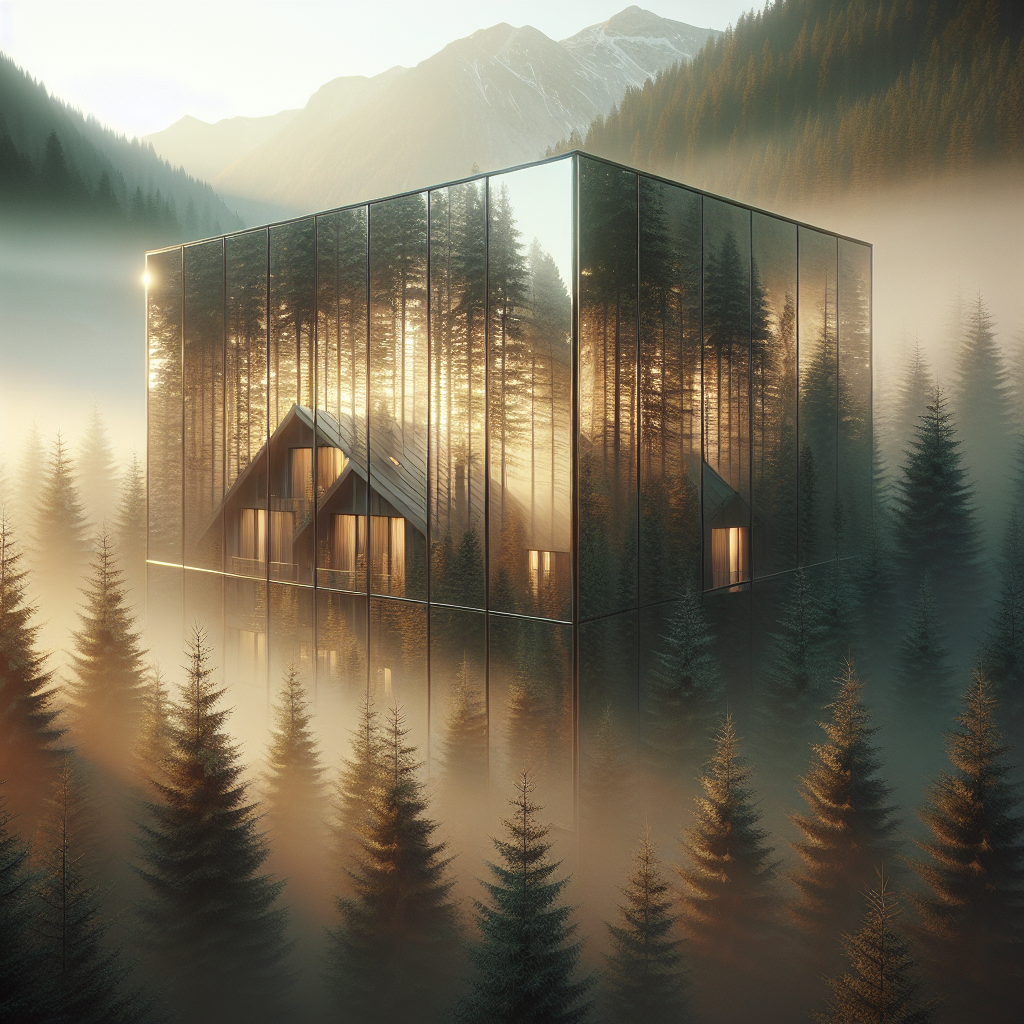
There is a peculiar beauty in absence. The most striking architecture of our time is not always the one that dominates the skyline, but the one that vanishes into it. Mirror houses—residences clad in reflective surfaces that dissolve into their surroundings—are redefining the relationship between built form and landscape. These structures, often nestled in forests, deserts, or alpine meadows, appear to flicker between presence and invisibility, challenging our perception of what a home should be.
At their core, mirror houses are an exploration of coexistence. They are not meant to impose upon nature but to merge with it. This architectural philosophy echoes the principles of biophilic design, where human well-being is enhanced through direct and indirect connections with the natural world. Yet, mirror houses go further—they erase the boundary altogether.
Material Alchemy: The Science Behind Reflection
The technology enabling these disappearing dwellings is as poetic as it is precise. High-performance mirrored glass, often with a low-iron composition, allows for both reflection and transparency depending on the angle of light. Specialized coatings—such as dichroic or anti-reflective layers—ensure that the structure remains energy-efficient while maintaining its chameleon-like qualities.
According to research from the Architectural Glass and Glazing Federation, innovations in reflective coatings have reduced solar gain by up to 60%, allowing mirrored facades to function sustainably even in extreme climates. This is crucial, as one of the criticisms of early mirror architecture was its environmental inefficiency and potential hazard to wildlife.
Today’s mirror houses employ bird-safe glass and low-emissivity materials, aligning with broader sustainability goals explored in projects like biodegradable architecture. These advancements mark a shift from aesthetic novelty to ecological responsibility.
Reflections of Place: Context as Design Language
A mirror house is not a universal form—it is a dialogue with its environment. In the Dolomites, Italian architect Peter Pichler’s “Mirror Houses” shimmer like twin apparitions among apple orchards, their facades capturing the shifting hues of the mountain sky. In the Nevada desert, a mirrored pavilion by artist Phillip K. Smith III transforms with the day’s light, from dawn’s pinks to the indigo of dusk.
Each project becomes a site-specific meditation. The mirrored surface is not a wall but a lens—reflecting, refracting, and reinterpreting the landscape. The result is a kind of architectural camouflage that questions permanence and identity. What does it mean for a home to exist when it cannot always be seen?
This inquiry parallels the philosophical underpinnings of reflective design in contemporary interiors, where surfaces become tools for expanding perception and emotional resonance. In both cases, reflection is not vanity—it is revelation.
Environmental Integration and Ethical Transparency
Beyond their visual poetry, mirror houses represent a deeper ecological ethic. By blending into their surroundings, they minimize visual pollution and encourage a subtler form of habitation. Yet, invisibility brings its own responsibilities. Architects must consider the impact of mirrored surfaces on local ecosystems—particularly birds and insects sensitive to reflected light.
The American Institute of Architects’ guidelines on bird-safe design have become a reference point for many of these projects, ensuring that aesthetic ambition does not come at the cost of biodiversity. Some mirror houses now incorporate micro-etched patterns or UV-reflective coatings visible only to wildlife, preserving the illusion for human eyes while protecting the environment.
From Spectacle to Sanctuary
The initial fascination with mirror houses was largely visual—Instagram-ready icons of architectural spectacle. But as the typology matures, a quieter narrative is emerging. These homes are becoming sanctuaries for introspection, designed to heighten awareness of one’s surroundings rather than to display them.
Inside, the experience is paradoxical. Large windows open to infinite reflections, yet the interiors remain cocooned, private, and serene. The interplay of transparency and concealment evokes the contemplative calm found in minimalist architecture, echoing the ethos of “disappearing design” that prioritizes sensory subtlety over visual dominance.
Constructing a mirror house is an exercise in precision. Every angle, seam, and reflection must be calculated to avoid distortion. Digital modeling tools and parametric design software allow architects to simulate light behavior across seasons, ensuring that reflections enhance rather than overwhelm the landscape.
This digital craftsmanship recalls the technological sophistication seen in virtual reality in architecture, where designers use immersive tools to predict how a structure will behave in its environment. In mirror architecture, this foresight is essential—the difference between a building that vanishes gracefully and one that blinds its surroundings.
The Future of the Invisible Home
As sustainability and sensory design converge, the mirror house may become a symbol of a new architectural humility—one that values disappearance as much as presence. Future iterations are likely to integrate adaptive materials, capable of shifting opacity or reflectivity in response to environmental conditions.
This vision aligns with the broader trajectory of net-zero energy architecture, where technology serves both environmental performance and aesthetic restraint. The invisible home, in this sense, is not a fantasy—it is a manifesto for coexistence.
Conclusion: Architecture as Reflection of Self and Surrounding
Mirror houses invite us to reconsider the role of architecture in the natural world. They do not dominate; they dissolve. They do not shout; they shimmer. In their silence, they offer a profound commentary on our relationship with the environment—a reminder that the most radical form of design may be the one that chooses to disappear.
—
{
  "seo_title": "Invisible Architecture: Mirror Houses",
  "meta_description": "Explore invisible architecture and mirror houses that blend seamlessly into nature using reflective design and sustainable materials.",
  "excerpt": "What if architecture could vanish? Mirror houses are redefining the boundaries between built form and nature through reflection and restraint.",
  "focus_keyphrase": "Invisible Architecture"
}
AI Image Prompts
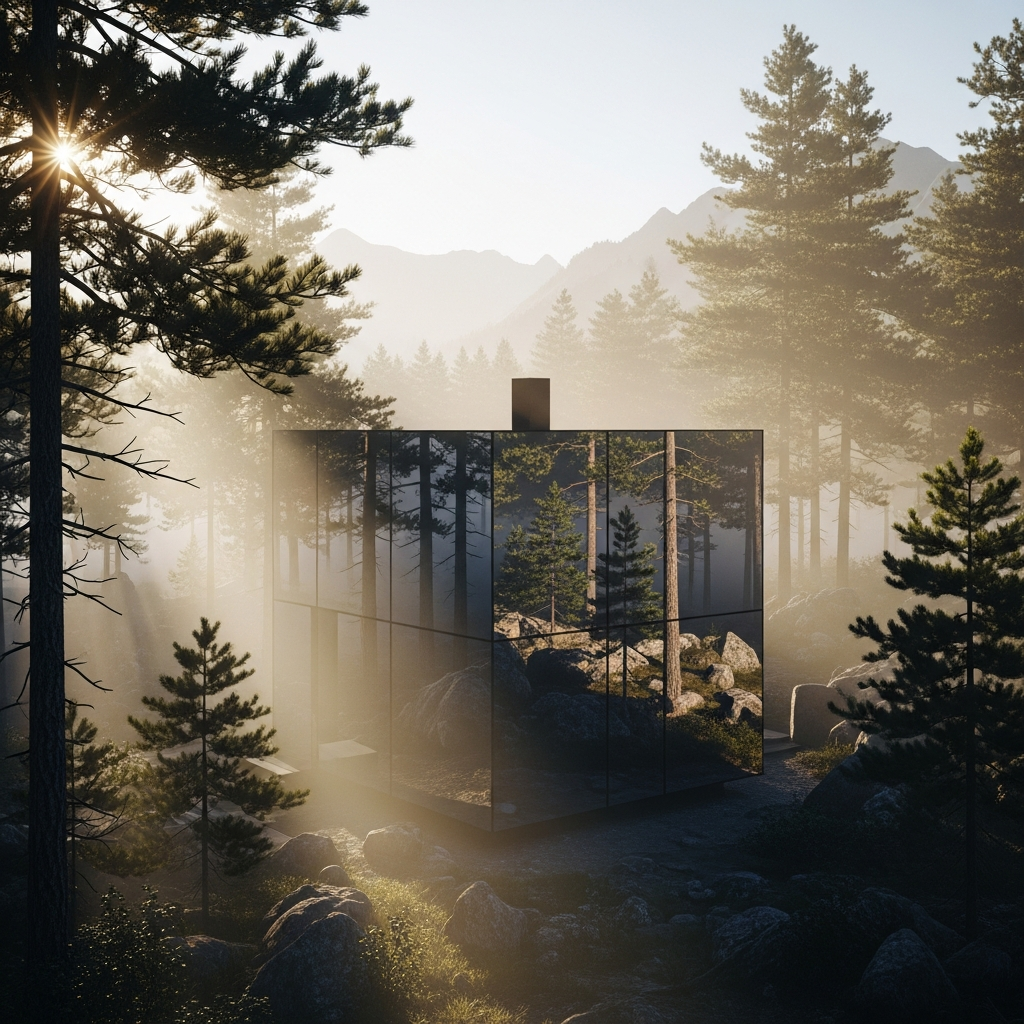
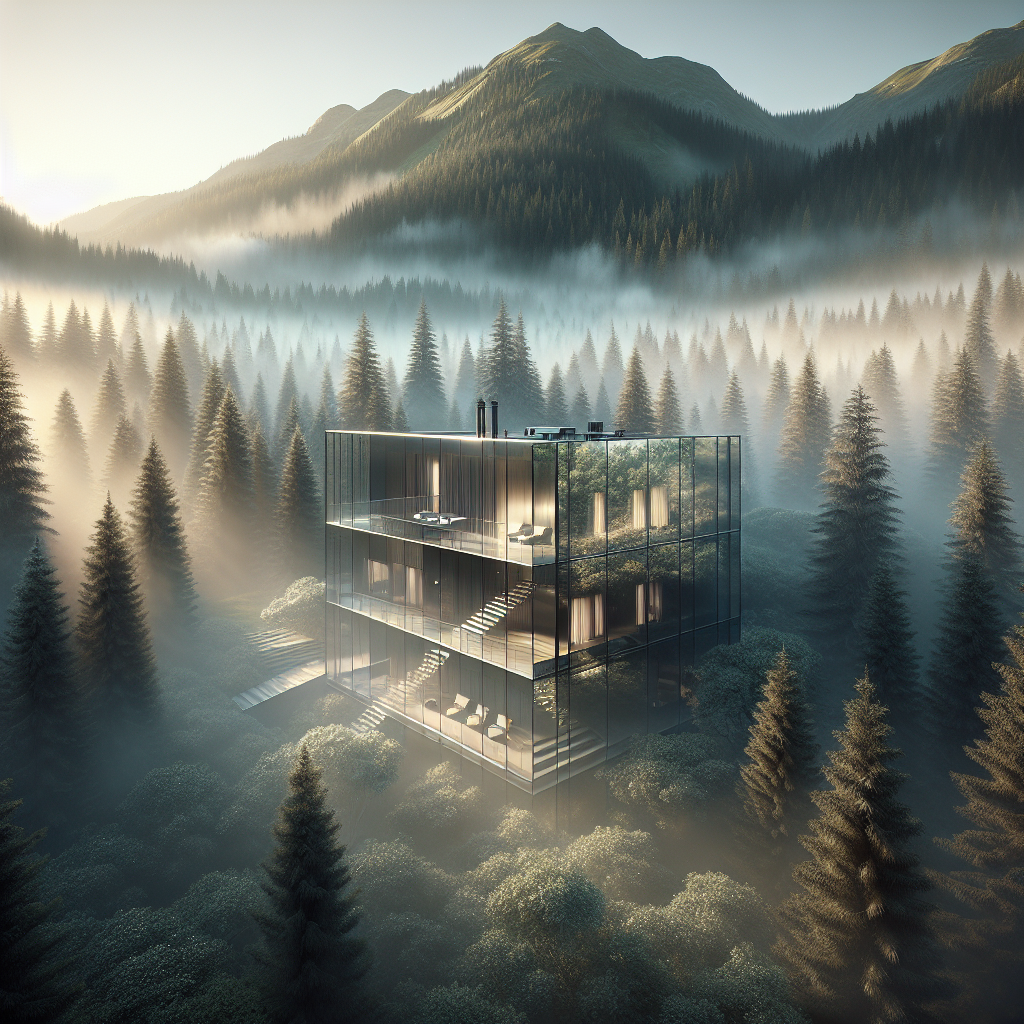
1. **Prompt:** A photorealistic mirror house in a dense alpine forest, early morning mist, reflective glass blending with pine trees, shot on Hasselblad H6D, natural light, high dynamic range.
**Alt text:** Mirror house blending into a misty alpine forest.
**Caption:** A mirrored retreat dissolves into the forest canopy, capturing the poetry of invisibility.
2. **Prompt:** Desert mirror pavilion at sunset, warm golden tones, reflective panels merging with sand dunes, minimalist geometry, Hasselblad X2D 100C, cinematic composition.
**Alt text:** Reflective desert pavilion merging with golden dunes.
**Caption:** The desert’s vastness mirrored—architecture that vanishes with the sun.
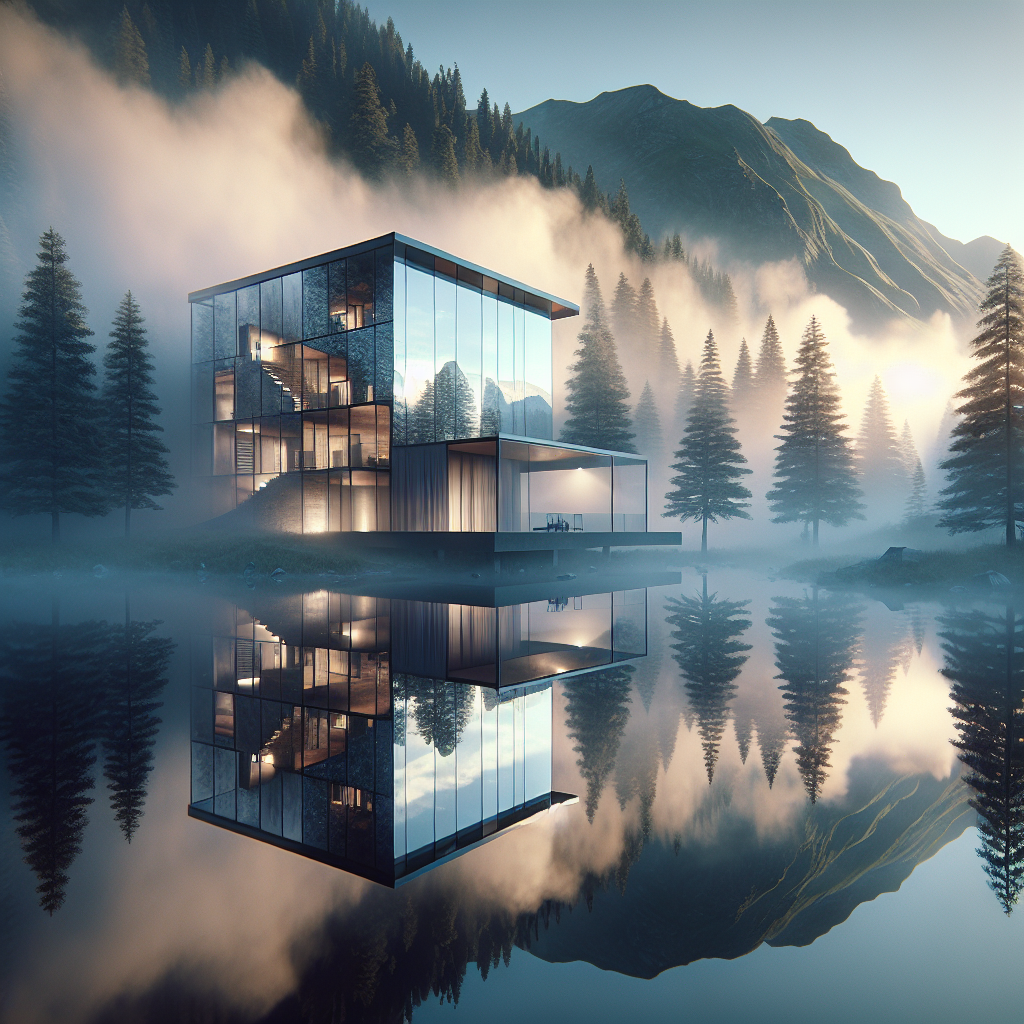
3. **Prompt:** Lakeside mirror cabin at dawn, calm water reflections, Scandinavian design minimalism, Hasselblad H5D, soft diffused light.
**Alt text:** Mirror cabin reflecting a tranquil lake at dawn.
**Caption:** Stillness doubled—where architecture and reflection become one.
4. **Prompt:** Urban mirror facade on a minimalist townhouse, reflecting city greenery, Hasselblad X1D II, midday light, crisp detail.
**Alt text:** Urban mirror facade reflecting surrounding greenery.
**Caption:** In the city, reflection becomes camouflage—a quiet rebellion against visibility.
Social Media Strategy
Instagram
**Main Post Caption:**
“Can architecture truly disappear? Mirror houses blur the line between human creation and natural wonder. Explore the rise of invisible architecture—where reflection becomes a philosophy. 🌿✨
Read more on Mainifesto.com. #LinkInBio”
**Hashtags:**
#InvisibleArchitecture #MirrorHouse #SustainableDesign #ArchitecturalInnovation #ReflectiveDesign #EcoArchitecture #MinimalistArchitecture #DesignInNature #ModernArchitecture #ArchitecturalPhotography #GlassArchitecture #SustainableLiving #DesignTrends2026 #ArchitectureLovers #MainifestoDesign
**Reel Strategy:**
Four-image narrative sequence with text overlays:
1. *“A house that disappears.”* — mirror home in forest.
2. *“A reflection of nature.”* — mirrored desert pavilion.
3. *“A sanctuary of silence.”* — lakeside mirror cabin.
4. *“The future of invisible living.”* — urban mirrored townhouse.
Background: ambient forest sounds and soft piano.
To provide the best experiences, we use technologies like cookies to store and/or access device information. Consenting to these technologies will allow us to process data such as browsing behavior or unique IDs on this site. Not consenting or withdrawing consent, may adversely affect certain features and functions.
Functional
Always active
The technical storage or access is strictly necessary for the legitimate purpose of enabling the use of a specific service explicitly requested by the subscriber or user, or for the sole purpose of carrying out the transmission of a communication over an electronic communications network.
Preferences
The technical storage or access is necessary for the legitimate purpose of storing preferences that are not requested by the subscriber or user.
Statistics
The technical storage or access that is used exclusively for statistical purposes.The technical storage or access that is used exclusively for anonymous statistical purposes. Without a subpoena, voluntary compliance on the part of your Internet Service Provider, or additional records from a third party, information stored or retrieved for this purpose alone cannot usually be used to identify you.
Marketing
The technical storage or access is required to create user profiles to send advertising, or to track the user on a website or across several websites for similar marketing purposes.