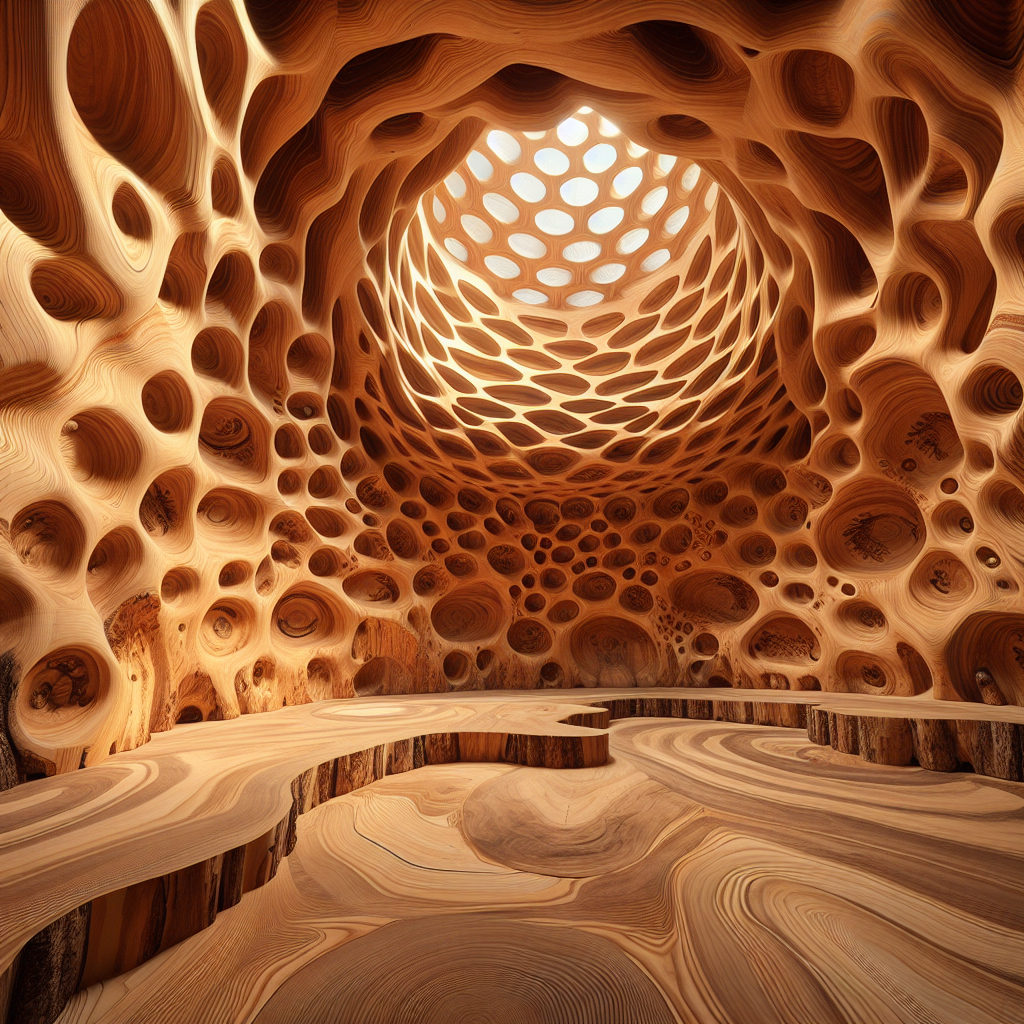
Evocative monolithic wood: single massive trunk shaped into entire rooms
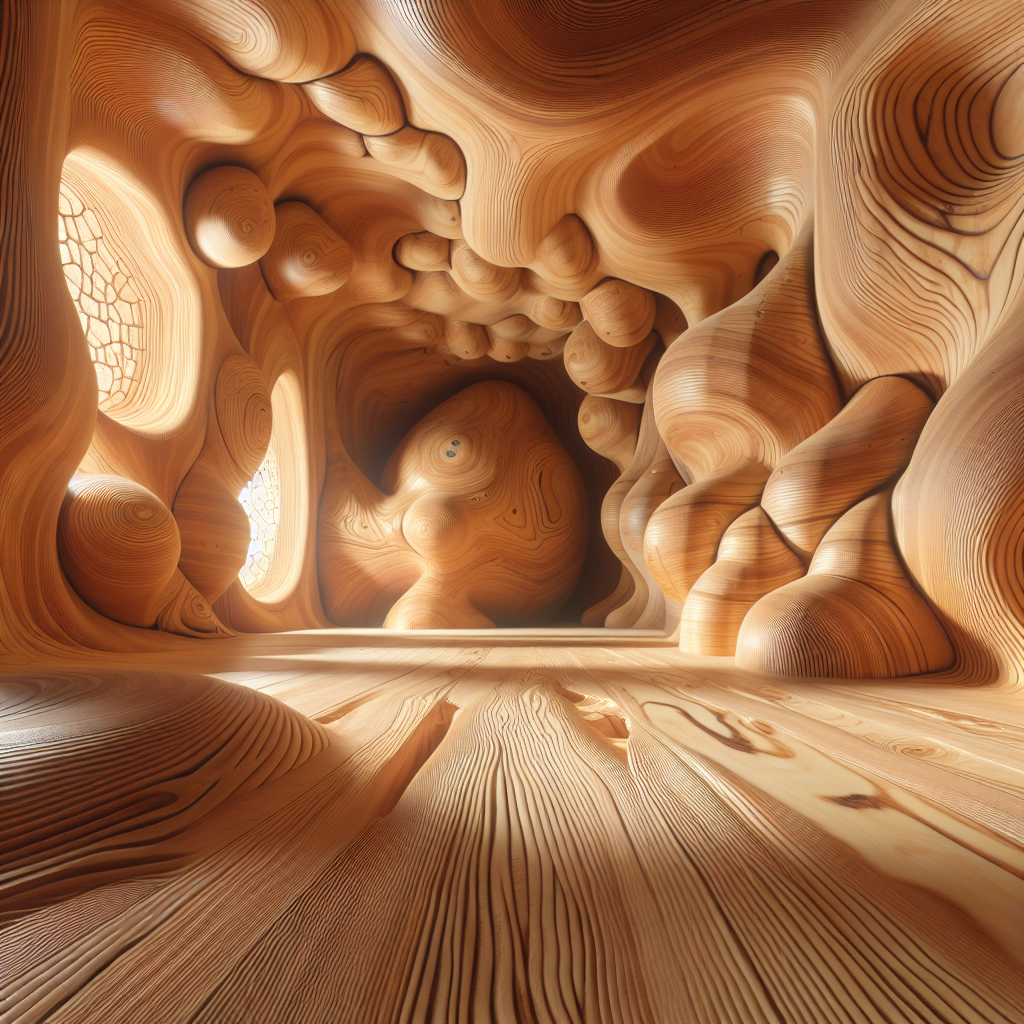
Evocative Monolithic Wood: Crafting Entire Rooms from a Single Massive Trunk
In an era where digital fabrication and modularity dominate architectural discourse, a countercurrent is emerging—one that celebrates the primal, tactile, and monumental. Monolithic wood architecture, carved from a single massive trunk, is reawakening ancient relationships between humans and trees, material and memory. These spaces—rooms hewn from entire logs—embody a poetic fusion of sculpture, craft, and spatial innovation. They challenge the boundaries between architecture and art, inviting us to inhabit the living essence of wood itself.
The Return of the Monolith
For centuries, monolithic construction has been associated with stone—think of the monoliths of antiquity or the sculpted temples of Petra. Yet, the concept of monolithic wood introduces a radically different sensibility: warmth, organic irregularity, and impermanence. Unlike stone, wood breathes, expands, and contracts. It ages gracefully, its surface bearing the marks of time and touch. In this new wave of design, architects and artisans are exploring how a single tree can become an entire architectural envelope—walls, ceiling, and floor unified in one continuous grain.
Recent projects in Japan, Scandinavia, and Central Europe have demonstrated how digital milling and robotic carving can transform ancient trunks into immersive environments. These spaces are not assembled; they are revealed—as if the room had always existed within the tree, waiting to be uncovered.
From Tree to Space: The Process of Transformation
Working with a single trunk requires both reverence and precision. Architects begin by selecting trees of exceptional scale—often centuries old, sustainably sourced from managed forests or fallen naturally. Each trunk is digitally scanned to capture its unique geometry and grain pattern. Advanced CNC milling and robotic arms then hollow the interior, guided by parametric models that respect the tree’s natural structure while achieving the desired spatial form.
The result is a continuous, seamless enclosure where every curve follows the logic of growth rings. Light filters through carved apertures that mimic knots or branches, creating a play of shadow reminiscent of forest canopies. The scent of resin and the tactile warmth of the surface engage the senses in ways that no synthetic material can replicate.
This approach aligns with the growing global interest in biophilic design, which seeks to reconnect built environments with natural systems. In monolithic wood interiors, the connection is not symbolic—it is literal. The occupant is enveloped by the body of a tree, surrounded by its cellular memory and energy.
Material Authenticity in the Age of Digital Craft
In contemporary architecture, authenticity has become a contested concept. As materials are increasingly engineered and hybridized, the purity of natural matter feels almost radical. Monolithic wood rooms stand as a manifesto for material honesty. They reject veneers, laminates, and composites in favor of unbroken continuity—a single organism transformed into habitable form.
Yet this authenticity is not nostalgic. It is deeply technological. Designers employ advanced computational tools to simulate structural behavior, moisture movement, and acoustic performance. The paradox is striking: ancient material, cutting-edge method. This duality mirrors the ethos explored in wooden skyscrapers, where timber reclaims its place in the architectural skyline through innovation rather than imitation.
As the circular economy gains traction, the idea of using a single, biodegradable material for an entire spatial envelope resonates with sustainability goals. Each monolithic room becomes a closed-loop system—no adhesives, no composites, no waste. When its life cycle ends, it can return to the earth without residue.
Case Studies: Sculpting the Sublime
One of the most striking examples of this approach is the “Kigumi Chamber” by Japanese architect Kengo Kuma, where a massive cedar trunk was hollowed into a meditative space. The interior’s smooth, undulating surfaces evoke the sensation of being inside a living organism. The scent of hinoki wood permeates the air, while light enters through fine perforations that resemble the pores of bark. Visitors describe the experience as both intimate and cosmic—a dialogue between human scale and arboreal monumentality.
In Norway, the design collective Atelier Fosse created a monolithic pine sauna carved from a single fallen tree. The project merges traditional log craftsmanship with robotic precision. The interior grain patterns align perfectly across surfaces, producing a hypnotic continuity that blurs distinctions between wall and ceiling. The designers describe it as “a forest condensed into a single breath.”
Meanwhile, experimental studios in Switzerland and Finland are exploring portable monolithic pods—small sanctuaries carved from single trunks, designed for meditation or acoustic isolation. These prototypes, often displayed at design fairs such as Salone del Mobile, highlight the growing fascination with tactile minimalism and sensory immersion.
The Poetics of Scale and Sensation
To step inside a monolithic wood room is to experience architecture as sculpture. The absence of joints or seams amplifies the spatial continuity, while the organic curvature of the surfaces creates a sense of embrace. Sound behaves differently here—softened, absorbed by the fibrous density of the wood. Light, too, becomes material, grazing the grain in golden gradients.
These interiors invite slowness. They are not spaces for display but for presence. The hand instinctively traces the surface, following the spiral of growth rings that record centuries of life. In this sense, monolithic wood design extends the philosophy of wabi-sabi—the beauty of imperfection and impermanence—into the architectural realm. The inevitable cracks, color shifts, and textures are not flaws but narratives of transformation.
Challenges and Sustainability Considerations
Despite their allure, monolithic wood structures pose significant challenges. The sourcing of trunks large enough for inhabitable spaces demands careful ecological consideration. Designers must ensure that each tree is ethically harvested, often from storm-felled or end-of-life specimens. The drying process is critical; uneven moisture can lead to cracking or warping. Engineers employ controlled humidity chambers and laser monitoring to stabilize the material before carving.
From a sustainability perspective, the embodied carbon of a single massive trunk is offset by its longevity and biodegradability. Compared to concrete or steel, wood stores carbon rather than emitting it. When integrated into biodegradable architecture frameworks, monolithic wood becomes both a structural and ecological statement—a testament to circular thinking in design.
Future Directions: From Monument to Microspace
As fabrication technologies evolve, the scale of monolithic wood design is diversifying. Beyond monumental installations, designers are experimenting with smaller applications—furniture, alcoves, and acoustic pods that retain the same immersive quality. Imagine a reading nook carved from a single oak log, or a hotel suite whose entire interior is milled from one ancient trunk. These concepts merge art, craft, and sustainability into a new typology of spatial intimacy.
In the broader context of material innovation, monolithic wood aligns with the growing fascination for craftsmanship revival and tactile authenticity. It stands as a counterpoint to the ephemeral aesthetics of digital minimalism, offering instead a sensory depth that reconnects us to the origins of shelter.
A Living Monument
To inhabit a room carved from a single tree is to participate in a continuum of life. The walls pulse with memory, the air carries the scent of resin, and the grain lines trace the rhythm of seasons long past. In a world increasingly defined by synthetic surfaces and virtual experiences, monolithic wood architecture reminds us that true innovation often lies in rediscovering the elemental.
These spaces are not just built—they are grown. They invite us to dwell within nature’s own architecture, to feel the pulse of the forest beneath our fingertips, and to remember that every structure, no matter how advanced, begins with a single seed.
Keywords: monolithic wood architecture, carved wood interiors, single trunk design, biophilic architecture, sustainable materials, wooden monoliths, digital craftsmanship, timber innovation