
Did an AI Design This? The Blur Between Human Creativity and Algorithms
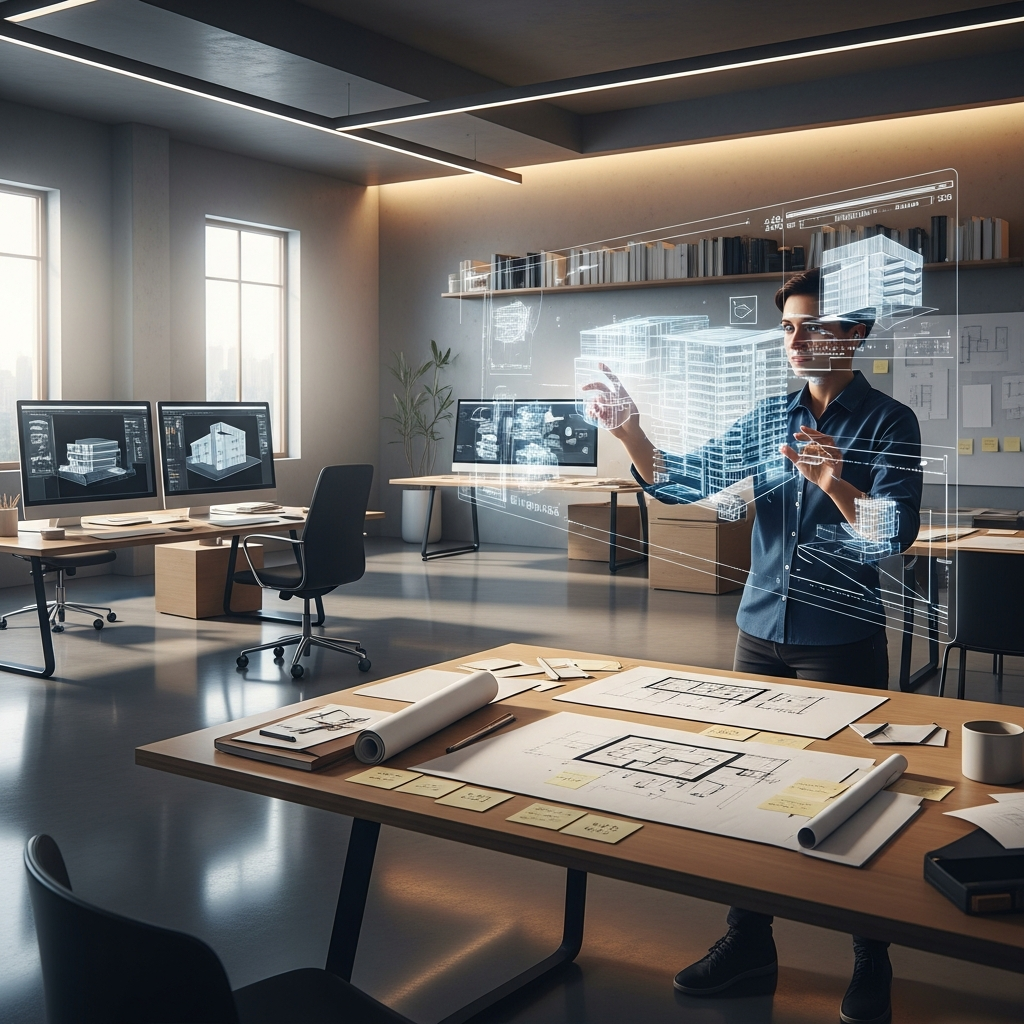
Did an AI Design This? The Blur Between Human Creativity and Algorithms
Walk into any design studio in 2026, and you’ll likely find a quiet collaborator humming in the background—not a person, but a program. Artificial intelligence has moved from being a speculative muse to a full-fledged co-creator, capable of generating architectural forms, curating interior palettes, and even proposing urban layouts. Yet, as the boundaries between human intuition and algorithmic precision dissolve, a pressing question emerges: when we admire a new building, a chair, or a cityscape, who—or what—designed it?
The Algorithm as Architect
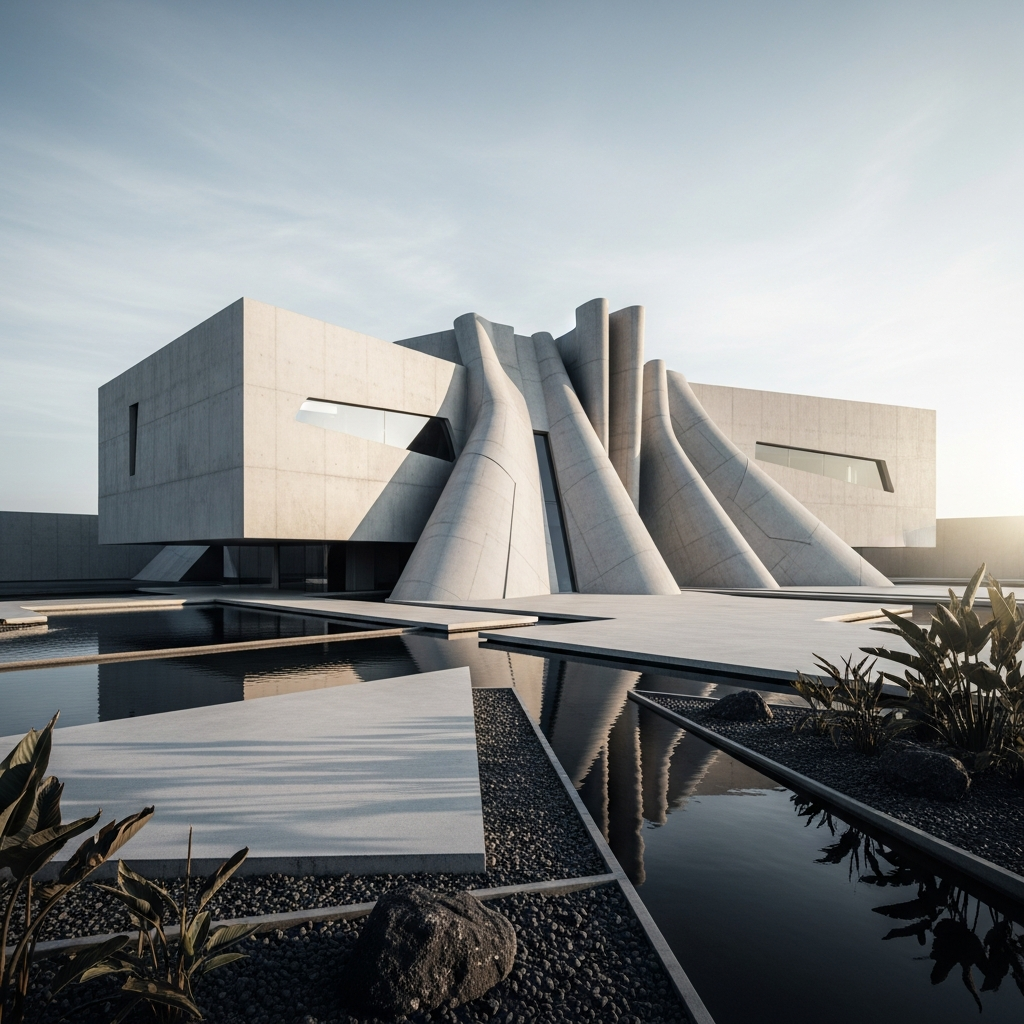
In architecture, AI’s role has evolved from a computational assistant to a creative partner. Generative design tools now process thousands of permutations in seconds, optimizing for sustainability, cost, and aesthetics. The architect becomes a curator of possibilities rather than a drafter of singular visions. Projects like Autodesk’s generative office layouts or Zaha Hadid Architects’ parametric explorations demonstrate how algorithms can produce forms that are both mathematically efficient and emotionally resonant.
Still, this collaboration raises philosophical and ethical questions. If a neural network proposes a façade that perfectly balances light and thermal performance, is the architect’s role diminished—or redefined? The integration of AI in architecture has become less about automation and more about augmentation. It’s not about replacing the human touch, but amplifying it through data-driven insight.
When Machines Dream in Color
In the realm of visual design, AI’s influence is even more pronounced. Tools like Midjourney and DALL·E have democratized the act of creation, allowing anyone to conjure photorealistic concepts from a few words. This accessibility has sparked a new aesthetic—one that feels simultaneously hyperreal and uncanny. Designers are now referencing “AI surrealism,” a genre defined by impossible geometries, liquid materials, and luminous gradients that seem to exist just beyond the tangible world.
Such imagery has begun to influence real-world projects. Architects experimenting with parametric design are translating these digital hallucinations into physical spaces, using algorithmic logic to craft fluid, adaptive structures. The result is a built environment that feels alive—responsive, unpredictable, and eerily sentient.
Ethics of Authorship
Authorship in the age of AI is no longer straightforward. The traditional model of the singular genius—Le Corbusier sketching a city, Eames sculpting a chair—has given way to collective intelligence. When a designer feeds an algorithm a dataset of Bauhaus furniture, who owns the outcome? The coder? The machine? The ghosts of the original creators?
Institutions like the Boston Society for Architecture and the UK Design Council are already grappling with these questions, proposing frameworks for transparency and accountability in AI-assisted design. Meanwhile, the European Union’s AI Act—set to regulate algorithmic decision-making—will likely shape how creative industries disclose the use of generative tools.
Material Intelligence: When Data Meets Matter
Beyond aesthetics, AI is transforming the very materials we build with. Machine learning models are now used to predict the structural behavior of sustainable composites, optimize energy flow, and even simulate the weathering of surfaces over decades. This fusion of digital foresight and material science is paving the way for what researchers at the Materials Today Journal call “predictive materiality.”
Consider the rise of biodegradable architecture—structures designed to decompose gracefully after their lifecycle. AI helps model how organic materials like mycelium or hempcrete behave under stress, humidity, and light exposure. The result is a new kind of sustainability: one that’s anticipatory rather than reactive.
The Emotional Algorithm
Perhaps the most intriguing frontier is emotional design. AI systems trained on biometric data can now infer how people feel in certain spaces—whether a room induces calm, focus, or anxiety. This capability aligns with the growing movement toward biophilic design, which seeks to reconnect humans with nature through sensory experience. Imagine a workspace that adjusts its lighting based on collective mood, or a museum that curates its layout in real time according to visitor engagement.
Such possibilities challenge our understanding of authorship and empathy. Can a machine truly design for emotion, or does it merely simulate it? The answer may lie in collaboration: human designers bring intuition and cultural context, while AI contributes precision and adaptability. Together, they form a hybrid intelligence capable of crafting environments that feel deeply personal yet universally attuned.
Between Inspiration and Imitation
As AI-generated art floods social media feeds and design competitions, the line between inspiration and imitation grows thinner. Some argue that algorithms, trained on vast datasets of existing works, inherently replicate rather than innovate. Others counter that all creativity is recombinant—that even human designers draw from collective memory and precedent.
In this sense, AI becomes a mirror, reflecting our own creative processes back at us. It exposes the patterns, biases, and archetypes that underlie design culture. The question, then, is not whether AI can be creative, but whether we can learn to see creativity differently—less as a solitary act of genius and more as a networked evolution of ideas.
The Future of Co-Creation
Looking ahead, the most compelling design studios may not be those that resist AI, but those that integrate it seamlessly into their workflow. Architects will collaborate with algorithms as they once did with draftsmen. Designers will use neural networks as sketchbooks. And cities themselves may become living systems, continuously optimized by data streams and human feedback loops.
Yet amid this technological fluency, the human element remains irreplaceable. The capacity to interpret, to feel, to decide what matters—these are qualities no algorithm can replicate. As one architect recently remarked, “AI can tell me what’s possible. Only I can tell it what’s meaningful.”
In the end, perhaps the question isn’t “Did an AI design this?” but rather, “What does it mean to design in an age when intelligence itself is shared?”
{
  "seo_title": "Did an AI Design This?",
  "meta_description": "Explore how AI blurs the line between human creativity and algorithms in modern design and architecture.",
  "excerpt": "Could algorithms ever feel creative? This deep dive explores how AI is reshaping architecture, art, and the meaning of authorship.",
  "focus_keyphrase": "AI design and human creativity"
}
AI Image Prompts
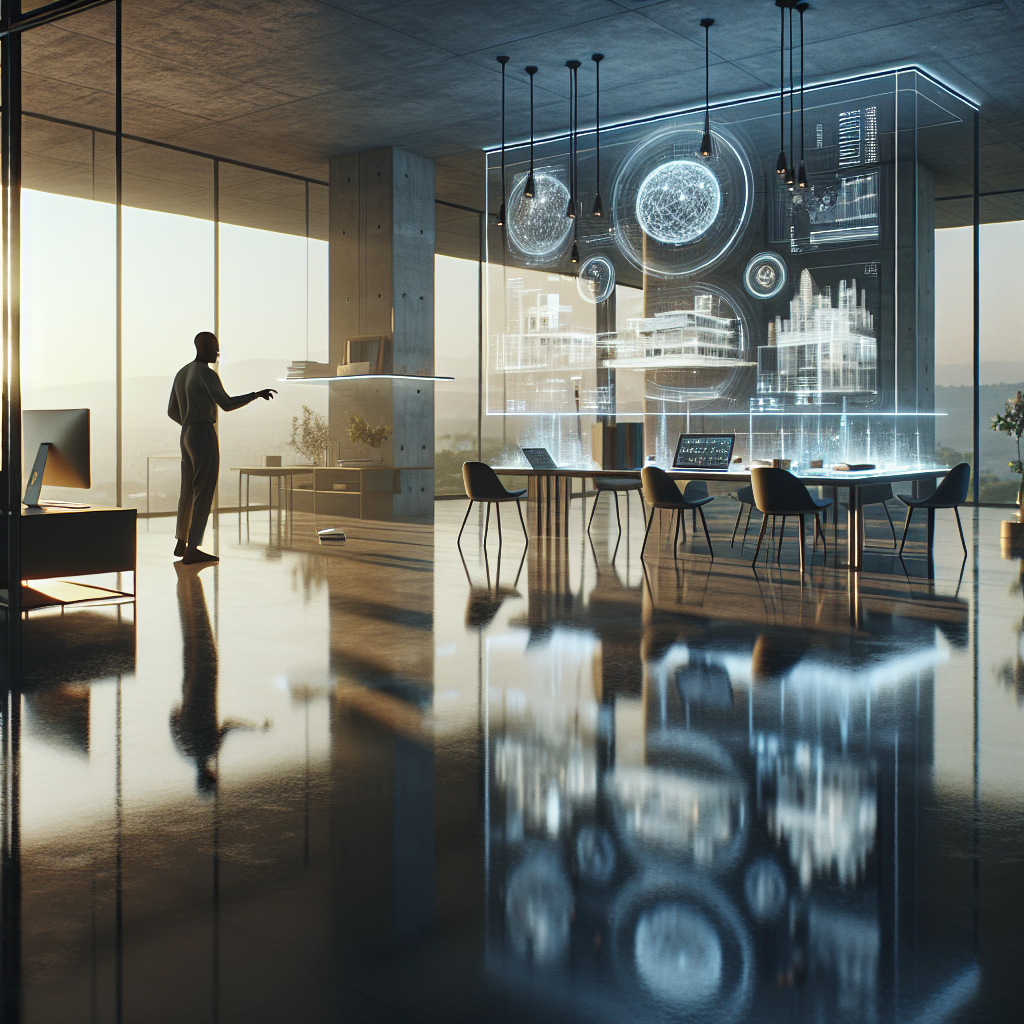
- Prompt: Photorealistic image of an architect’s studio where a holographic AI interface projects 3D building models, shot on a Hasselblad H6D with natural morning light and minimalistic decor.
Alt text: Architect collaborating with AI holographic model in a minimalist studio.
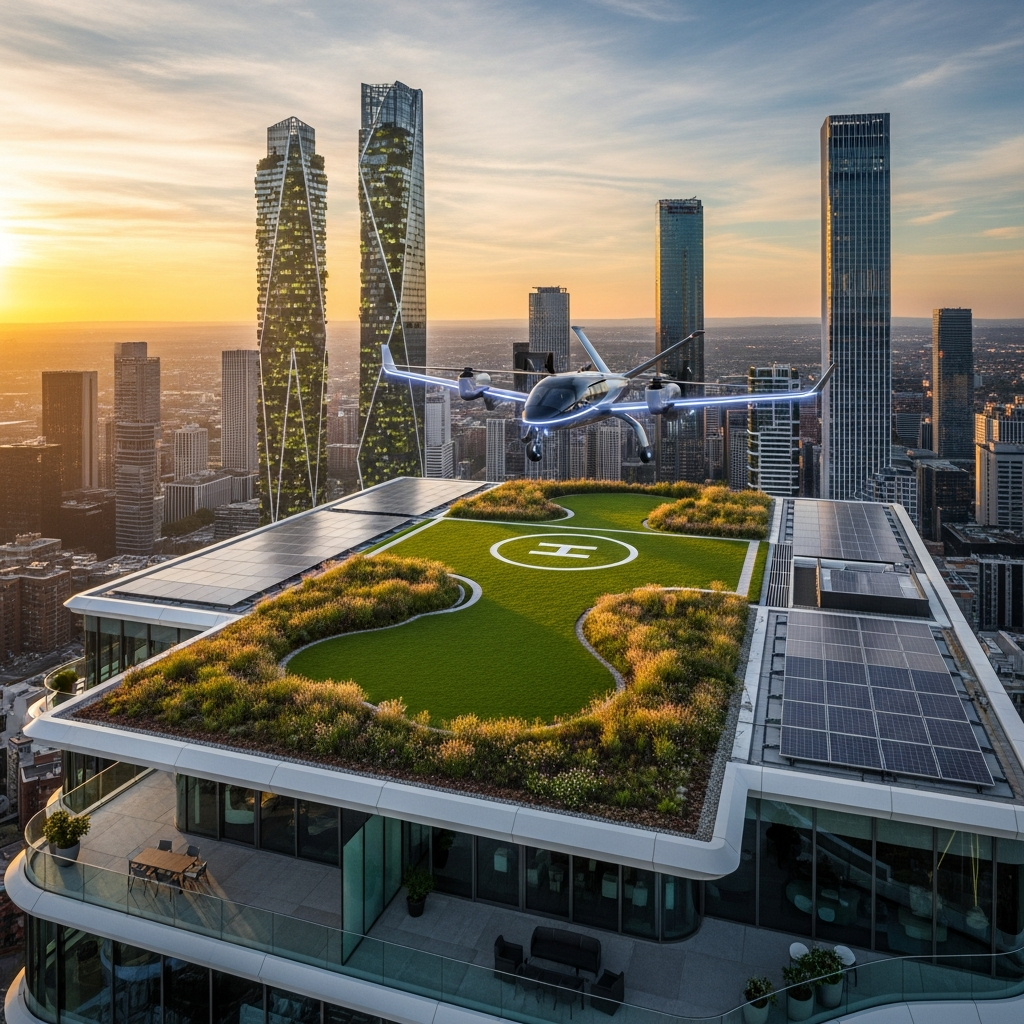
Caption: The new design partnership—where human intuition meets algorithmic precision. - Prompt: A futuristic cityscape at dusk with AI-optimized skyscrapers featuring kinetic facades and glowing organic forms, captured in ultra-high resolution on a Hasselblad X2D.
Alt text: Futuristic skyline showcasing AI-designed kinetic architecture.
Caption: Cities shaped by code—AI-generated skylines redefining urban identity. - Prompt: Interior of a biophilic workspace with adaptive lighting responding to human emotion, lush greenery, and soft tactile materials, photographed with a Hasselblad X1D II.
Alt text: Emotion-responsive biophilic office interior with adaptive lighting.
Caption: Where empathy meets engineering—AI sensing the mood of a space. - Prompt: A designer sketching beside a large screen displaying generative art morphing in real time, shot on a Hasselblad H6D with cinematic depth of field.
Alt text: Designer collaborating with generative AI art on digital screen.
Caption: The creative dialogue between hand and algorithm continues to evolve.
Social Media Strategy
Main Post Caption:
“Did an AI design this—or