
Desert minimalism: earthen walls and sun-baked palettes for sustainable villas
Desert Minimalism: Earthen Walls and Sun-Baked Palettes for Sustainable Villas
In the vast silence of arid landscapes, where the horizon blurs into heat and light, a new architectural language is emerging—one that draws from ancient wisdom yet speaks fluently in the dialect of contemporary sustainability. Desert minimalism is not merely an aesthetic; it is a philosophy of restraint, rooted in ecology, material honesty, and the choreography of light. As architects and designers seek to reconcile luxury with environmental responsibility, the desert has become both muse and mentor.
The Essence of Desert Minimalism
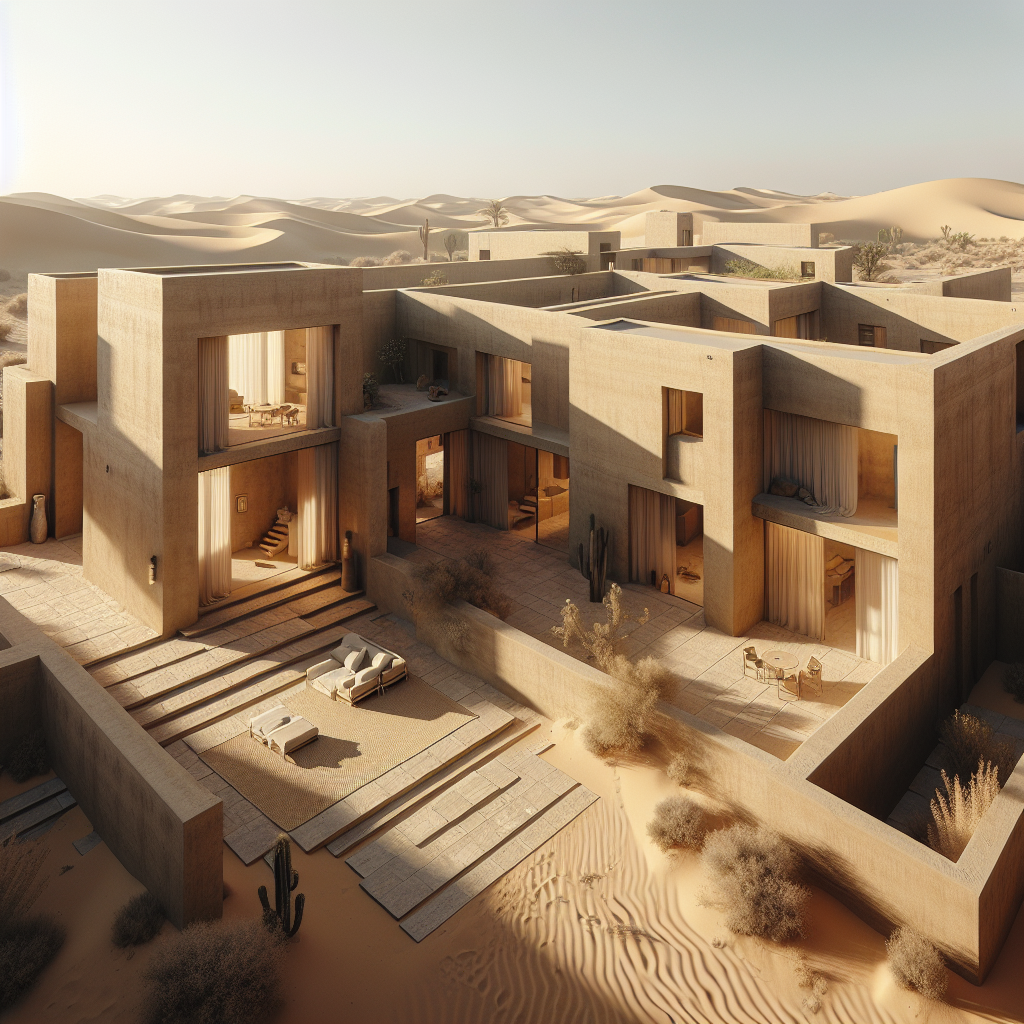
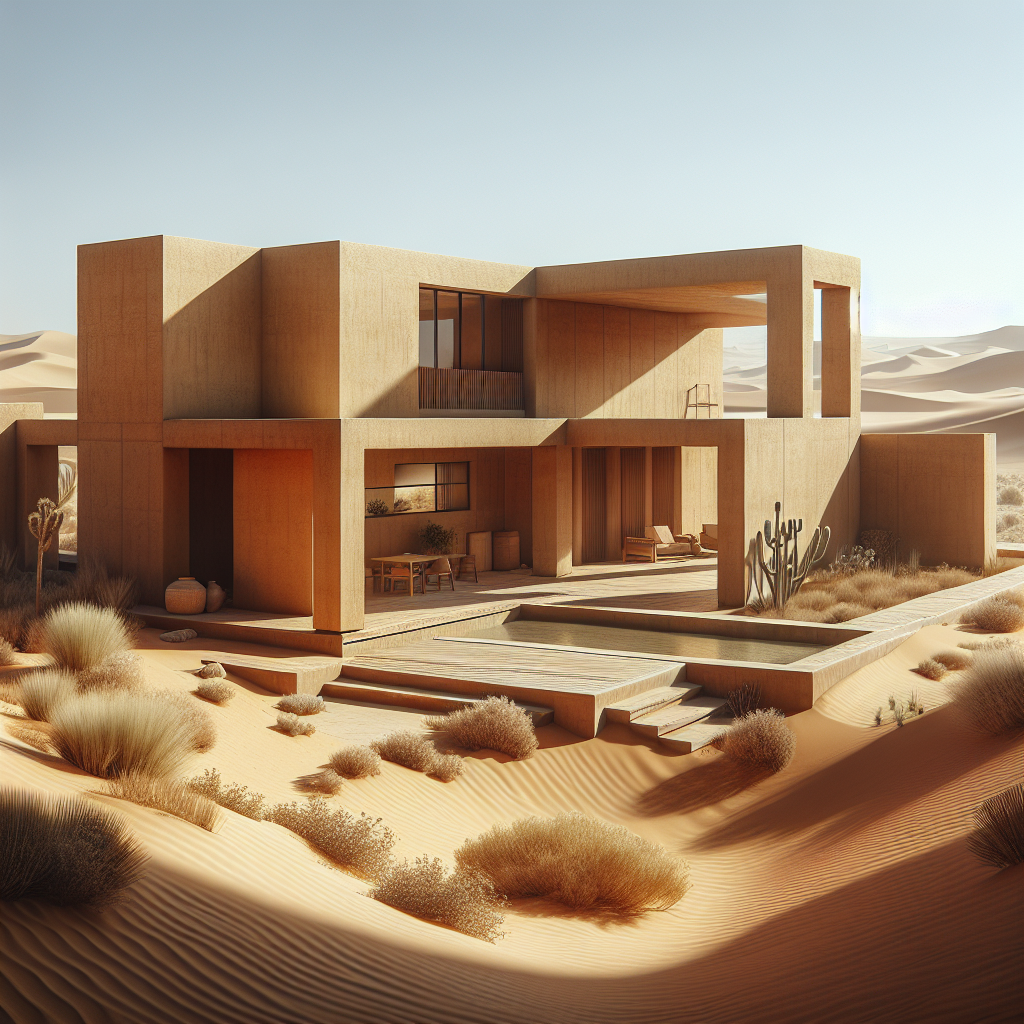
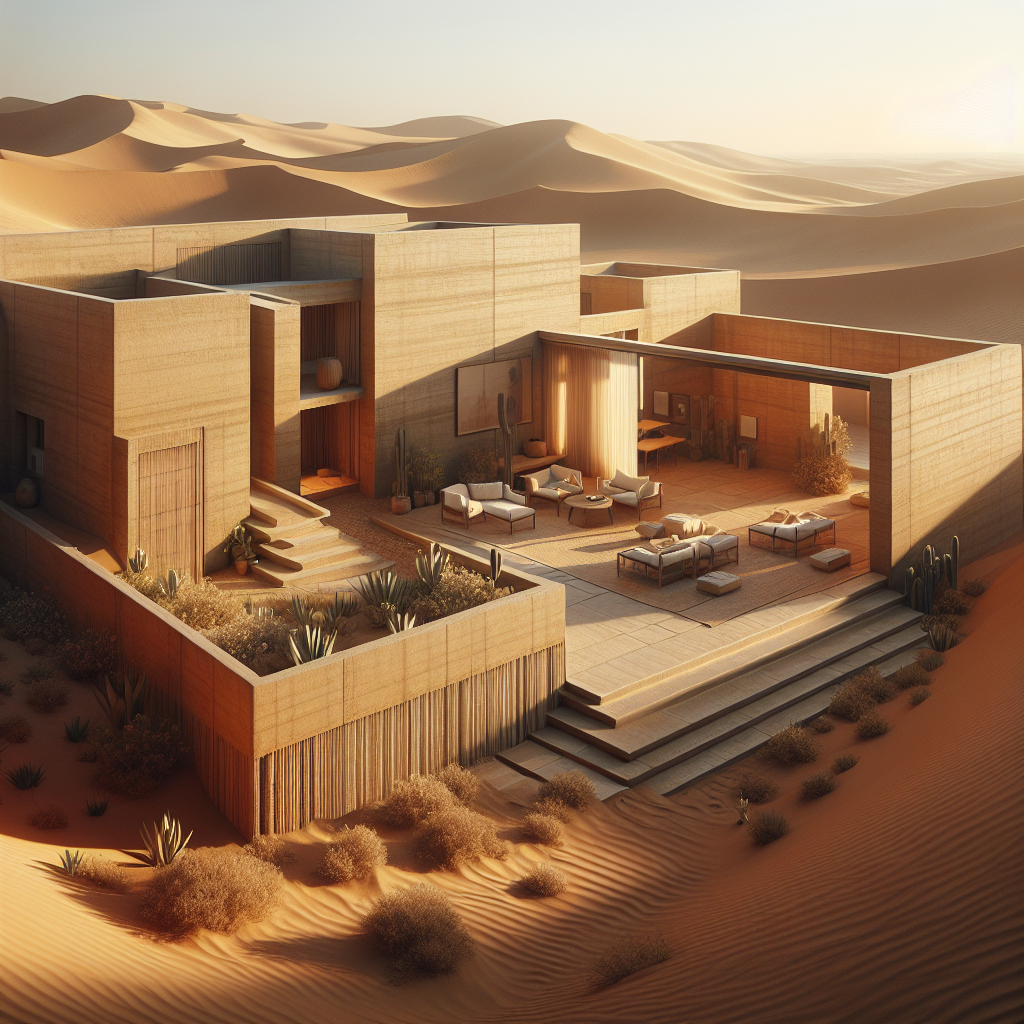
Desert minimalism distills architecture to its most elemental form: structure, texture, and light. It celebrates the tactile qualities of earthen materials—adobe, rammed earth, clay plaster—and the chromatic poetry of ochres, siennas, and sun-baked neutrals. These villas are not built to dominate their surroundings but to dissolve into them, their muted tones mirroring the terrain’s geological layers.
Unlike the whitewashed minimalism of coastal modernism, desert minimalism embraces imperfection and patina. The walls are not polished to reflect but to absorb; their rough surfaces trap shadows and tell time through subtle tonal shifts. This approach resonates with the wabi-sabi aesthetic—beauty found in transience and authenticity—while responding pragmatically to the climate’s demands.
Material Honesty and Thermal Wisdom
At the heart of this movement lies a return to vernacular intelligence. Long before the advent of mechanical cooling, desert dwellers mastered passive design strategies that remain profoundly relevant today. Earthen walls, often up to half a meter thick, act as natural insulators, absorbing heat during the day and releasing it at night. Courtyards, shaded arcades, and narrow apertures create microclimates that temper extremes of temperature and light.
Contemporary architects are reinterpreting these principles through advanced material science. Stabilized rammed earth, for instance, combines traditional soil composition with modern binders for improved durability and seismic resistance. In projects like the Al Faya Lodge in Sharjah or Studio KO’s Musée Yves Saint Laurent in Marrakech, we see how earthen architecture can be both ancient and avant-garde.
This synergy between heritage and innovation echoes themes explored in ancient desert architecture, where passive cooling and material circularity were intrinsic to survival. Today, these same principles underpin the global push toward net-zero design.
Sun-Baked Palettes and the Chromatic Calm
Color in desert minimalism is more than decoration—it is atmosphere. The palette is drawn directly from the land: ochre sands, terracotta dust, burnt umber cliffs, and the pale blush of dawn light on limestone. These tones, when layered with restraint, create interiors that feel both grounded and ethereal.
Walls in limewash or clay plaster diffuse sunlight into a soft, matte glow. Floors of polished concrete or local stone echo the tonal gradients of the terrain. Textiles—undyed linen, woven jute, raw wool—introduce tactile warmth without visual noise. The result is a chromatic serenity that feels both elemental and timeless, akin to the wabi-sabi aesthetic yet tailored for the high desert’s luminosity.
In many contemporary villas, architects employ light as a material. Skylights, clerestory windows, and perforated screens choreograph the sun’s movement, transforming interiors into living sundials. As the day unfolds, walls blush, fade, and glow—each moment a dialogue between architecture and the cosmos.
Crafting Sustainability Through Locality
The desert, often perceived as barren, is in fact a masterclass in resourcefulness. Desert minimalism extends this ethos by prioritizing local materials and low-impact construction. Earth, sand, and stone are sourced on-site, minimizing transport emissions and harmonizing the building’s carbon footprint with its geography.
Water scarcity—a defining challenge of arid regions—has inspired innovative systems for collection and reuse. Greywater recycling, condensation harvesting, and shaded roof gardens reduce consumption while reintroducing vegetation into the built environment. These strategies align with the principles of biophilic design, which integrates natural systems to enhance human well-being.
According to a 2024 report by the United Nations Environment Programme, buildings account for nearly 37% of global energy-related CO₂ emissions. By leveraging local materials and passive design, desert minimalism offers a tangible pathway toward reducing this impact—without sacrificing aesthetic sophistication.
Case Studies: From the Atlas to Arizona
Across continents, architects are reimagining desert living through a minimalist lens. In Morocco’s Agafay Desert, boutique eco-retreats employ rammed earth and reclaimed timber to merge seamlessly with the dunes. Their courtyards frame the horizon like minimalist paintings, while interiors remain sparse yet sensual—defined by texture rather than ornament.
In Arizona, the Desert Courtyard House by Wendell Burnette Architects exemplifies this ethos. Constructed from soil excavated on-site, its walls possess a geological authenticity that blurs the line between architecture and landscape. The villa’s open-air courtyards and deep overhangs orchestrate a delicate balance between exposure and refuge, echoing the rhythms of desert life.
Meanwhile, in Saudi Arabia’s AlUla region, new hospitality projects are redefining luxury through restraint. Instead of imposing glass towers, architects are sculpting subterranean villas into sandstone cliffs—structures that breathe with the land rather than compete against it. This approach aligns with the broader movement toward biodegradable and regenerative architecture, where buildings are conceived as temporary extensions of their ecosystems.
Technology Meets Tradition
While desert minimalism is grounded in ancient techniques, it is far from nostalgic. Emerging technologies—such as sand-printing construction and AI-driven environmental modeling—are enabling architects to optimize earthen forms for structural performance and thermal efficiency. 3D-printed clay modules, for instance, can replicate the thermal mass of traditional adobe while reducing labor and waste.
Digital tools also allow for precision in passive design. Parametric modeling simulates solar angles, wind flow, and thermal gain, ensuring that every aperture and wall thickness serves a climatic purpose. The result is architecture that feels intuitive yet is informed by data—a seamless fusion of craft and computation.
The Emotional Geometry of Stillness
Beyond sustainability metrics and material innovation, desert minimalism resonates on a psychological level. In a world saturated with visual noise and digital overstimulation, these villas offer a counterpoint: silence, shadow, and stillness. The spatial compositions—long corridors, framed vistas, monolithic walls—evoke a meditative calm reminiscent of monastic architecture.
This emotional restraint aligns with the broader cultural shift toward slow living and sensory mindfulness. As luxury evolves from opulence to authenticity, the desert villa becomes a sanctuary for contemplation—a place where architecture returns to its primal purpose: shelter, shade, and serenity.
Desert Minimalism as a Global Blueprint
The principles of desert minimalism extend far beyond arid geographies. Its lessons in thermal regulation, material circularity, and chromatic harmony are increasingly relevant to urban and temperate contexts. Architects are adapting its ethos to coastal, alpine, and even tropical settings, proving that minimalism, when rooted in ecology, transcends style.
As climate-responsive design becomes imperative, the desert’s quiet wisdom offers a blueprint for the future. It teaches us that sustainability is not achieved through technological excess but through attunement—to place, to light, to time. In this sense, desert minimalism is not just a trend but a manifesto for living lightly on the earth.
In the end, the allure of earthen walls and sun-baked palettes lies not in nostalgia but in necessity. They remind us that architecture, at its most profound, is an act of empathy—toward the land, the climate, and the human spirit.
By embracing the silence of the desert, we may rediscover the true sound of

❮
❯