
Desert courtyards harnessing: thermal mass for daily temperature shifts
Desert Courtyards Harnessing Thermal Mass for Daily Temperature Shifts
In the world’s arid landscapes—where the sun blazes by day and the air chills by night—architecture has long been a quiet mediator between extremes. The desert courtyard, an ancient typology reimagined for contemporary sustainability, stands as one of the most elegant solutions to this climatic duality. Today, architects are rediscovering how thermal mass—the ability of materials to absorb, store, and release heat—can transform courtyards into living instruments of environmental balance. This renewed fascination merges tradition with innovation, yielding spaces that are both emotionally resonant and thermally intelligent.
The Science of Stillness: Understanding Thermal Mass
At its core, thermal mass refers to the capacity of a material to moderate temperature fluctuations by absorbing heat during the day and releasing it as temperatures drop. In desert climates, where diurnal temperature variations can exceed 20°C, this principle becomes a natural ally. Materials such as adobe, rammed earth, and stone possess high heat capacity, acting as thermal batteries that stabilize interior conditions without mechanical intervention.
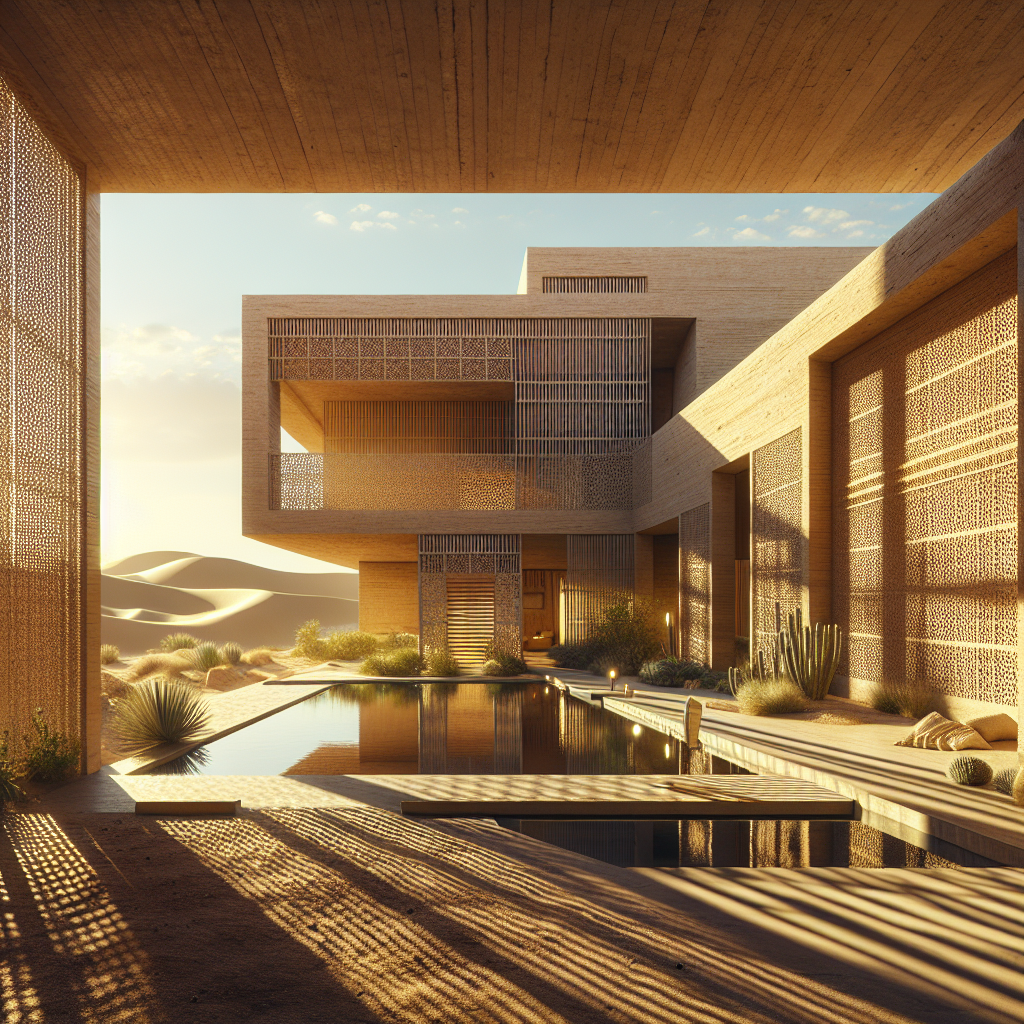
When integrated into courtyard architecture, these materials create a microclimate—a self-regulating environment where the interplay of shade, air movement, and stored heat ensures comfort. The courtyard’s walls and floors, often thick and tactile, become passive thermal regulators, capturing solar energy in the morning and radiating warmth through the cool desert night.
From Ancient Wisdom to Modern Application
Architectural history is rich with examples of this principle. The courtyards of the Alhambra in Granada, for instance, were designed to channel breezes, reflect light off water surfaces, and maintain thermal equilibrium through dense masonry. Similarly, Persian bagh gardens and North African riads demonstrate how spatial geometry and material science converge to produce climatic harmony.
Contemporary architects are now reinterpreting these vernacular lessons through the lens of sustainability. In the Middle East, firms like X-Architects and Anarchitect are employing rammed earth and compressed clay blocks to design villas that respond dynamically to the desert’s thermal rhythm. Their courtyards are not nostalgic gestures but performative systems—part social heart, part environmental engine.
This revival echoes the ideas explored in Lessons from Ancient Desert Architecture, where the past’s intuitive strategies inform the future’s sustainable ambitions. The renewed interest in thermal mass represents a larger movement toward climate-responsive design—a philosophy that values adaptation over domination.
Material Alchemy: The Aesthetics of Thermal Performance
In high-end desert architecture, materiality is both aesthetic and functional. The tactile roughness of rammed earth, the cool density of limestone, and the matte softness of clay plasters are more than stylistic choices—they are thermal instruments. The material palette often mirrors the surrounding landscape, creating a visual continuity between built form and terrain.
Architects are also experimenting with hybrid materials that combine traditional mass with modern insulation. For instance, stabilized adobe mixed with natural fibers enhances structural integrity while maintaining breathability. In some projects, walls are embedded with phase-change materials that absorb latent heat, subtly amplifying the building’s thermal inertia.
These innovations parallel the ethos of biodegradable architecture, where material performance is inseparable from ecological responsibility. The result is a new architectural language—earthy yet precise, rooted yet futuristic.
Courtyard as Climate Mediator
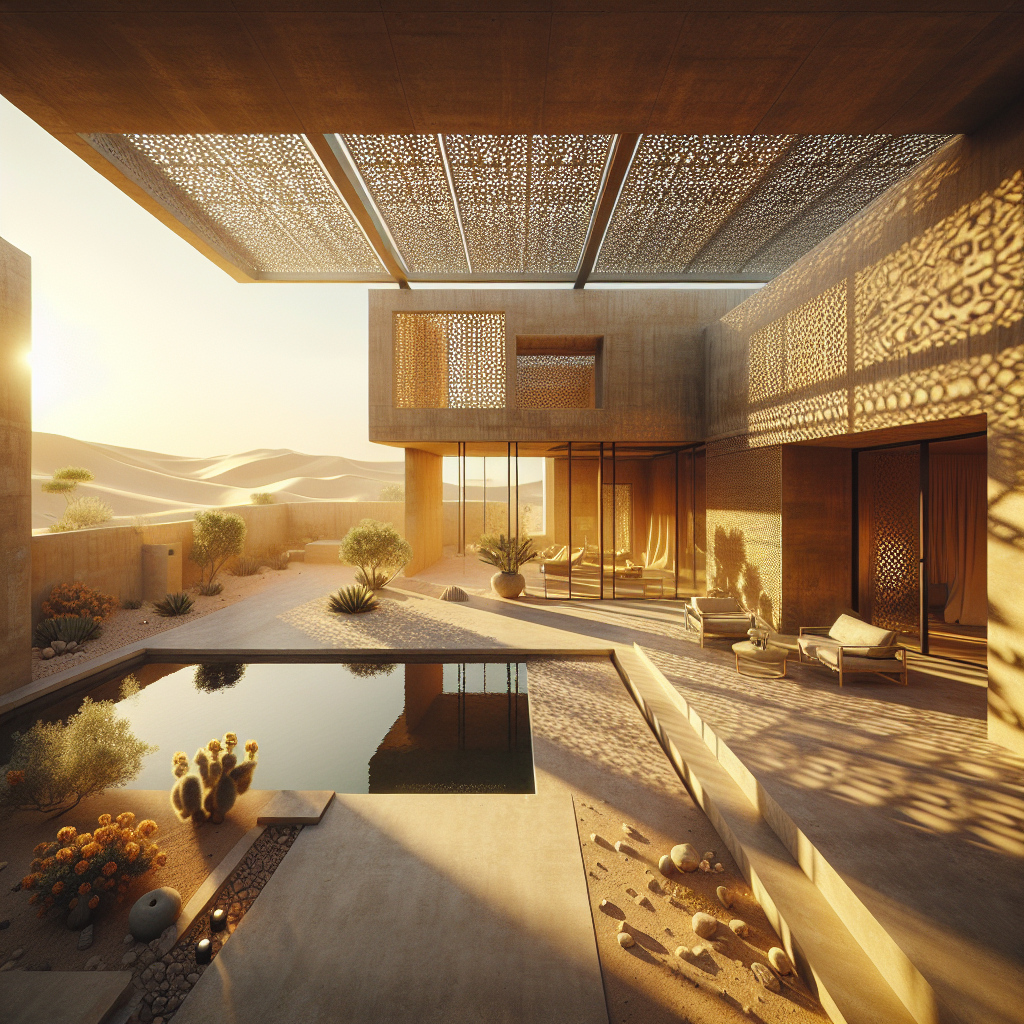
The courtyard’s geometry is central to its thermal function. A well-proportioned courtyard acts as a thermal buffer zone, mediating between interior and exterior conditions. During the day, its shaded walls and reflective surfaces reduce solar gain, while at night, the stored heat radiates gently into the void, maintaining ambient warmth.
Designers often incorporate water features and vegetation to enhance evaporative cooling. Shallow pools, shaded by date palms or desert acacias, create a microclimate that can lower air temperature by several degrees. The psychological effect is equally profound—these spaces offer a sensory refuge, where the hum of water and the scent of earth evoke a primal connection to place.
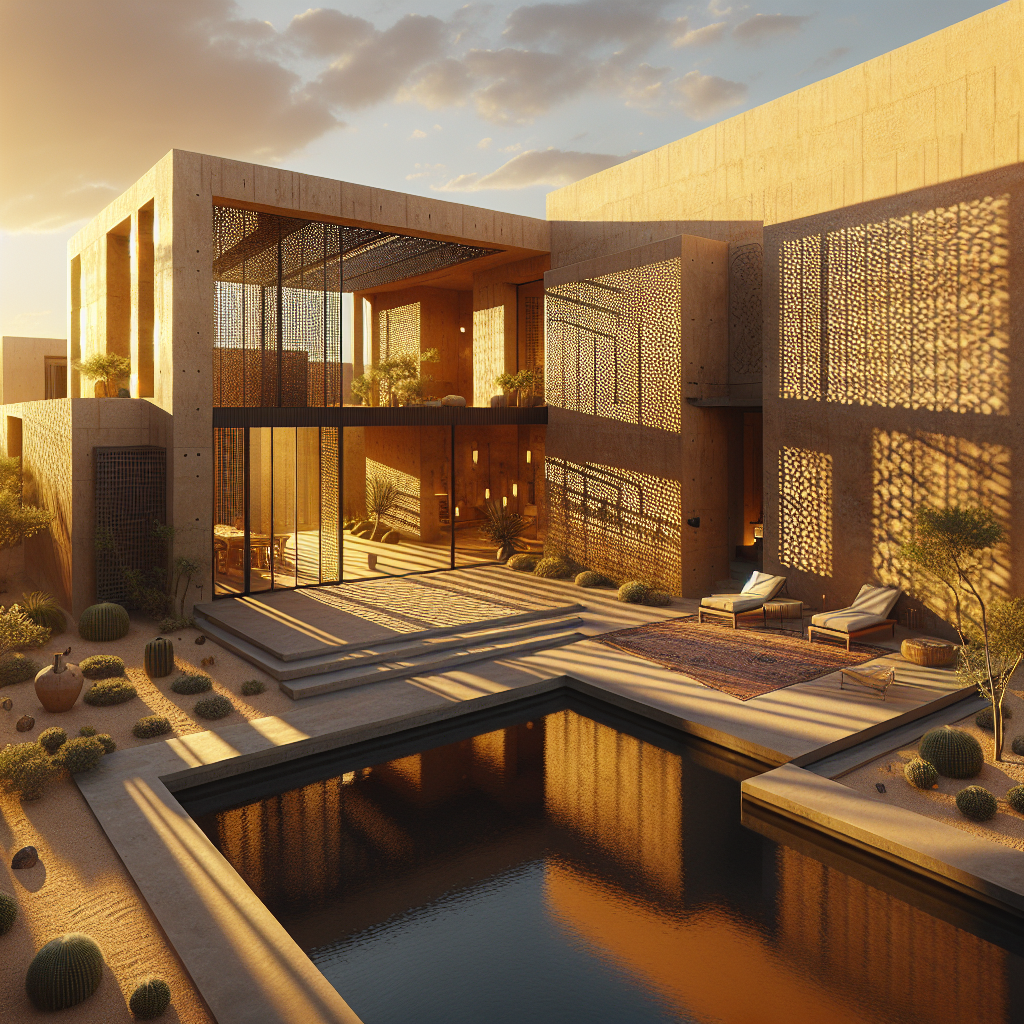
Modern courtyards also integrate kinetic shading systems and laser-cut metal screens, as seen in projects like Intricate Shadow Play. These elements reinterpret the mashrabiya tradition, casting dynamic patterns of light and shadow that evolve throughout the day while optimizing thermal comfort.
Case Study: The Desert Courtyard House, Arizona
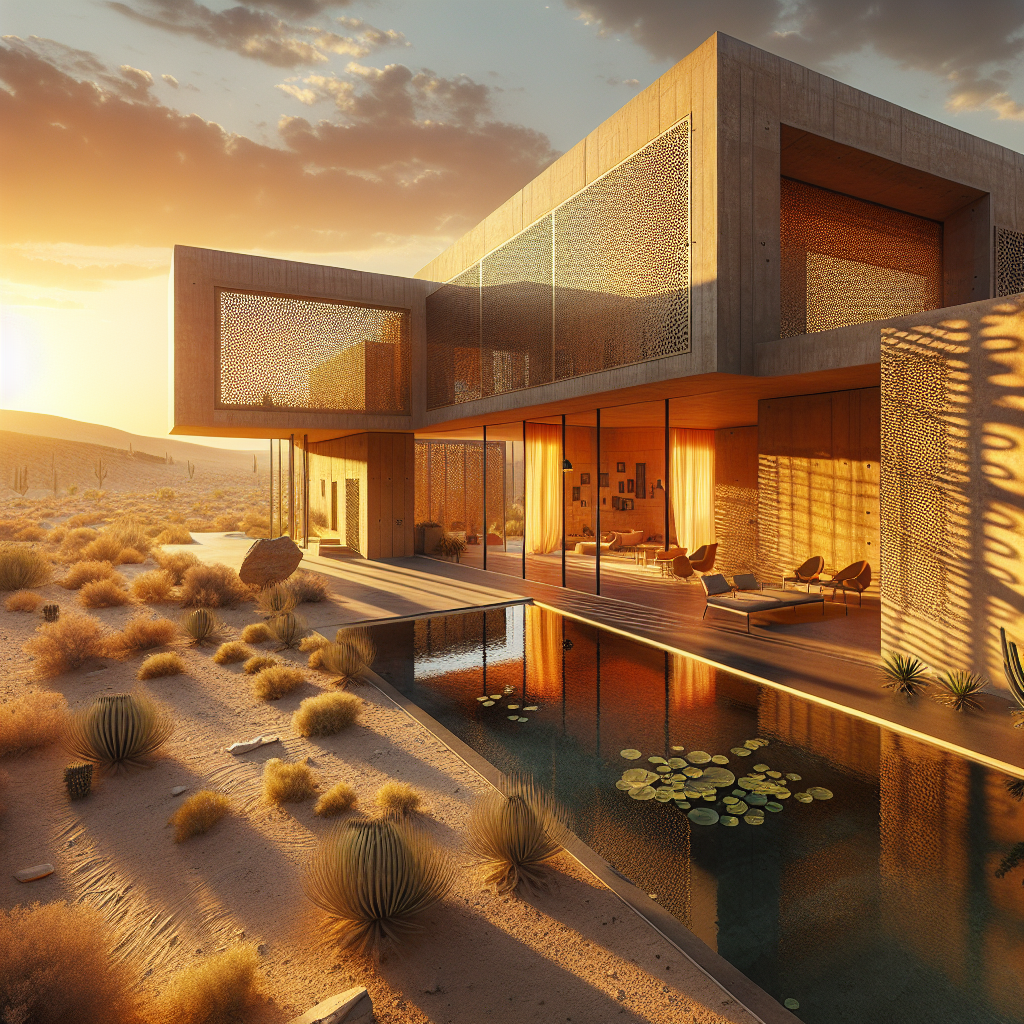
One of the most compelling examples of thermal mass in action is Wendell Burnette’s Desert Courtyard House in Scottsdale, Arizona. Constructed from locally sourced rammed earth and steel, the residence is embedded into the desert floor, its courtyard carved as a void of stillness. The thick earthen walls absorb solar radiation, while the recessed courtyard captures cool air, creating a natural convection cycle that minimizes the need for mechanical cooling.
At dusk, the walls release their stored warmth, enveloping the courtyard in a subtle, radiant glow. The experience is both physical and poetic—a dialogue between architecture and atmosphere. The project exemplifies how thermal mass design can yield both environmental efficiency and emotional resonance.
Digital Tools, Ancient Principles
Today’s architects are leveraging computational modeling to refine these age-old strategies. Software simulations analyze solar trajectories, wind flow, and material heat capacity to optimize courtyard proportions and orientations. This fusion of parametric design and environmental data allows for precision-driven interpretations of traditional wisdom.
Such technological integration aligns with the broader shift toward AI in architecture, where machine learning aids in predicting thermal performance and occupant comfort. Yet, the essence remains human: crafting spaces that breathe with the rhythm of the desert.
Beyond Sustainability: Toward Emotional Thermal Design
In the luxury design sphere, sustainability is no longer a constraint but a narrative of refinement. The new desert courtyard is not only energy-efficient but emotionally calibrated. Its materials invite touch; its shadows choreograph time. The architecture becomes a sensory instrument, tuned to the desert’s daily symphony of heat and coolness.
Designers are increasingly aware that thermal comfort is as much psychological as it is physical. The slow release of warmth from a sun-baked wall, the coolness of stone underfoot at dawn—these are experiences that ground inhabitants in their environment. This human-centric approach resonates with the principles of biophilic design, emphasizing the restorative power of natural processes.
The Future of Desert Living
As global temperatures rise and energy resources tighten, the lessons embedded in desert courtyards gain new urgency. The passive cooling and heating strategies once born of necessity now represent a sophisticated response to climate resilience. Future desert architecture will likely blend thermal mass systems with smart technologies—adaptive facades, responsive shading, and embedded sensors—to create self-regulating environments that honor both tradition and innovation.
Ultimately, the desert courtyard is more than an architectural typology; it is a philosophy of coexistence. It teaches us that comfort can emerge from restraint, and that sustainability, when rooted in cultural intelligence, can be profoundly beautiful. In the stillness of its shaded walls and the slow pulse of its thermal mass, the courtyard whispers a timeless truth: design, at its best, is the art of living with the climate, not against it.
Keywords: desert courtyard architecture, thermal mass design, passive cooling, sustainable architecture, rammed earth, bioclimatic design, desert architecture trends