
Decentralized Urban Planning: Can Cities Be Designed Like Blockchains?
Decentralized Urban Planning: Can Cities Be Designed Like Blockchains?
In the last decade, the architecture and urban design community has witnessed a growing fascination with decentralized systems—structures that distribute power, data, and decision-making across networks rather than concentrating them in a single authority. This shift, largely inspired by the rise of blockchain technology, is beginning to influence how architects, planners, and policymakers imagine the future of cities. The question is no longer purely technological: can cities themselves function like blockchains? Could the built environment evolve into a self-regulating, transparent, and participatory ecosystem where every citizen becomes a node in a living, urban network?
The Blockchain Blueprint for Urbanism
At its core, blockchain is a distributed ledger—a system that records transactions across multiple computers so that the record cannot be altered retroactively. Its principles of transparency, immutability, and decentralization have profound implications for urban governance. Imagine a city where zoning decisions, resource allocation, and infrastructure maintenance are logged on a shared, tamper-proof system accessible to all residents. This would not only democratize urban planning but also enhance accountability and reduce bureaucratic inefficiencies.
Architects and urban theorists are beginning to explore how this digital logic might translate into physical form. In this vision, the city becomes a networked organism—each neighborhood a node, each building a block, and each citizen a validator of the system’s integrity. This concept aligns with the growing movement toward community-driven architecture, where design decisions emerge from collective intelligence rather than top-down mandates.
From Centralized Masterplans to Distributed Design
Traditional urban planning has long relied on centralized masterplans—grand visions drafted by a small group of experts and implemented over decades. While these have produced iconic cities like Brasília or Chandigarh, they often fail to adapt to the dynamic needs of their inhabitants. In contrast, a decentralized approach would allow cities to evolve organically, guided by real-time data and local participation.
Consider the example of Barcelona’s “Decidim” platform, an open-source digital tool that enables citizens to propose, debate, and vote on urban initiatives. It operates on blockchain principles of transparency and traceability, ensuring that every contribution is recorded and verifiable. Similarly, in Seoul, the “Blockchain City” initiative uses distributed ledgers to manage property records and public contracts, reducing corruption and streamlining urban management.
These initiatives signal a shift toward what could be termed “distributed urbanism”—a model where the city’s design and governance are co-authored by its inhabitants. It’s a philosophy that resonates with the participatory ethos of democratic design, yet it introduces a technological infrastructure capable of scaling participation to millions.
Architecture as a Networked System
To design cities like blockchains, architects must rethink the very nature of the built environment. Buildings could act as data nodes, embedded with sensors that monitor energy use, air quality, and occupancy patterns. This data, stored on decentralized networks, could inform adaptive responses—automatically adjusting lighting, ventilation, or even the allocation of shared resources.
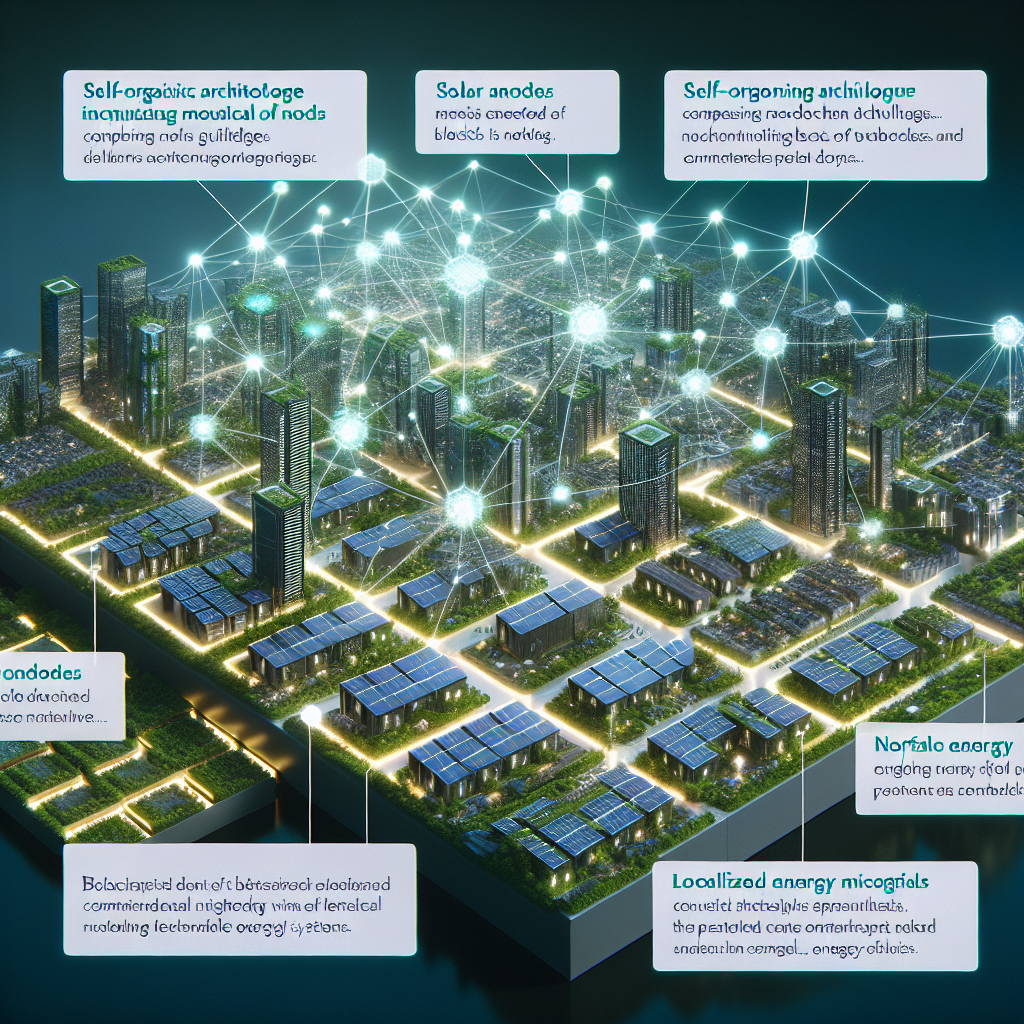
Such systems are already emerging in the form of smart home technologies and responsive architecture. But the next frontier lies in scaling these principles to the urban level. Imagine a district where every building contributes to a shared energy microgrid, where waste management is coordinated through peer-to-peer systems, and where mobility networks dynamically adapt to user demand. This vision echoes the principles explored in blockchain in architecture, extending transparency and collaboration from construction sites to entire city ecosystems.
Visualizing the Decentralized City
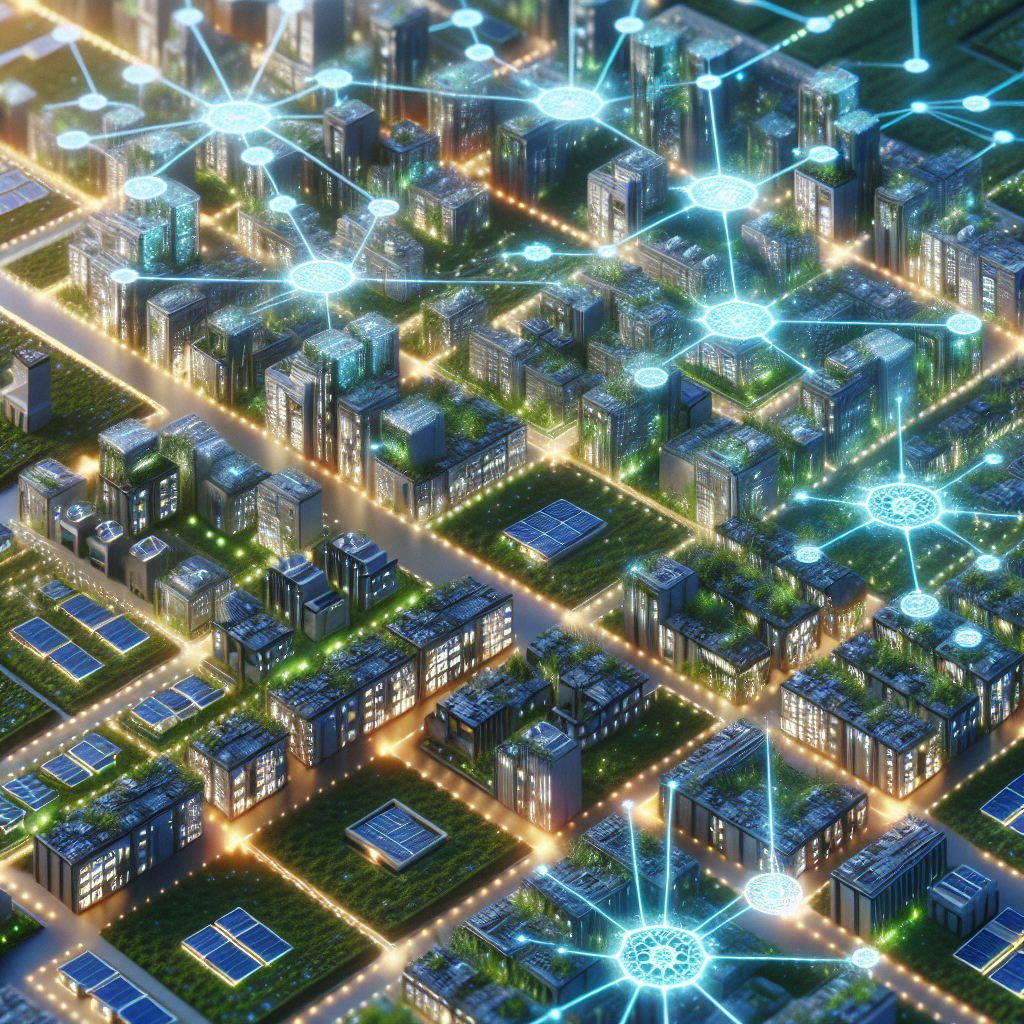
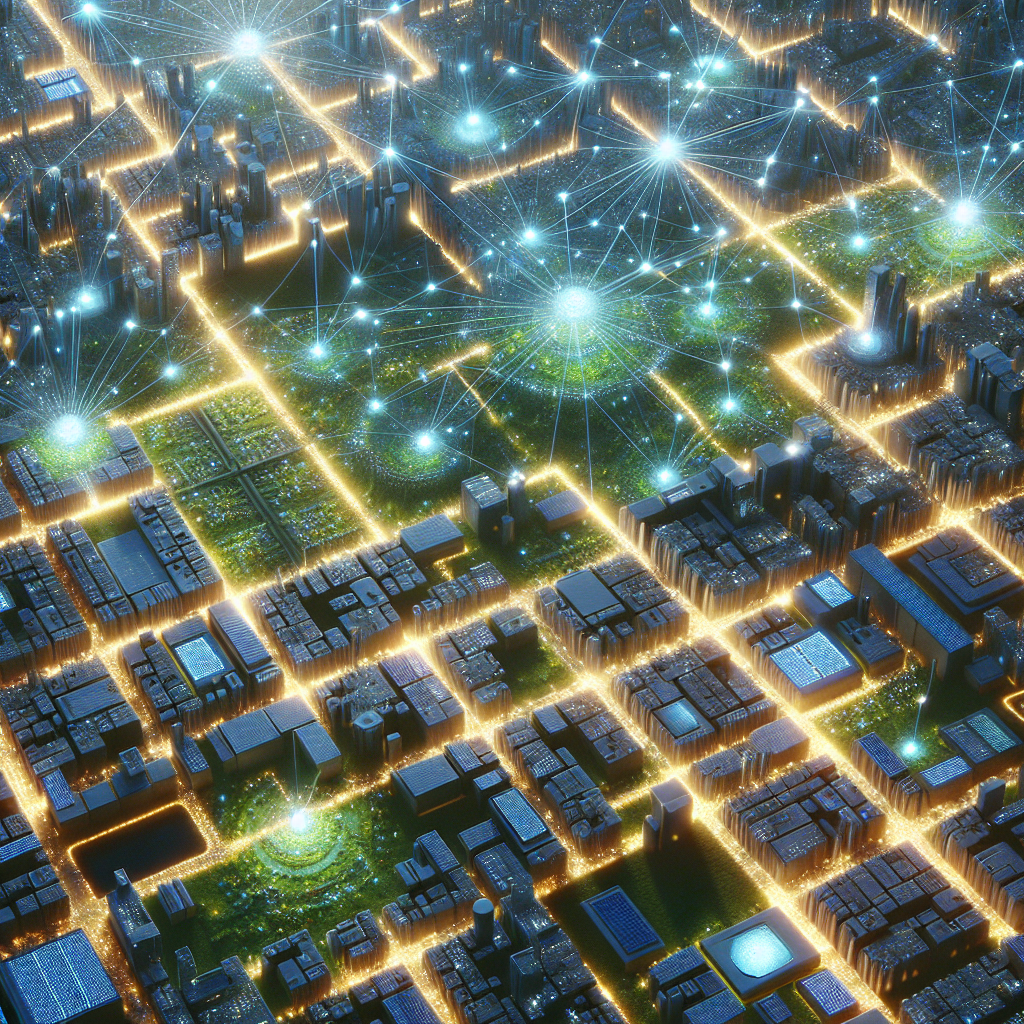
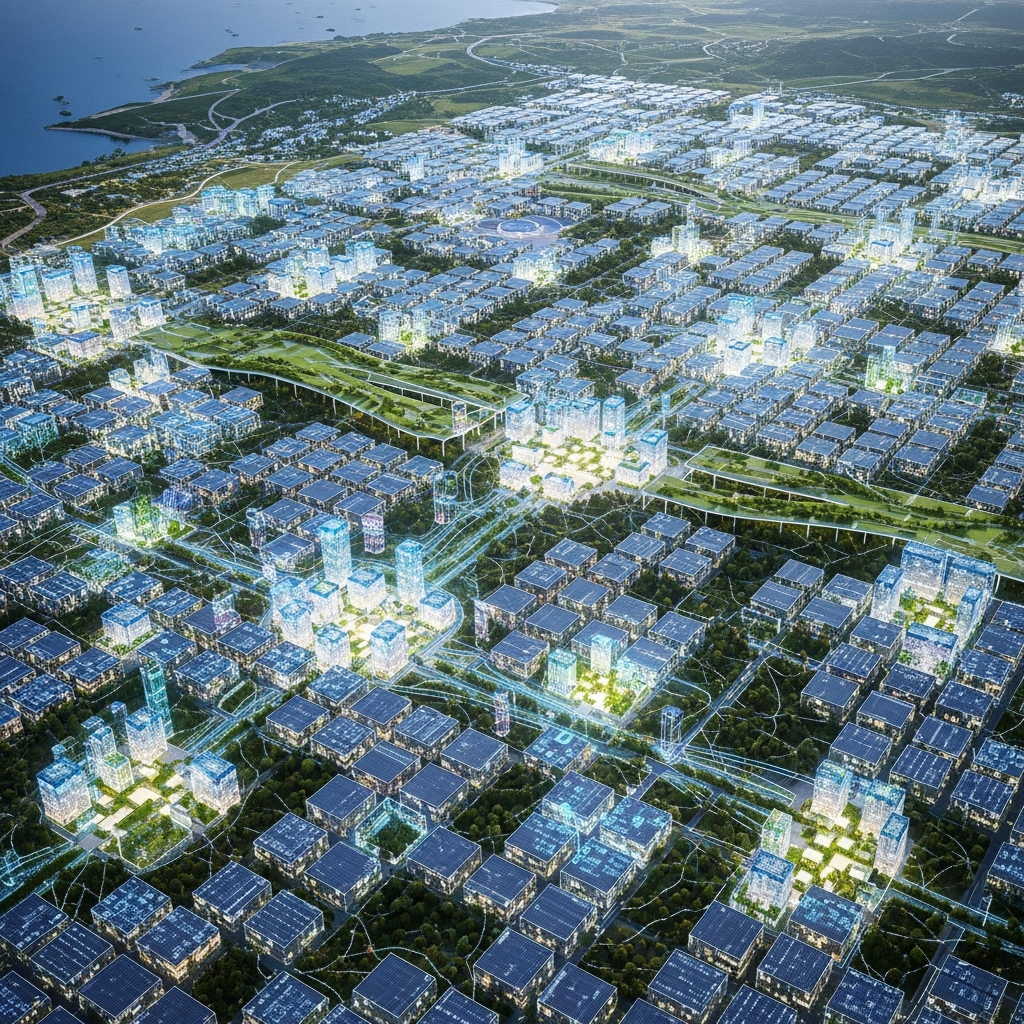
In aesthetic terms, a decentralized city might appear less like a rigid grid and more like a fractal organism—a pattern of repeating units that adapt to local conditions while maintaining coherence at the macro scale. Picture clusters of modular housing units, each designed by local cooperatives, connected through shared courtyards and green corridors. The visual language would be one of interconnected diversity: glass façades reflecting solar data dashboards, kinetic facades responding to microclimates, and communal hubs glowing with digital transparency.
Architectural studios are already experimenting with this visual lexicon. Projects like Carlo Ratti Associati’s “Senseable City Lab” in Turin and Sidewalk Labs’ (formerly Alphabet’s urban innovation arm) Toronto prototype have explored how data-driven systems can inform flexible, adaptive environments. These designs are not merely smart—they are self-organizing, embodying the same distributed intelligence that defines blockchain networks.
Challenges of Decentralized Urban Planning
Despite its promise, decentralized urban planning faces formidable challenges. The first is governance complexity. While blockchain systems excel at recording and verifying transactions, they struggle with subjective decisions—such as aesthetic preferences or cultural priorities—that are intrinsic to design. Furthermore, decentralization risks creating fragmentation if not guided by shared values or design frameworks.
Another concern is digital inequality. For decentralized systems to function equitably, all citizens must have access to digital tools and literacy. Without this, the model could reinforce existing disparities rather than dismantle them. The physical infrastructure of decentralization—distributed energy grids, local fabrication hubs, and data nodes—also demands significant investment and maintenance.
Finally, there is the question of trust. While blockchain eliminates the need for intermediaries, it cannot replace the social trust that underpins community life. Urban design must therefore balance technological autonomy with human connection, ensuring that cities remain spaces of empathy and encounter, not just efficiency.
Case Studies: Decentralization in Practice
Several experimental projects are already testing the waters of decentralized urbanism. In the Netherlands, the “Schoonschip” floating neighborhood in Amsterdam operates as a cooperative microgrid, where residents share energy generated from solar panels and exchange surplus power through a blockchain-based system. In Dubai, the government’s “Smart Dubai” initiative aims to migrate all public services onto blockchain platforms, creating a transparent and paperless civic infrastructure.
These examples demonstrate that decentralization need not be purely digital—it can manifest spatially, socially, and materially. In architecture, this ethos is mirrored in the rise of modular design and adaptive reuse, where buildings evolve through collective input and open-source fabrication. The result is a city that is not built once, but continuously rewritten by its inhabitants.
Designing for Resilience and Autonomy
Decentralized urban planning also aligns with the broader pursuit of resilient and sustainable cities. By distributing resources and decision-making, cities become less vulnerable to systemic shocks—whether environmental, economic, or political. Microgrids, local food systems, and community-managed water networks exemplify this resilience, echoing the self-sufficiency of blockchain nodes.
In this sense, decentralization is not just a technological shift but a philosophical one. It invites architects to design for autonomy rather than control, for collaboration rather than hierarchy. The decentralized city becomes a living blockchain—transparent, adaptive, and inherently democratic.
The Future of the Distributed City
As we enter 2026, the intersection of blockchain and urban design is no longer speculative. It is emerging in pilot projects, research labs, and policy frameworks worldwide. The decentralized city may not resemble the utopian grids of modernism, but rather a mosaic of interconnected systems—each self-sufficient yet interdependent, each transparent yet deeply human.
For architects and designers, this paradigm offers both a challenge and an opportunity: to craft spaces that embody the ethics of openness, participation, and resilience. In doing so, they may discover that the true beauty of the decentralized city lies not in its technology, but in its capacity to empower the collective imagination.
In the end, designing cities like blockchains is less about mimicking code and more about embracing its spirit—an architecture of trust, collaboration, and continuous evolution. The city of the future, much like the blockchain itself, will not be built by one hand, but by many.
Keywords: decentralized urban planning, blockchain cities, distributed design, smart cities, participatory architecture, resilient urbanism