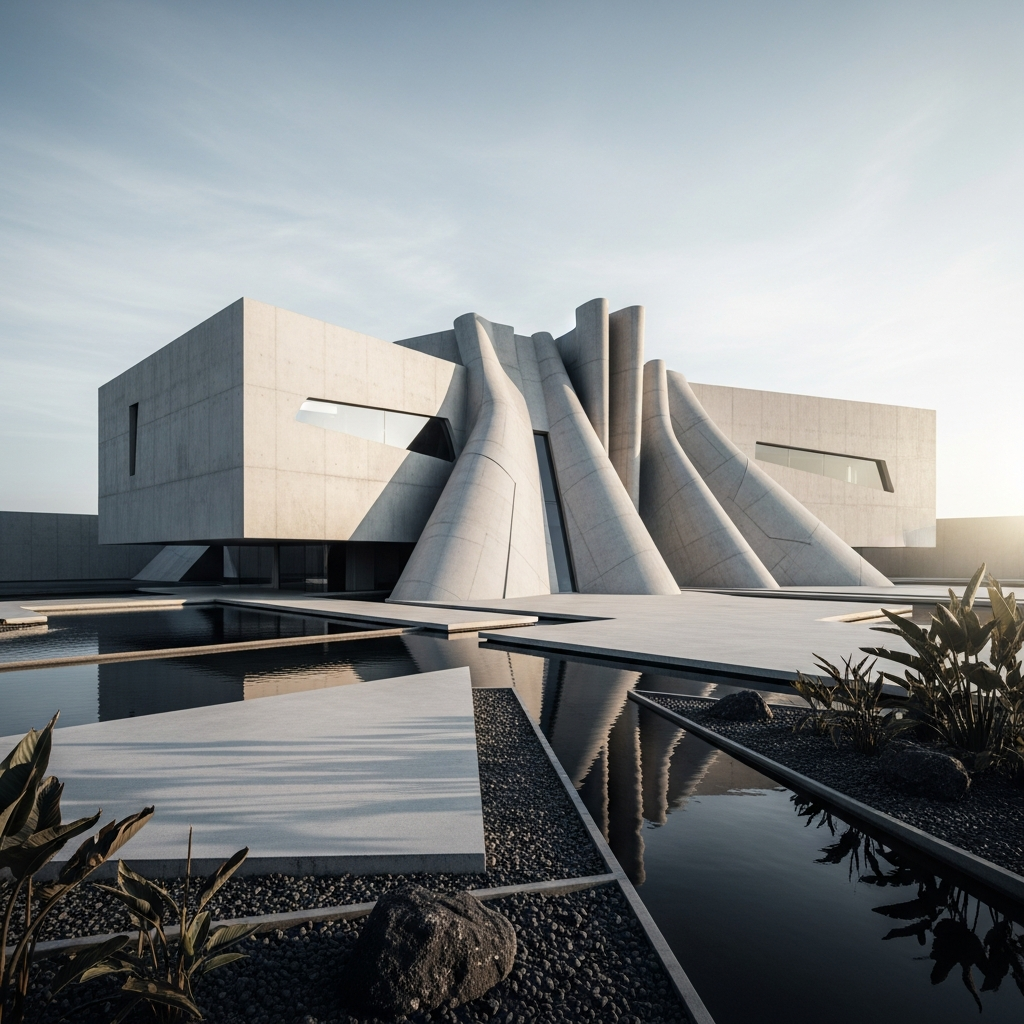

Cyber-Gothic Cathedrals: Reimagining Religious Spaces for the Digital Age
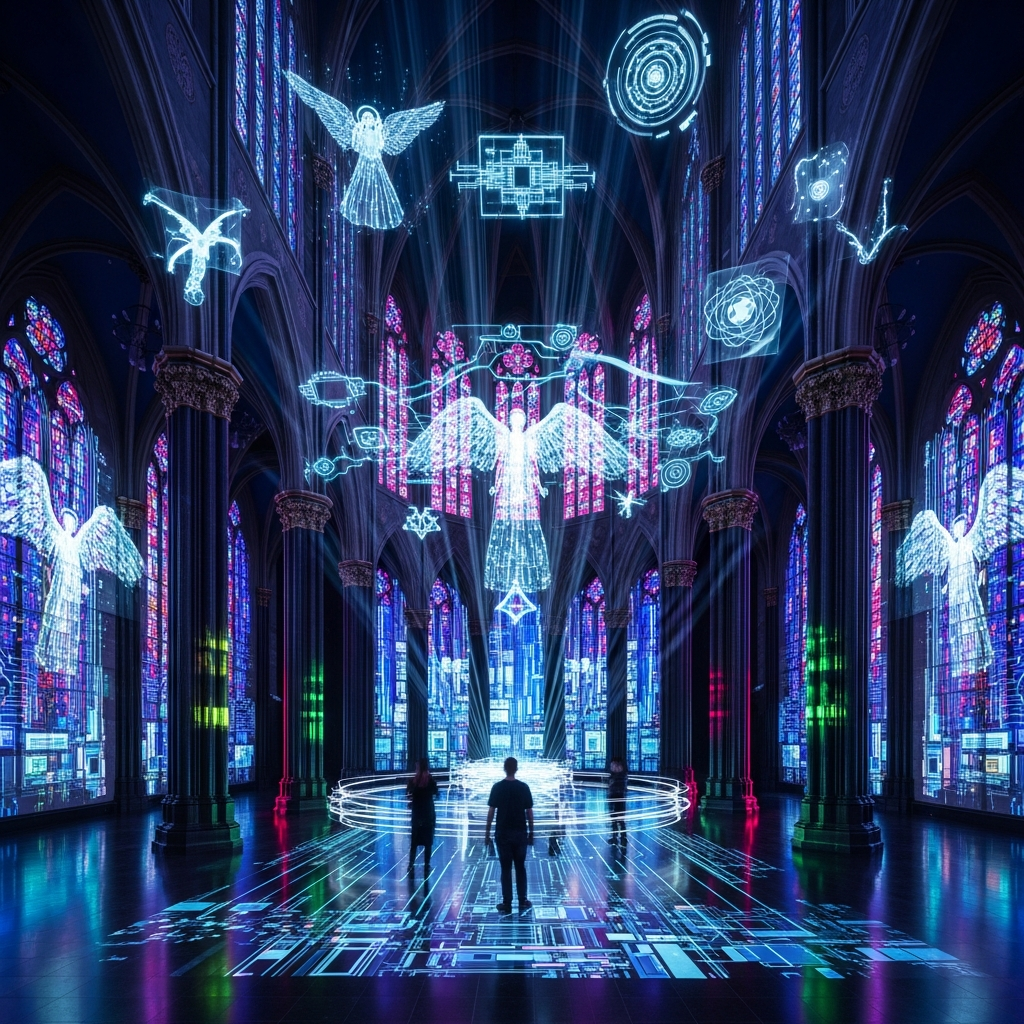
Cyber-Gothic Cathedrals: Reimagining Religious Spaces for the Digital Age
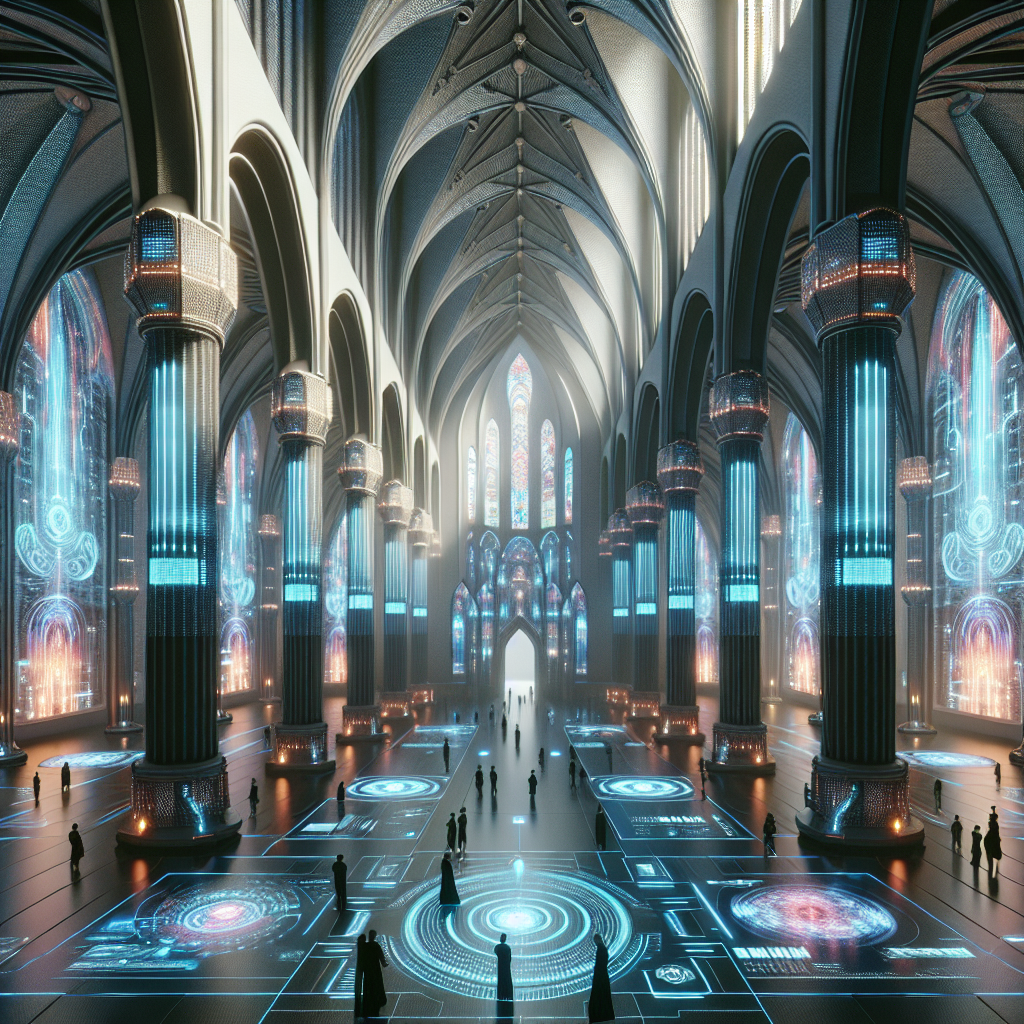
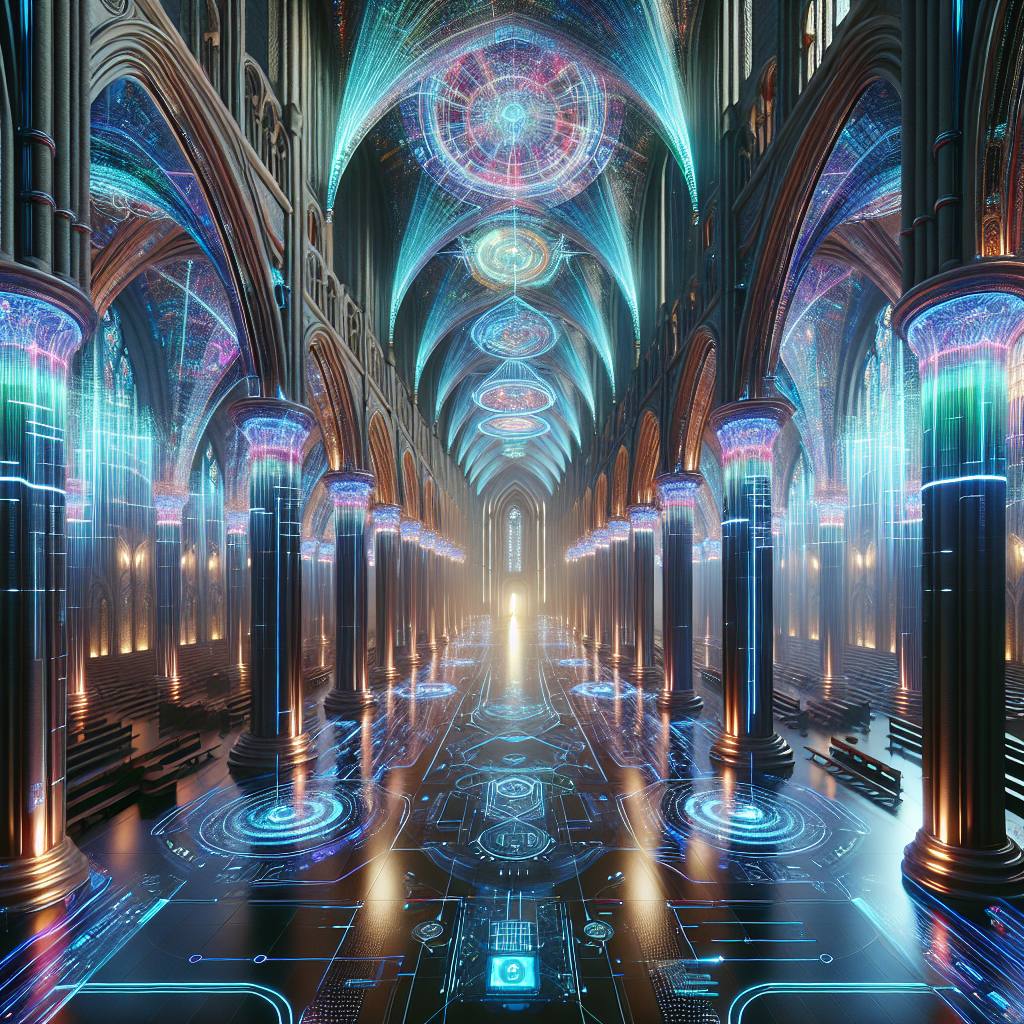
In the age of algorithms and augmented realities, the cathedral—once the pinnacle of architectural and spiritual ambition—faces a radical reinvention. The rise of “Cyber-Gothic” architecture signals a new chapter in the dialogue between faith, form, and technology. These are not churches in the traditional sense, but sanctuaries of data and light—structures that fuse medieval mysticism with digital materiality, where stained glass becomes holographic projection and the nave hums with the rhythm of code.
The Digital Sublime
For centuries, Gothic cathedrals embodied the human yearning for transcendence. Their spires pierced the heavens, their ribbed vaults echoed divine geometry. Today, that same pursuit of the sublime is being reinterpreted through the lens of digital culture. Architects and technologists are exploring how virtual and physical realms can converge to create spaces of collective contemplation—what might be called “networked spirituality.”
Projects like the integration of virtual reality in architectural design have already demonstrated how immersive environments can evoke emotional resonance comparable to sacred architecture. In Cyber-Gothic cathedrals, the sacred experience is no longer confined to stone and stained glass; it’s rendered in pixels, sensors, and interactive light.
Materiality and the Metaphysical
Unlike their medieval predecessors, these digital sanctuaries are not bound by gravity or permanence. They exist in a fluid state—part tangible, part virtual. The material palette includes responsive glass, conductive textiles, and carbon-based composites that shimmer like digital relics. The emergence of sand-printing technology has made it possible to fabricate intricate lattice structures reminiscent of Gothic tracery, but with algorithmic precision. These forms, when illuminated by dynamic LED arrays, seem to breathe, shifting in hue and texture according to the movement of visitors.
In this sense, Cyber-Gothic architecture reclaims the metaphysical ambition of its forebears. It is less about replicating religious iconography and more about translating spiritual awe into the language of light, data, and motion. The architecture becomes a living interface—responsive, sentient, and deeply symbolic.
From Sacred Stone to Sacred Code
The shift from stone to code mirrors a broader cultural transition. Just as medieval builders encoded theology into geometry, today’s architects embed meaning into algorithms. The nave becomes a data corridor; the rose window transforms into a digital mandala of information flow. According to the ArchDaily archives, several contemporary projects have already begun to reinterpret Gothic motifs through parametric design, using AI-driven modeling to simulate the organic complexity of medieval craftsmanship.
One striking example is the “Neo-Cyber Basilica” concept unveiled at the Venice Architecture Biennale, where the traditional cruciform plan was reimagined as a network diagram—each node representing a digital congregation. Visitors could interact with holographic icons that responded to biometric data, creating a feedback loop between human emotion and architectural expression.
Spirituality in the Age of Screens
In a world where attention is fragmented and rituals are mediated by devices, the Cyber-Gothic cathedral proposes a new kind of sacred encounter—one that merges the contemplative with the interactive. Here, prayer might take the form of data visualization; meditation might unfold within a sound-responsive chamber that translates breath into color. These experiences echo the principles of biophilic design, which connects human emotion to environmental stimuli, but they do so through digital rather than natural means.
Institutions like the American Institute of Architects have begun to explore how immersive technologies can foster communal experiences in secular and sacred contexts alike. The Cyber-Gothic movement extends this inquiry, suggesting that architecture can once again serve as a bridge between the human and the transcendent—even if the divine now resides in the cloud.
Algorithmic Ornamentation
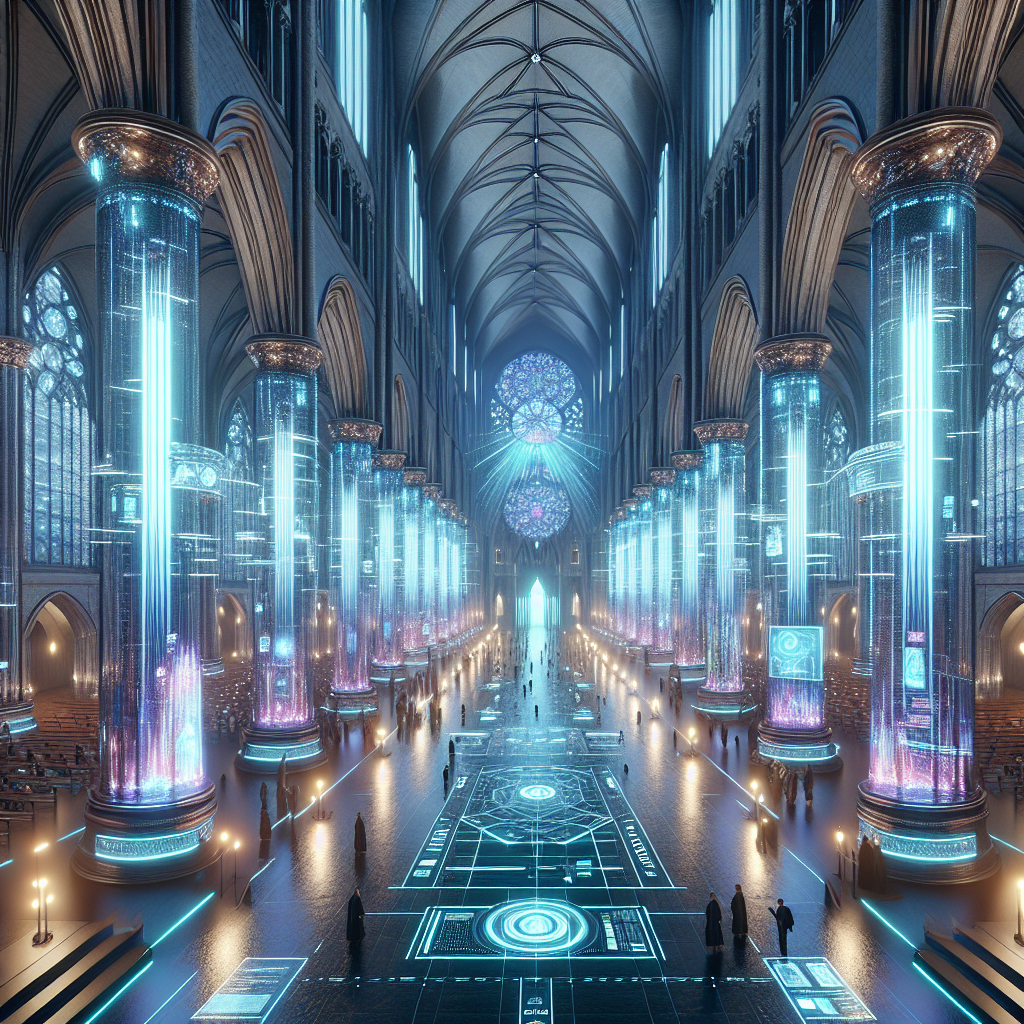
Gothic architecture was defined by its ornamentation—every arch, finial, and gargoyle carried symbolic weight. In the Cyber-Gothic paradigm, ornamentation becomes algorithmic. Patterns are generated in real time, responding to environmental data or social media sentiment. The result is a kind of living ornament—a façade that pulses with the collective consciousness of its visitors.
Researchers at the Materials Today journal have documented advances in photonic materials that could soon allow façades to display complex light patterns without consuming significant energy. Imagine a cathedral whose walls shimmer with data-driven color gradients, reflecting the emotional state of its congregation in real time. The architecture becomes not just a container for worship, but a participant in it.
Preservation Through Transformation
While some may view these digital sanctuaries as a departure from tradition, they can also be seen as a continuation of it. The Gothic builders of the 12th century were technological pioneers, pushing the limits of engineering and artistry. Their cathedrals were, in essence, the “smart buildings” of their time—complex systems of light, structure, and acoustics designed to evoke wonder. The Cyber-Gothic revival honors that spirit of innovation while adapting it to a world defined by connectivity and code.
Moreover, this new typology could offer a model for the adaptive reuse of historic religious sites. By integrating digital layers into existing structures, architects can preserve their cultural significance while reactivating them for contemporary audiences. This approach resonates with the principles outlined in adaptive reuse architecture, where heritage and innovation coexist in dynamic equilibrium.
The Cathedral as Interface
Ultimately, the Cyber-Gothic cathedral is not a building in the conventional sense—it is an interface between worlds. It mediates between the physical and the virtual, the sacred and the secular, the individual and the collective. Its spires may be made of light rather than limestone, but its purpose remains the same: to elevate human consciousness beyond the everyday.
As we move deeper into the digital century, these hybrid sanctuaries may become the new centers of reflection—spaces where technology is not a distraction but a conduit for meaning. In their glowing vaults and algorithmic arches, we may rediscover what the Gothic builders knew all along: that architecture, at its most profound, is a form of prayer.
###ARTICLE_END### { “seo_title”: “Cyber-Gothic Cathedrals for the Digital Age”, “meta_description”: “Explore Cyber-Gothic cathedrals—where architecture, technology, and spirituality merge in the digital age.”, “excerpt”: “Cyber-Gothic cathedrals blend medieval mysticism with digital innovation, redefining sacred architecture for the 21st century.”, “focus_keyphrase”: “Cyber-Gothic cathedrals” } — **AI Image Prompts** 1. **Prompt:** Photorealistic image of a futuristic cathedral interior blending Gothic arches with holographic stained glass projections, ambient light filtering through digital panels, shot on a Hasselblad H6D. **Alt text:** Cyber-Gothic cathedral interior with holographic stained glass and digital arches. **Caption:** Inside the Cyber-Gothic cathedral—where light, code, and devotion converge. 2. **Prompt:** Exterior view of a Cyber-Gothic cathedral at dusk, metallic spires illuminated by bioluminescent LED veins, crowds gathered in reflection, captured on a Hasselblad X2D. **Alt text:** Futuristic cathedral exterior glowing with LED spires at dusk. **Caption:** The new sacred skyline—Cyber-Gothic architecture redefines the urban horizon. 3. **Prompt:** Close-up of responsive façade made of translucent smart glass panels displaying algorithmic light patterns, photographed in high contrast on a Hasselblad H5D. **Alt text:** Smart glass façade of Cyber-Gothic cathedral showing dynamic light patterns. **Caption:** Algorithmic ornamentation—digital craftsmanship inspired by Gothic tracery. 4. **Prompt:** Aerial shot of a digital cathedral plaza integrating augmented reality installations and reflective pools, captured in golden hour light with a Hasselblad X1D II. **Alt text:** Aerial view of Cyber-Gothic cathedral plaza with AR installations. **Caption:** A public sanctuary for the digital age—architecture as immersive interface. — **Social Media Strategy** **Instagram Main Post Caption:** “Where stone meets code, and light becomes language. ✨ Explore the rise of Cyber-Gothic cathedrals—spaces that fuse spirituality, architecture, and technology into a new digital sublime. 🔗 Read the full story on Mainifesto.com. #CyberGothic #DigitalArchitecture #Future