

Colossal geometry furniture: playful scaling reminiscent of childlike curiosity
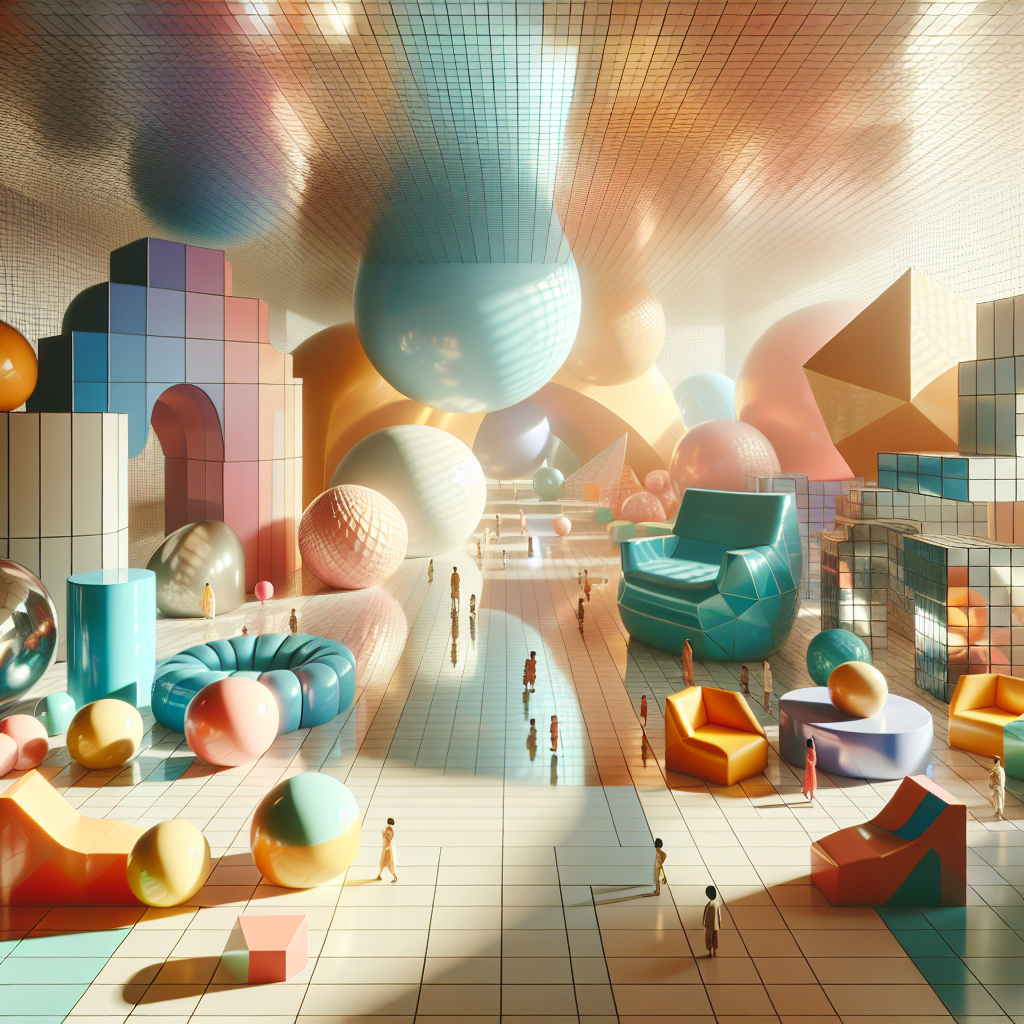
Colossal Geometry Furniture: Playful Scaling Reminiscent of Childlike Curiosity
In an era where design oscillates between the hyper-functional and the emotionally evocative, a new movement is emerging at the intersection of sculpture, architecture, and play. Colossal geometry furniture—an audacious trend defined by exaggerated proportions, monumental forms, and a sense of scale distortion—invites adults to rediscover the wonder of childhood through design. These oversized, geometric furnishings challenge spatial perception, blur the boundaries between art and utility, and transform interiors into immersive landscapes of tactile exploration.
The Rise of Monumental Play
In recent years, the design world has witnessed a shift toward experiential interiors that prioritize emotion and engagement over mere aesthetics. The rise of colossal geometry furniture can be seen as a natural extension of this evolution. Designers are increasingly embracing playful scaling—a deliberate manipulation of size and proportion that evokes the surreal delight of a child encountering the world anew. Chairs tower like architectural monuments, tables resemble sculptural plinths, and sofas unfold into topographies of color and form.
This movement resonates with the broader design philosophy of Postmodern architecture, which often celebrated irony, humor, and visual exaggeration. Yet, unlike the postmodern pastiche of the 1980s, today’s colossal geometry is grounded in material honesty and digital precision. It merges advanced fabrication technologies with a renewed fascination for human-scale interaction—a theme also explored in playful modern design that redefines how we inhabit space.
Designing at the Edge of Function and Fantasy
What makes colossal geometry furniture so compelling is its dual nature: it is both functional object and conceptual sculpture. The exaggerated scale forces users to renegotiate their relationship with the environment. A coffee table might rise to waist height, inviting standing interaction rather than seated repose. A bookshelf might resemble a fragmented cityscape, its angular forms recalling Brutalist architecture yet softened by playful chromatic accents.
Designers such as Sabine Marcelis, Objects of Common Interest, and Studio Swine have explored this intersection of scale and tactility. Their works often employ translucent resins, high-gloss lacquers, or cast glass to amplify the sense of monumentality. The result is furniture that behaves like architecture—anchoring a room not just visually but emotionally. As one Milan-based curator observed during Salone del Mobile, “These pieces are not furniture in the traditional sense; they are spatial experiences.”
Childlike Curiosity as Design Philosophy
At the heart of this movement lies a return to childlike curiosity—a sensibility that prioritizes discovery, surprise, and joy. In the same way that a child perceives a staircase as a mountain or a chair as a fortress, colossal geometry furniture reawakens the imagination of the adult user. The oversized scale disrupts routine perception, prompting new ways of moving, sitting, and engaging with space.
This ethos aligns with the growing emphasis on inclusive play design in architecture and urban planning, where interaction and sensory engagement are central to the user experience. The playful scaling of furniture echoes the tactile curiosity of playgrounds, yet reinterprets it through refined materials and sophisticated craftsmanship. In essence, it transforms domestic interiors into microcosms of exploration—spaces that encourage users to touch, climb, and imagine.
Materiality and the Mathematics of Scale
Behind the apparent whimsy of colossal geometry lies a rigorous design process rooted in mathematics and material science. Scaling up a form is not a simple act of enlargement; it requires rethinking structure, ergonomics, and balance. A cube-shaped stool that functions perfectly at 40 centimeters may become unstable or visually oppressive when scaled to two meters. Designers must therefore employ advanced modeling tools and structural simulations to ensure that these monumental pieces remain both safe and inviting.
Materials play a crucial role in achieving this equilibrium. Lightweight composites, expanded foams, and 3D-printed polymers allow for large volumes without excessive weight. Some studios are experimenting with sand-printing technology to produce sculptural furniture that mimics stone yet remains portable. Others turn to sustainable materials such as cork, recycled plastics, or biopolymers—aligning the movement with the broader sustainability discourse that defines contemporary design.
Color, too, becomes a structural element. Bold primaries and high-contrast pairings recall the geometric purity of Bauhaus compositions, while pastel gradients and translucent finishes evoke the digital aesthetics of augmented reality. The visual impact is immediate and immersive, transforming interiors into living galleries of scale and hue.
Spatial Narratives: When Furniture Becomes Architecture
In the context of interior architecture, colossal geometry furniture operates as a spatial narrative device. Its monumental presence redefines circulation, hierarchy, and sightlines within a room. A single oversized chair can command the visual weight of an entire space, functioning as both focal point and conversation starter. In commercial settings—boutiques, galleries, or hospitality venues—these pieces become experiential anchors that invite social media engagement and sensory immersion.
Architects are increasingly integrating such furnishings into holistic spatial concepts. In some boutique hotels, lobbies feature geometric seating clusters that resemble miniature landscapes. In retail environments, colossal display plinths blur the line between merchandise and art installation. This approach mirrors the growing trend of sculptural furniture, where the boundary between object and environment dissolves into a seamless continuum of form.
Psychological Resonance and the Return of Wonder
Beyond aesthetics, the appeal of colossal geometry furniture lies in its psychological resonance. In a world dominated by screens and standardized experiences, the tactile immediacy of oversized forms offers a rare sense of presence. The act of sitting on a chair that feels too large—or leaning against a table that towers unexpectedly—elicits a subtle sense of awe. It reconnects users with the physicality of space, a quality often lost in digital design culture.
Recent studies in environmental psychology suggest that playful spatial distortions can stimulate creativity and reduce stress by reawakening the brain’s exploratory instincts. This insight aligns with the principles of biophilic design, which emphasizes sensory engagement as a pathway to well-being. While biophilia draws from nature, colossal geometry draws from memory—specifically, the embodied memory of childhood exploration.
From Collectible Design to Cultural Statement
As the collectible design market continues to expand, colossal geometry furniture is finding its place among high-end galleries and design fairs. Limited-edition pieces by avant-garde studios command attention not only for their sculptural presence but also for their conceptual depth. They challenge the conventions of proportion and function, positioning furniture as a medium for cultural commentary.
In this sense, the movement echoes the spirit of radical design groups from the 1960s and 1970s, such as Superstudio and Archizoom, who used exaggerated forms to critique consumerism and spatial conformity. Today’s designers reinterpret that legacy through the lens of digital fabrication and sustainability, crafting works that are both playful and profound.
The Future of Scale in Design
Looking ahead, the fascination with scale manipulation is likely to deepen as technologies such as augmented reality and parametric modeling enable new forms of spatial experimentation. Designers can now prototype at monumental scales virtually before committing to physical production, allowing for greater precision and reduced material waste. This convergence of digital imagination and tactile craftsmanship is redefining what furniture can be—a dynamic interface between human perception and architectural space.
As our homes and workplaces evolve into more flexible, hybrid environments, colossal geometry furniture offers a refreshing antidote to minimalism’s restraint. It invites us to inhabit our spaces with curiosity, to see the familiar anew, and to rediscover the joy of disproportion. In doing so, it reaffirms one of design’s most enduring purposes: to remind us that the world, when viewed through the lens of imagination, is still wonderfully larger than life.
Keywords: colossal geometry furniture, playful scaling, childlike curiosity, sculptural furniture, design trends 2025, monumental interiors, geometric design, oversized furniture, experiential design, architectural furniture.