
Cocoon-like offices designing: quiet zones for deep focus
Cocoon-like Offices: Designing Quiet Zones for Deep Focus
In an era defined by open-plan offices and digital hyperconnectivity, the need for quiet zones—spaces that foster deep focus and psychological restoration—has never been more pressing. The concept of cocoon-like office design has emerged as a counterpoint to overstimulation, offering a refuge for concentration, creativity, and calm. These spaces, enveloping yet breathable, are reshaping how architects and interior designers think about productivity, privacy, and well-being in the workplace.
The Rise of the Cocoon Office
The open-plan revolution, once celebrated for its collaborative ethos, has reached a saturation point. Studies from the Harvard Business School reveal that open layouts can actually reduce face-to-face interactions by up to 70%, as employees retreat into digital communication to reclaim personal space. In response, designers are reintroducing the notion of spatial intimacy through cocoon-like offices—zones designed to balance connection and solitude.
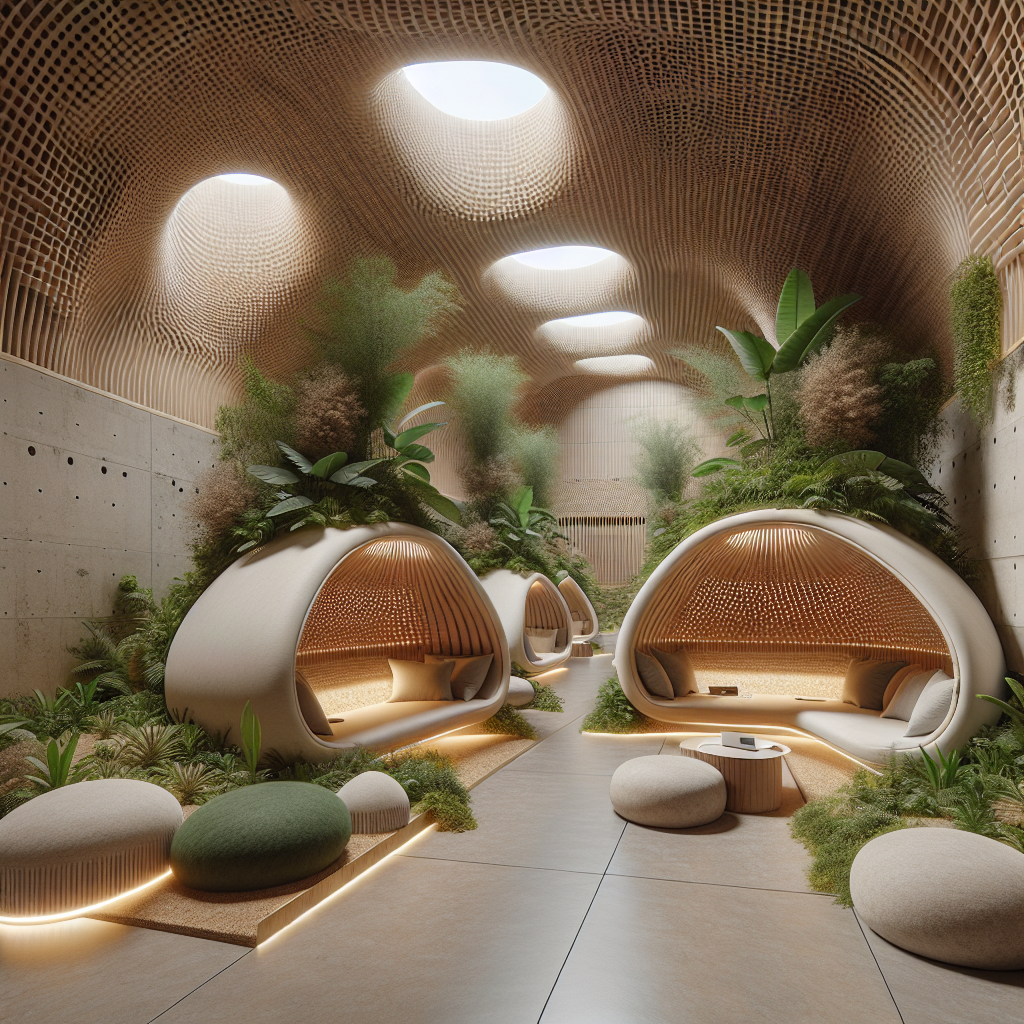
These new environments borrow from the language of biophilic design and sensory architecture, integrating organic forms, muted acoustics, and tactile materials. The goal is not isolation, but immersion—a deliberate choreography of light, sound, and texture that nurtures focus without severing the user from the collective rhythm of the workplace.
Designing for Deep Focus
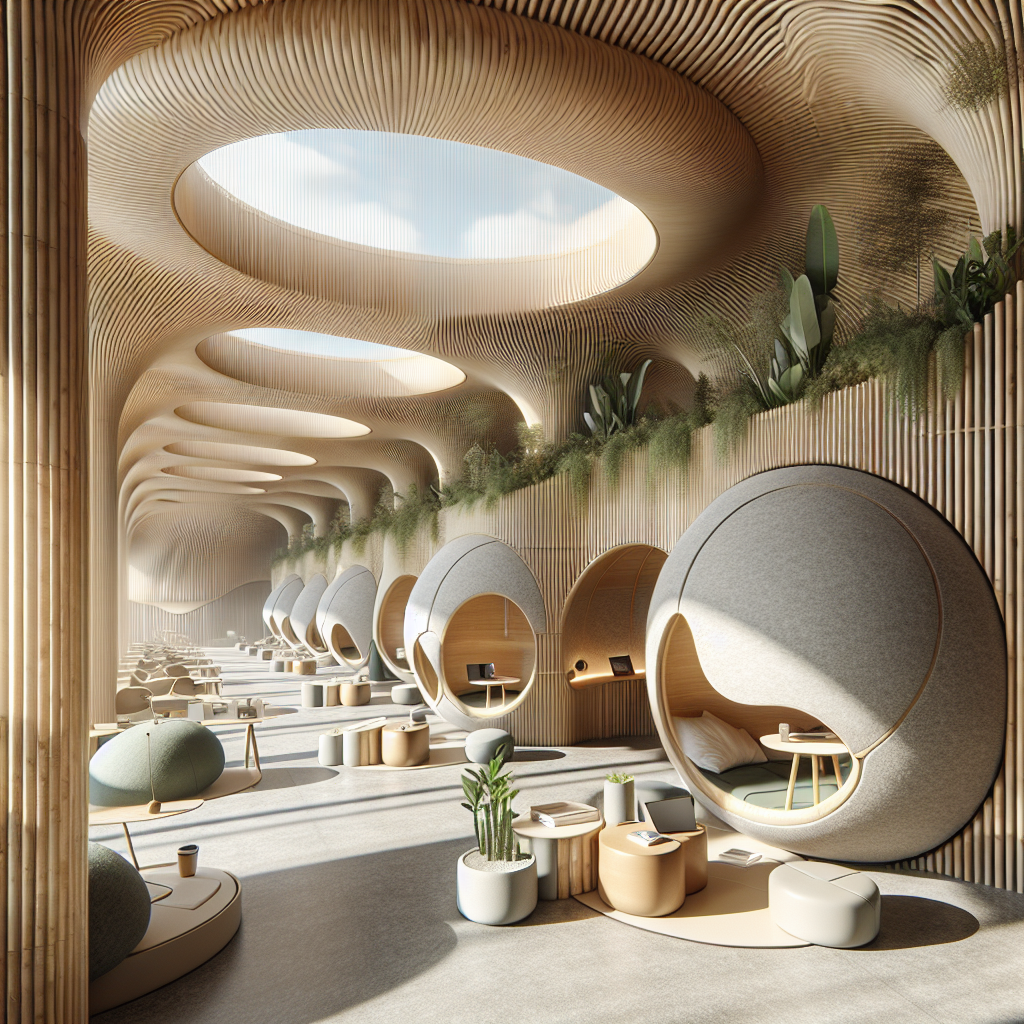
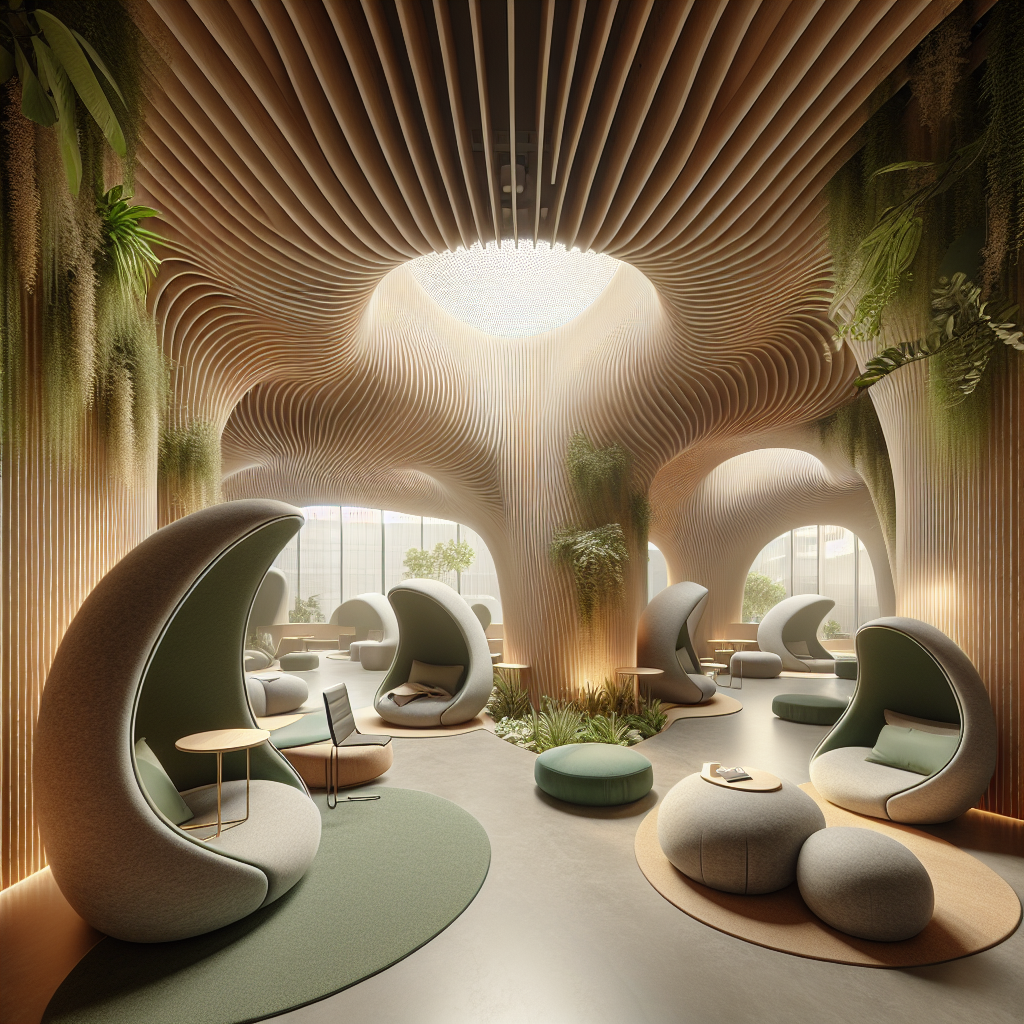
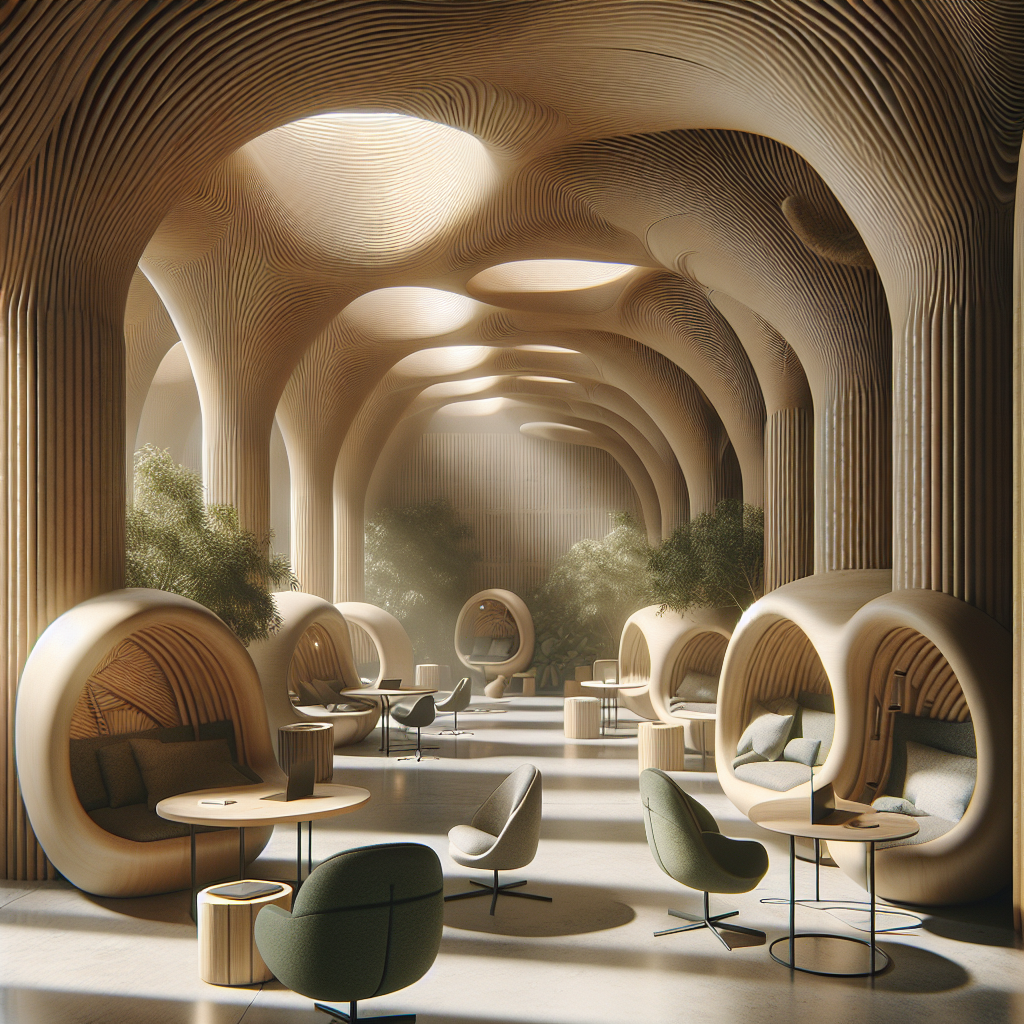
At the heart of cocoon-like office design lies the pursuit of psychological safety and acoustic comfort. Architects are drawing inspiration from natural geometries—nests, shells, and pods—to create enveloping forms that subtly signal retreat. The spatial strategy often involves curved partitions, suspended acoustic panels, and layered textiles that diffuse sound and soften light.
In projects such as the “Silent Lounge” by the London-based studio Pearson Lloyd, modular pods are wrapped in felt and cork, forming a series of semi-enclosed alcoves that invite concentration. The effect is akin to stepping into a forest clearing—protected yet porous. Similarly, the importance of acoustic comfort has become a defining factor in workplace well-being, influencing everything from ceiling baffles to furniture upholstery.
Lighting, too, plays a crucial role. Designers are favoring low-glare, circadian-friendly systems that mimic natural daylight cycles. The result is a serene atmosphere that supports sustained attention, echoing the principles of environmental psychology, which links spatial quality to cognitive performance.
Material Warmth and Tactile Calm
The cocoon aesthetic is as much about materiality as it is about form. Natural fibers, soft woods, and matte finishes dominate these interiors, replacing the sterile glass-and-chrome palette of the corporate past. Surfaces are chosen for their sensory resonance—linen-wrapped panels, woolen partitions, and micro-perforated timber screens that absorb sound while exuding warmth.
Designers are increasingly turning to sustainable materials, aligning cocoon-like spaces with the broader movement toward biodegradable architecture. Mushroom-based acoustic tiles, recycled felt, and bamboo composites not only reduce environmental impact but also contribute to a tactile, grounded ambiance. The tactile dimension is vital: when the fingertips meet softness, the mind slows down.
Spatial Psychology: The Architecture of Solitude
Architectural psychologist Sally Augustin notes that enclosed forms with gentle curvature can lower stress levels and improve focus. This principle underpins the design of cocoon-like offices, where spatial boundaries are calibrated to human scale. A radius of 1.5 to 2 meters—the average personal comfort zone—often defines the ideal dimensions of these pods.
Some designers take cues from monastic architecture, where silence and proportion cultivate introspection. The resulting environments feel almost sacred: a blend of minimalism and mindfulness. In this sense, cocoon offices are not merely functional—they are emotional architectures, designed to restore the equilibrium between sensory input and cognitive clarity.
These ideas resonate with the emerging philosophy of designing for solitude, which reframes isolation as a form of empowerment. The cocoon, then, becomes a metaphor for metamorphosis—a space where thought matures before rejoining the collective flow.
Technology Meets Tranquility
While the cocoon office emphasizes analog calm, technology plays a discreet yet essential role. Smart glass partitions can shift from transparent to opaque at a touch, offering instant privacy. Noise-canceling panels equipped with embedded sensors adjust their acoustic absorption in real time, responding to fluctuating sound levels. Some experimental workspaces even integrate biosensing systems that monitor stress indicators, adjusting lighting and temperature accordingly.
This fusion of design and digital intelligence echoes the broader trend of AI in architecture, where data-driven insights enhance human experience rather than replace it. The cocoon office thus becomes a living interface—responsive, adaptive, and attuned to the rhythms of its occupants.
Case Studies: Global Interpretations
In Tokyo, the “Focus Pods” designed by Nendo reinterpret the cocoon as a sculptural element. Each pod, crafted from layered plywood, resembles a hollowed tree trunk, its interior lined with acoustic foam and indirect lighting. The result is a micro-architecture of mindfulness—compact yet expansive in its psychological effect.
Meanwhile, in Copenhagen, the workspace collective Space10 has introduced modular “Quiet Cubes” made from recycled PET felt. These mobile units can be rearranged to form clusters or solitary zones, reflecting the Scandinavian ethos of flexibility and sustainability. Their muted color palette—dusty sage, clay, and stone—reinforces a sense of grounded calm.
In New York, Gensler’s “Resonance Rooms” explore the intersection of sound and architecture. Each chamber is tuned to a specific frequency range, creating subtle variations in acoustic texture. The experience borders on the meditative, transforming the act of focus into a sensory ritual.
The Future of Workplace Serenity
As hybrid work models redefine office culture, the cocoon-like design is poised to become a cornerstone of post-pandemic architecture. The office is no longer a mere site of labor—it is a sanctuary for thought, a curated environment that supports both solitude and synergy. This shift mirrors the growing recognition that creativity thrives not in chaos, but in carefully designed calm.
Forward-thinking firms are integrating cocoon zones into larger ecosystems of wellness: meditation rooms, biophilic lounges, and sensory corridors. These elements form part of a holistic strategy that prioritizes mental health and sustainable productivity. In essence, the cocoon office is not a retreat from the world, but a recalibration of how we inhabit it.
A New Aesthetic of Focus
The visual language of cocoon-like offices is unmistakable: curved silhouettes, dimmed peripheries, and textures that invite touch. It is an aesthetic of quiet confidence—one that replaces spectacle with subtlety. The design speaks softly, yet its impact is profound. It acknowledges that in a world of constant noise, silence has become the ultimate luxury.
As the boundaries between home, work, and wellness continue to blur, the cocoon office offers a blueprint for balance. It embodies the essence of human-centered design: empathetic, adaptive, and deeply attuned to the rhythms of the mind. For architects and designers, it signals a return to the fundamentals of spatial care—crafting environments that not only house activity but also nurture the inner life of those who inhabit them.
In the architecture of tomorrow, the cocoon is not confinement—it is liberation.
Keywords: cocoon-like offices, quiet zones, deep focus, acoustic design, workplace architecture, biophilic design, sustainable materials, office wellness, spatial psychology, mindful interiors