
Bioluminescent Baroque: When 17th Century Ornaments Meet Avatar-Like Glow
Bioluminescent Baroque: When 17th Century Ornaments Meet Avatar-Like Glow
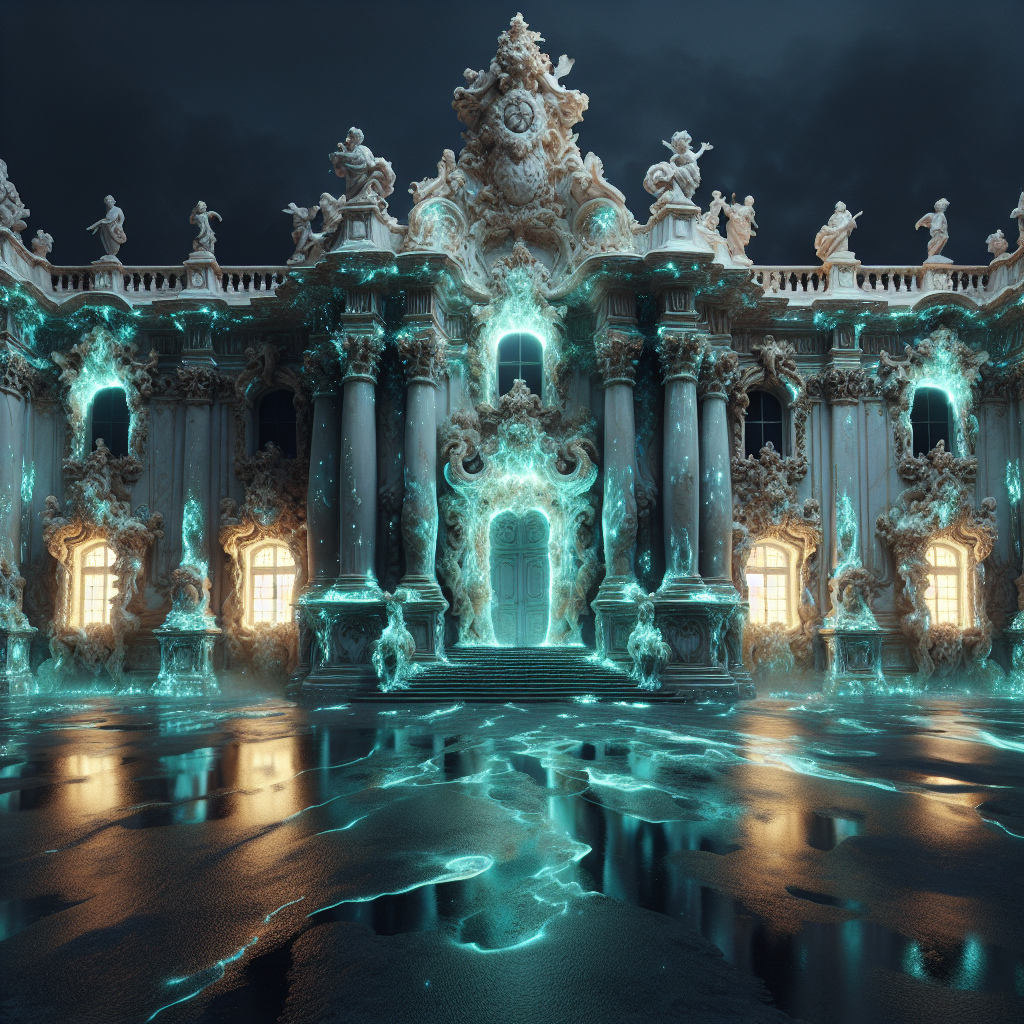
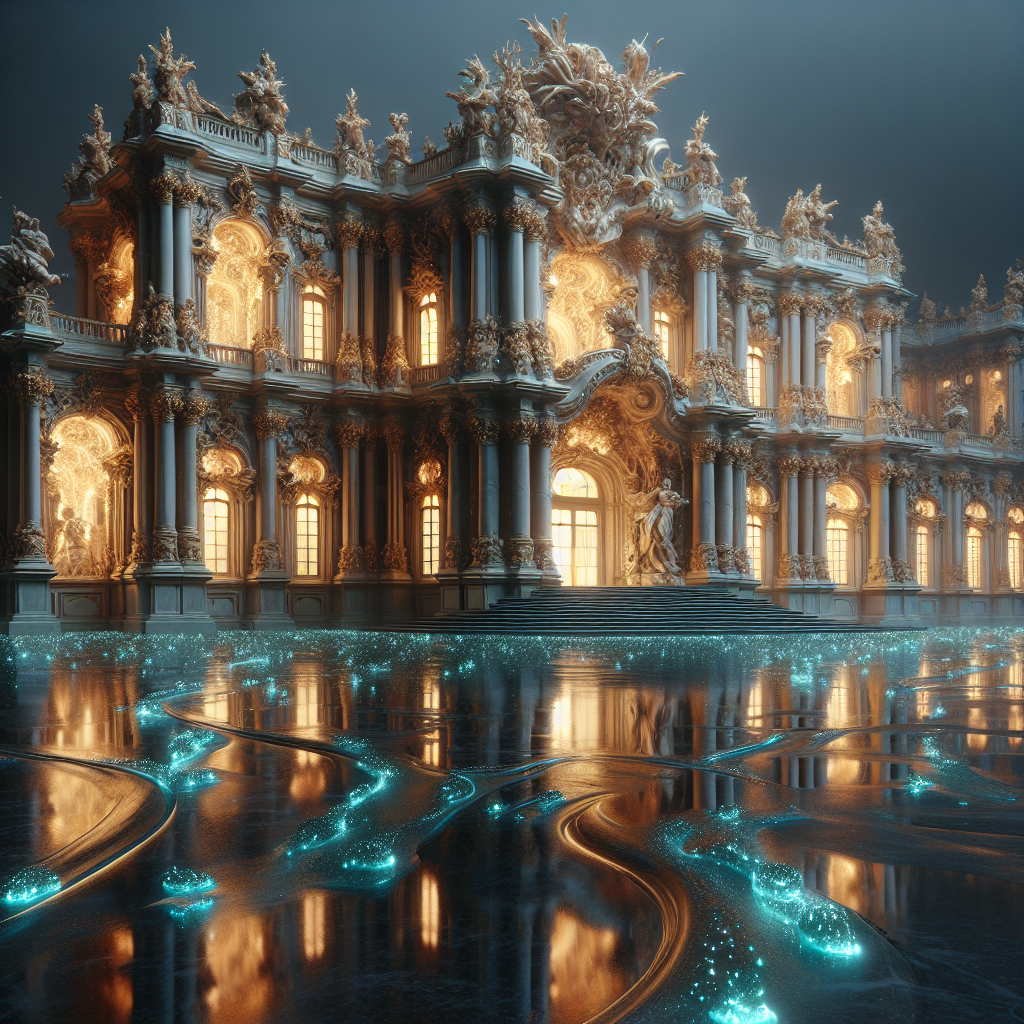
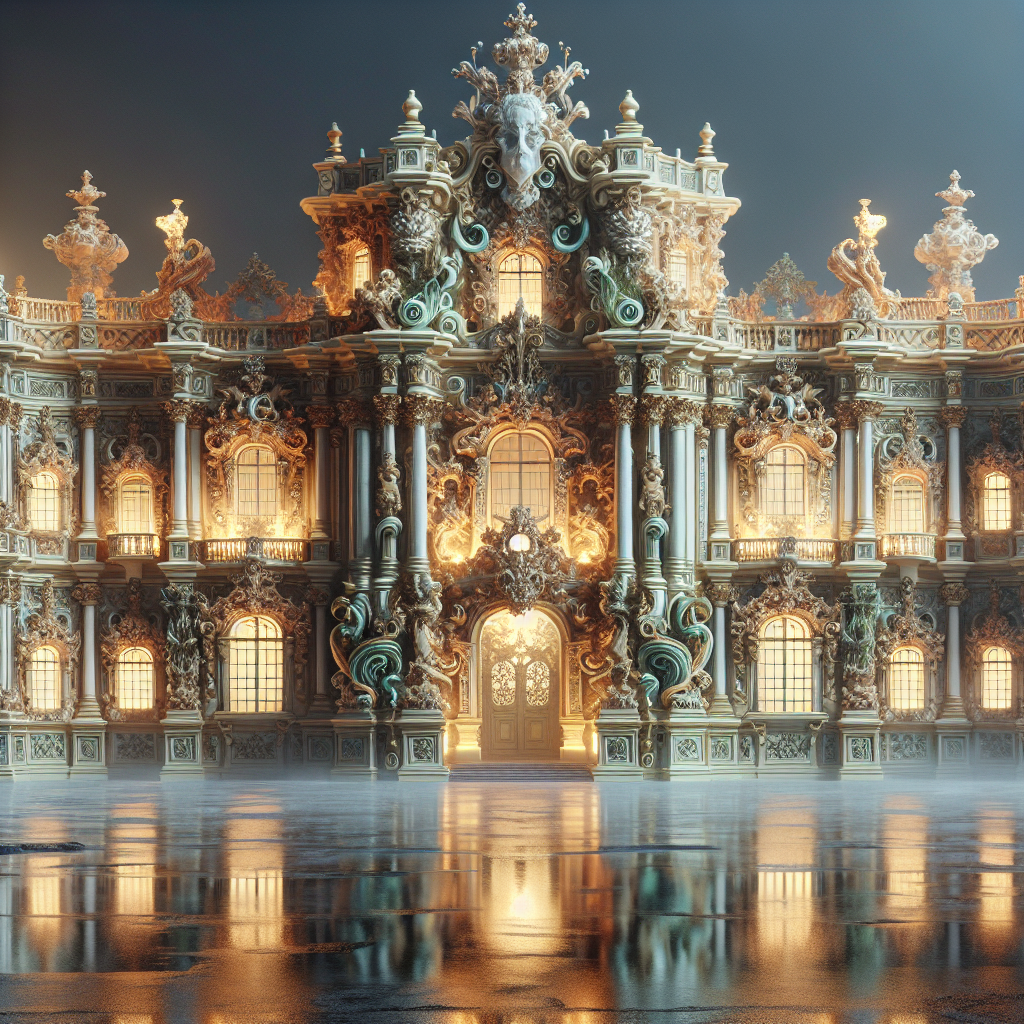
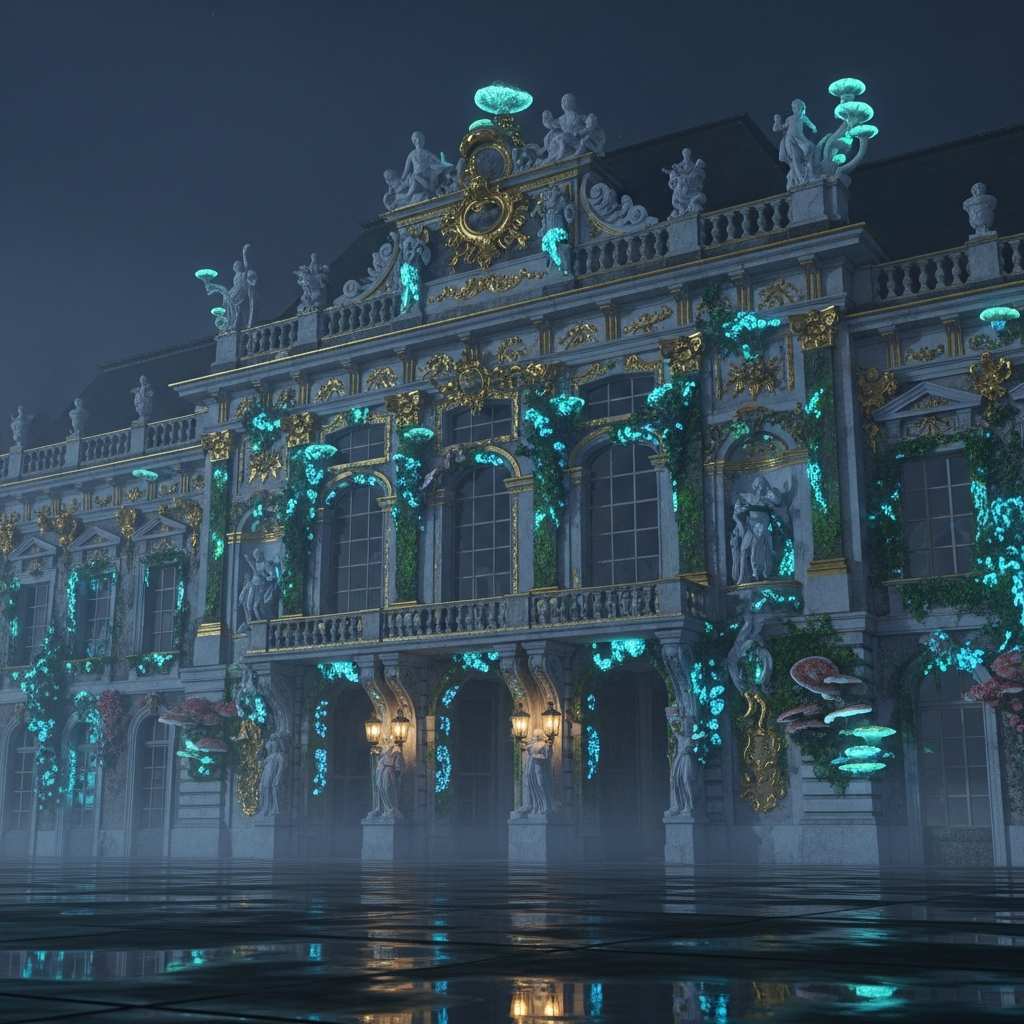
Imagine Versailles at night—not illuminated by chandeliers of crystal and candlelight, but by living walls that pulse with a soft, marine luminescence. The curls of gilded stucco breathe faint light, and carved cherubs shimmer as if underwater. This is not fantasy; it’s the speculative intersection of 17th-century ornamentation and 21st-century biotechnology—a design language we might call Bioluminescent Baroque.
The Revival of Ornament Through Light
Baroque architecture, with its exuberant scrolls, domes, and theatrical interplay of shadow and gold, was born to seduce the eye. Yet, in the age of energy-conscious design, ornament has often been stripped away in favor of efficiency. The reintroduction of ornament through bioluminescence—using genetically engineered algae, fungi, or bacteria that emit light—marks a new chapter in the dialogue between sustainability and spectacle.
Researchers at the Architectural Association and the Materials Today Journal have been exploring how bioluminescent organisms can be embedded into construction materials. These living pigments can replace electric lighting in low-intensity applications, creating façades that glow gently after sunset. The result is an architecture that feels alive—literally breathing light.
Ornament as Ecosystem
In this emerging aesthetic, ornamentation is no longer inert. A carved frieze could host colonies of light-emitting algae, its curves optimized for moisture retention and nutrient flow. The façade becomes a living ecosystem—an architectural terrarium. This concept aligns with the growing movement toward biophilic design, where natural systems are integrated into built environments to enhance human well-being.
Baroque design, with its fascination for movement and vitality, offers the perfect historical framework for this symbiosis. The swirling volutes and asymmetrical flourishes of the 1600s find new relevance when reinterpreted as living conduits for light and life. The building becomes both ornament and organism—a hybrid of art and ecology.
From Versailles to Virtuality
Contemporary designers are reimagining historical motifs through digital fabrication and responsive materials. Projects like “Legacy Meets Laser,” a concept explored in Mainifesto’s coverage, demonstrate how CNC milling and laser etching can reinterpret Baroque flourishes in modern contexts. When combined with bioluminescent materials, these techniques produce a visual tension between the mechanical and the organic, the past and the post-human.
In the digital realm, this aesthetic has already taken root. Designers inspired by the phosphorescent jungles of James Cameron’s Avatar are merging historical ornamentation with speculative ecology. Architectural visualization tools and virtual reality environments allow users to experience these glowing palaces in immersive, interactive ways—spaces that feel simultaneously ancient and alien.
Material Alchemy: The Science Behind the Glow
Bioluminescence is a natural chemical reaction, typically involving luciferin and luciferase, that produces light without heat. Scientists at the Nature Research Institute have demonstrated that these reactions can be stabilized within engineered materials, allowing for sustained illumination. When integrated into architectural coatings or resins, they can replace certain artificial lighting systems, reducing energy consumption and carbon output.
In the context of Baroque revivalism, this scientific innovation becomes poetic. Imagine a gilded ceiling fresco where the night sky literally glows, or a marble column whose veins emit a soft blue radiance. The boundary between art and organism dissolves, and architecture begins to participate in the metabolic cycles of the environment.
Ethics and Ephemerality
There is, however, a philosophical tension within this luminous renaissance. Bioluminescent materials are living systems—they require care, humidity, and nutrients. They die, fade, and regenerate. This introduces a temporal dimension to architecture that the Baroque would have understood well: the beauty of impermanence, the theater of decay.
As we move toward biodegradable architecture, the idea of a building that glows, fades, and renews itself aligns with ecological cycles rather than industrial permanence. It’s a design philosophy that acknowledges entropy as part of beauty—a radical departure from the static perfection of classical ornamentation.
Urban Glowscapes
Imagine entire city districts transformed into bioluminescent environments. Street façades ripple with soft light, parks shimmer with glowing flora, and canals reflect the spectral blues and greens of living organisms. This vision is not far from reality. Pilot projects in Singapore and Copenhagen are already experimenting with bioluminescent pathways and algae-based streetlights. These initiatives echo the principles explored in Mainifesto’s study on bioluminescent lighting, where designers argue that living light could redefine urban nocturnal identity.
In such environments, the artificial and the natural merge seamlessly. The city becomes a coral reef of human creation—ornate, glowing, and alive.
Baroque Reimagined for the Anthropocene
The 17th century’s fascination with divine light and celestial order finds a new resonance in our era of ecological uncertainty. The Bioluminescent Baroque is not merely decorative; it’s didactic. It teaches us to see ornament as a living interface between culture and nature. Each glowing flourish becomes a reminder of the delicate balance between technology and biology, excess and restraint.
In the Anthropocene, where design must grapple with planetary limits, this hybrid aesthetic offers a path forward. It suggests that sustainability need not mean austerity—that ecological responsibility can coexist with opulence, even exuberance. The Baroque, reborn in bioluminescent form, becomes a metaphor for resilience: a glowing testament to the enduring dialogue between art, science, and the living world.
Conclusion: Toward a Living Aesthetic
As designers continue to explore the fusion of biotechnology and historical ornamentation, the Bioluminescent Baroque stands as both provocation and promise. It challenges our assumptions about what architecture can be—no longer static, but sentient; no longer illuminated, but illuminating. The next great cathedral may not be built of stone and glass, but of living light, breathing softly in the night.
###ARTICLE_END### { “seo_title”: “Bioluminescent Baroque: Glowing Ornament Reimagined”, “meta_description”: “Explore Bioluminescent Baroque, where 17th-century ornament meets living light in sustainable, glowing architecture.”, “excerpt”: “A visionary fusion of Baroque opulence and biotechnological glow, redefining ornament as a living, sustainable ecosystem.”, “focus_keyphrase”: “Bioluminescent Baroque” } **AI Image Prompts** 1. **Prompt:** Photorealistic image of a grand Baroque palace façade at night, its ornate carvings softly glowing with bioluminescent algae, captured on a Hasselblad with high dynamic range lighting. **Alt text:** Bioluminescent Baroque palace glowing with living light. **Caption:** A reimagined Baroque façade bathed in the gentle luminescence of living ornamentation. 2. **Prompt:** Interior of a cathedral-inspired hall with gilded stucco and glowing organic patterns integrated into the ceiling, photographed on a Hasselblad with cinematic contrast. **Alt text:** Bioluminescent ceiling blending Baroque ornament and biotechnology. **Caption:** The sacred meets the scientific in a ceiling that breathes light. 3. **Prompt:** Close-up of a marble column embedded with bioluminescent veins, emitting a soft turquoise glow, macro shot on a Hasselblad with shallow depth of field. **Alt text:** Marble column with bioluminescent veins. **Caption:** The veins of stone come alive—ornamentation as living organism. 4. **Prompt:** Urban nightscape with bioluminescent pathways and glowing Baroque-inspired street façades, captured on a Hasselblad with long exposure. **Alt text:**