
Bio-based insulation mushroom-derived: panels for cozy living
Bio-Based Insulation Mushroom-Derived: Panels for Cozy Living
In the quiet revolution reshaping sustainable architecture, a humble organism is taking center stage: the mushroom. More precisely, mycelium—the intricate root network of fungi—is emerging as a bio-based insulation material redefining how we think about comfort, sustainability, and design integrity. Once relegated to the fringes of eco-experimentation, mushroom-derived insulation panels are now entering the mainstream of high-end architecture and interior design, offering a tactile, breathable, and carbon-negative alternative to synthetic materials. As the design world pivots toward regenerative practices, these panels embody a rare fusion of science, aesthetics, and ethics.
The Rise of Mycelium in Sustainable Architecture
Mycelium’s rise as a construction material is not accidental. Architects and designers have long sought alternatives to petrochemical-based insulation such as polyurethane foam or polystyrene, both notorious for their environmental impact. Mycelium, by contrast, grows naturally on agricultural waste—think corn husks, hemp shives, or sawdust—binding these fibers into a dense, spongy matrix. Once dried, the result is a lightweight, fire-resistant, and thermally efficient panel that rivals conventional insulation in performance while leaving a fraction of the carbon footprint.
According to a 2024 report by the European Commission, bio-based materials like mycelium could reduce embodied carbon in buildings by up to 40% when used at scale. The appeal extends beyond sustainability metrics: these panels exude a natural warmth and texture that aligns with the growing appetite for biophilic design—a philosophy that integrates nature into the built environment to enhance human well-being.
Material Alchemy: How Mushroom Insulation Works
At the heart of mycelium insulation lies a fascinating biological process. Mycelium acts as a natural adhesive, colonizing organic substrates and weaving them into a cohesive mass. This growth phase, typically lasting five to seven days, takes place in controlled conditions that optimize humidity and temperature. Once the desired density is achieved, the material is heat-treated to halt growth, resulting in a stable, inert product.
The resulting panels possess a cellular structure that traps air pockets, delivering exceptional thermal and acoustic insulation. Mycelium’s thermal conductivity averages around 0.03–0.04 W/mK—comparable to mineral wool or expanded polystyrene. Moreover, its vapor permeability ensures walls “breathe,” preventing condensation and mold, a crucial advantage in energy-efficient, airtight buildings.
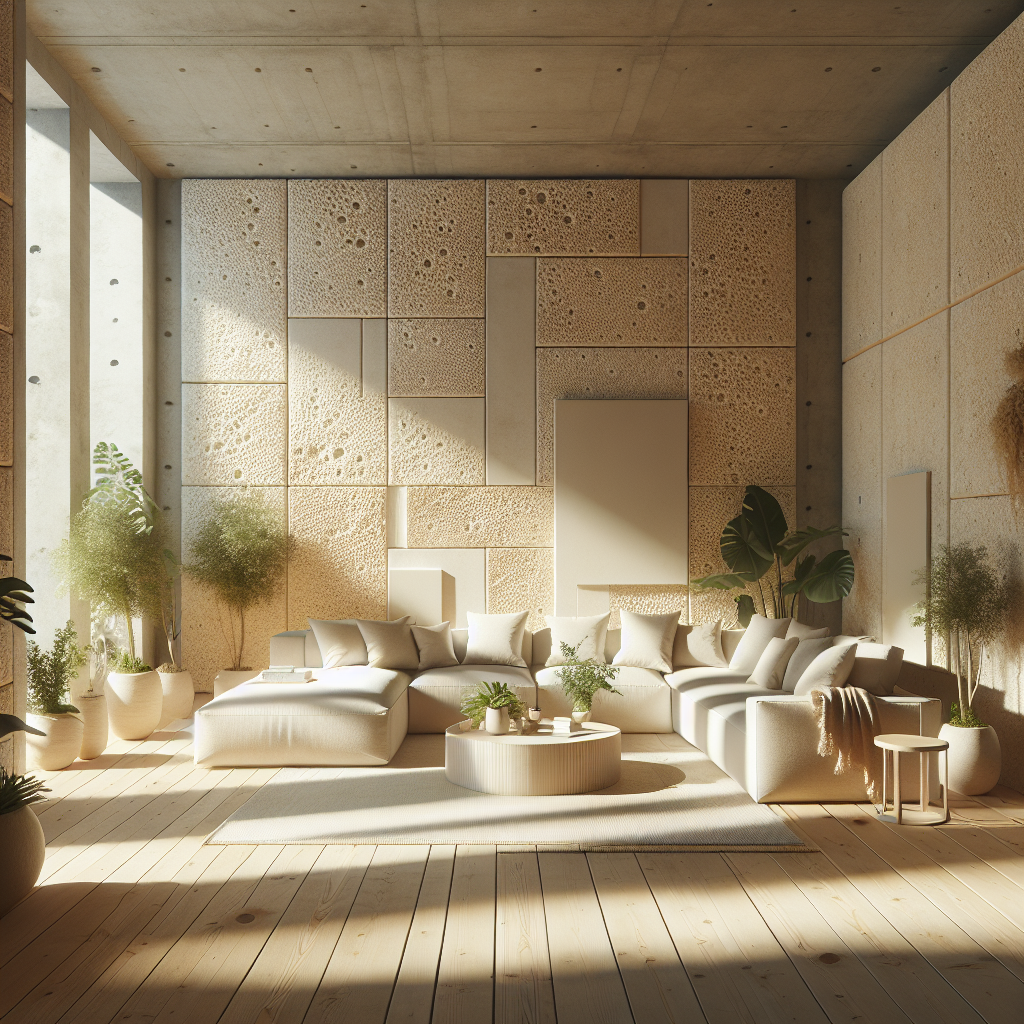
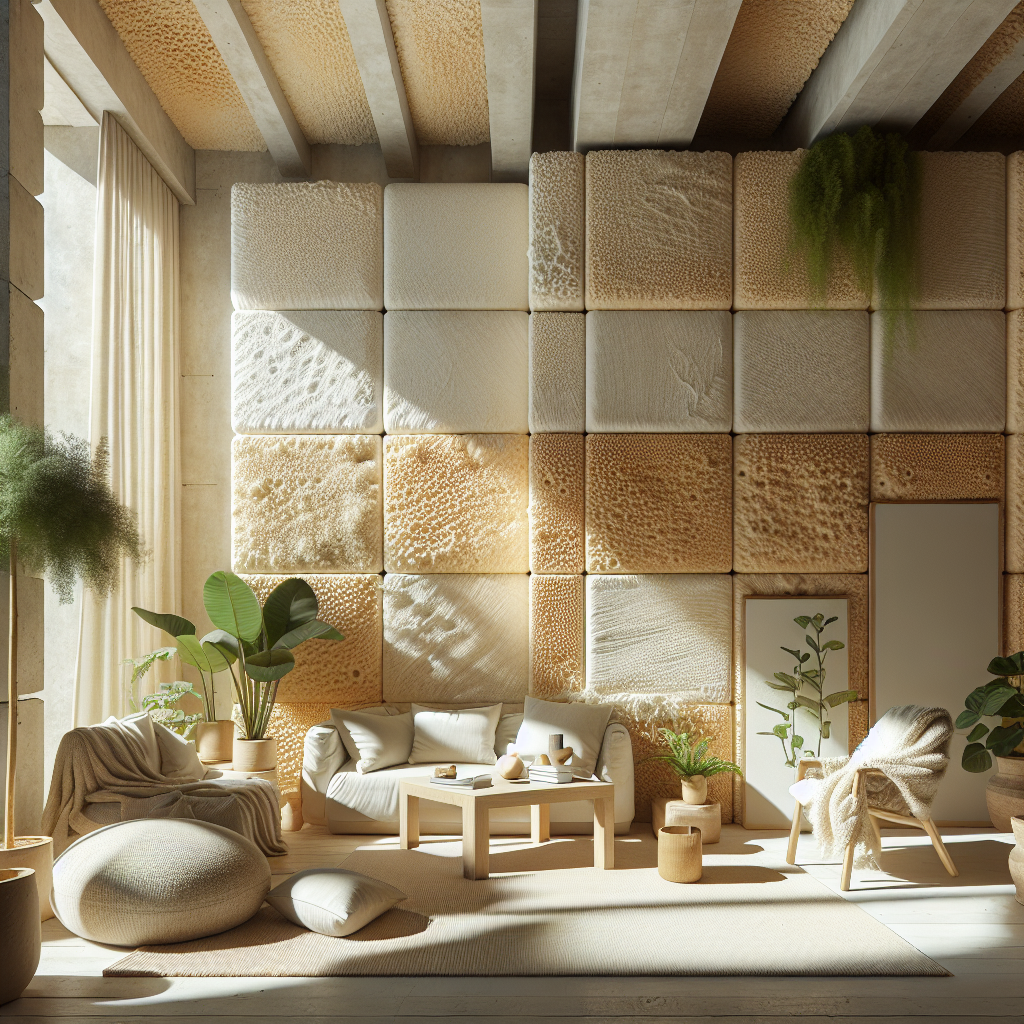
Designers have also embraced the aesthetic potential of mycelium. The panels’ subtle organic patterns—ranging from creamy whites to earthy browns—lend interiors a tactile authenticity. In minimalist or timber-centric architecture, the visual harmony between wood and mycelium creates a serene, grounded atmosphere that resonates with contemporary notions of cozy, sustainable living.
Case Studies: From Experimental Labs to Luxury Interiors
Several pioneering studios are already integrating mushroom-derived insulation into their projects. The Dutch design collective Mogu, for instance, has developed modular acoustic panels and wall tiles crafted entirely from mycelium composites. Their installations in Milan and Copenhagen demonstrate how the material’s sculptural versatility can transform interiors into soft, sound-absorbing sanctuaries.
In the United States, the architectural firm Ecovative Design has collaborated with boutique developers to create prototype homes insulated entirely with mycelium panels. The results are striking: interiors maintain stable temperatures with minimal energy input, while the material’s natural breathability enhances indoor air quality. These homes, with their pale, textured walls and diffused light, evoke a sense of organic calm reminiscent of Scandinavian hygge—yet with a distinctly futuristic edge.
Similarly, in Japan, a recent collaboration between Kyoto University researchers and local craftspeople explored the use of mycelium insulation in traditional machiya townhouses. The material’s ability to regulate humidity proved particularly effective in preserving the delicate wooden structures, bridging ancient craftsmanship with modern sustainability.
Performance Meets Philosophy: The Design Implications
Beyond its technical merits, mushroom-based insulation represents a philosophical shift in how we conceive materials. It challenges the linear “take-make-dispose” model of industrial production, aligning instead with the principles of the circular economy. At the end of its life cycle, mycelium insulation can be composted, returning nutrients to the soil rather than contributing to landfill waste.
This regenerative potential resonates with the broader movement toward biodegradable architecture, where buildings are designed to coexist symbiotically with their ecosystems. The tactile, almost living quality of mycelium panels invites occupants to reconsider their relationship with the materials that surround them—not as inert barriers, but as participants in a continuous ecological dialogue.
Architects are also exploring hybrid applications, combining mycelium insulation with structural elements like cross-laminated timber or hempcrete. These composite systems promise not only superior performance but also a visual language rooted in natural imperfection—a celebration of texture, variation, and organic form that recalls the wabi-sabi aesthetic.
Challenges and Future Directions
Despite its promise, mycelium insulation faces hurdles before achieving mass adoption. Scaling production remains a challenge, as growth cycles are slower than industrial manufacturing processes. Standardization and certification are also evolving, with ongoing research into fire resistance, moisture durability, and long-term performance under varying climatic conditions.
Yet innovation is accelerating. Advances in biotechnology are enabling faster growth rates and improved consistency, while digital fabrication techniques allow architects to mold mycelium into complex geometries. The intersection of biology and computation—echoing themes explored in biomimicry-driven design—is giving rise to a new material paradigm: one where living systems inform structural logic.
According to the World Green Building Council, the global market for bio-based construction materials is projected to exceed $200 billion by 2030, with mycelium products representing one of the fastest-growing segments. As architects and developers seek to meet net-zero targets without compromising comfort or beauty, mushroom-derived insulation stands poised to become a cornerstone of sustainable luxury.
The Aesthetic of Warmth: Designing with Mycelium
In practice, integrating mycelium insulation into interiors is as much an artistic endeavor as a technical one. The panels’ soft, matte surfaces diffuse light gently, creating a cocoon-like ambiance ideal for residential or hospitality settings. Designers often leave sections exposed, allowing the material’s natural striations to serve as subtle wall art. When paired with linen drapery, clay plaster, or untreated oak, the effect is profoundly tactile—spaces that invite touch, reflection, and repose.
Some architects have gone further, using mycelium panels as modular partitions or sculptural installations. In these applications, the material transcends its functional role, becoming a medium for storytelling—an emblem of renewal and resilience. It embodies a vision of design that is not merely sustainable but sensorially rich, emotionally resonant, and deeply human.
A New Kind of Comfort
As climate-conscious design matures, the notion of “cozy living” is being redefined. Comfort is no longer measured solely by temperature or texture, but by the integrity of the materials that make a home. Mushroom-derived insulation encapsulates this shift: it is warm not only in its thermal properties but in its ethics, its tactility, and its quiet connection to the natural world.
In a future where buildings breathe, grow, and decompose gracefully, mycelium may well become the emblem of a new architectural vernacular—one that fuses science with soul, and sustainability with sensuality. For the discerning designer, it offers more than insulation; it offers inspiration.
Keywords: bio-based insulation, mushroom insulation panels, mycelium architecture, sustainable building materials, eco-friendly design, circular economy, biophilic interiors