Bamboo ceilings with: pivot hinges controlling light diffusion and air flow
Bamboo Ceilings with Pivot Hinges: Controlling Light Diffusion and Air Flow in Sustainable Architecture
In the evolving landscape of sustainable architecture, bamboo ceilings with pivot hinges are emerging as a sophisticated fusion of craft, climate intelligence, and material innovation. These adaptive ceiling systems—crafted from renewable bamboo panels that rotate on precision-engineered pivot hinges—are redefining how interiors breathe, glow, and respond to their environment. Beyond their aesthetic allure, they represent a new chapter in bioclimatic design, one where natural materials and mechanical ingenuity collaborate to create dynamic, energy-efficient spaces.
The Rise of Bamboo as a Modern Architectural Material
Bamboo’s ascent from vernacular building material to a high-performance architectural resource is no coincidence. With tensile strength comparable to steel and a rapid growth cycle that makes it one of the most renewable materials on Earth, bamboo aligns perfectly with the global push toward sustainable construction. According to the Wikipedia entry on bamboo, certain species can grow up to 90 centimeters in a single day, making it an unparalleled resource for regenerative design.
In contemporary practice, bamboo is no longer confined to rustic pavilions or tropical resorts. Architects are integrating it into urban high-rise projects, modular interiors, and even acoustic installations. Its natural grain, subtle sheen, and capacity to modulate humidity lend it both tactile warmth and technical sophistication—qualities increasingly valued in post-industrial design culture.
Pivot Hinges: The Mechanics of Adaptability
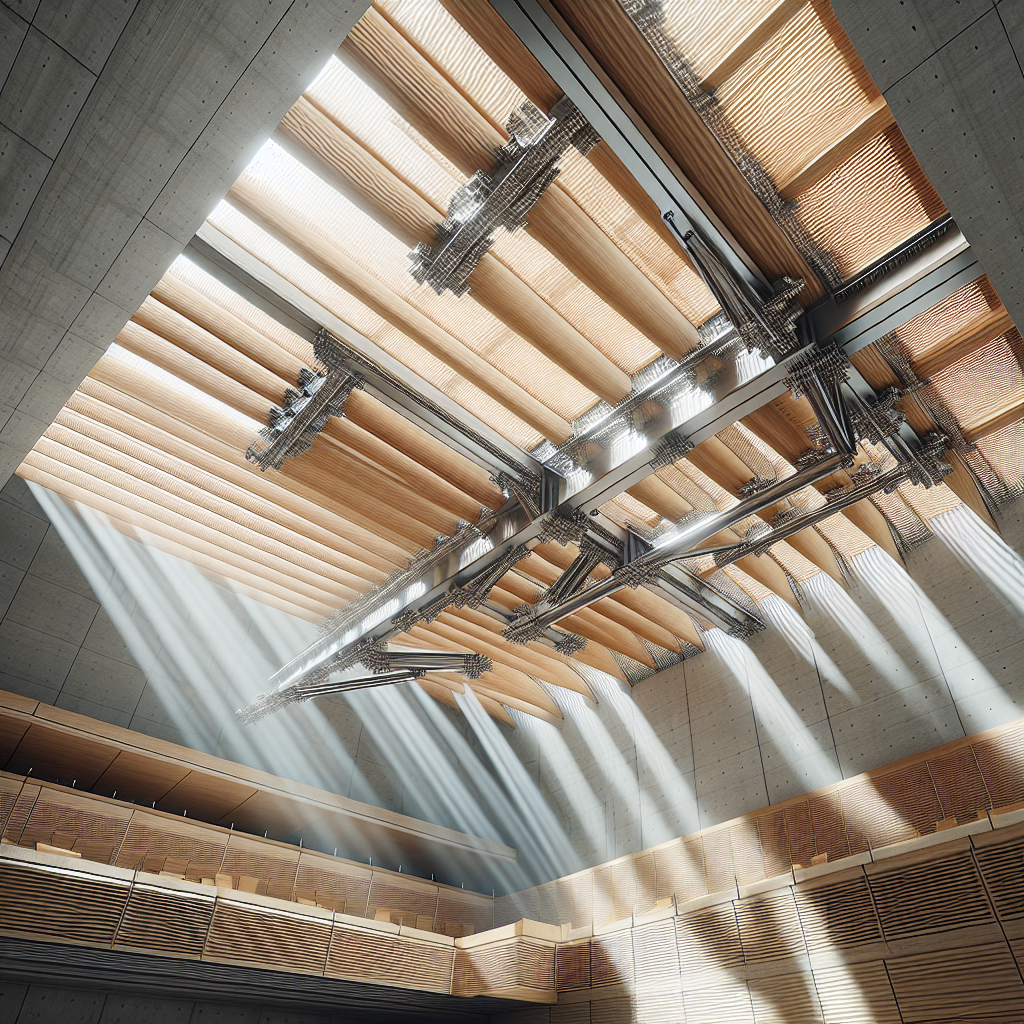
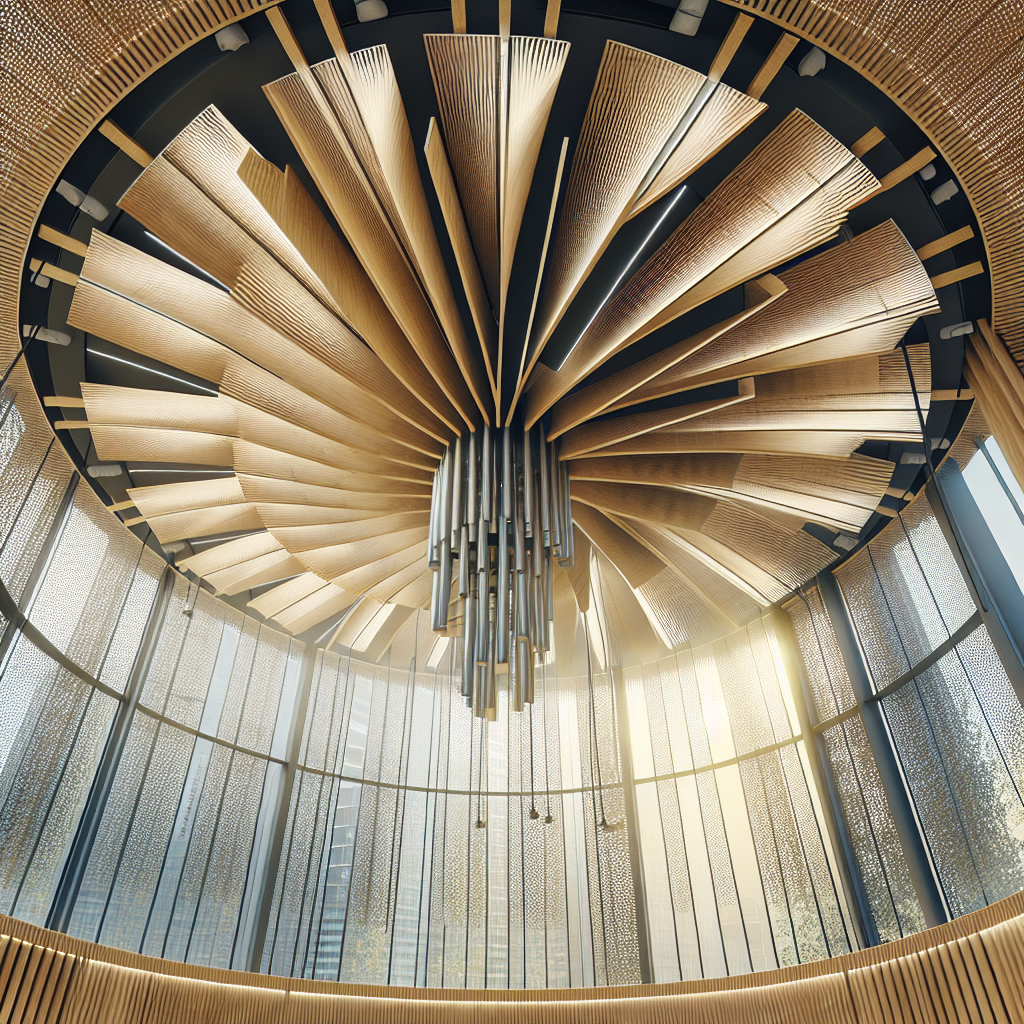
At the heart of these innovative ceiling systems lies the pivot hinge—a discreet yet transformative mechanism. Unlike traditional fixed panels, pivot-mounted bamboo slats can rotate along a central axis, allowing occupants to manually or automatically adjust their angle. This rotation modulates the diffusion of natural light and the flow of air across the ceiling plane, creating a responsive microclimate within the room.
Architectural engineers have long explored the potential of kinetic elements in façades and interiors. From kinetic façades that track the sun to shading louvers that respond to temperature, the pivot hinge brings this adaptability indoors. When applied to bamboo ceilings, it transforms a static surface into a living interface—one that filters sunlight into dappled patterns and channels cross-ventilation with precision.
Light Diffusion as a Design Language
Light, in architecture, is both a material and a mood. The bamboo ceiling’s pivoting panels allow designers to choreograph light with extraordinary nuance. Depending on the angle of rotation, the panels can scatter daylight into soft, rhythmic gradients or focus it into linear beams that animate the space below. The result is a ceiling that behaves like a responsive lantern—its texture and tone shifting throughout the day.
In tropical and subtropical regions, where direct sunlight can be harsh, this control over light diffusion reduces glare and thermal gain. The ceiling becomes a passive shading device, minimizing reliance on artificial lighting and air conditioning. A study by the International Energy Agency notes that adaptive shading systems can reduce cooling loads by up to 30%, underscoring the tangible environmental benefits of such designs.
Some designers have taken inspiration from biophilic design principles, aligning the movement of bamboo panels with natural rhythms—mimicking the way leaves respond to wind or light. This kinetic interplay between nature and structure enhances occupant well-being, fostering a sense of calm and connection to the environment.
Air Flow and Thermal Comfort
Beyond light, the bamboo ceiling’s pivoting mechanism introduces a new dimension of natural ventilation. When panels are partially opened, they allow warm air to rise and escape, drawing cooler air into the space below. This principle, rooted in passive cooling strategies, has been reinterpreted through a modern lens of material precision and mechanical control.
In climates where humidity and heat are constant challenges, such systems act as breathable membranes. They balance temperature and airflow without compromising acoustic comfort or visual harmony. Architects in Southeast Asia and Latin America have been early adopters, integrating pivoting bamboo ceilings into both residential and hospitality projects. The result is a spatial experience that feels simultaneously open and sheltered—where air moves gently, filtered through the organic lattice of bamboo.
Craftsmanship Meets Technology
What distinguishes these ceilings from conventional mechanical systems is their tactile authenticity. Each bamboo panel is hand-finished, often treated with natural oils to enhance durability and resist moisture. The pivot hinges—typically crafted from stainless steel or anodized aluminum—are engineered for silent operation and longevity. Together, they form a dialogue between craftsmanship and technology, between the hand-made and the machine-precise.
Design studios such as Penda China and Vo Trong Nghia Architects have championed bamboo’s expressive potential, blending traditional joinery with computational design. Their work demonstrates how parametric modeling can optimize panel orientation for maximum daylight efficiency, echoing the adaptive strategies explored in parametric design. The result is a system that feels both ancient and futuristic—a harmony of nature’s intelligence and human ingenuity.
Applications Across Typologies
The versatility of bamboo ceilings with pivot hinges extends across architectural typologies. In private residences, they introduce a serene, spa-like atmosphere, filtering light into meditative gradients. In commercial spaces, they function as dynamic acoustic baffles, softening sound while maintaining visual continuity. Museums and galleries have adopted them as curatorial tools—controlling the quality of light to protect artworks while enhancing visitor experience.
Hospitality design, in particular, has embraced the aesthetic and climatic advantages of these systems. Resorts in Bali, Costa Rica, and southern India have implemented pivoting bamboo ceilings in open-air lounges and dining areas, allowing guests to experience natural ventilation without exposure to direct sunlight. The effect is both sensual and sustainable: a ceiling that breathes, glows, and adapts.
Sustainability and Lifecycle Considerations
From a sustainability perspective, bamboo’s rapid renewability and low embodied energy make it a cornerstone of eco-conscious architecture. When paired with mechanical systems that require minimal energy input, the environmental footprint of these ceilings is remarkably low. Many designers source bamboo locally, reducing transportation emissions and supporting regional economies.
Lifecycle assessments indicate that properly treated bamboo can last decades, especially when shielded from direct moisture and UV exposure. Its carbon sequestration capacity further enhances its ecological value—each square meter of bamboo ceiling stores significant amounts of CO₂, contributing to the building’s overall carbon offset. In the broader context of circular design, bamboo ceilings exemplify how renewable materials can integrate seamlessly into high-performance, low-impact architecture.
Designing for the Future of Adaptive Interiors
As architecture continues to evolve toward responsive, human-centered environments, bamboo ceilings with pivot hinges represent a compelling model for the future. They embody the shift from static enclosures to living systems—spaces that sense, adapt, and participate in the rhythms of their surroundings. In an era increasingly defined by climate awareness and sensory design, this fusion of material intelligence and mechanical adaptability feels not only timely but essential.
In the words of one architect interviewed at the 2025 Salone del Mobile, “The ceiling is no longer a boundary—it’s a filter, a living organism that mediates between the sky and the space below.” This sentiment captures the essence of the bamboo pivot ceiling: a poetic yet pragmatic response to the environmental and emotional needs of contemporary life.
A New Paradigm of Sensory Architecture
Ultimately, these ceilings invite us to rethink the role of architectural surfaces. They are not mere finishes but instruments—tuned to light, air, and atmosphere. As more designers explore the intersection of natural materials and kinetic mechanisms, bamboo pivot ceilings may well become emblematic of a broader movement: one that celebrates impermanence, responsiveness, and the quiet intelligence of sustainable design.
For professionals seeking to integrate such systems, the challenge lies not in imitation but in interpretation—understanding how local climates, materials, and cultures can shape unique expressions of this idea. Whether in a minimalist urban loft or a tropical retreat, the bamboo ceiling with pivot hinges stands as a testament to architecture’s enduring capacity to evolve—gracefully, intelligently, and sustainably.
Keywords: bamboo ceilings, pivot hinges, light diffusion, air flow, sustainable architecture, adaptive interiors, biophilic design, kinetic systems
Published on 12/31/