
Arctic Warmth: Thermal Sanctuaries Hidden in the Ice
Arctic Warmth: Thermal Sanctuaries Hidden in the Ice
In the world’s coldest regions, where the horizon dissolves into white silence and the air carries the weight of stillness, a quiet architectural revolution is taking place. The Arctic—long perceived as a landscape of isolation and endurance—is now home to a new typology of design: thermal sanctuaries. These structures, carved into or cocooned by ice, challenge the dichotomy between fragility and resilience, between nature’s extremes and human comfort. They are not mere shelters; they are symphonies of heat and light orchestrated against the void of frost.
The Architecture of Thermal Balance
Designing for sub-zero environments requires more than insulation—it demands a rethinking of energy flow, material behavior, and human perception. The new generation of Arctic sanctuaries employs geothermal wells, aerogel insulation, and passive solar orientation to maintain warmth without disturbing the surrounding ecosystem. According to the Architectural Digest, the trend is shifting from survivalist architecture to regenerative design, where buildings not only withstand the cold but thrive within it.
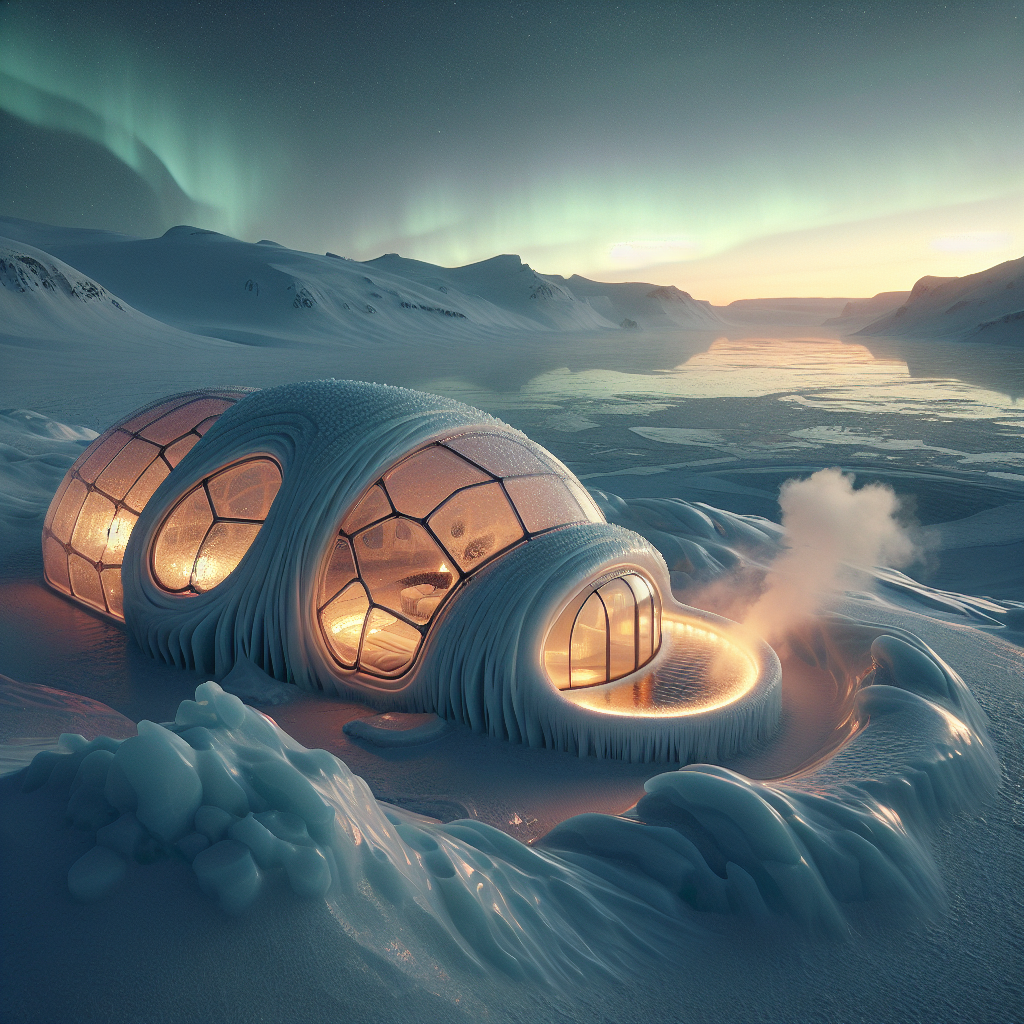
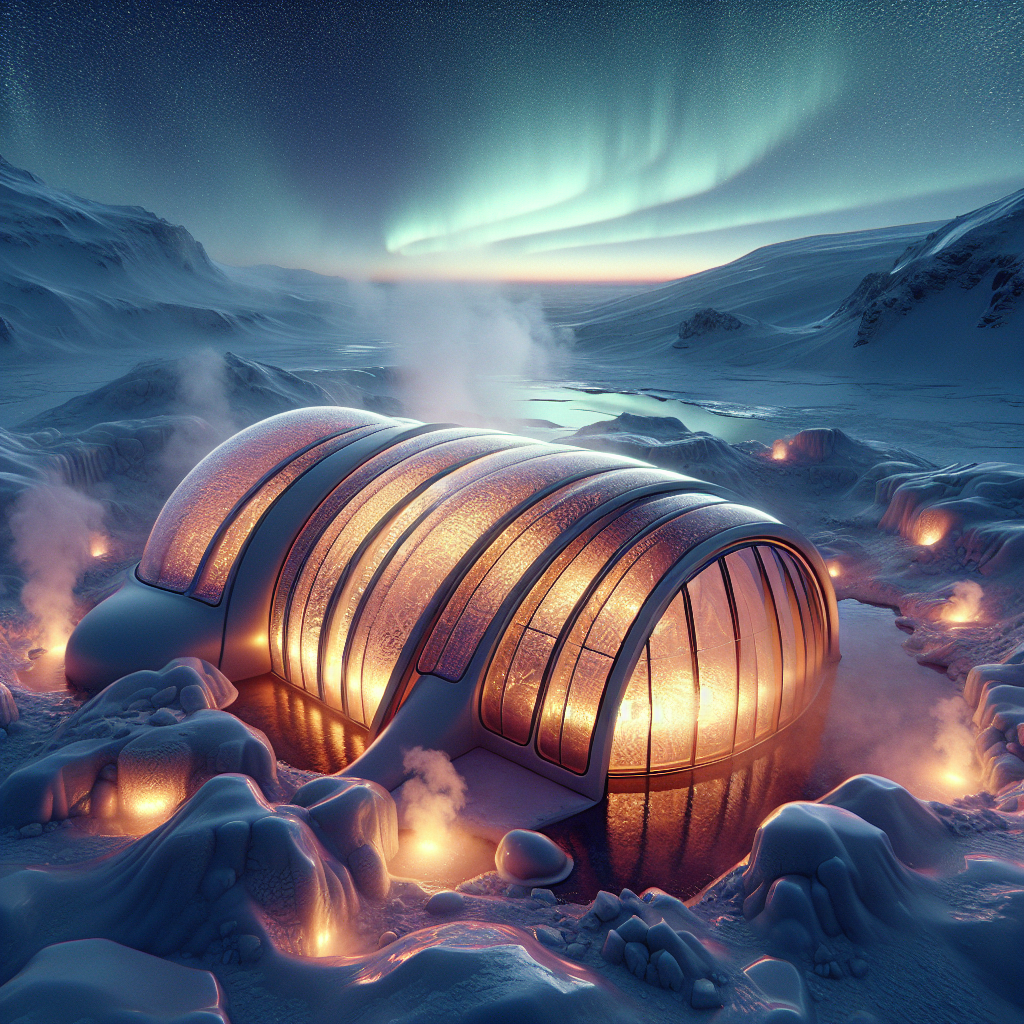
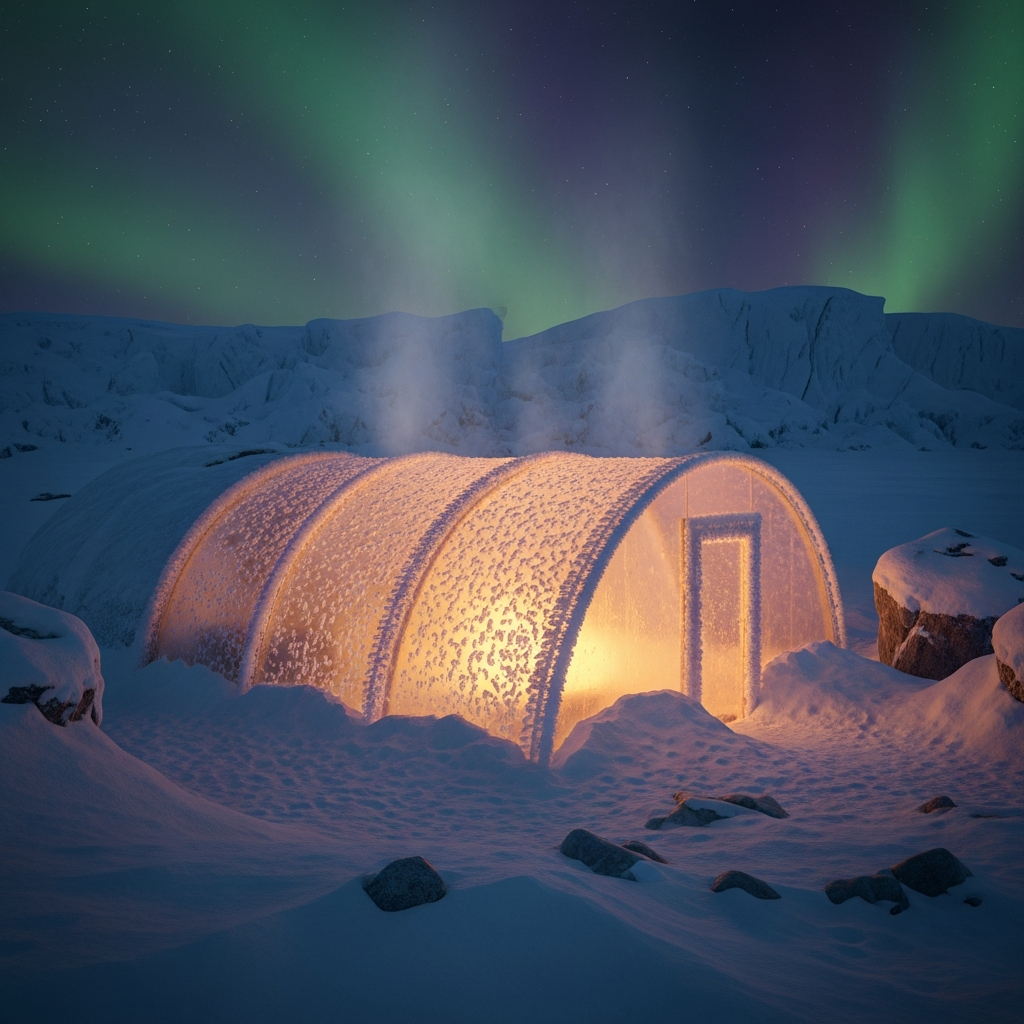
These structures often appear as glowing monoliths half-buried in snowdrifts, their surfaces refracting light like frozen glass. Beneath the surface, heat circulates through radiant flooring and thermally responsive walls—technologies inspired by the principles of biophilic design. The result is a spatial experience that feels alive, where temperature gradients guide movement and perception much like light does in traditional architecture.
Material Alchemy in Subzero Conditions
Materials in the Arctic behave differently. Concrete fractures, steel contracts, and glass fogs. To counter this, architects are experimenting with hybrid composites—frozen sand panels, phase-change materials, and translucent polymers that store heat like living tissue. The Materials Today Journal recently highlighted innovations in micro-porous ceramics that absorb solar energy during the brief Arctic daylight and release it slowly through the night. This creates what designers call “thermal breathing”—a rhythmic exchange between architecture and atmosphere.
In Svalbard, a research station built with recycled aluminum panels demonstrates how reflective materials can double as both insulation and illumination. The metallic skin mirrors the pale sky, blending the structure into its environment while capturing diffuse light. It’s a philosophy that echoes the adaptive reuse ethos explored in adaptive reuse projects—repurposing not just materials, but entire climatic systems.
Heat as a Design Medium
In these frozen frontiers, warmth becomes more than a utility—it becomes a design language. Thermal gradients define zones of intimacy and retreat. Architects are now using heat mapping to choreograph interior experiences, ensuring that temperature, texture, and light coalesce into emotional resonance. The Arctic spa, for instance, is no longer a luxury but a statement of ecological balance: a place where geothermal energy, snow-melt water, and timber harmonize to create sustainable indulgence.
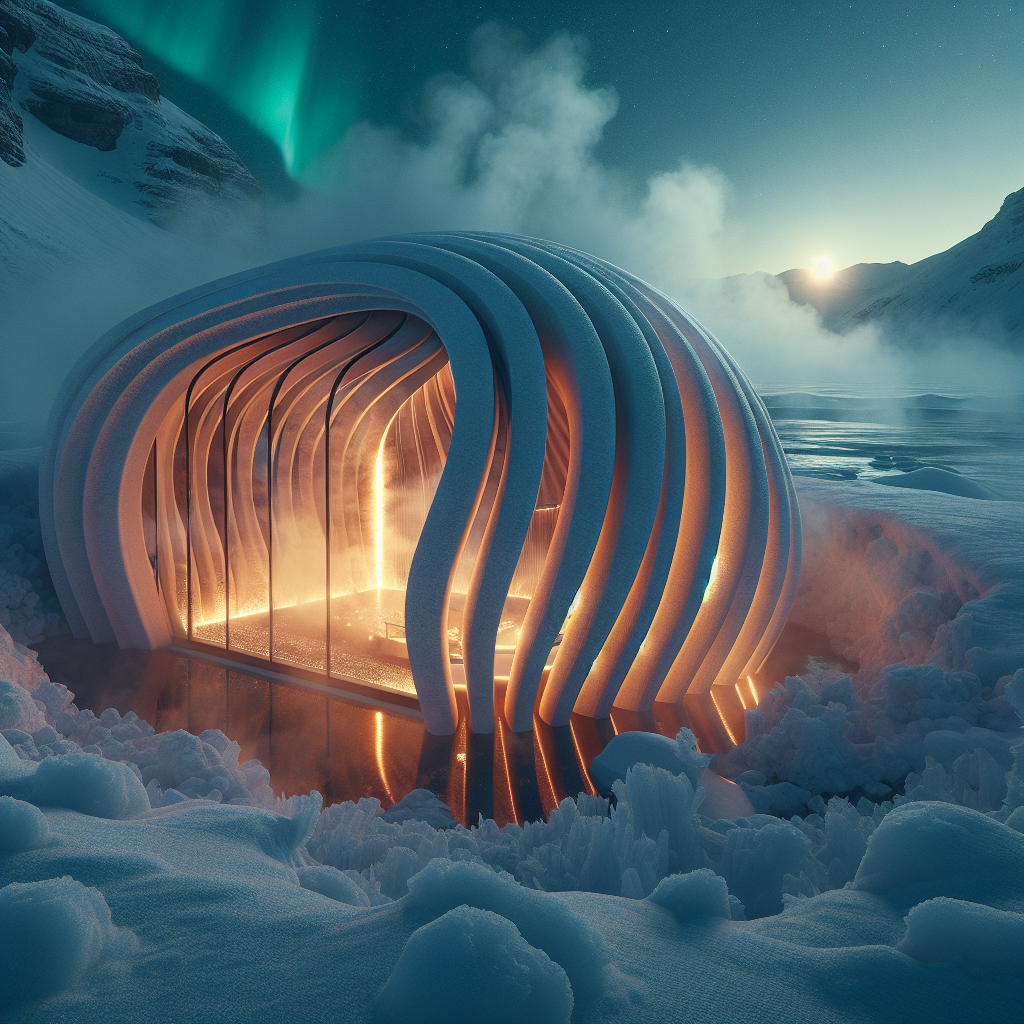
Projects like the “Ice Veil Pavilion” in Greenland, designed by a collective of Nordic architects, exemplify this shift. The pavilion’s layered membrane of aerogel and snow captures sunlight and radiates a soft amber glow at dusk. Visitors describe it as “walking inside a candle.” The concept resonates with the principles behind biodegradable architecture, where material impermanence becomes part of the design narrative.
Lessons from Indigenous Wisdom
Long before thermal imaging and aerogels, Arctic communities mastered the art of warmth. The igloo—an architectural marvel of compressed snow—remains a lesson in efficiency. Its parabolic form minimizes heat loss, while its material, paradoxically cold to the touch, insulates through trapped air. Modern architects are revisiting these vernacular principles, merging them with contemporary technologies to create hybrid habitats that honor both tradition and innovation.
The ArchDaily platform has documented several projects in Nunavut and northern Norway where indigenous design logic informs modern construction. These structures embody a philosophy of coexistence rather than conquest—a mindset increasingly vital as climate change reshapes the Arctic landscape.
Thermal Sanctuaries as Climate Laboratories
Beyond comfort, these sanctuaries serve as living laboratories for climate adaptation. They test how architecture can respond to volatility—melting permafrost, shifting winds, and prolonged darkness. Some employ kinetic façades that adjust to temperature fluctuations, echoing the principles of responsive design. Others integrate atmospheric sensors that regulate interior heat based on human occupancy and external pressure changes.
In a broader sense, these Arctic experiments are prototypes for future habitats in extreme environments—from Martian colonies to submerged cities. The same principles of energy efficiency, material adaptability, and sensory balance could inform how humanity designs for survival beyond Earth. The Arctic, once seen as the edge of the world, may now be its blueprint for endurance.
The Aesthetics of Warmth
Visually, Arctic sanctuaries defy expectations. They are neither rustic cabins nor futuristic domes, but sculptural forms that appear to emerge from the ice itself. Their interiors favor tactility—wool, felt, and wood juxtaposed with translucent polymers and brushed metals. Light is filtered through snow-packed skylights, creating gradients of gold and blue that shift with the time of day. Every element, from the hum of geothermal pumps to the condensation trails on glass, contributes to a multisensory experience of warmth.
In this sense, “Arctic warmth” is not just physical—it’s emotional. It represents a new humanism in architecture, one that acknowledges vulnerability and interdependence. The sanctuaries remind us that comfort is not the absence of cold, but the art of living within it.
Conclusion: Designing the Future of Cold
As the planet warms, paradoxically, the Arctic becomes a mirror for global design ethics. The lessons learned here—about restraint, respect, and regeneration—will inform how we build in all climates. Thermal sanctuaries hidden in the ice are not escapist fantasies; they are testaments to our ability to coexist with extremes. They whisper a new architectural manifesto: that warmth, when designed with intelligence and empathy, can be the most sustainable luxury of all.
###ARTICLE_END### { “seo_title”: “Arctic Warmth: Thermal Sanctuaries in Ice”, “meta_description”: “Explore Arctic warmth through thermal sanctuaries hidden in ice—architecture merging heat, light, and sustainability in extreme environments.”, “excerpt”: “Discover how architects are designing thermal sanctuaries in the Arctic—structures that merge warmth, sustainability, and sculptural beauty within ice.”, “focus_keyphrase”: “Arctic warmth” } **AI Image Prompts** 1. **Prompt:** Photorealistic image of a geothermal Arctic research station partially embedded in snow, glowing softly at dusk, captured on a Hasselblad H6D with 50mm lens, crisp atmospheric detail, visible aurora in background. **Alt text:** Geothermal Arctic research station glowing at dusk under aurora. **Caption:** A geothermal research station in Svalbard radiates warmth beneath the polar night. 2. **Prompt:** Interior of an Arctic thermal sanctuary with aerogel walls and radiant flooring, steam rising from a geothermal pool, warm light reflecting off snow outside, Hasselblad X2D shot, cinematic contrast. **Alt text:** Interior of Arctic thermal sanctuary with geothermal pool and aerogel walls. **Caption:** Inside an Arctic sanctuary, warmth becomes a sculptural medium of light and steam. 3. **Prompt:** Indigenous-inspired Arctic lodge built from compressed snow and timber, surrounded by frozen tundra, morning light casting long shadows, Hasselblad 907X with 35mm lens. **Alt text:** Indigenous-inspired Arctic lodge blending snow and timber design. **Caption:** Traditional forms meet modern sustainability in a snow-and-timber Arctic lodge. 4. **Prompt:** Aerial view of multiple thermal sanctuaries scattered across an icy fjord, their roofs glowing amber through snow, captured at twilight on Hasselblad H6D drone mount. **Alt text:** Aerial view of glowing Arctic sanctuaries across icy fjord. **Caption:** Thermal sanctuaries illuminate the Arctic landscape like lanterns in the snow. — **Instagram Strategy** **Main Post Caption:** In the heart of the Arctic, warmth is no longer a luxury—it’s an art form. Discover how architects are sculpting sanctuaries of heat and light within the ice. Tap the link in bio to explore the full story on Mainifesto. ❄️🔥 **Hashtags