
Acoustic illusions parametric: shaping for perfect sound resonance

Acoustic Illusions Parametric: Shaping for Perfect Sound Resonance
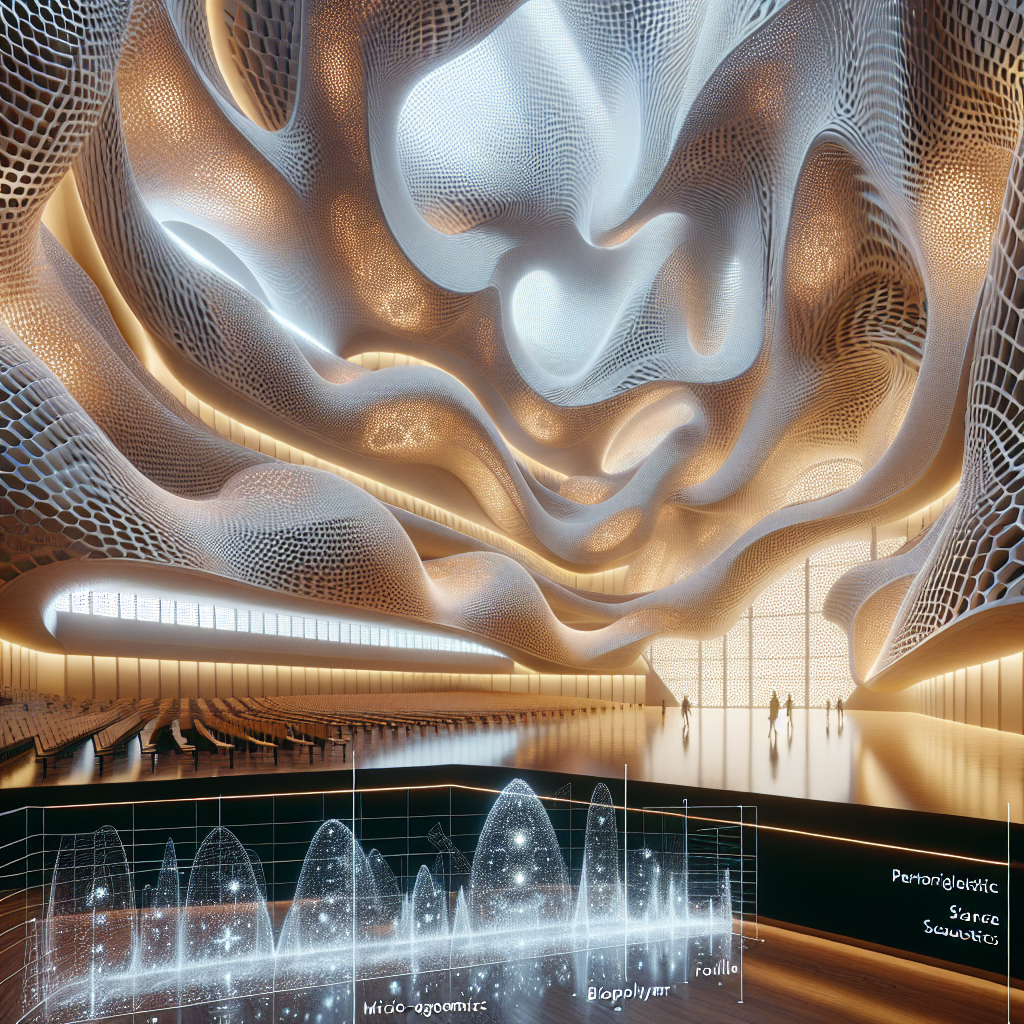
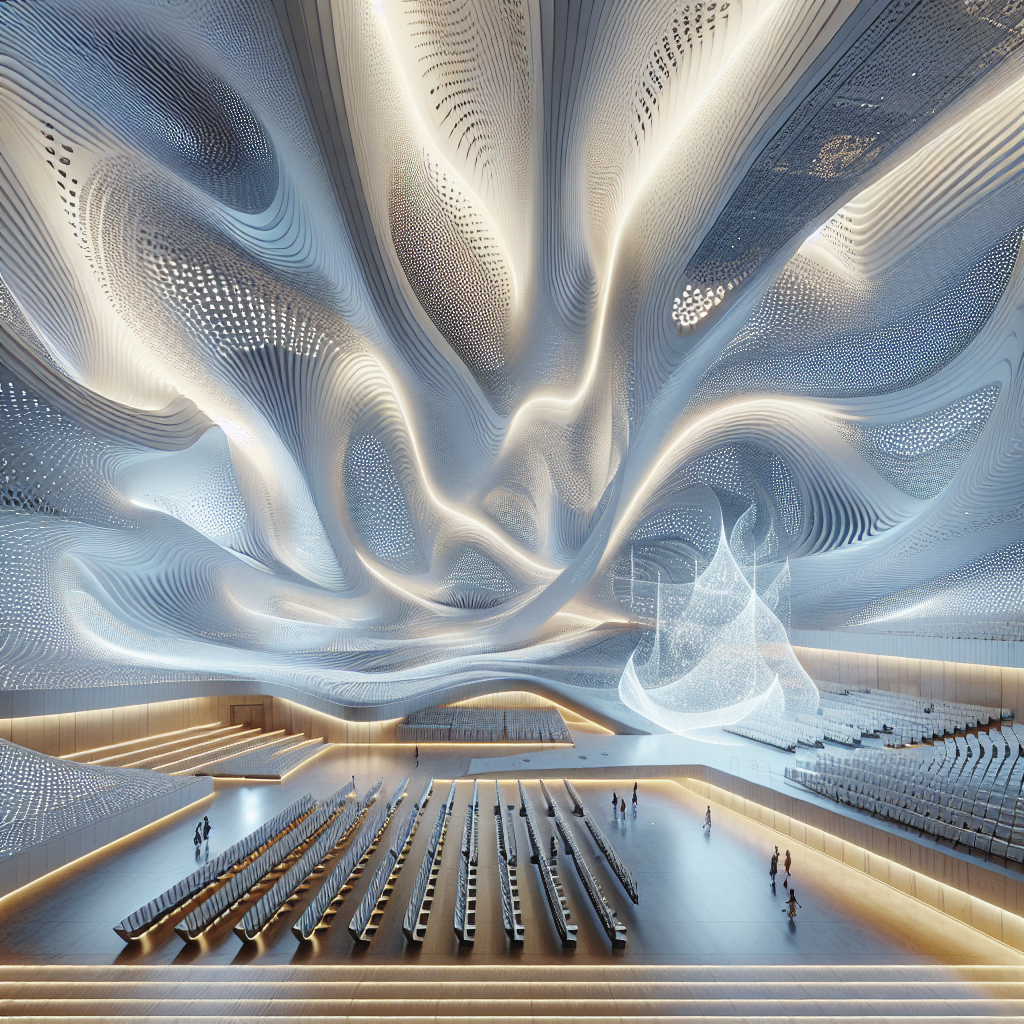
In the evolving landscape of architectural innovation, the fusion of parametric design and acoustic engineering is quietly orchestrating a revolution. From concert halls to co-working spaces, designers are no longer treating sound as an afterthought but as a fundamental material—one that can be sculpted, tuned, and spatially choreographed. The concept of acoustic illusions parametric embodies this shift: the deliberate manipulation of form and surface geometry to create environments where sound behaves with precision, depth, and emotion.
The Science of Sound Meets the Art of Form
Sound, at its core, is a physical phenomenon—a vibration that travels through air, bouncing off surfaces and filling volumes. Yet in architecture, these vibrations are often distorted by geometry. Flat walls reflect sound harshly; corners trap it; domes amplify it unpredictably. The emerging discipline of parametric acoustics seeks to counter this by using algorithmic modeling to predict and optimize how sound waves interact with space.
Parametric tools—those same digital engines that have given rise to fluid facades and organic structures—are now being used to simulate acoustic behavior in real time. By adjusting curvature, density, and material porosity, architects can “tune” a room like a musical instrument. The result is not merely functional silence or clarity, but an immersive acoustic illusion: spaces that seem larger, warmer, or more intimate than their physical dimensions suggest.
Parametric Resonance: Designing with Sound as a Material
In traditional architecture, acoustics were often corrected post-design, through the addition of panels, baffles, or absorbent materials. Today, the process begins at the conceptual stage. Parametric modeling allows designers to embed acoustic performance directly into the geometry of a structure. Surfaces are no longer passive—they become active participants in the sonic experience.
Take, for instance, the Elbphilharmonie in Hamburg, whose interior “white skin” of 10,000 uniquely shaped gypsum panels was digitally modeled to scatter sound evenly across its grand hall. Each panel’s curvature was determined by algorithms that accounted for frequency response and audience distribution. This is the essence of parametric resonance: a dialogue between mathematics and emotion, where form and frequency converge.
Such approaches echo the broader architectural shift toward parametric design—a methodology that uses computational logic to generate complex geometries responsive to environmental data. When applied to acoustics, this logic transforms into a language of vibration, reflection, and reverberation.
From Visual to Sonic Illusions
Acoustic illusions are not merely about sound quality—they are about perception. Much like optical illusions in architecture, they manipulate sensory expectations. A narrow corridor can be made to feel expansive through carefully diffused sound reflections; a high-ceilinged lobby can be made intimate through targeted absorption zones. These illusions alter how we inhabit space, engaging both ear and mind.
In retail environments, designers are experimenting with sound zoning—using parametric surfaces to create invisible boundaries between areas without physical partitions. In museums, whispering galleries and echo chambers are being reimagined through computational precision, producing immersive soundscapes that guide visitors intuitively through exhibits. The boundary between architecture and performance is dissolving.
Material Intelligence: Sculpting Silence and Resonance
Materiality plays a crucial role in this sonic choreography. Porous ceramics, perforated metals, and 3D-printed biopolymers are being engineered with micro-geometries that absorb or scatter specific frequencies. The use of bio-based materials—from mycelium composites to cellulose foams—introduces sustainability into the acoustic equation, aligning with the growing ethos of biodegradable architecture.
Recent research published by the Acoustical Society of America highlights how surface topology can be tuned to control resonance without adding bulk. This has profound implications for urban design, where compactness and sound insulation often conflict. Parametric modeling allows for micro-variations in surface depth—imperceptible to the eye but transformative to the ear.
Imagine a co-working hub where each desk cluster is enveloped by softly undulating partitions that diffuse chatter while maintaining visual openness. Or a restaurant where ceiling panels ripple like sound waves, their curvature calculated to dampen clatter while amplifying conversation at each table. These are not speculative fantasies—they are the emerging reality of acoustic parametric design.
Case Studies: Spaces That Sing
In Copenhagen, the BLOX building by OMA integrates a parametric acoustic ceiling that adjusts its reflectivity based on occupancy levels. Sensors detect ambient noise and trigger subtle mechanical shifts in the ceiling’s micro-panels, ensuring consistent sound comfort throughout the day. The effect is almost imperceptible—an acoustic illusion of calm amid activity.
Meanwhile, in Tokyo’s Shibuya district, a boutique sound studio designed by local firm Suppose Design Office employs 3D-printed resin panels shaped by generative algorithms. Each panel’s geometry corresponds to a specific frequency band, creating a spatial equalizer that envelops the listener. The result is a room that “disappears” acoustically, allowing pure sound to emerge without echo or distortion.
These examples illustrate how acoustic parametrics can transcend technical optimization to become an expressive medium—one that shapes atmosphere, emotion, and identity.
Digital Craftsmanship: The Return of the Ear
What distinguishes this new wave of acoustic design is its synthesis of digital precision and sensory intuition. While algorithms model the physics of sound, the designer’s ear remains the ultimate arbiter. This recalls the spirit of the craftsmanship revival seen across contemporary design disciplines: a renewed respect for the tactile, the perceptual, and the human.
In this sense, parametric acoustics is less about automation and more about augmentation. It empowers architects to sculpt not just space, but the invisible atmospheres that define how we feel within it. As cities grow denser and interiors more multifunctional, the ability to control sound with architectural precision becomes a new form of luxury—an invisible comfort that distinguishes exceptional design from the merely functional.
The Future Sound of Architecture
As we approach the mid-2020s, the integration of acoustic illusions into parametric workflows is expanding beyond cultural venues into everyday environments. Schools, offices, and even residential interiors are adopting algorithmically shaped surfaces to enhance acoustic comfort and privacy. The convergence of AI-driven design and acoustic simulation is enabling real-time feedback loops, where architects can “listen” to their models before a single wall is built.
In parallel, advances in psychoacoustics—the study of how humans perceive sound—are informing design strategies that go beyond decibels and reverberation times. By understanding how spatial acoustics influence mood, cognition, and social behavior, designers are crafting environments that resonate emotionally as well as physically.
The ultimate goal is not silence, but harmony: a calibrated interplay between reflection and absorption, between sound and form. In this emerging paradigm, architecture becomes an instrument, and the designer, a composer of spatial symphonies.
Conclusion: Toward a Sonic Aesthetic
The rise of acoustic illusions parametric signals a profound evolution in architectural thinking. It challenges the dominance of the visual, inviting us to design for the ear as much as for the eye. As computational tools grow more sophisticated, and as our understanding of sensory experience deepens, the built environment will increasingly hum with intention—each curve, cavity, and contour tuned to perfection.
In the near future, we may walk into a building and feel its resonance before we see its form. That will be the moment when architecture truly sings.
Keywords: acoustic illusions, parametric design, sound resonance, architectural acoustics, computational design, psychoacoustics, digital fabrication, parametric architecture.