
#REF!
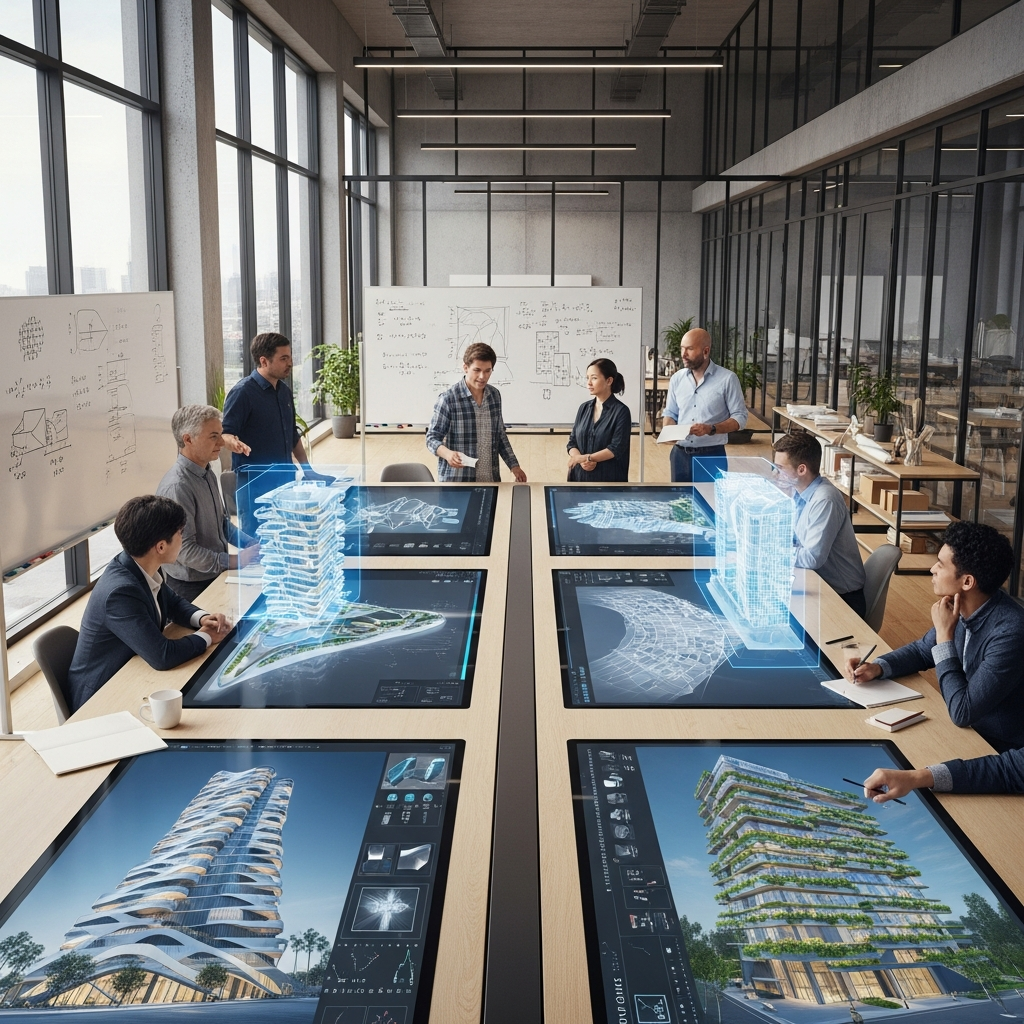
7 Secret Prompts Architecture Studios Are Using to Win Competitions
In the world of architecture competitions, where innovation meets persuasion, the difference between a shortlisted concept and a winning proposal often lies in how ideas are framed, visualized, and narrated. As artificial intelligence and computational design tools redefine creative workflows, a new generation of architects is quietly leveraging “prompt engineering” — the art of crafting precise digital instructions — to generate evocative imagery, structural logic, and even emotional resonance. These prompts, once the domain of coders and digital artists, have become the secret weapons of leading studios seeking to stand out in an increasingly saturated field.
The Rise of the Architectural Prompt
In the past, competition entries were defined by the clarity of their concept diagrams and the strength of their renderings. Today, the architectural prompt has emerged as a meta-tool — a linguistic blueprint that guides AI systems to produce hyperrealistic visualizations, material experiments, and even narrative texts. This evolution parallels the shift seen in virtual reality in architecture, where immersive environments have transformed the way designers communicate spatial intent.
But what exactly makes a prompt “win-worthy”? According to researchers at the Royal Institute of British Architects (RIBA), successful AI-driven design prompts combine three essential ingredients: contextual awareness, emotional tone, and spatial specificity. In other words, they must evoke not only the form of a building but also its atmosphere and social relevance.
Prompt 1: “Design as Ecosystem”
One of the most powerful prompt strategies focuses on ecology. Studios are increasingly asking AI tools to “imagine architecture as a living organism.” This conceptual shift aligns with the growing interest in biophilic design, where nature’s patterns inform everything from façade systems to interior acoustics. The prompt encourages the generation of spaces that breathe, grow, and adapt — a visual and philosophical language that resonates deeply with juries attuned to sustainability narratives.
In competitions such as the European Green Pavilion, teams using this prompt have produced designs that merge digital parametrics with natural morphologies, resulting in renderings that appear both futuristic and organic. The effect is not just aesthetic; it communicates a holistic understanding of architecture’s role in the planetary ecosystem.
Prompt 2: “Temporal Layers”
Another secret lies in invoking time. The prompt “show the passage of time through material decay and renewal” has become a favorite among conceptual architects. It generates imagery that juxtaposes the permanence of structure with the impermanence of life — a theme reminiscent of the wabi-sabi aesthetic. By visualizing erosion, weathering, and growth, designers subtly suggest resilience and adaptability, key values in contemporary urban discourse.
This approach echoes lessons from ancient desert architecture, where buildings were designed to evolve with their environment rather than resist it. The prompt thus becomes a poetic instrument, bridging past wisdom with future speculation.
Prompt 3: “Material Alchemy”
AI systems trained on material databases can now simulate the tactile qualities of stone, timber, and glass with uncanny precision. The prompt “render light passing through translucent materials inspired by recycled glass and sand composites” taps into this capacity. It also aligns with the emerging field of sustainable material innovation, explored by institutions like the Material District.
In practice, this prompt allows studios to test speculative materials — from bio-based resins to sand-printed façades — without the cost of prototyping. It’s a technique that connects digital experimentation with real-world feasibility, much like the advances discussed in sand printing technology for design and architecture.
Prompt 4: “The Human Scale in the Machine Age”
As generative tools produce increasingly complex geometries, many architects are reintroducing the human figure as a counterbalance. The prompt “insert subtle human gestures — a hand on a railing, a shadow crossing a courtyard” humanizes AI-generated spaces. It’s a small detail that transforms sterile perfection into lived experience. According to the ArchDaily editorial team, juries often respond more favorably to renderings that evoke empathy rather than spectacle.
Prompt 5: “Light as Narrative”
Light remains one of architecture’s most powerful storytelling tools. The prompt “simulate dawn light filtering through kinetic façades” not only produces visually striking results but also conveys a building’s relationship with its environment. This technique has been used in competition-winning proposals for cultural centers and pavilions, where light becomes a metaphor for knowledge, transition, or community.
By integrating responsive lighting systems — a topic explored in responsive design — architects demonstrate how technology can serve emotion, not just efficiency.
Prompt 6: “Urban Symbiosis”
In the age of climate-conscious design, the urban prompt “envision a city where architecture and agriculture coexist vertically” has become emblematic of the solarpunk movement. It’s a vision that merges infrastructure with ecology, echoing the principles behind vertical farming and hydroponic systems. The resulting imagery often depicts lush terraces cascading down skyscrapers — a visual shorthand for sustainable aspiration.
Beyond aesthetics, this prompt also engages with the real-world shift toward regenerative urbanism, as seen in research from the UN-Habitat Urban Planning Lab. It challenges architects to think beyond form and into systems — energy, food, and social interaction — all interwoven within the built environment.
Prompt 7: “The Future Memory”
Perhaps the most enigmatic of all, this prompt asks AI to “imagine a building that remembers its past lives.” The resulting images often blend ruins with digital overlays, suggesting a future where architecture becomes an archive of its own transformations. It’s a deeply philosophical approach that resonates with the current discourse on adaptive reuse and cultural continuity.
Studios employing this prompt often find themselves crafting narratives that extend beyond design — into heritage, identity, and collective memory. It’s a reminder that even in an age of algorithms, architecture remains a profoundly human act of storytelling.
The New Language of Design
These seven prompts reveal a quiet revolution in architectural thinking. They are not just technical tools but conceptual frameworks — linguistic seeds that grow into visual worlds. In competitions, where juries must sift through hundreds of entries, such prompts help projects stand out not by louder imagery but by deeper meaning.
As AI continues to evolve, the mastery of prompting will likely become as essential to architects as sketching once was. The winners of tomorrow’s competitions will not simply draw buildings; they will compose instructions that teach machines how to dream — responsibly, beautifully, and with purpose.
{
  "seo_title": "7 Secret Prompts Architecture Studios Use",
  "meta_description": "Discover 7 secret AI prompts architecture studios use to win competitions and create visionary, sustainable designs.",
  "excerpt": "Ever wondered how top studios consistently win design competitions? These 7 secret AI prompts reveal the linguistic art behind architectural innovation.",
  "focus_keyphrase": "architecture competition prompts"
}
AI Image Prompts
- Image Prompt 1: A photorealistic rendering of an architectural studio workspace with digital screens displaying AI-generated building concepts, shot on a Hasselblad H6D, natural daylight, minimalistic interiors.
Alt text: “Architectural studio using AI-generated prompts for competition design.”
Caption: “Inside the creative core — where human intuition meets algorithmic imagination.” - Image Prompt 2: A futuristic pavilion with translucent façades inspired by recycled glass and sand composites, photographed at sunset with soft golden light.
Alt text: “Futuristic pavilion with translucent sand-glass façade.”
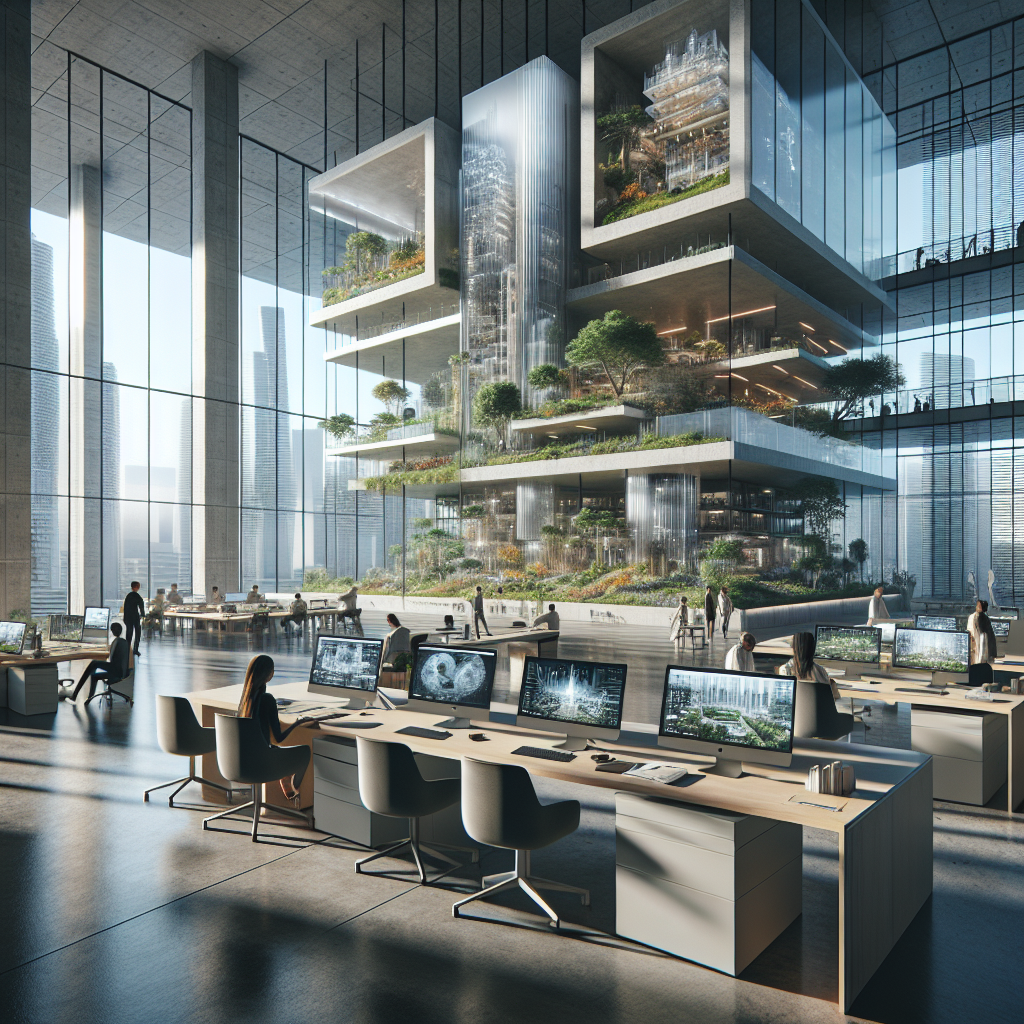
Caption: “Material alchemy in motion — light and sustainability intertwined.” - Image Prompt 3: A vertical urban farm integrated into a high-rise building, lush greenery cascading down terraces, captured from a drone perspective.
Alt text: “Vertical farming integrated into sustainable
 ×
×❮ ❯