
#REF!
Artificial Circadian Lighting: Houses That Simulate Perfect Sunrises and Sunsets on the Ceiling
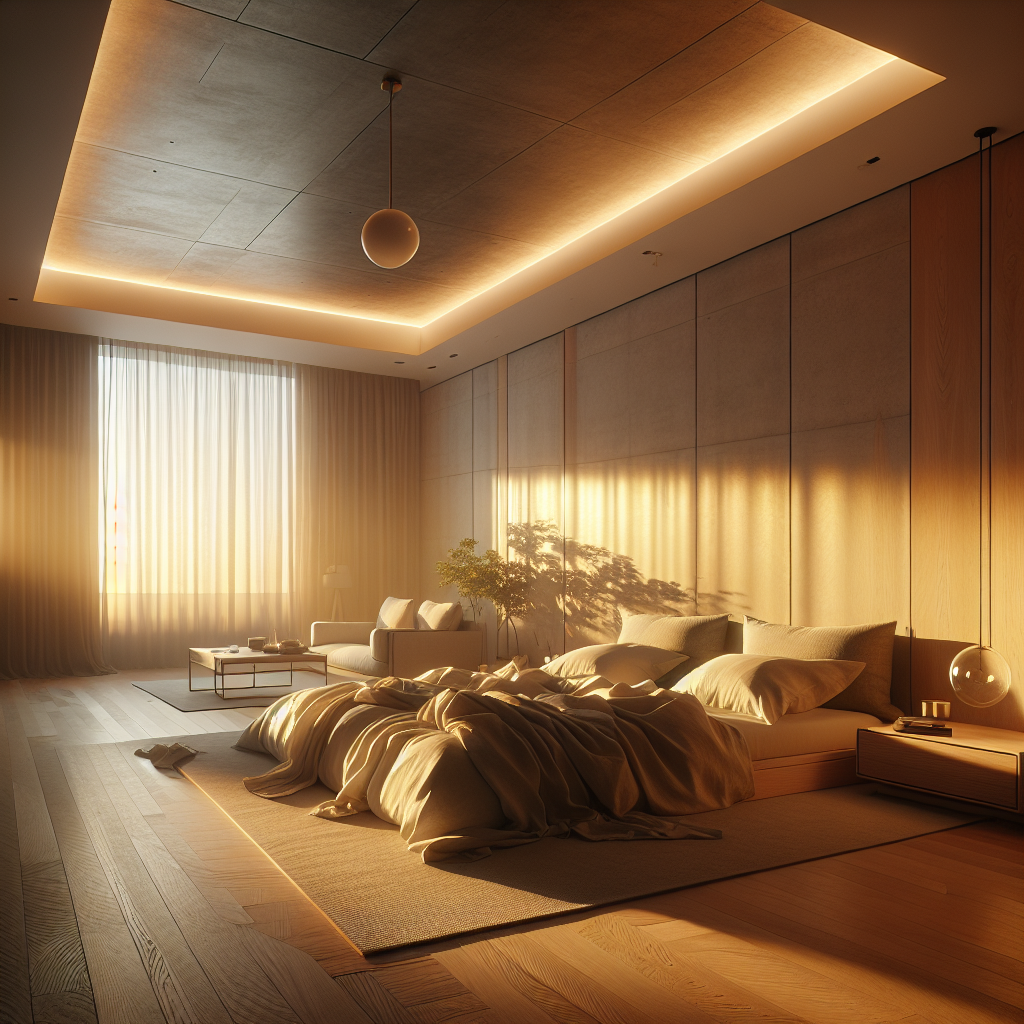
In the quiet of early morning, before the first light touches the horizon, a ceiling begins to glow. Not from a bulb or a lamp, but from a dynamic panel that mimics the gradual bloom of dawn. This is not science fiction—it’s the emerging reality of artificial circadian lighting, a design and technology fusion that is reshaping how we experience time, rest, and wellbeing inside our homes.
By 2026, circadian lighting has evolved from a wellness trend into a full-fledged architectural movement. These systems don’t just illuminate; they orchestrate light as a living rhythm, mirroring the natural progression of the sun. In doing so, they promise to restore something that modern life has quietly stolen—our innate connection to daylight.
The Science of Simulated Sunlight
At its core, artificial circadian lighting is rooted in chronobiology—the study of how light regulates human biological clocks. The Illuminating Engineering Society defines circadian lighting as illumination designed to support the body’s natural sleep-wake cycle by adjusting color temperature and intensity throughout the day. In practical terms, this means ceilings that blush with warm amber hues at dawn, transition to crisp daylight white by noon, and fade into soft twilight gradients by evening.
Manufacturers now integrate LED matrices, smart sensors, and AI-driven controls to replicate the spectral qualities of natural sunlight. The result is a ceiling that behaves like a sky—responsive, nuanced, and alive. Architects are increasingly embedding these systems into residential projects, not as gadgets, but as architectural elements that redefine spatial atmosphere.
Designing the Artificial Sky
In high-end interiors, the ceiling has become a new canvas for design innovation. Artificial circadian lighting panels are often installed as luminous membranes—diffused surfaces that span entire rooms. Their seamless integration recalls the serenity of biophilic design, yet with a distinctly technological edge. The goal is not imitation, but translation: capturing the emotional essence of natural light within controlled environments.
Studios like CoeLux and Philips Lighting have pioneered ultra-realistic sky panels that use nanostructured materials to scatter light as the atmosphere does. According to research published in the Nature Scientific Reports, exposure to such lighting environments can significantly improve mood, alertness, and cognitive performance—particularly in windowless spaces.
For urban dwellers living in dense, shaded cities, this innovation offers a profound psychological benefit. It’s a way to reclaim sunlight, even when the sky is hidden behind concrete and glass.
Ceilings That Heal
Beyond aesthetics, artificial circadian lighting is increasingly viewed as a therapeutic tool. In hospitals, eldercare facilities, and even corporate offices, dynamic lighting systems are being used to regulate melatonin production and reduce fatigue. A study by the American Institute of Architects notes that properly tuned circadian lighting can improve sleep quality by up to 30% in patients and residents exposed to it regularly.
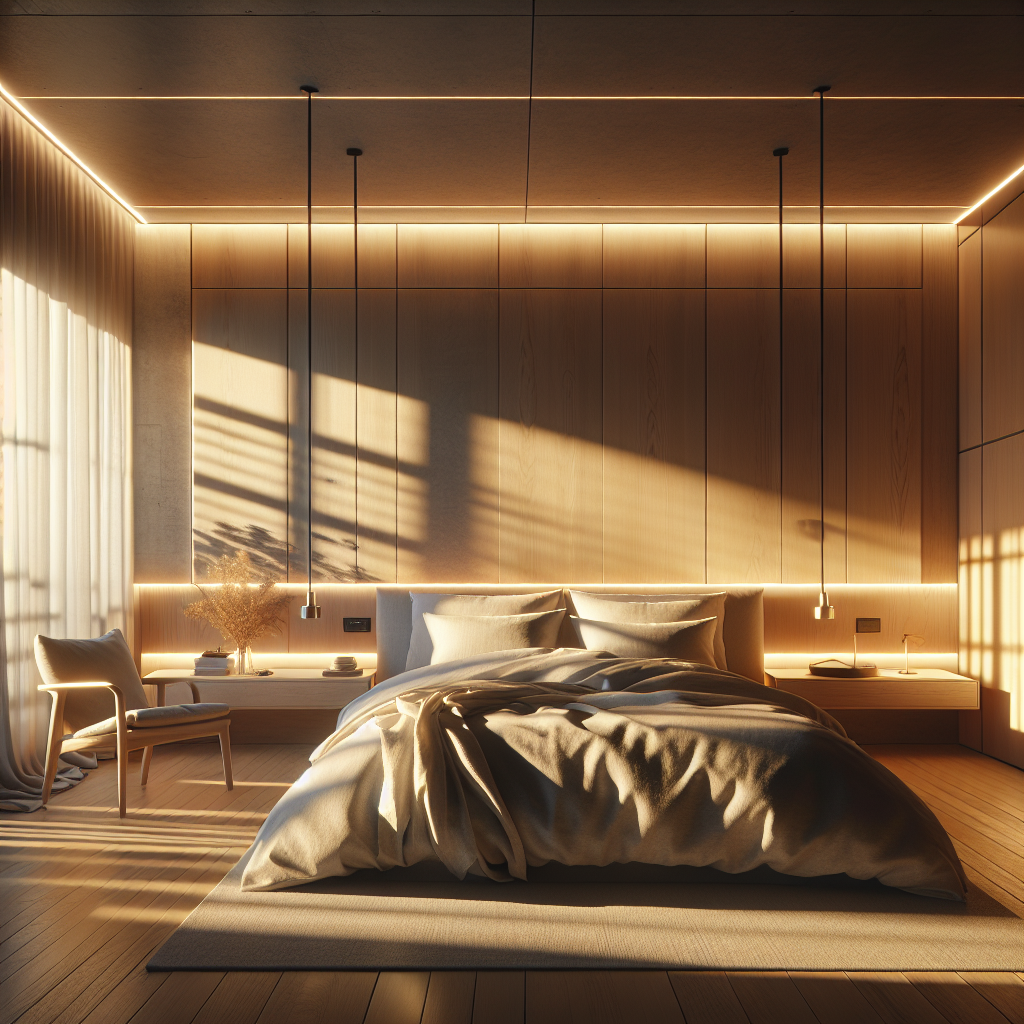
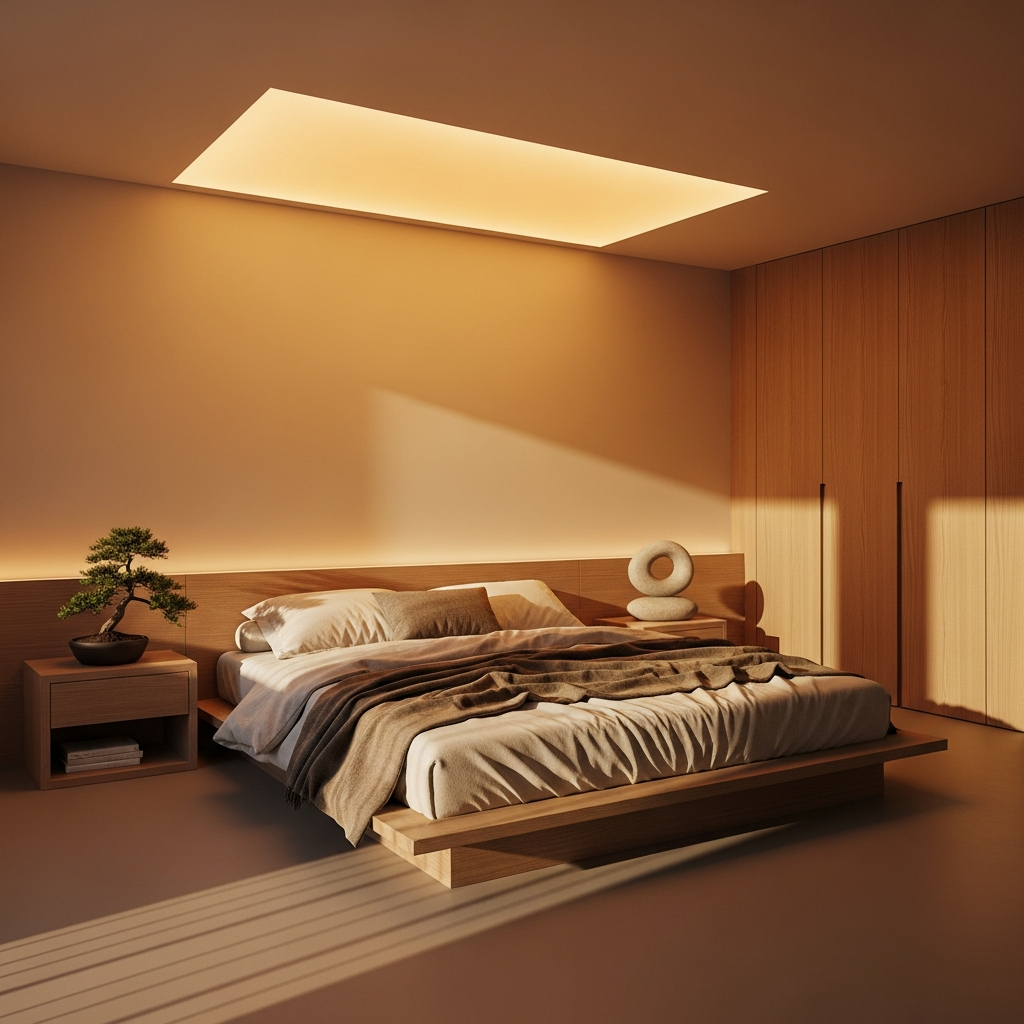
At home, the benefits are equally compelling. Bedrooms equipped with programmable sunrise simulations gently coax occupants awake, replacing the jarring buzz of alarms with a natural light crescendo. Evening scenes, meanwhile, shift toward amber tones that signal the body to wind down. The result is a home that not only shelters but also synchronizes with its inhabitants’ biology.
Integration with Smart Home Ecosystems
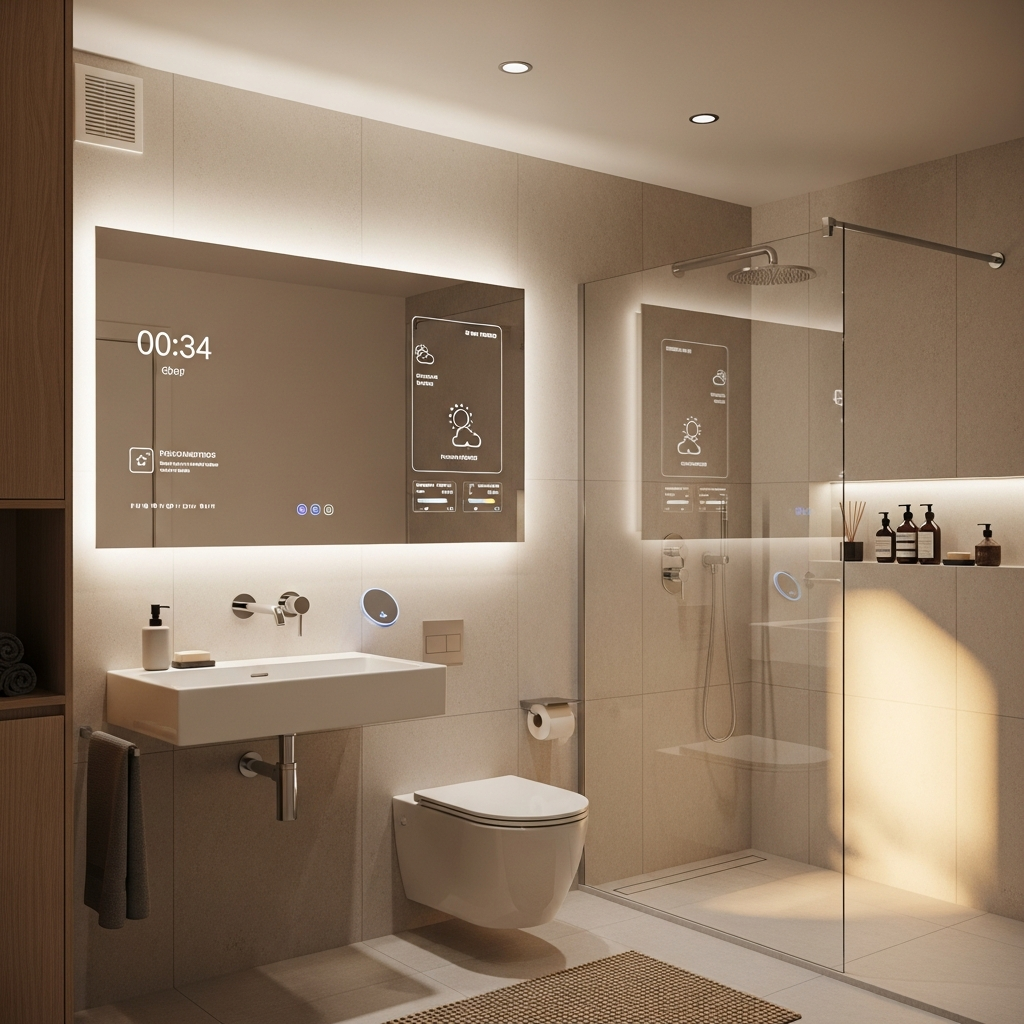
Artificial circadian lighting systems are now part of a broader movement toward smart home automation. Connected to voice assistants and environmental sensors, these systems adjust in real time based on occupancy, weather, and even emotional state. Imagine a ceiling that dims when rain clouds gather or brightens subtly during a late-night reading session.
Some designers are experimenting with “emotive lighting,” where AI interprets facial expressions or vocal tones to modulate light ambiance. It’s a concept aligned with the principles of AI in architecture—spaces that sense, think, and respond. The ceiling, once a static plane, becomes an intelligent interface between architecture and emotion.
Materiality and Atmosphere
Technological sophistication aside, the success of circadian lighting lies in its material execution. Diffusers made from frosted glass, textile membranes, or translucent polymers soften the light’s output, creating a sense of depth and natural diffusion. Some architects integrate microperforated acoustic panels behind the lighting layers, merging visual comfort with sound absorption—an approach reminiscent of the sensory design explored in wellness architecture.
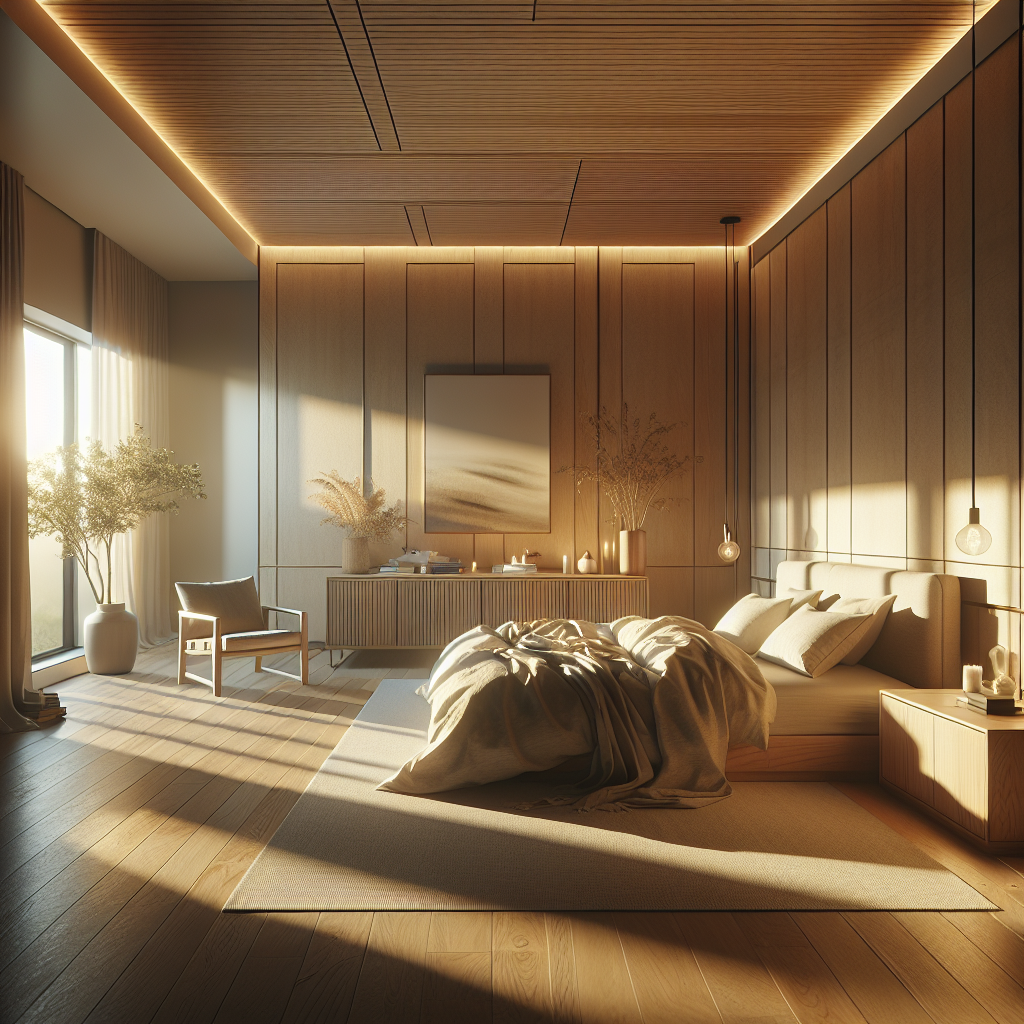
These ceilings are often paired with minimalist interiors, where light becomes the primary decorative element. The interplay of hue and shadow animates otherwise neutral spaces, transforming them into dynamic environments that evolve throughout the day.
From Luxury to Necessity
What began as a luxury feature in boutique hotels and wellness spas is now entering mainstream residential design. The shift is driven by a growing awareness of how light affects mental health and productivity. In cities like Tokyo, Stockholm, and New York—where daylight hours fluctuate dramatically—artificial circadian systems are becoming essential tools for maintaining balance.
Architects are also exploring sustainable implementations. By aligning artificial lighting with natural rhythms, energy consumption can be reduced significantly. When paired with daylight sensors and solar integration, circadian systems can operate with remarkable efficiency, echoing the sustainability ethos found in biodegradable architecture and other eco-conscious design movements.
The Emotional Architecture of Light
Ultimately, artificial circadian lighting represents a philosophical shift in how we perceive architecture. It moves design away from static form and toward temporal experience. A home becomes not just a space to inhabit, but a rhythm to live within—a choreography of light that aligns body and environment.
As our cities grow denser and our screens brighter, the need for restorative, human-centered illumination becomes more urgent. Artificial circadian lighting doesn’t seek to replace the sun; it seeks to remind us of it. It reintroduces the poetry of dawn and dusk into the architecture of everyday life, one ceiling at a time.
{
  "seo_title": "Artificial Circadian Lighting for Homes",
  "meta_description": "Explore how artificial circadian lighting transforms homes with ceilings that simulate perfect sunrises and sunsets.",
  "excerpt": "Could your ceiling become your sunrise? Discover how artificial circadian lighting is redefining home design and wellbeing through light that lives and breathes.",
  "focus_keyphrase": "artificial circadian lighting"
}
AI Image Prompts
- Prompt: Photorealistic interior of a minimalist bedroom with a dynamic ceiling simulating sunrise light, warm amber tones, soft shadows, shot on a Hasselblad H6D. Alt text: Bedroom with artificial circadian lighting simulating sunrise. Caption: A serene bedroom where light awakens gently, mimicking the natural rhythm of dawn.
- Prompt: Modern living room with a luminous ceiling transitioning from daylight white to sunset hues, Scandinavian furniture, natural textures, shot on a Hasselblad X2D. Alt text: Living room ceiling with artificial sunset lighting. Caption: The ceiling transforms into a living sky, painting the space with the colors of evening.
- Prompt: Smart home interior with integrated circadian lighting panels, voice-controlled system interface visible, shot on a Hasselblad H6D. Alt text: Smart home with circadian lighting system. Caption: Intelligent lighting systems that adapt to human rhythms and emotional cues.
- Prompt: Wellness spa interior featuring artificial skylight panels simulating natural daylight, minimalist design, tranquil atmosphere, shot on a Hasselblad X1D. Alt text: Spa interior with artificial daylight ceiling. Caption: A sanctuary of light—architecture that heals through illumination.
Social Media Strategy
Main Post Caption: Imagine waking up to a sunrise that unfolds across your ceiling. 🌅 Artificial circadian lighting is redefining home design—bringing natural rhythms indoors for better sleep, mood, and focus. Would you let