
#REF!
Liquid Furniture: Stunning Tables and Chairs That Look Like Moving Water
There’s a quiet revolution taking place in the world of furniture design—one that flows, ripples, and refracts light like a living body of water. “Liquid furniture,” as it’s been dubbed, is more than a passing aesthetic trend. It’s a material and philosophical exploration of movement, transparency, and the psychological pull of fluidity in static form. These pieces—tables that shimmer like still ponds, chairs that appear to melt into their surroundings—invite us to reconsider the boundaries between solid and liquid, art and utility.
The Aesthetics of Fluidity
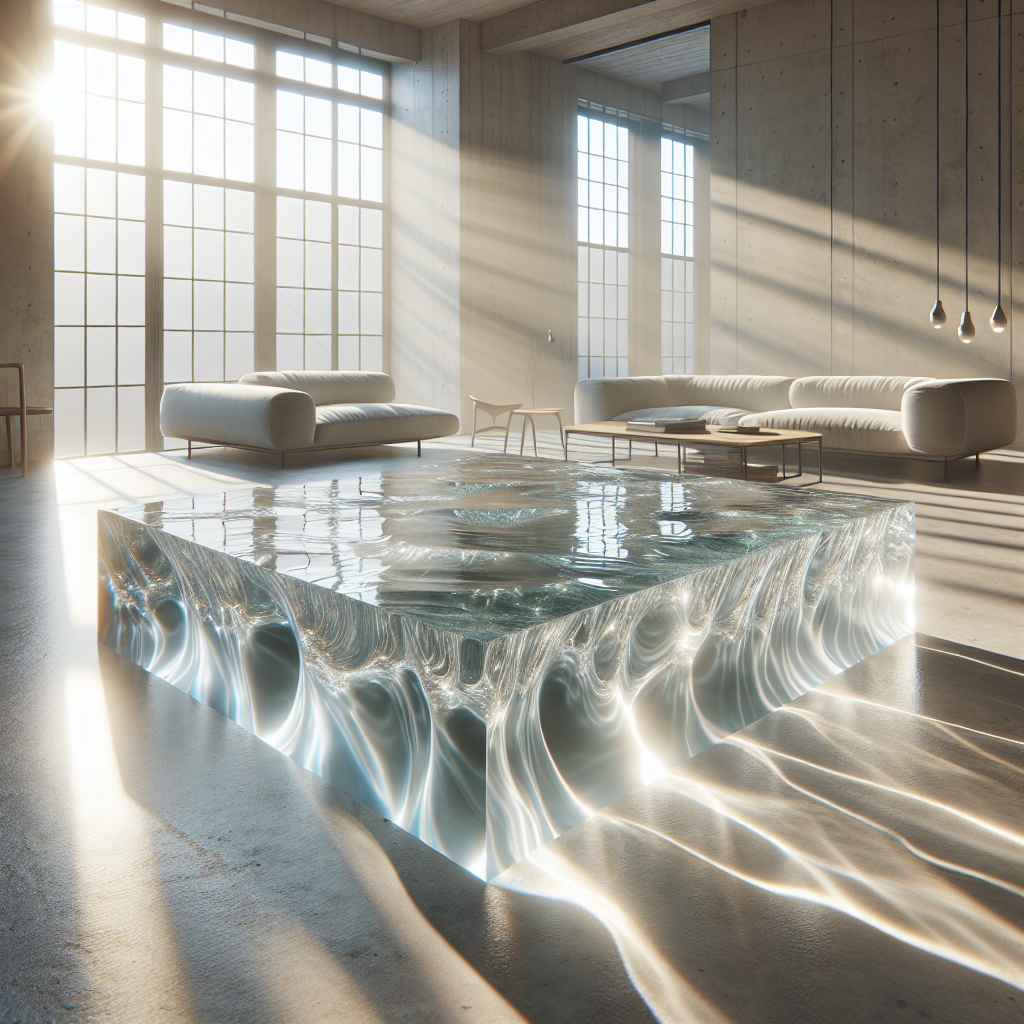
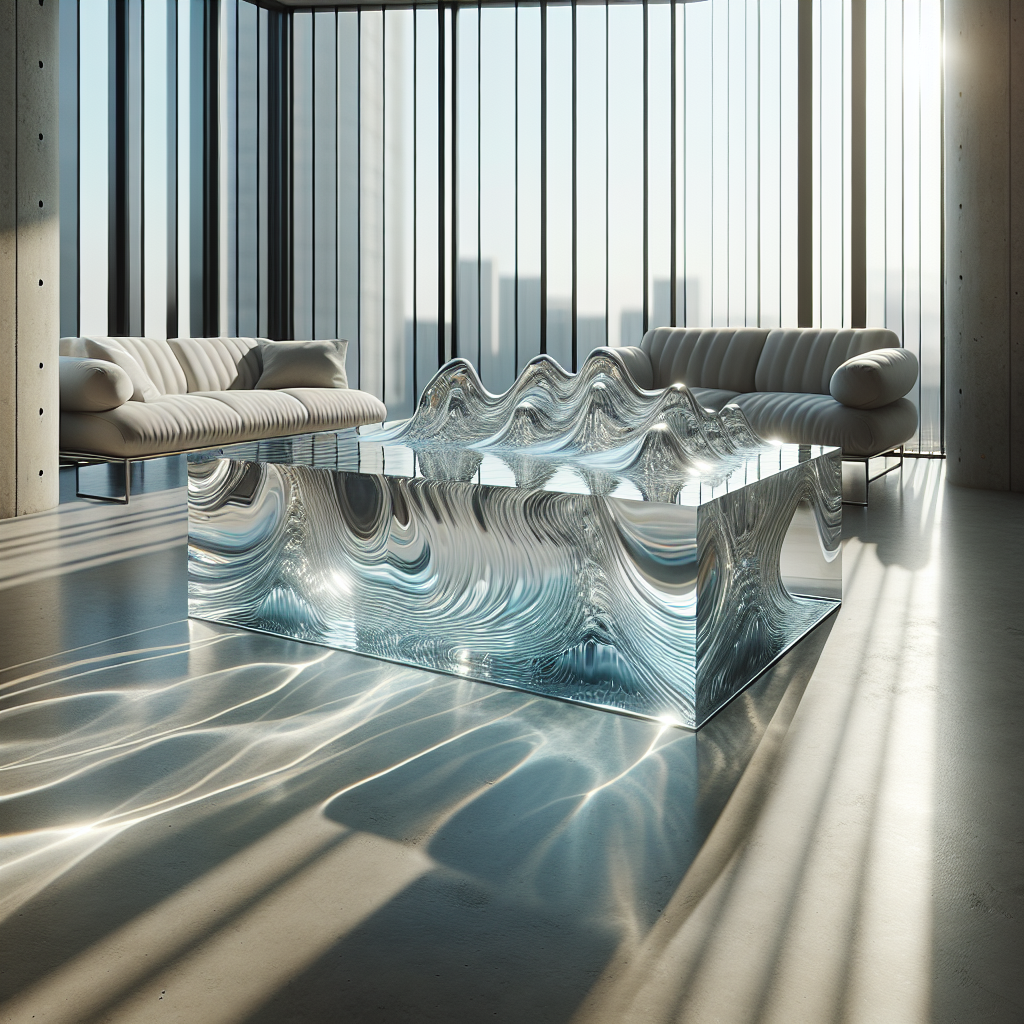
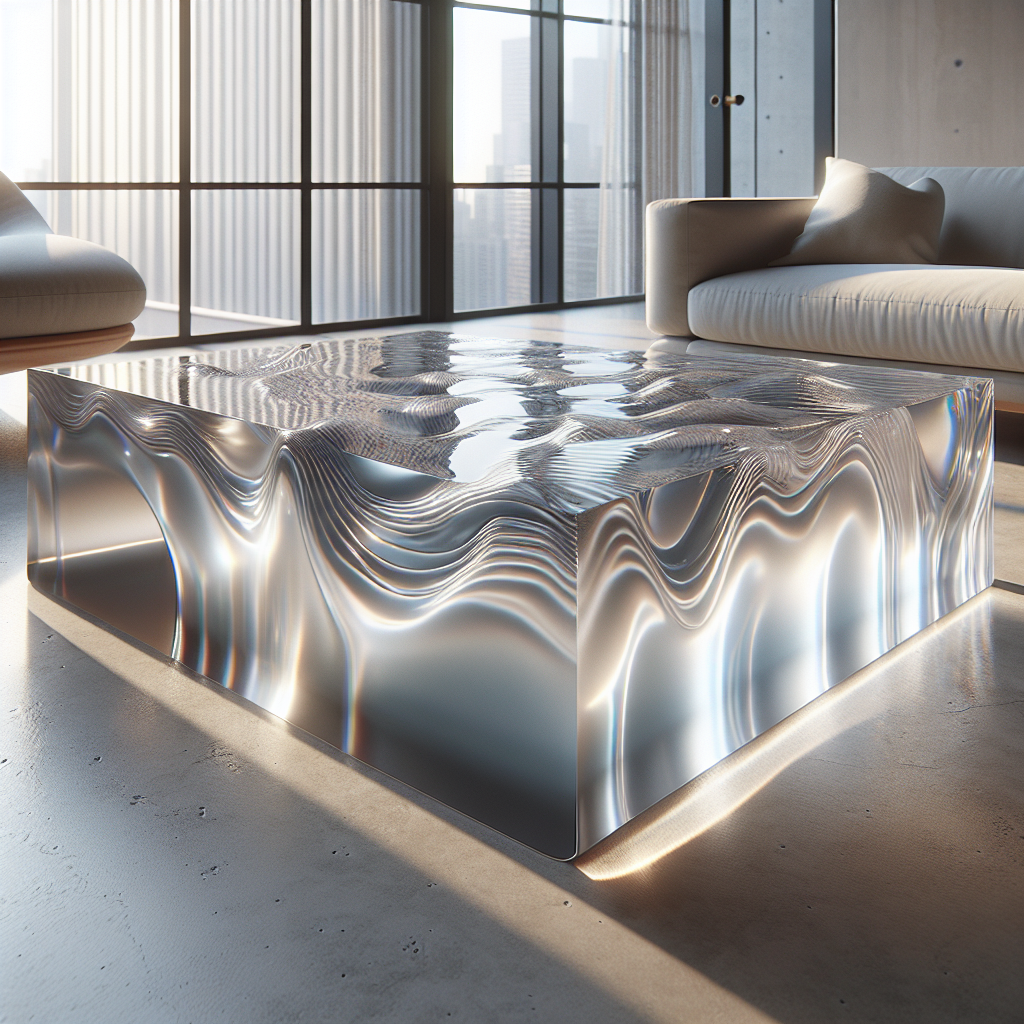
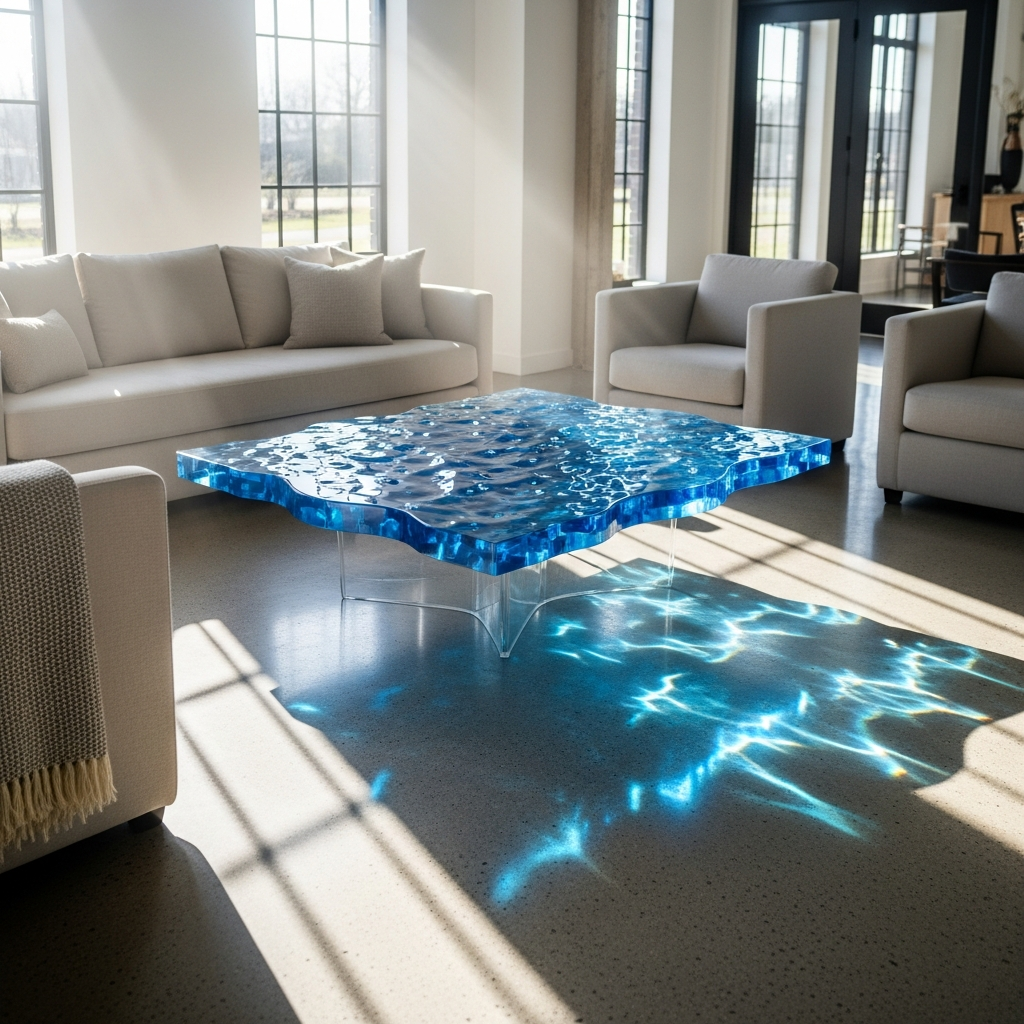
At first glance, liquid furniture seems to defy physics. Designers use resin, glass, and polished metal to emulate the visual properties of water—its translucence, its reflective surface, its unpredictable motion. The effect is mesmerizing: a coffee table that looks as though it’s perpetually rippling, or a dining chair that seems to have been frozen mid-pour. The visual illusion is not merely decorative; it’s experiential. Light dances across these surfaces, shifting with the viewer’s perspective, creating a dynamic interaction between object and observer.
This fascination with fluidity is not new. The 20th century’s fascination with transparency—epitomized by the glass pavilions of Mies van der Rohe—laid the groundwork for today’s experiments in optical materiality. Yet where modernism sought clarity and purity, liquid furniture embraces distortion and reflection. It’s a design language that celebrates impermanence, echoing the organic principles of biophilic design, where natural phenomena are integrated into the built environment to evoke calm and connection.
Material Innovation: The Science Behind the Flow
Behind the illusion of liquidity lies a complex interplay of chemistry and craftsmanship. Designers are experimenting with thermosetting resins, cast acrylics, and high-gloss epoxy coatings to achieve that signature fluid sheen. According to research published by the Materials & Design Journal, the manipulation of refractive indices in composite materials can produce optical effects nearly indistinguishable from water. The precision required is immense—temperature, humidity, and curing time all influence the final outcome.
In some cases, artisans layer tinted resins to mimic the depth of a lagoon or the gradient of a tide pool. Others employ CNC-milled aluminum polished to a mirror finish, creating a metallic liquidity that feels both futuristic and primal. The results are objects that appear to breathe with light—solid, yet in constant motion.
Emotional Resonance: The Psychology of Still Water
There’s a reason humans are drawn to water. Studies from the Architects’ Journal and environmental psychology fields suggest that water-like visuals reduce stress and enhance cognitive restoration. Liquid furniture taps into this innate response, transforming interiors into meditative spaces. A dining table that glows like a tranquil lake or a bench that ripples beneath sunlight can subtly alter the emotional tone of a room.
This sensorial approach aligns with the broader movement toward sustainable and emotionally intelligent design. In an era of overstimulation, designers are rediscovering the value of serenity. Liquid furniture, with its gentle luminosity and tactile smoothness, becomes a conduit for calm—a sculptural pause in the visual noise of modern life.
From Art to Function: Where Sculpture Meets Utility
While many liquid-inspired pieces straddle the line between art and design, their functional dimension is equally compelling. The challenge lies in balancing form with usability. A resin table must not only look fluid but also support weight and resist scratches. This has led to collaborations between designers and material scientists, exploring hybrid composites that maintain both strength and optical clarity.
At the 2025 Salone del Mobile in Milan, several studios unveiled collections that pushed this duality further. One standout was a series of stools made from recycled glass infused with microbubbles, creating the illusion of effervescence. Another featured a “melting” console table that appeared to drip onto the floor, yet was structurally reinforced with an internal steel skeleton. These works embody the same experimental ethos that drives innovations in sand-printing technology—a willingness to let material behavior dictate aesthetic outcome.
Crafting Transparency: The Artisan’s Role
Despite the high-tech processes involved, much of liquid furniture’s allure stems from handcraft. The sanding, polishing, and layering of resin are tactile, time-intensive acts. Each imperfection—an air bubble, a subtle wave—adds character. In this sense, liquid furniture echoes the Japanese philosophy of wabi-sabi, finding beauty in imperfection and impermanence. The final piece becomes a frozen moment of transformation, a record of motion captured in stillness.
Designers like Zaha Hadid Design, Mathieu Lehanneur, and Nendo have all explored fluid forms in recent years, blurring the boundaries between digital modeling and artisanal finish. Their works resonate with the same conceptual undercurrents that inform the study of parametric architecture: the pursuit of organic geometry through technological precision.
The Future of Fluid Design
As sustainability and sensory design converge, the next evolution of liquid furniture may involve bio-based resins or even water-filled cores that respond to touch and temperature. Researchers at the Materials Research Society are already experimenting with hydrogels and transparent ceramics that mimic the optical depth of water while remaining durable and recyclable.
Imagine a table that subtly shifts hue with the ambient light of the day, or a chair that refracts sunlight into gentle rainbows across the floor. These aren’t distant fantasies—they’re the logical continuation of a design movement that seeks to merge the poetic with the practical. In a world increasingly defined by rigidity—digital grids, algorithmic precision—liquid furniture reminds us of the value of softness, unpredictability, and flow.
Ultimately, these pieces do more than decorate; they recalibrate our relationship with materiality. They invite us to slow down, to observe, to feel. In their stillness, they ripple with life.
{
  "seo_title": "Liquid Furniture That Looks Like Moving Water",
  "meta_description": "Explore liquid furniture—tables and chairs that look like moving water, blending art, material science, and emotional design.",
  "excerpt": "Can furniture flow like water? Discover how designers are crafting liquid tables and chairs that shimmer, ripple, and calm the senses.",
  "focus_keyphrase": "liquid furniture"
}
AI Image Prompts
- Prompt: Photorealistic image of a translucent resin coffee table resembling rippling water, sunlight refracting through its surface, minimal living room, shot on Hasselblad H6D.
Alt text: Resin coffee table with water-like ripples in a minimalist interior.
Caption: A resin coffee table captures the illusion of a still pond, refracting daylight into soft patterns across the floor. - Prompt: Close-up of a polished aluminum chair shaped like a liquid pour, reflective surface mirroring surroundings, studio lighting, Hasselblad H6D.
Alt text: Reflective aluminum chair shaped like flowing liquid.
Caption: The chair’s molten form blurs the line between sculpture and seating, reflecting its environment in fluid distortions. - Prompt: Dining table made of layered tinted glass resembling ocean waves, surrounded by minimalist décor, natural morning light, Hasselblad H6D.
Alt text: Layered glass dining table resembling ocean waves.
Caption: Layered glass creates a marine illusion, turning a dining surface into a luminous body of water. - Prompt: Artisan hand-polishing a liquid resin surface in a workshop, reflections of tools and light visible, shallow depth of field, Hasselblad H6D.
Alt text: Artisan polishing a liquid resin furniture surface.
Caption: Behind every liquid illusion lies hours of craftsmanship—sanding, polishing, and refining to achieve perfect flow.
Social Media Strategy
Main Post Caption:
“Can furniture move without moving? 💧 Discover the mesmerizing world of liquid furniture—where tables