
Treehouse 2.0: The High-Tech Evolution of Living in the Canopy
Treehouse 2.0: The High-Tech Evolution of Living in the Canopy
Once a childhood fantasy of wooden planks and rope ladders, the treehouse has matured into a sophisticated architectural typology. Today’s elevated dwellings—crafted from carbon-neutral materials, embedded with smart systems, and designed to harmonize with their ecosystems—represent a new frontier in sustainable living. The “Treehouse 2.0” movement merges ancient biophilic instincts with the precision of modern technology, redefining what it means to live among the trees.
The Rebirth of the Canopy Dwelling
Across Scandinavia, Japan, and the Pacific Northwest, architects are reimagining arboreal living not as escapism but as ecological integration. The modern treehouse is no longer a rustic retreat; it’s a microcosm of environmental responsibility. Firms like Baumraum in Germany and Atelier Bow-Wow in Tokyo have elevated the typology—literally and philosophically—by combining lightweight engineering with passive design strategies. These structures often employ tension-based foundations that avoid damaging root systems, while photovoltaic panels and rainwater harvesting systems make them self-sufficient.
This approach aligns closely with the principles of biophilic design, which emphasizes human connection to nature as a cornerstone of wellness. In the context of Treehouse 2.0, biophilia is not an aesthetic gesture—it’s a structural ethos. The architecture itself becomes a living organism, breathing, responding, and adapting to its environment.
Technology Among the Branches
Smart home technology has quietly infiltrated the canopy. Treehouses today can be controlled via voice command or smartphone, with sensors monitoring everything from humidity to structural stress. The integration of smart home automation ensures that these spaces are not only efficient but also deeply attuned to their natural surroundings. For instance, electrochromic glass panels adjust transparency based on sunlight intensity, while embedded AI systems optimize energy use and airflow.
According to research from the Royal Institute of British Architects (RIBA), the next decade will see a surge in adaptive micro-habitats—structures that respond dynamically to environmental data. Treehouse 2.0 is a prototype for this future: lightweight, data-driven, and symbiotic. It represents a shift from static architecture to living architecture.
Material Intelligence: Building with Nature, Not Against It
Timber remains the protagonist of this narrative, but it’s not the timber of the past. Cross-laminated timber (CLT) and laminated veneer lumber (LVL) offer strength comparable to steel while sequestering carbon rather than emitting it. The use of engineered wood aligns with the broader trend toward sustainable vertical construction, as explored in wooden skyscraper design. These materials allow architects to craft suspended dwellings that are both structurally sound and environmentally restorative.
Recent studies published in the Journal of Cleaner Production highlight that engineered timber can reduce a building’s carbon footprint by up to 60% compared to concrete. When combined with modular fabrication and digital design tools, this innovation makes Treehouse 2.0 not just sustainable but scalable.
Designing for the Senses
Treehouse living is as much about sensory experience as it is about sustainability. Architects are exploring how light, sound, and scent can shape emotional well-being in elevated environments. Natural ventilation systems draw in forest air filtered through leaves, while diffused daylight creates an ever-changing play of shadows across wooden interiors. Acoustic design—often overlooked in traditional cabins—has become central, ensuring that the rustle of leaves and the call of birds form part of the daily rhythm rather than intrusive noise.
This sensory awareness connects to the broader philosophy of biodegradable architecture, where materials are chosen not only for their performance but for their life cycle. The ultimate goal is impermanence—structures that can return to the earth without trace, echoing the cyclical logic of the forest itself.
From Solitude to Community
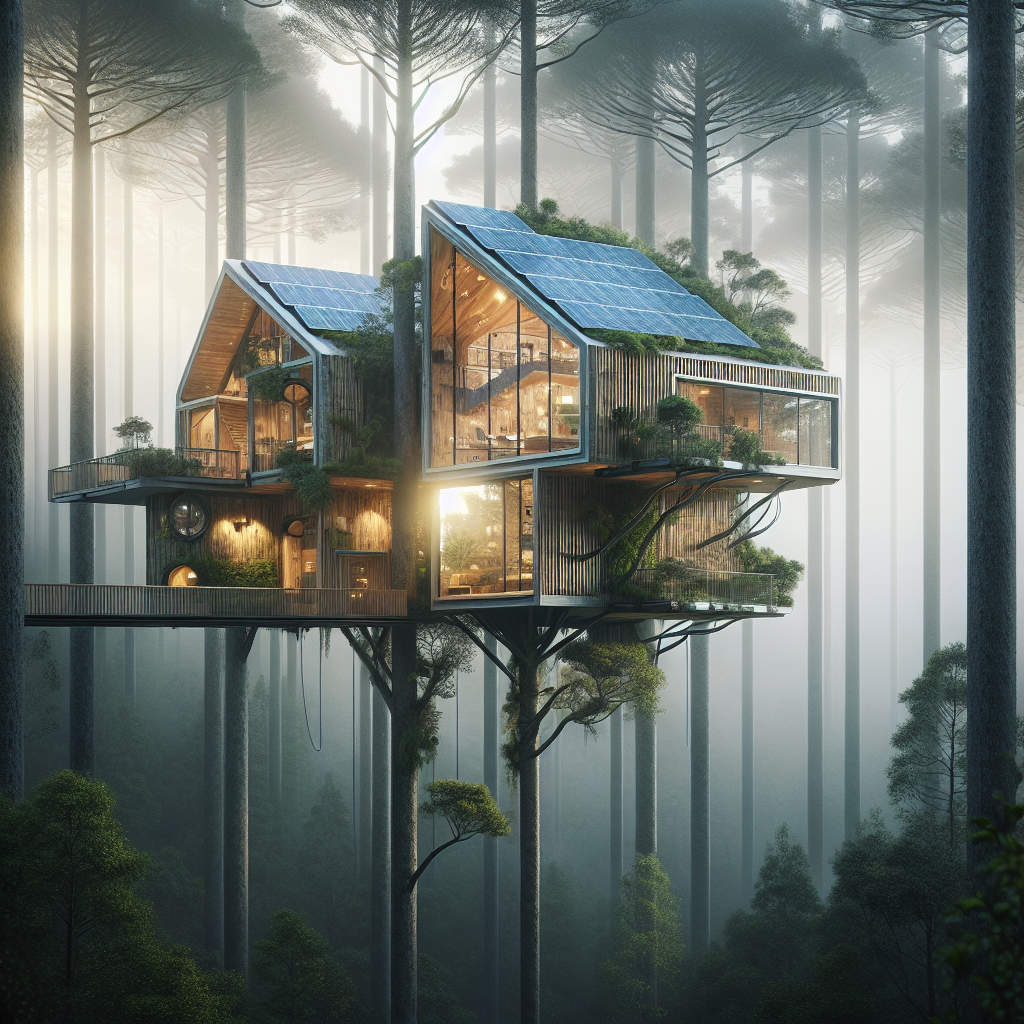
While the image of the solitary treehouse persists, the new generation of canopy dwellings often exists within networks. Architects are designing clusters of elevated pods connected by suspended walkways, forming vertical communities that share resources like solar grids and water systems. These “arboreal villages” echo the principles of bioregional urbanism, where architecture becomes a mediator between human habitation and ecological preservation.
In Costa Rica, for example, the Finca Bellavista community demonstrates how elevated architecture can coexist with dense ecosystems. Each home is built with minimal ground disturbance, and residents rely on renewable energy and composting systems. It’s a living laboratory for the future of sustainable, off-grid living.
The Aesthetic of Lightness
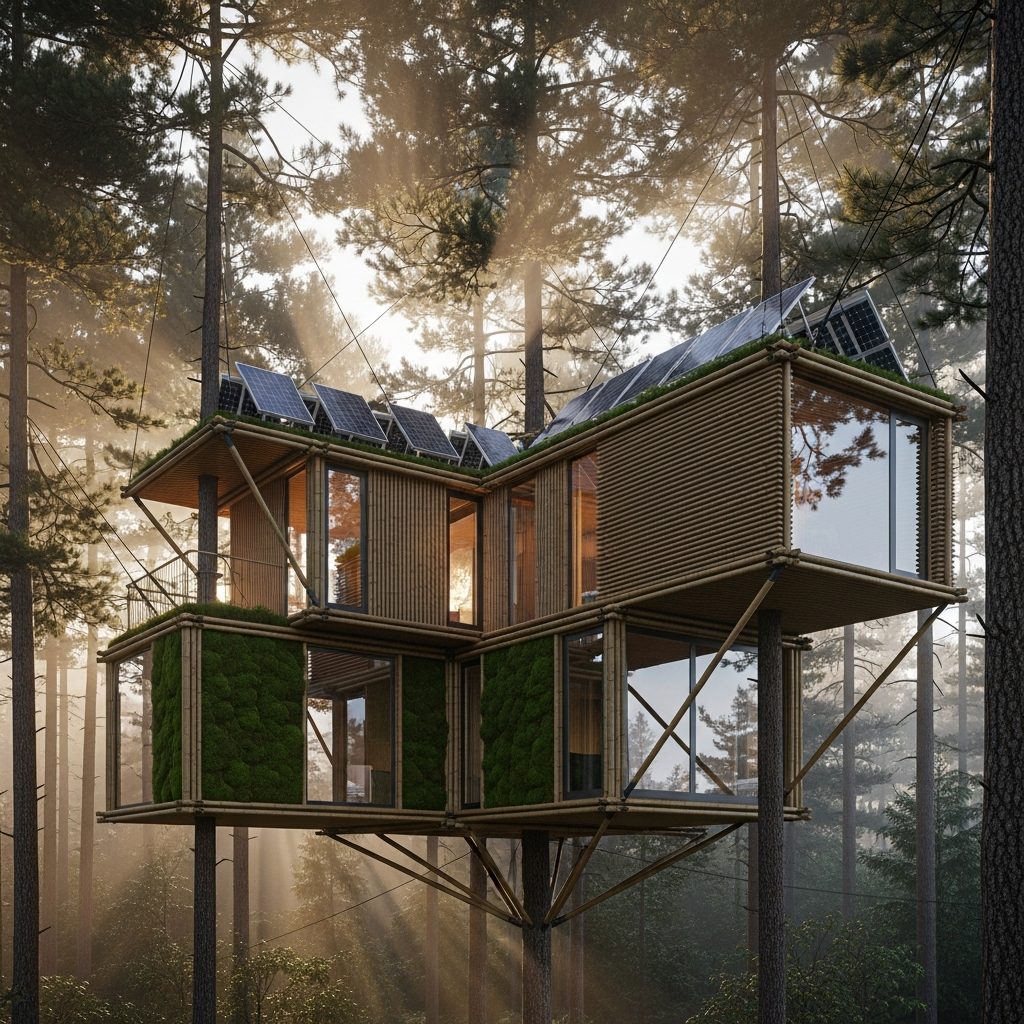
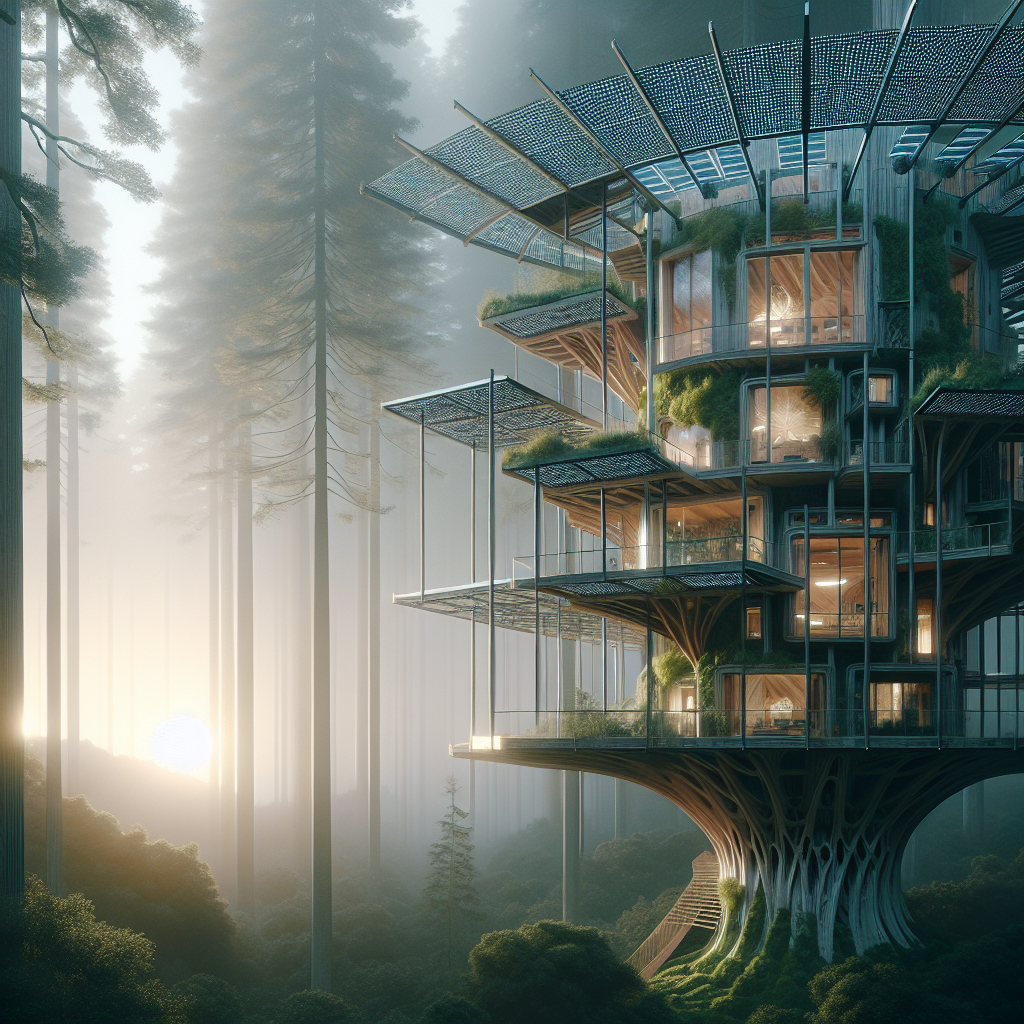
Visually, Treehouse 2.0 embodies an aesthetic of restraint. The design language favors transparency, modularity, and lightness—qualities that mirror the forest canopy itself. Cantilevered decks float above the undergrowth, while slender steel or bamboo supports blend into the vertical rhythm of trunks. Interiors often adopt a minimalist approach, emphasizing tactile materials and panoramic views. The result is architecture that feels suspended between worlds: part machine, part organism.
Architectural theorists have drawn parallels between this movement and the principles of parametric design, where form follows environmental logic rather than human imposition. In Treehouse 2.0, algorithms simulate wind flow, sunlight penetration, and structural stress, ensuring that every curve and joint is both beautiful and functional.
Beyond Sustainability: Toward Regeneration
The most progressive examples of Treehouse 2.0 go beyond minimizing harm—they actively regenerate their surroundings. Some prototypes incorporate moss-based façades that filter air pollutants, while others use bio-reactive panels that generate energy from algae. According to the Materials Today journal, such bio-integrated systems could transform architecture into a form of environmental repair.
In this sense, the treehouse becomes more than a home; it becomes a participant in the ecosystem. It absorbs carbon, nurtures biodiversity, and provides a model for how architecture might coexist with the planet rather than dominate it. The canopy, once a symbol of childhood imagination, now represents a blueprint for the future of sustainable living.
Conclusion: The Future Is Suspended
Treehouse 2.0 captures a profound cultural shift—from extraction to coexistence, from permanence to adaptability. It is architecture that listens, breathes, and learns. As cities grapple with density and climate change, the lessons of the canopy may soon descend to the urban core. The future of living, it seems, might not be about reaching higher, but about living lighter.
{
  "seo_title": "Treehouse 2.0: The Future of Canopy Living",
  "meta_description": "Explore Treehouse 2.0, the high-tech evolution of living in the canopy blending biophilic design, smart tech, and sustainable architecture.",
  "excerpt": "Reimagining the forest home, Treehouse 2.0 fuses advanced technology with biophilic design to create sustainable, intelligent dwellings among the trees.",
  "focus_keyphrase": "Treehouse 2.0"
}
AI Image Prompts
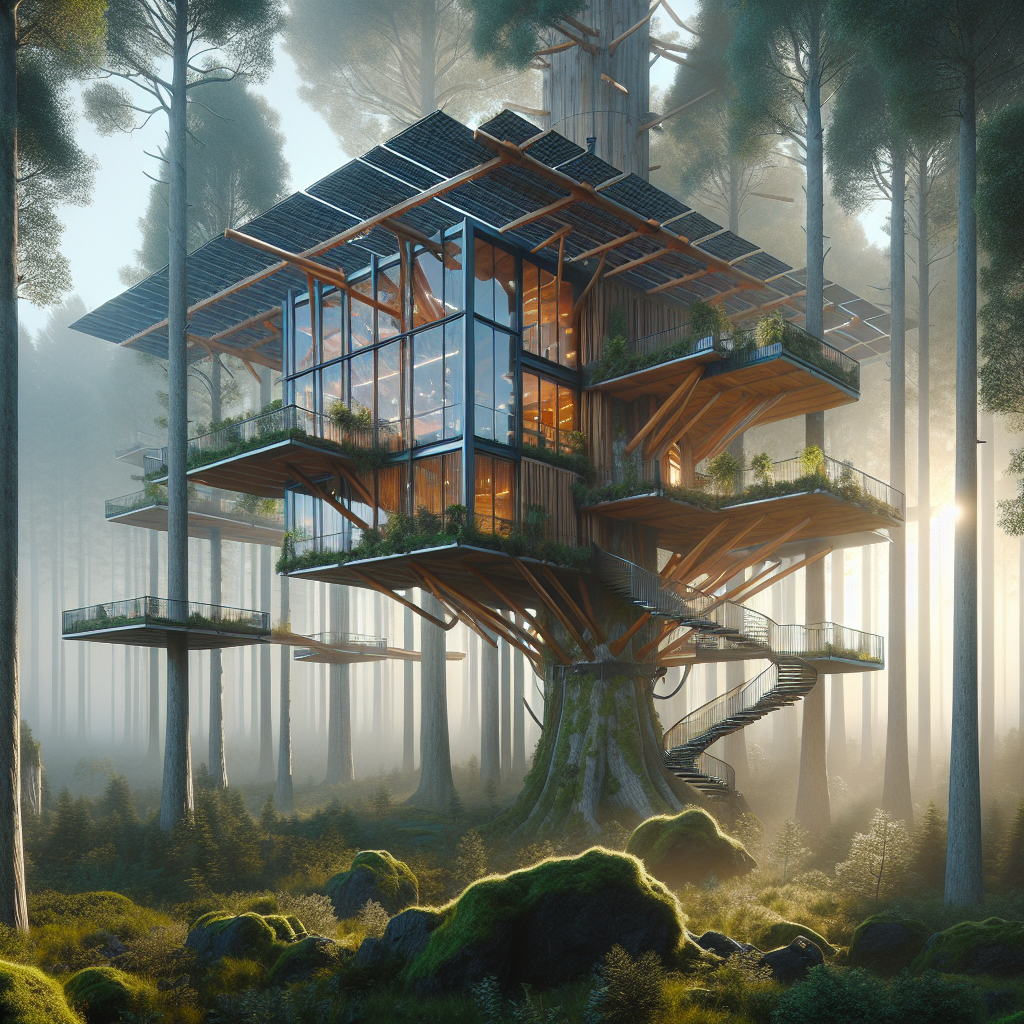
- Prompt: Photorealistic image of a modern treehouse built with cross-laminated timber and glass, suspended among tall pines, morning mist, soft natural light, shot on Hasselblad H6D.
Alt text: Modern timber and glass treehouse in misty forest canopy.
Caption: A serene example of Treehouse 2.0—sustainability elevated through material innovation. - Prompt: Aerial view of interconnected canopy dwellings linked by wooden bridges, solar panels on roofs, lush rainforest below, captured at golden hour, Hasselblad X2D.
Alt text: Network of high-tech treehouses connected by bridges in rainforest.
Caption: The rise of arboreal communities—shared energy, shared ecosystem. - Prompt: Interior of a minimalist treehouse with panoramic glass walls, smart lighting, and
 ×
×❮ ❯