
Zero-Energy Neighborhoods: The Next Step in Sustainable Living
Zero-Energy Neighborhoods: The Next Step in Sustainable Living
In the evolving landscape of sustainable architecture, the conversation has shifted from individual net-zero energy buildings to entire zero-energy neighborhoods—integrated ecosystems where energy generation, consumption, and community design operate in perfect equilibrium. These developments represent not just a technological milestone but a profound cultural and urban shift, redefining how we live, build, and connect. As the global construction sector—responsible for nearly 40% of carbon emissions—faces mounting pressure to decarbonize, zero-energy neighborhoods emerge as the most holistic and forward-thinking response yet.
The Evolution from Buildings to Neighborhoods
Over the past decade, the architectural community has mastered the art of designing net-zero energy buildings—structures that produce as much energy as they consume annually. Yet, as cities densify and energy systems become more interconnected, the next logical progression is to scale this concept up. A zero-energy neighborhood (ZEN) integrates multiple buildings, renewable energy systems, and shared infrastructure into a self-sustaining urban fabric. It’s a shift from isolated efficiency to collective resilience.
Unlike standalone buildings, ZENs optimize energy flows across a network. Residential, commercial, and public spaces share resources through smart grids, battery storage, and microgeneration systems. This interdependence transforms energy from a commodity into a communal asset—one that strengthens social ties while reducing environmental impact.
Designing for Energy Symbiosis
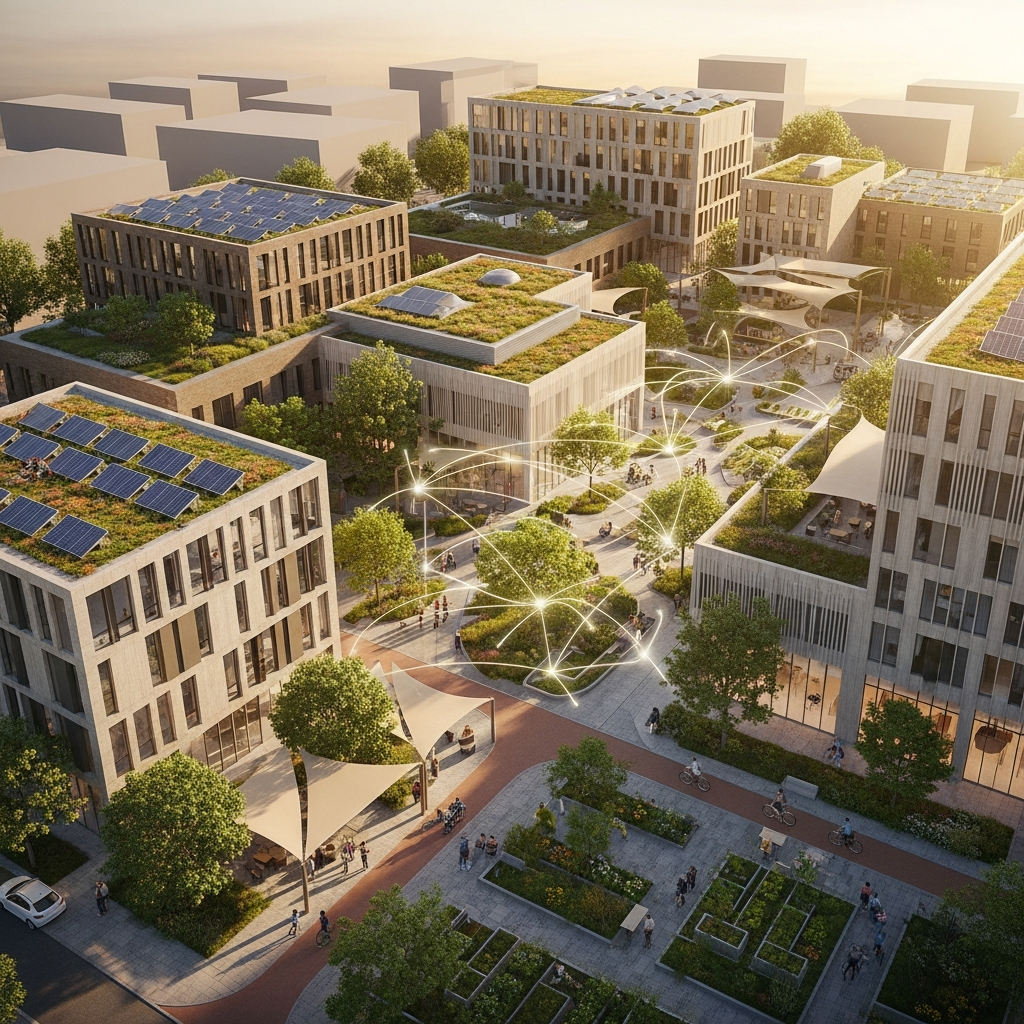
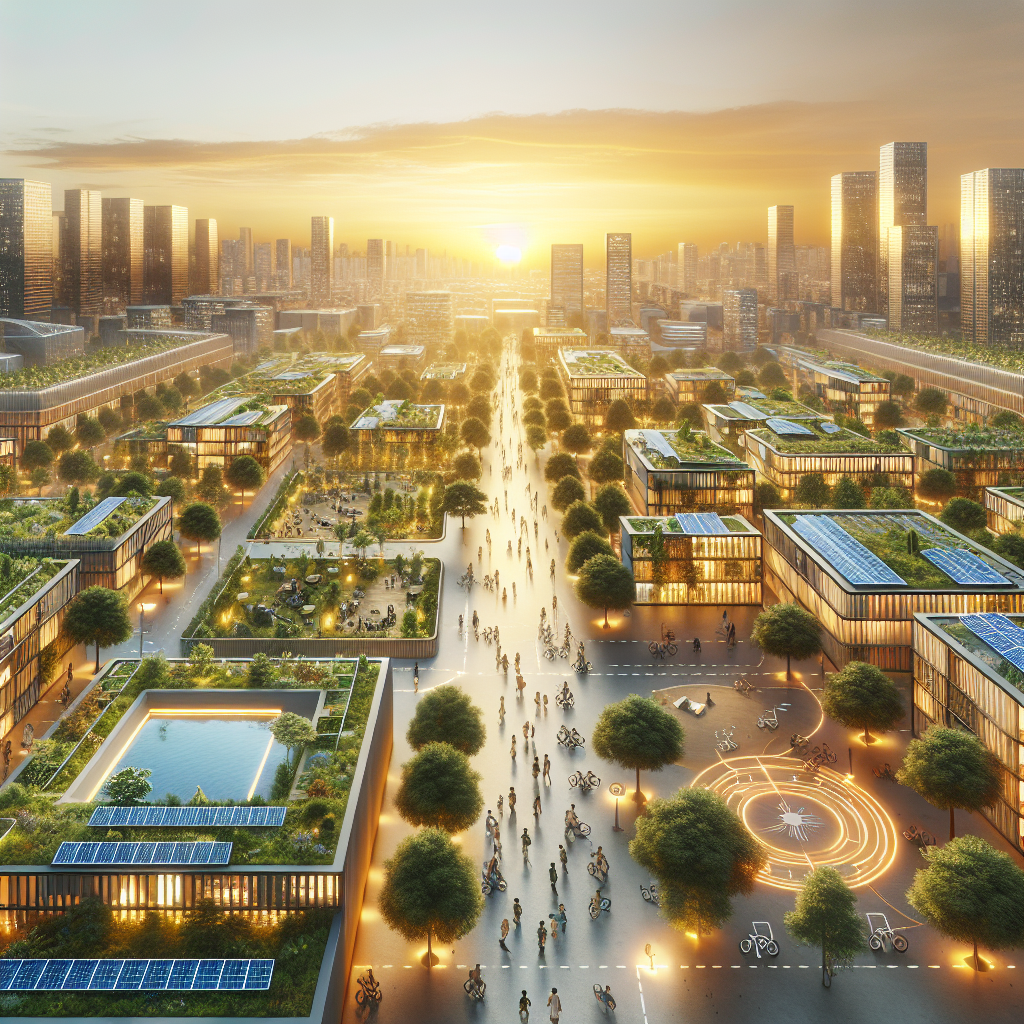
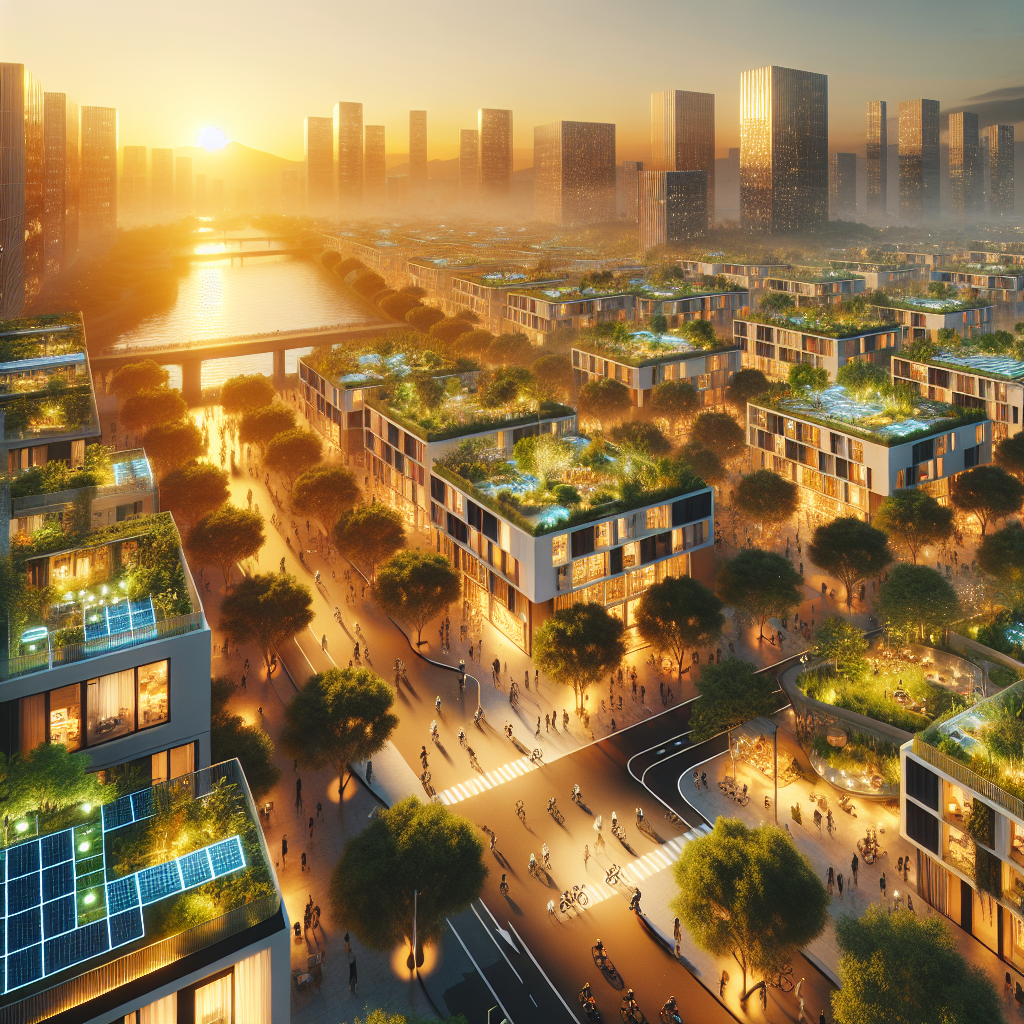
At the heart of every zero-energy neighborhood lies a sophisticated choreography of architecture, landscape, and technology. Solar panels glint across rooftops like scales of a living organism, while geothermal wells hum quietly beneath shared courtyards. Streets are oriented to maximize passive solar gain, façades are clad in responsive materials, and green roofs double as both insulation and biodiversity corridors.
In Norway’s Powerhouse Brattørkaia project—one of the world’s most energy-positive buildings—the design team from Snøhetta demonstrated how architecture can actively generate surplus energy for its surroundings. When scaled to a neighborhood level, such synergy becomes transformative. Imagine an urban block where office buildings feed excess solar power to nearby homes during the day, and residential batteries return stored energy to public lighting at night. This is energy symbiosis in action.
Architectural aesthetics in these neighborhoods are evolving too. The visual language of sustainability is no longer confined to utilitarian solar arrays or green walls. Instead, designers are embracing expressive forms that celebrate energy production as part of the urban identity—solar canopies that double as sculptural installations, or kinetic façades that respond to light and wind, echoing innovations seen in responsive architecture.
Technology as the Invisible Urban Planner
Digitalization is the backbone of zero-energy neighborhoods. Advanced energy management systems use predictive algorithms to balance supply and demand in real time, ensuring that no watt is wasted. Artificial intelligence and IoT-enabled sensors monitor temperature, occupancy, and lighting, dynamically adjusting building systems for optimal efficiency. This convergence of architecture and data mirrors the principles explored in AI-driven architectural design, where machine learning enhances human creativity and precision.
Moreover, decentralized energy systems—often called microgrids—allow neighborhoods to operate independently from national grids during outages or peak demand. This autonomy not only improves resilience but also democratizes energy access, enabling communities to control their own production and consumption. In essence, technology becomes an invisible urban planner, orchestrating the flow of energy, light, and comfort across the built environment.
Case Studies: From Vision to Reality
Several pioneering projects across the globe are already turning the zero-energy neighborhood vision into tangible reality. In the Netherlands, the Brainport Smart District in Helmond integrates renewable energy, circular materials, and digital infrastructure into a living laboratory for sustainable urbanism. Each home is equipped with solar panels, battery storage, and smart meters, all connected through a shared digital platform that optimizes energy use collectively.
Meanwhile, in the United States, the Whisper Valley development near Austin, Texas, combines geothermal energy loops with solar generation to power more than 7,000 homes. The result is a community that not only achieves net-zero energy but also fosters a lifestyle centered on wellness, mobility, and environmental stewardship. Public spaces are designed as green arteries—tree-lined bike paths, edible landscapes, and shaded plazas—encouraging residents to live sustainably beyond their front doors.
These examples underscore a crucial point: zero-energy neighborhoods are not just technical achievements; they are cultural projects. They redefine how communities engage with their environment, turning sustainability into a shared experience rather than an individual responsibility.
Human-Centric Sustainability
While technology and energy systems form the structural backbone of ZENs, their success ultimately depends on human behavior and social design. Architects and urban planners are increasingly drawing from biophilic design principles to ensure that these neighborhoods nurture both ecological and psychological well-being. Natural materials, daylight optimization, and abundant greenery create sensory-rich environments that promote comfort and connection.
Public spaces are intentionally designed to foster interaction—community gardens, shared workshops, and co-housing models encourage collaboration and reduce resource duplication. The goal is to cultivate a sense of belonging, transforming sustainability from a technical metric into a lived value. As one architect from the ZEN Research Centre in Trondheim observed, “Energy efficiency is meaningless if people don’t feel at home in it.”
Economic and Policy Dimensions
Beyond design, the rise of zero-energy neighborhoods reflects broader economic and policy shifts. Governments across Europe and North America are increasingly incentivizing decentralized energy systems through tax credits, grants, and regulatory frameworks. According to the International Energy Agency, distributed renewable energy capacity is expected to double by 2030, driven largely by community-scale initiatives.
Developers, too, are recognizing the long-term value proposition. While initial costs for ZENs can be 10–15% higher than conventional developments, lifecycle analyses reveal substantial savings in energy, maintenance, and health outcomes. Moreover, the growing demand for sustainable living environments—particularly among younger generations—has made such projects a premium asset in the real estate market.
Challenges and the Road Ahead
Despite their promise, zero-energy neighborhoods face significant challenges. Integrating diverse energy systems across multiple stakeholders requires robust governance and transparent data sharing. Retrofitting existing urban areas is particularly complex, demanding creative approaches to infrastructure, zoning, and financing. Yet, as seen in the adaptive reuse strategies explored in adaptive reuse architecture, innovation often thrives within constraints.
Equally critical is ensuring inclusivity. The sustainability movement risks becoming an exclusive privilege if zero-energy developments cater only to affluent markets. The future of ZENs must therefore balance technological sophistication with social equity—creating neighborhoods that are not only energy self-sufficient but also accessible, diverse, and resilient.
A Blueprint for the Future
Zero-energy neighborhoods represent a paradigm shift in how we conceive of cities—not as static collections of buildings but as dynamic, living systems. They embody the convergence of design, technology, and community, where every architectural gesture contributes to a collective ecological intelligence. As the world confronts the realities of climate change, these neighborhoods offer a hopeful blueprint: one where sustainability is not an afterthought but the foundation of daily life.
In this new urban narrative, architecture transcends aesthetics to become an agent of regeneration. Streets hum with renewable energy, façades breathe with the rhythm of the sun, and communities thrive in harmony with their environment. The zero-energy neighborhood is not a distant utopia—it is the next logical, luminous step in the evolution of sustainable living.
Keywords: zero-energy neighborhoods, sustainable architecture, net-zero energy, renewable energy design, smart cities, microgrids, biophilic design, sustainable urbanism, energy efficiency, green building innovation.
Published on 01/22/2026
Get the Mainifesto weekly — curated design debates, speculative ideas and the week's best articles every Saturday.