Hydroponic Buildings: Integrating Vertical Farming into Urban Architecture
Hydroponic Buildings: Integrating Vertical Farming into Urban Architecture
In the evolving narrative of sustainable urbanism, hydroponic buildings are emerging as the next frontier in architectural innovation. These structures—where architecture and agriculture coalesce—represent a radical rethinking of how cities can feed themselves while reducing environmental impact. By embedding vertical farming systems directly into building envelopes, designers are crafting self-sustaining ecosystems that redefine both the skyline and the food supply chain. The concept is not merely aesthetic or technological; it is a manifesto for resilience, circularity, and the rewilding of the urban fabric.
The Rise of Hydroponic Architecture
Hydroponics, the soil-free cultivation of plants using nutrient-rich water, has existed for decades. Yet, its integration into architectural design is a relatively recent phenomenon—one accelerated by urban density, climate change, and the need for local food production. According to the Wikipedia entry on vertical farming, the global vertical farming market surpassed USD 6 billion in 2025, with projections showing exponential growth as cities pursue food security and sustainability.
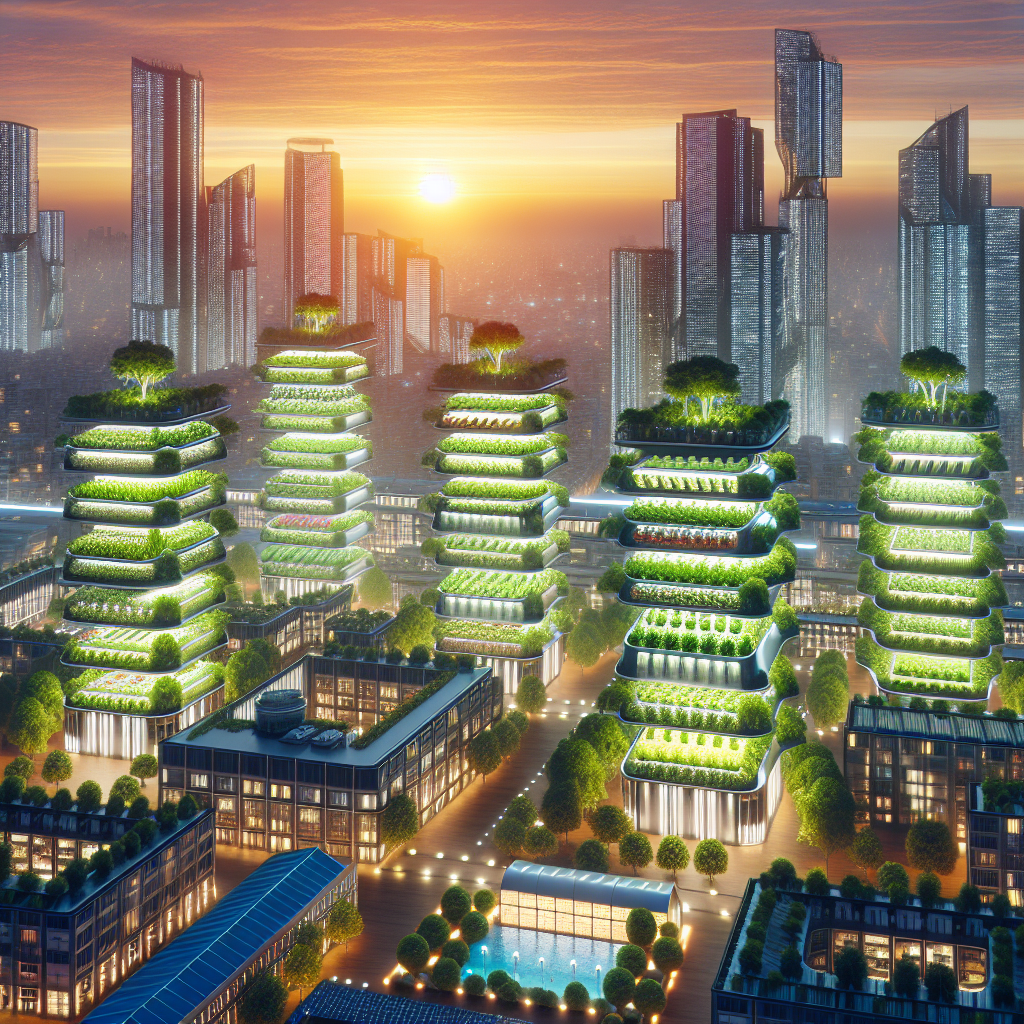
Architects and urban planners are increasingly embedding hydroponic systems into façades, atriums, and rooftops, transforming inert surfaces into productive landscapes. These hydroponic buildings not only produce fresh food but also regulate microclimates, filter air, and enhance occupant well-being—an evolution of the biophilic design movement that seeks to reconnect humans with nature through built form.
From Concept to Construction: How Hydroponic Buildings Work
At the core of hydroponic architecture lies a synergy between engineering precision and ecological intelligence. Plants are cultivated in vertically stacked layers, nourished by recirculating water systems enriched with minerals. LED lighting mimics sunlight, while sensors monitor humidity, pH, and nutrient levels in real time. The result is a closed-loop system that consumes up to 90% less water than traditional agriculture and eliminates the need for pesticides or arable land.
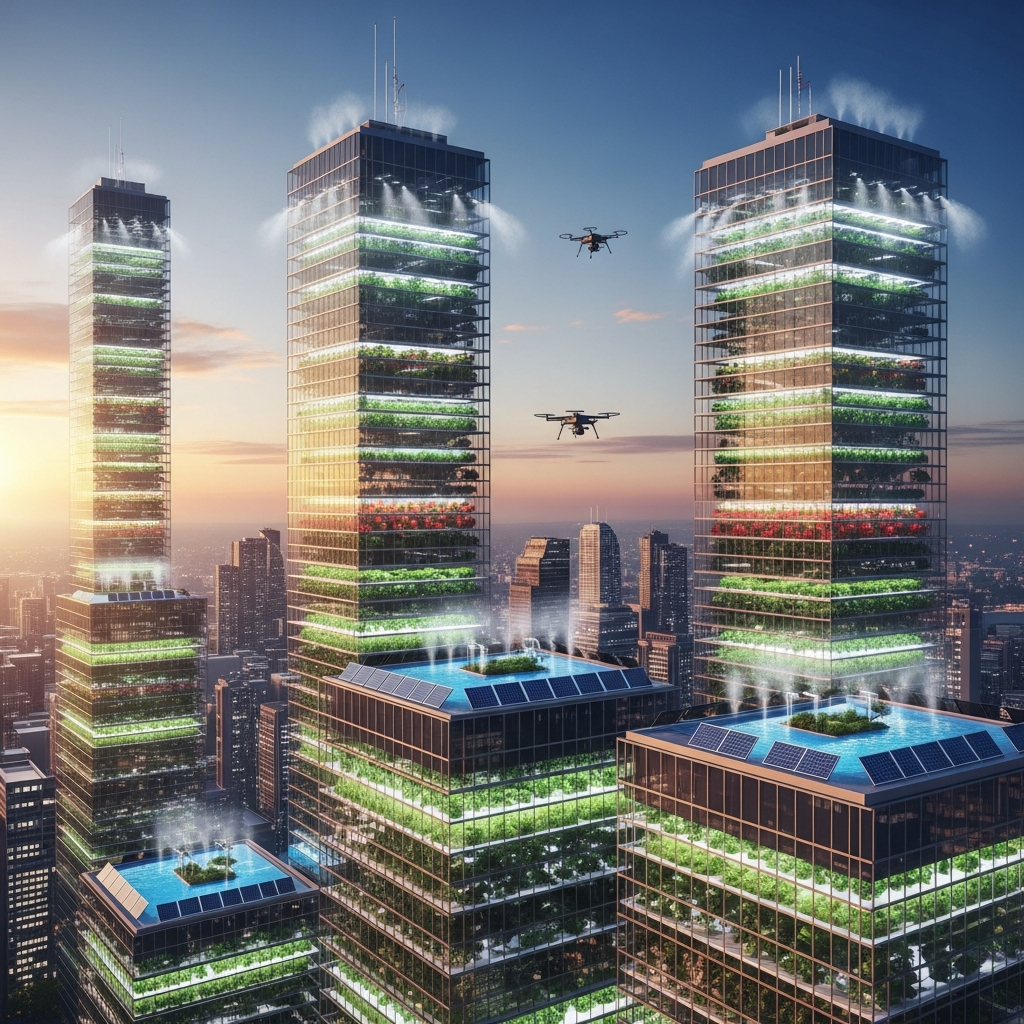
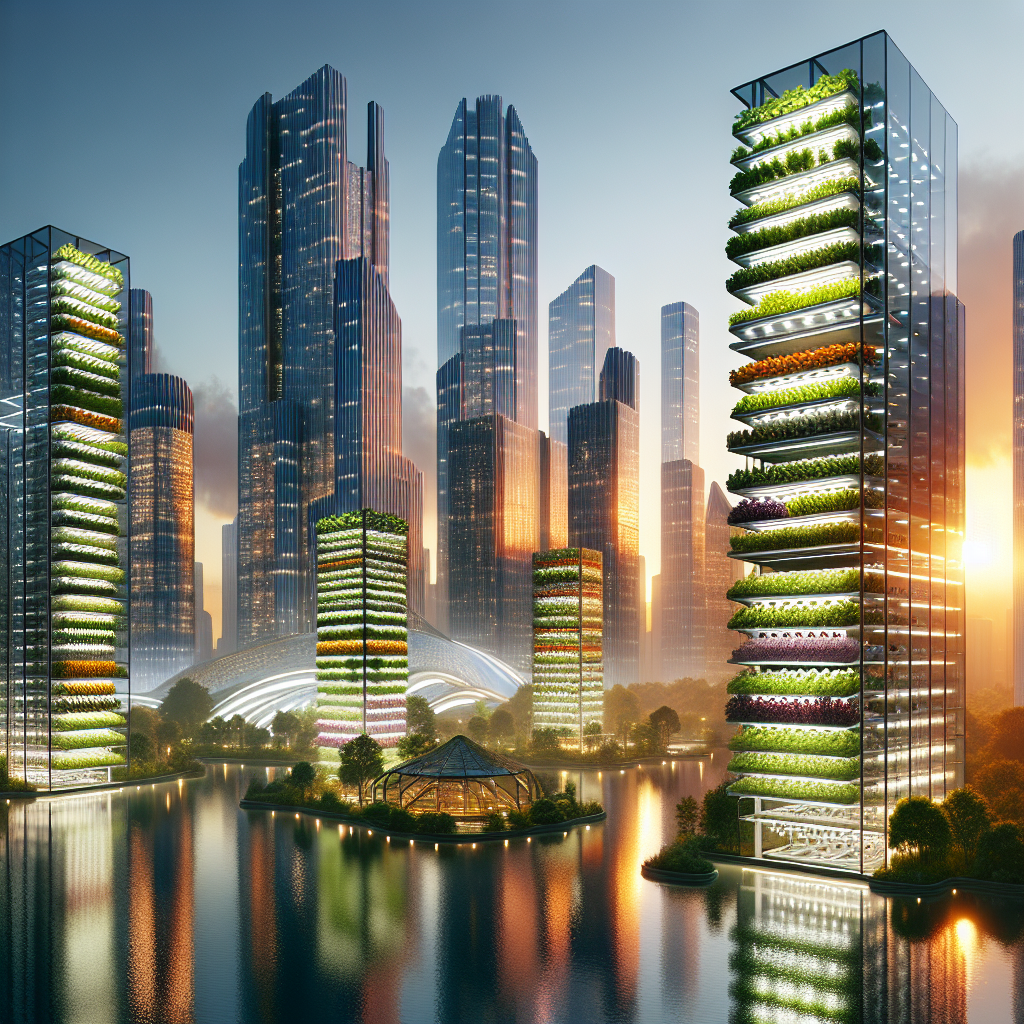
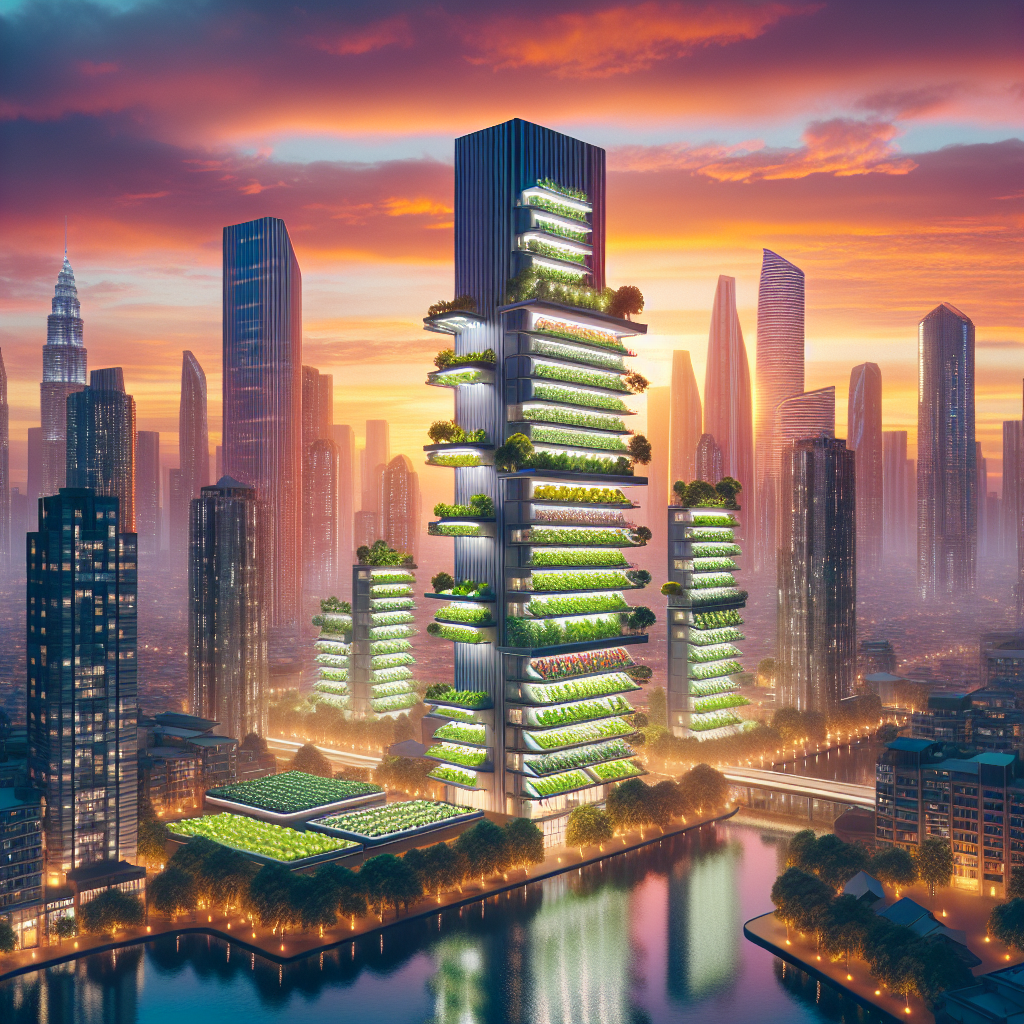
In architectural terms, these systems are seamlessly integrated into building skins or interior walls. Imagine a high-rise whose glass façade doubles as a living farm—rows of lettuce, basil, and strawberries cascading behind transparent panels, irrigated by harvested rainwater and powered by rooftop photovoltaics. The visual effect is mesmerizing: a dynamic façade that breathes, grows, and glows with chlorophyll hues, turning sustainability into spectacle.
Case Studies: Cities Growing Upward
One of the most compelling examples is Singapore’s CapitaSpring Tower, designed by BIG and Carlo Ratti Associati. Rising 280 meters above the city, it houses a 35-meter-tall “Green Oasis” filled with hydroponic gardens that supply produce to the building’s restaurants. The integration of farming within a commercial skyscraper signals a paradigm shift—food production as a core architectural function rather than an auxiliary amenity.
In Tokyo, the Pasona Urban Farm by Kono Designs transformed an office building into a living laboratory of hydroponic innovation. Employees work alongside vertical rice paddies and leafy greens that purify indoor air and create a calming, sensory-rich environment. The project demonstrates how hydroponic interiors can enhance productivity and well-being while reducing carbon footprints.
These precedents echo the principles explored in vertical farming research and urban ecology, yet they push further—blurring the boundaries between architecture, agriculture, and art.
Designing for the Future Metropolis
The architectural implications of hydroponic integration are profound. Traditional façades, once passive barriers, become productive membranes that interact with their environment. Designers are experimenting with modular hydroponic panels that can be retrofitted onto existing buildings, transforming concrete jungles into edible cities. These panels often feature lightweight aluminum frames, transparent polycarbonate covers, and automated irrigation channels—an aesthetic fusion of technology and nature.
In interiors, hydroponic walls are redefining spatial experience. Picture a lobby where vertical gardens climb through multi-story atria, diffusing light through layers of foliage. The air is cooler, oxygen-rich, and subtly fragrant. Visitors move through a space that feels both futuristic and primal—a living architecture that evolves daily. This experiential dimension aligns with the principles of green roof design and urban farming, yet hydroponic systems offer far greater scalability and precision.
Environmental and Economic Impact
Hydroponic buildings are not only visually striking but also environmentally strategic. They drastically reduce the “food miles” associated with conventional agriculture, cutting transportation emissions and waste. According to the Wikipedia overview of hydroponics, such systems can yield up to ten times more produce per square meter than soil-based farming. When integrated into mixed-use developments, they can also generate revenue streams through on-site food sales or partnerships with local restaurants.
From an energy perspective, hydroponic systems can be optimized through renewable sources. Photovoltaic façades, geothermal cooling, and smart lighting algorithms ensure that food production remains carbon-neutral. This synergy resonates with the ethos of net-zero energy architecture, where every component of a building contributes to its ecological balance.
Challenges and Technological Frontiers
Despite their promise, hydroponic buildings face technical and regulatory challenges. Water management, structural load, and maintenance logistics require careful coordination between architects, engineers, and agronomists. Moreover, the upfront costs of installation can be significant, though these are often offset by long-term savings in energy and food procurement.
Emerging technologies are addressing these barriers. AI-driven climate control systems adjust nutrient delivery and lighting intensity based on plant growth cycles. Robotics are being deployed for harvesting and monitoring, while blockchain-based supply chains ensure transparency from seed to plate. These innovations echo the digital transformation trends seen in AI-driven architecture and digital fabrication, suggesting a future where hydroponic buildings are not only sustainable but also intelligent.
Hydroponic Aesthetics: The New Urban Green
Beyond their ecological function, hydroponic systems are redefining the aesthetics of the city. The interplay of glass, water, and vegetation creates façades that shimmer with vitality. At night, LED grow lights transform these surfaces into luminous tapestries—an urban bioluminescence that celebrates life within the built environment. This visual dynamism recalls the sensory richness explored in bioluminescent lighting design, yet here it is rooted in biology rather than technology alone.
Architects are also exploring the poetic potential of hydroponic design. In residential projects, hydroponic kitchens allow inhabitants to harvest herbs directly from wall-mounted systems. In public buildings, hydroponic atriums become educational tools, demonstrating sustainable cycles to visitors. The result is a new typology of architecture—one that is performative, participatory, and profoundly alive.
Urban Agriculture as Civic Infrastructure
As cities grapple with climate volatility and population growth, hydroponic buildings could become essential civic infrastructure. They offer a decentralized model of food production that complements renewable energy grids and water recycling systems. In dense metropolises like New York, London, and Seoul, architects are envisioning networks of hydroponic towers that collectively supply neighborhoods with fresh produce, much like microgrids distribute clean energy.
This integration of agriculture into architecture echoes ancient precedents—from the Hanging Gardens of Babylon to modernist experiments in green urbanism—but with a distinctly 21st-century sensibility. It represents not nostalgia, but evolution: a recognition that the future of architecture lies not in separation from nature, but in symbiosis with it.
A Vision for Living Cities
Hydroponic buildings encapsulate a broader cultural shift toward regenerative design. They challenge architects to think beyond form and function, to design ecosystems rather than objects. As the boundaries between natural and artificial dissolve, cities themselves begin to act like living organisms—breathing, growing, and nourishing their inhabitants.
For the discerning architect or designer
Get the Mainifesto weekly — curated design debates, speculative ideas and the week's best articles every Saturday.