
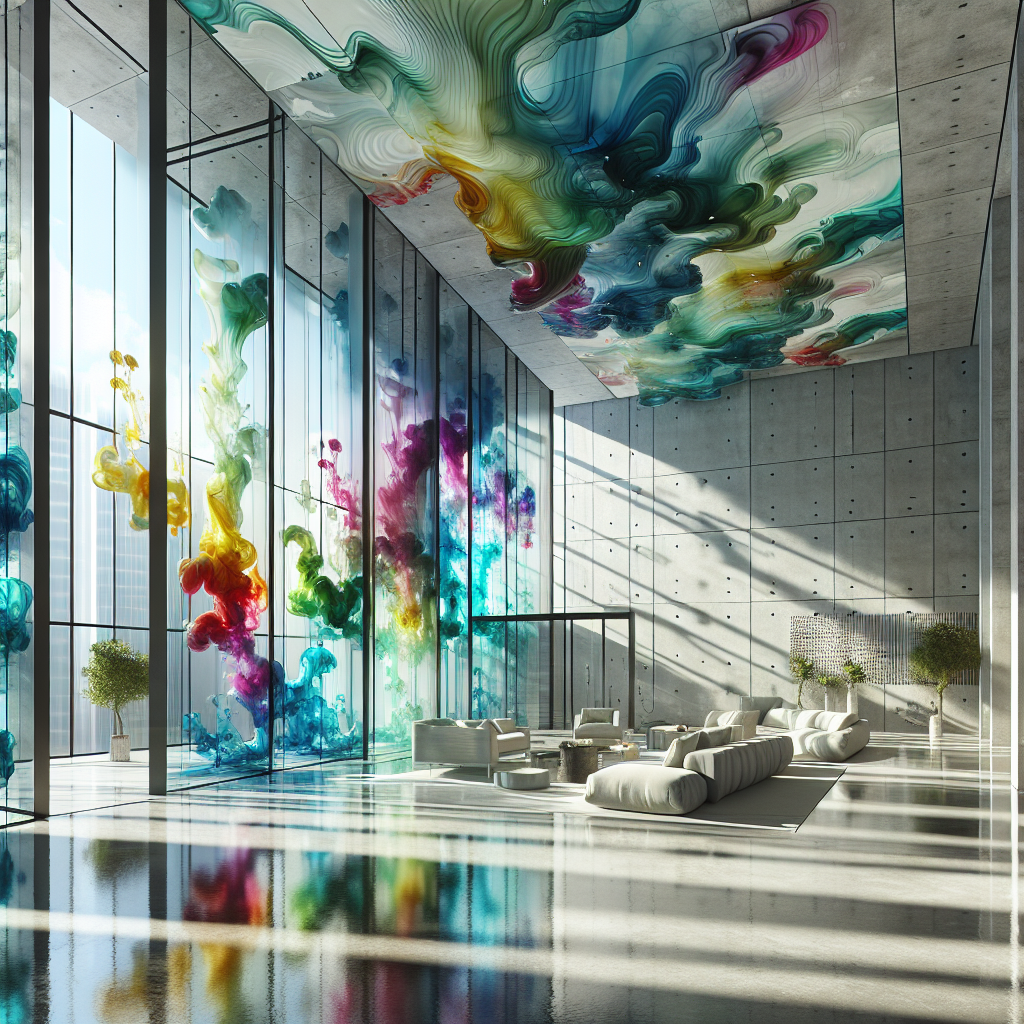
Ink-injected glass partitions: swirling pigment captured between transparent layers
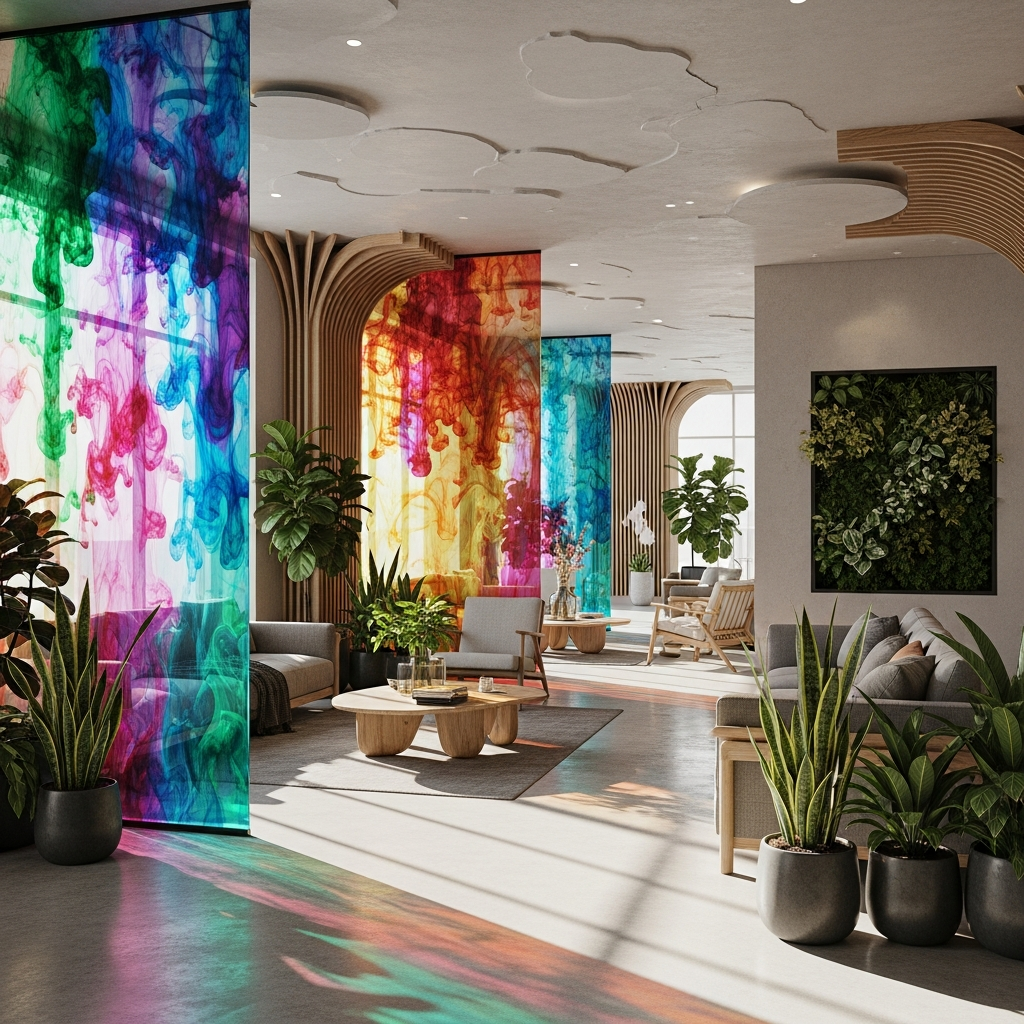
Ink-Injected Glass Partitions: Swirling Pigment Captured Between Transparent Layers
In the evolving language of contemporary architecture and interior design, glass has long been the medium of light, reflection, and openness. Yet a new innovation—ink-injected glass partitions—is transforming this familiar material into something more expressive, more fluid, and profoundly artistic. These panels, where pigment swirls are suspended between transparent layers, merge technology with craft, transparency with opacity, and structure with poetry. The result is a material that refracts not only light but emotion—an architectural surface that feels alive.
The Emergence of Pigmented Transparency
Glass has always been a symbol of modernity. From the Bauhaus movement’s emphasis on transparency to today’s minimalist skyscrapers, it has represented progress and purity. Yet the rise of ink-injected glass signals a subtle rebellion against sterile transparency. By introducing pigment into laminated glass layers, designers create ethereal compositions reminiscent of watercolor suspended in time. Each panel becomes a one-of-a-kind visual field—fluid, organic, and unpredictable.
The process involves injecting specially formulated inks or dyes between sheets of tempered or laminated glass before they are fused under heat and pressure. The pigments disperse in intricate patterns—sometimes marbled, sometimes veined, sometimes like clouds dissolving in water. When backlit or illuminated by natural light, these patterns shift in tone and depth, producing a kinetic interplay of color and shadow that changes throughout the day.
From Material Experimentation to Architectural Expression
The origins of this technique lie in experimental glass art rather than architecture. Artists exploring the chemistry of pigments and resins discovered that certain inks could remain stable when encapsulated between glass layers. What began as an art installation medium has evolved into a viable architectural material—suitable for partitions, façades, balustrades, and even furniture surfaces.
In commercial interiors, ink-injected glass partitions are redefining spatial boundaries. Unlike traditional frosted or tinted glass, these partitions offer privacy without monotony. They act as translucent canvases that animate corridors, meeting rooms, and lounges. In residential projects, they serve as luminous dividers—subtle yet expressive, transforming daylight into painterly gradients. This aligns with the growing preference for biophilic design, where natural forms and organic irregularities foster calm and connection.
Craft Meets Chemistry: The Process Behind the Panels
Creating ink-injected glass is both a scientific and artistic endeavor. Designers collaborate with material scientists to balance pigment density, viscosity, and diffusion rates. Too much pigment, and the glass loses its translucency; too little, and the effect disappears. The challenge lies in controlling chaos—allowing ink to move freely yet remain visually coherent.
Manufacturers often use UV-stable inks to prevent fading, and multi-layer lamination ensures durability and safety. The result is a product that meets rigorous architectural standards while retaining the spontaneity of a handmade object. Some studios have even begun using digital mapping to predict pigment flow, merging algorithmic precision with organic beauty—a philosophy reminiscent of parametric design.
Applications Across Architectural Typologies
The versatility of ink-injected glass has made it a favorite among forward-thinking architects and interior designers. In corporate environments, it softens the rigidity of open-plan offices, introducing visual rhythm without sacrificing transparency. In hospitality design, it evokes atmosphere—turning lobbies and restaurants into immersive environments that shift with the light. Luxury retail spaces use it to frame merchandise in color-drenched transparency, creating emotional resonance with customers.
One striking example is a boutique hotel in Kyoto where each guest suite features a partition infused with indigo pigment, echoing the city’s centuries-old dyeing traditions. The panels glow at sunrise, their patterns resembling ink diffusing through rice paper. In contrast, a Berlin co-working hub uses monochrome ink dispersions that resemble smoke or fog, adding a meditative calm to the space. These projects demonstrate how the technique transcends mere decoration—it becomes narrative architecture.
Light, Color, and the Psychology of Space
Color psychology plays a crucial role in the success of ink-injected glass installations. Studies have shown that hues influence mood, productivity, and perception of space. Designers leverage this by tailoring pigment palettes to the function of each environment. Warm tones—amber, coral, ochre—energize social zones, while cooler shades—azure, jade, lilac—enhance focus and relaxation. The diffusion of color through glass creates gradients that feel natural, never overwhelming.
This sensitivity to light and emotion aligns with the growing trend toward chromatic harmony in architectural design. Unlike painted walls or static panels, ink-injected glass interacts dynamically with its surroundings. As daylight shifts, so does the intensity of the pigment, creating a living surface that evolves with time. It’s a reminder that architecture need not be static—it can breathe, shimmer, and respond.
Sustainability and Material Responsibility
While glass production is energy-intensive, advances in lamination and recycling technologies are improving its environmental profile. Many manufacturers now use low-iron, recyclable glass and non-toxic inks. Moreover, the longevity of ink-injected panels contributes to sustainability by reducing the need for frequent replacements or surface treatments. Their aesthetic endurance—resisting trends through timeless abstraction—also aligns with the principles of circular design.
Some designers are even experimenting with natural pigments derived from minerals or plant-based dyes, merging ancient craft with modern technology. This echoes the broader movement toward material honesty and ecological mindfulness that defines 21st-century design thinking.
Technological Integration and Future Directions
The next frontier for ink-injected glass lies in digital integration. Researchers are exploring ways to embed conductive layers or smart films within the glass, allowing panels to change opacity or color temperature on demand. This convergence of art and technology recalls the vision of AI-driven architecture, where materials respond intelligently to human needs.
Imagine a meeting room partition that subtly shifts from translucent blue to clear as daylight fades, or a residential wall that glows softly at night, mimicking the movement of ink through water. These scenarios are no longer speculative—they’re emerging realities. The fusion of pigment, glass, and smart control systems will redefine how we perceive and inhabit space.
Why Designers Are Drawn to the Medium
For architects and interior designers, ink-injected glass offers a rare combination of material innovation and emotional depth. It allows them to manipulate light as a tangible design element, crafting spaces that feel both intimate and expansive. Its unpredictability—each panel’s pattern unique—introduces a human touch often missing in industrial materials.
In an era where digital renderings often precede physical experience, this medium reintroduces serendipity. The pigment’s movement, frozen mid-flow, captures a moment of transformation—a metaphor for design itself. It embodies what many contemporary practitioners seek: a balance between control and chance, between precision and poetry.
A New Aesthetic of Transparency
The aesthetic impact of ink-injected glass extends beyond its surface beauty. It challenges the notion of transparency as neutrality. Instead of invisible boundaries, we get expressive membranes—thresholds that filter perception rather than merely separate spaces. This conceptual shift resonates with the post-minimalist sensibility shaping today’s interiors: layered, sensory, and emotionally charged.
In the coming years, as architects continue to explore the expressive potential of materials, ink-injected glass will likely become a defining element of progressive design. It stands at the intersection of art, science, and architecture—a medium that refracts not only light but imagination.
In the end, these swirling pigments, suspended in glass, remind us that even the most transparent materials can hold depth. They invite us to look closer, to see motion in stillness, and to rediscover the poetic possibilities of the built environment.
Published on 01/17/2026
Get the Mainifesto weekly — curated design debates, speculative ideas and the week's best articles every Saturday.