
Asymmetrical pivot doors: dynamic thresholds for fluid transitions
Asymmetrical Pivot Doors: Dynamic Thresholds for Fluid Transitions
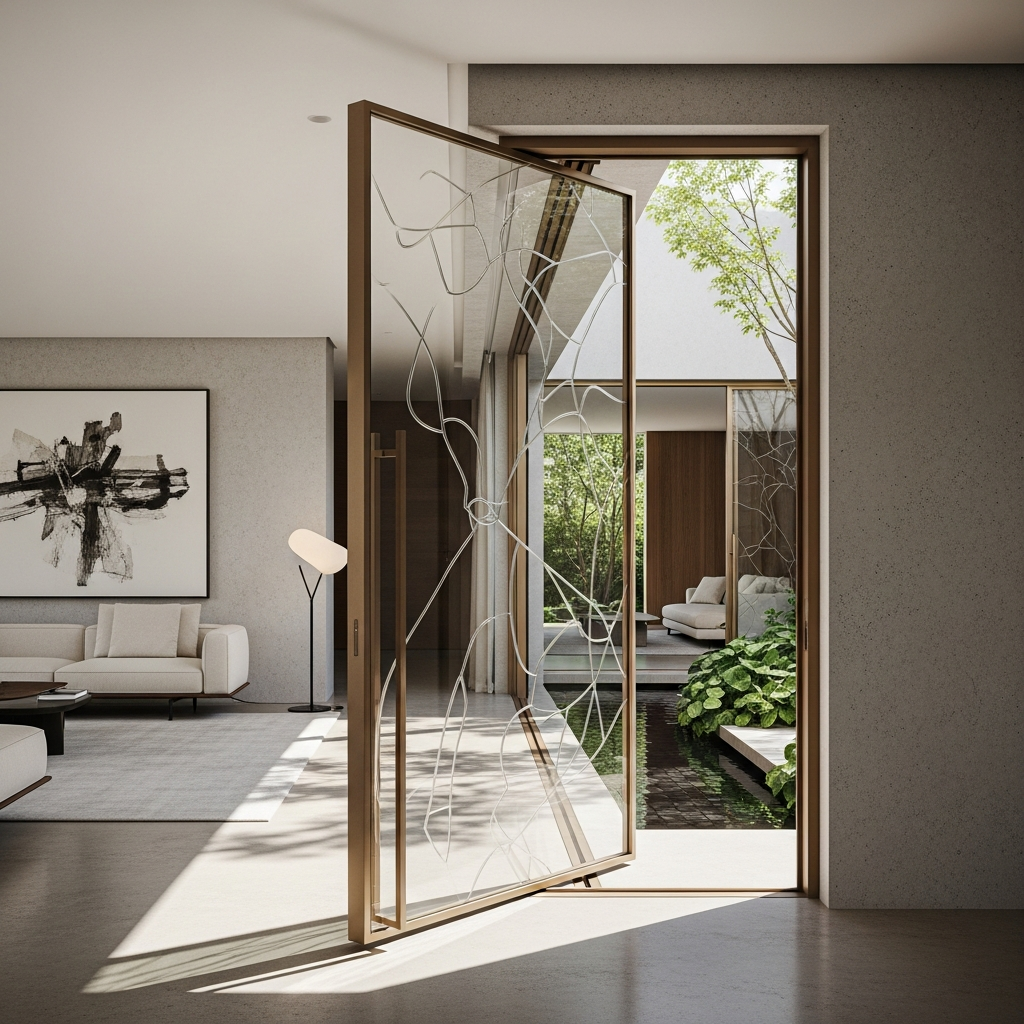
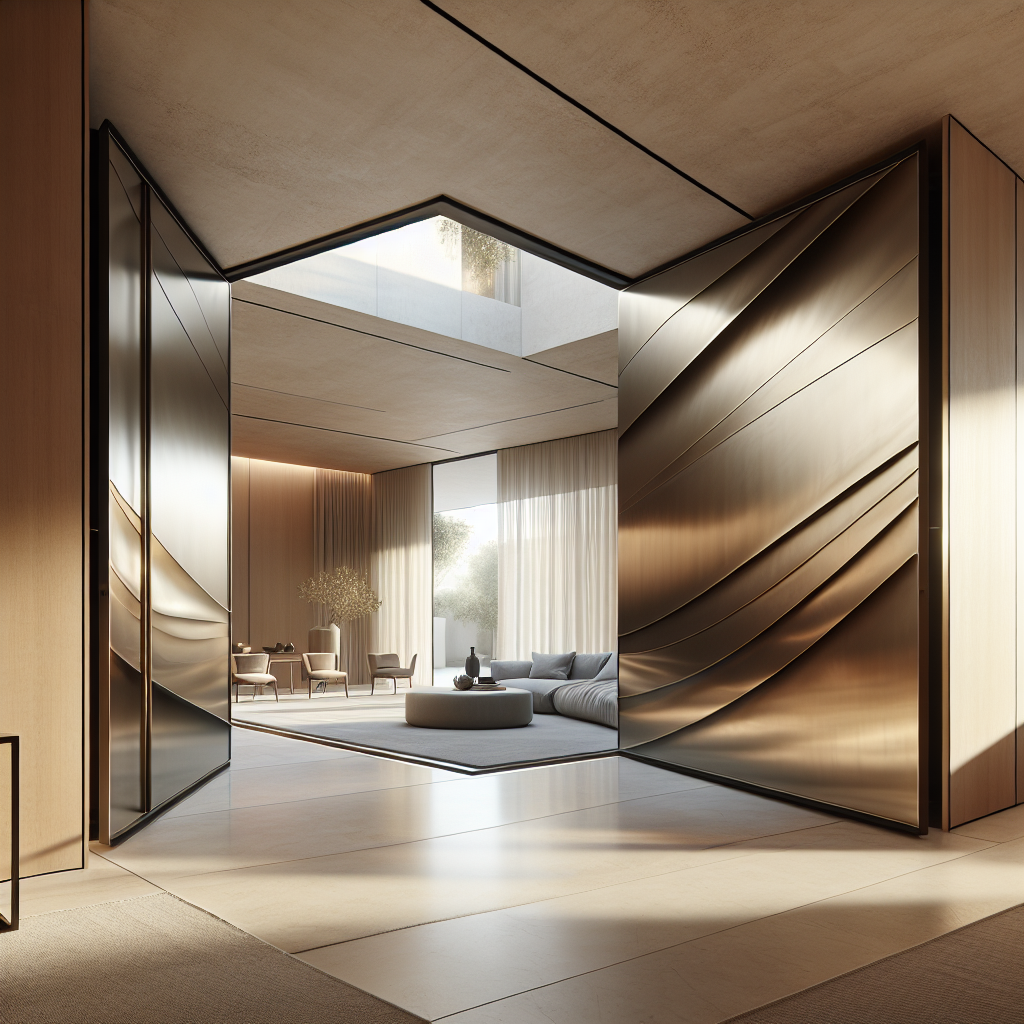
In the evolving lexicon of contemporary architecture, asymmetrical pivot doors have emerged as a striking intersection of form, function, and fluidity. These sculptural thresholds—defined by their off-center axis and seamless rotation—reimagine the very act of passage. No longer mere separators, they choreograph movement, light, and spatial perception, embodying the architectural zeitgeist of flexibility and transformation. For architects and designers attuned to the nuances of spatial experience, the asymmetrical pivot door represents a quiet revolution: a hinge between stillness and motion, interior and exterior, privacy and openness.
The Architectural Allure of Asymmetry
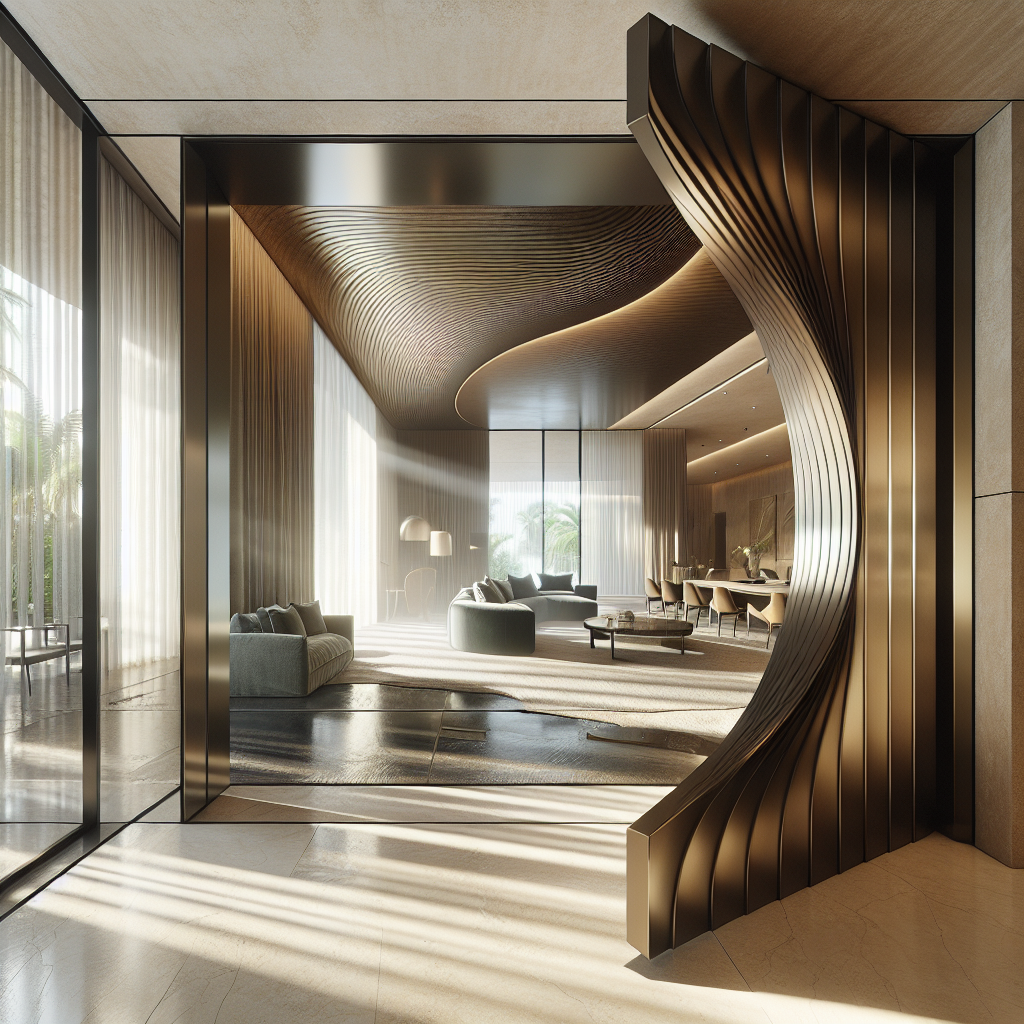
Symmetry has long been synonymous with balance and order in architecture, from the classical facades of Renaissance villas to the disciplined grids of modernism. Yet, as design increasingly embraces organic irregularity and adaptive spatial flow, asymmetry has become a language of dynamism. The asymmetrical pivot door exemplifies this shift. By offsetting the pivot point—sometimes dramatically—it transforms the act of opening into a kinetic gesture. The door no longer swings predictably from a side hinge; instead, it arcs through space, creating an evolving threshold that changes with every degree of rotation.
In high-end residential and hospitality projects, this sense of movement becomes a narrative device. A bronze-clad pivot door in a Lisbon townhouse, for instance, opens like a sculptural wing, revealing the courtyard beyond in a slow, cinematic reveal. In contrast, a minimalist glass pivot in a Tokyo gallery appears to dissolve entirely when aligned with the wall, erasing the boundary between exhibition and exterior. The asymmetry is not merely visual—it is experiential, altering how users inhabit and perceive space.
Engineering Elegance: The Mechanics Behind the Motion
At the heart of every pivot door lies its concealed hardware: a system of precision bearings and floor-mounted pivots that allow the door to rotate effortlessly around a vertical axis. In asymmetrical configurations, the pivot point is deliberately displaced—often one-third or even one-quarter from the edge—creating a larger and smaller leaf. This offset alters the balance of forces, demanding advanced engineering and meticulous detailing to ensure smooth operation and stability.
Manufacturers such as FritsJurgens and MWE have refined this technology to near invisibility. Their systems integrate hydraulic dampers, self-closing mechanisms, and adjustable tension controls, allowing even massive panels—crafted from materials like marble, glass, or timber—to move with the grace of a whisper. The result is a door that feels both monumental and weightless, an architectural paradox that aligns with the growing pursuit of responsive design in contemporary interiors.
Materiality and Expression: From Timber to Titanium
The material palette of asymmetrical pivot doors is as diverse as the spaces they inhabit. In minimalist villas, brushed aluminum or smoked glass panels amplify light and reflection, producing an almost ethereal quality. In contrast, richly grained walnut or charred timber introduces warmth and tactility, grounding the kinetic form in organic authenticity. The door becomes a canvas for texture and tone, a sculptural statement that mediates between architecture and art.
Some designers are pushing this material experimentation further, integrating reclaimed materials or bio-based composites to align with sustainability goals. The fusion of craft and technology recalls the ethos of the Bauhaus movement, where material honesty and functional innovation coexisted in perfect harmony. Today, that legacy manifests in pivot doors that not only move beautifully but also embody ecological intelligence.
Fluid Transitions in Modern Spatial Design
In an era where architecture increasingly prioritizes fluid transitions—between indoor and outdoor, private and communal, static and adaptive—the asymmetrical pivot door becomes a critical mediator. Its movement is not binary but continuous, offering infinite degrees of openness. This fluidity aligns with broader trends in spatial design, from open-plan living to hybrid work environments that demand flexibility and permeability.
Architects are using these doors to choreograph spatial rhythm. In a coastal residence in California, a 3.5-meter-high pivot door clad in sandblasted oak blurs the boundary between the living room and terrace, allowing Pacific breezes to flow through uninterrupted. In contrast, a boutique hotel in Copenhagen employs a series of smaller asymmetrical pivots to modulate privacy within suites, transforming corridors into transitional galleries of light and shadow. These examples underscore how the pivot door is less a partition than a performance—a dynamic threshold that redefines the architecture of movement.
Psychology of Passage: The Human Experience of Motion
Movement in architecture is not only physical but psychological. The act of opening a door—especially one that pivots asymmetrically—creates a moment of engagement, a tactile dialogue between user and space. The unexpected motion challenges spatial intuition, inviting curiosity and awareness. This aligns with the principles of biophilic design, which emphasizes sensory stimulation and connection to natural rhythms.
Research in environmental psychology suggests that such interactive elements can enhance spatial satisfaction and cognitive engagement. The asymmetrical pivot door, by introducing an element of surprise and control, transforms routine movement into ritual. It reawakens the body’s relationship with architecture—something increasingly rare in the age of automation and touchless interfaces.
Asymmetry in Context: From Modernism to Metamodernism
The rise of asymmetrical pivot doors can also be read as part of a broader cultural shift in design philosophy. Where modernism sought purity and order, today’s metamodern sensibility embraces contradiction and fluidity. The pivot door’s off-center axis embodies this ethos—balanced yet unpredictable, functional yet poetic. It reflects a world where boundaries are increasingly porous, and design must accommodate multiplicity rather than singularity.
This aesthetic and conceptual evolution parallels innovations in other architectural domains, such as kinetic facades and adaptive shading systems. Both explore movement as a medium of expression, responding to environmental and human stimuli. The asymmetrical pivot door, though smaller in scale, operates within the same philosophical framework: architecture as choreography, not composition.
Future Directions: Smart Integration and Sustainable Craft
As smart home technologies continue to advance, pivot door systems are integrating sensors, access control, and automated locking mechanisms without compromising their minimalist aesthetic. Some prototypes now feature embedded lighting or responsive materials that shift opacity based on ambient conditions—a nod to the fusion of smart home design and artisanal craftsmanship.
Equally significant is the growing emphasis on sustainability. Manufacturers are experimenting with lightweight cores, recycled metals, and FSC-certified woods to reduce embodied carbon. The pivot door, once a symbol of luxury, is evolving into a statement of responsible innovation—an emblem of how design can balance performance, beauty, and conscience.
Conclusion: The Door as Dialogue
To describe the asymmetrical pivot door merely as a functional element is to overlook its profound architectural and emotional resonance. It is a dynamic threshold—a living interface that mediates between spaces, moods, and moments. In its rotation lies a metaphor for contemporary life: fluid, adaptive, and elegantly off-center. As architects continue to explore the poetics of movement and material, the asymmetrical pivot door stands as both an object of design and a gesture of transition—inviting us to cross not just from one room to another, but from one way of inhabiting space to the next.
In the end, it is not the door that moves, but the architecture itself—breathing, shifting, and evolving with every turn of the axis.
Keywords: asymmetrical pivot doors, architectural thresholds, dynamic transitions, modern interior design, kinetic architecture, fluid spatial design

Get the Mainifesto weekly — curated design debates, speculative ideas and the week's best articles every Saturday.