
Parabolic vantage points: balconies that pivot for changing city views
Parabolic Vantage Points: Balconies That Pivot for Changing City Views
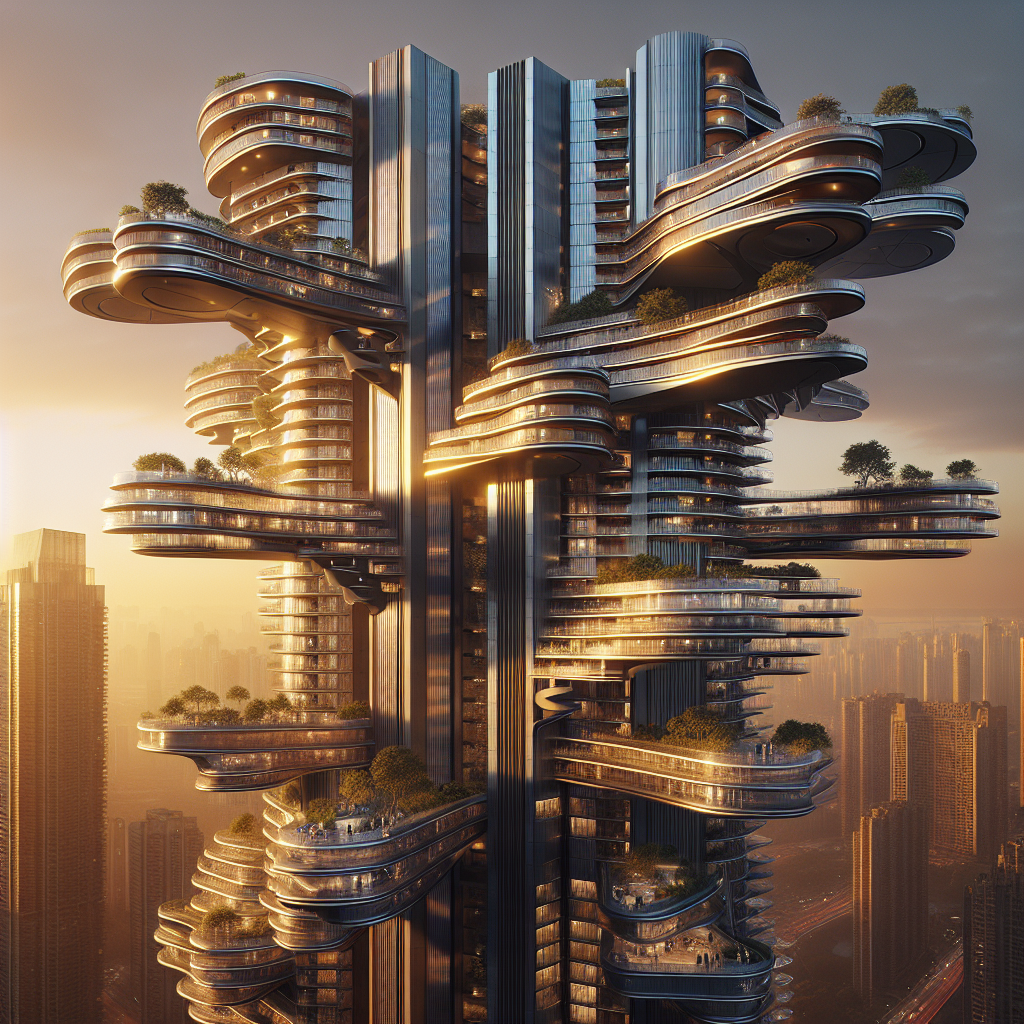
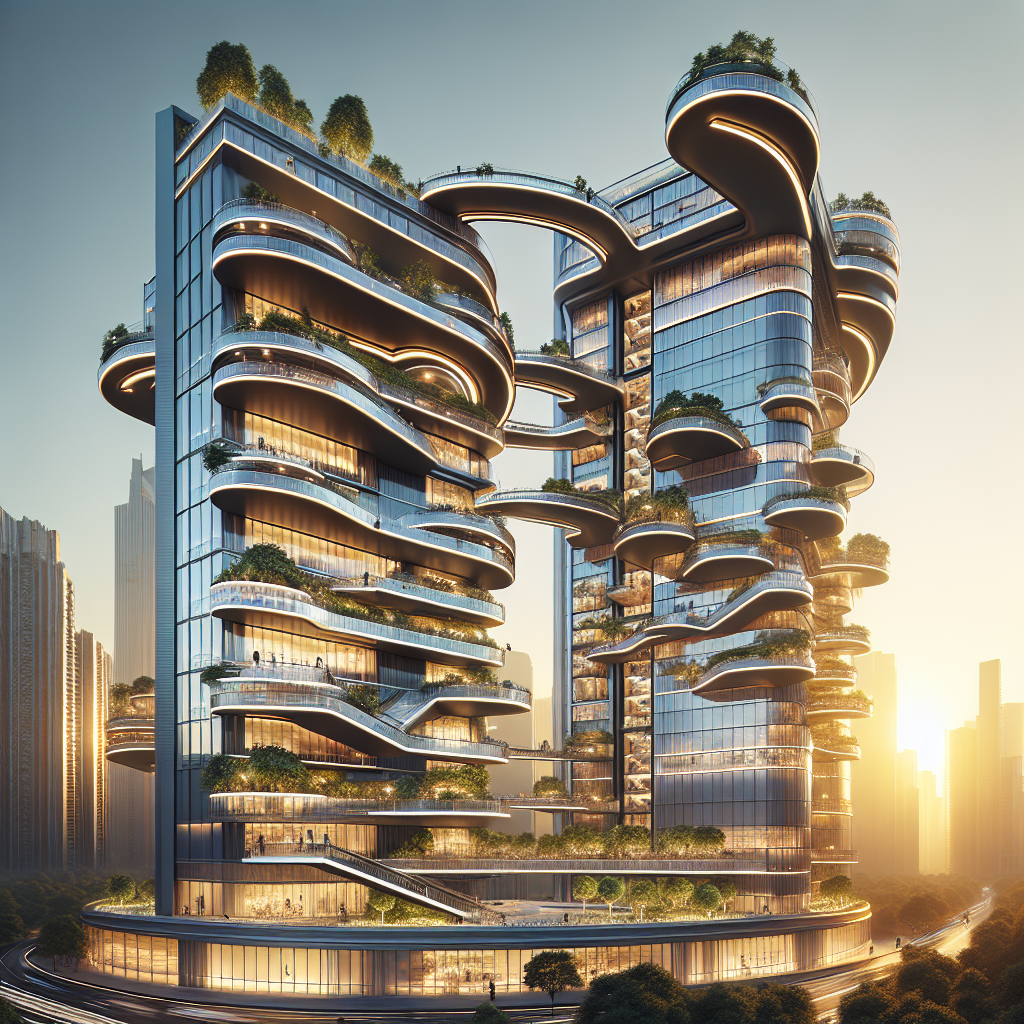
In the ever-evolving vocabulary of contemporary architecture, few innovations capture the imagination quite like parabolic balconies—dynamic, pivoting extensions that reframe the relationship between residents and their urban surroundings. These kinetic structures, capable of rotating or shifting along curved tracks, transform the static balcony into a responsive interface between architecture, environment, and human experience. As cities densify and vertical living becomes the norm, the idea of a balcony that moves—literally changing its orientation to chase light, breeze, or skyline—represents a poetic yet pragmatic evolution in urban design.
The Rise of Kinetic Architecture
The concept of kinetic architecture—buildings or components that move—has long fascinated architects. From Buckminster Fuller’s geodesic experiments to contemporary kinetic façades, movement has symbolized adaptability and progress. Yet, until recently, the balcony remained a largely static typology. The emergence of parabolic vantage points—balconies designed to pivot along a calculated arc—signals a shift toward more interactive, user-responsive architecture.
In projects from Rotterdam to Seoul, architects are experimenting with mechanical and hydraulic systems that allow balconies to rotate up to 90 degrees, offering residents a choice between sun and shade, privacy and exposure, or differing city panoramas. These innovations are not merely aesthetic; they address pressing environmental and social needs. By adjusting orientation, a balcony can optimize natural ventilation, reduce solar gain, and enhance daylighting—principles that align with the growing emphasis on green architecture and energy efficiency.
Engineering the Curve: The Parabolic Principle
The term “parabolic” refers to the geometric curve that defines the balcony’s motion path. Unlike simple rotational systems, a parabolic pivot allows for nuanced control of perspective and light exposure. The balcony glides along a curved rail or hinge system, often guided by smart sensors that track solar angles and wind direction. The result is a structure that behaves almost like a living organism—responsive, adaptive, and sensorially attuned to its environment.
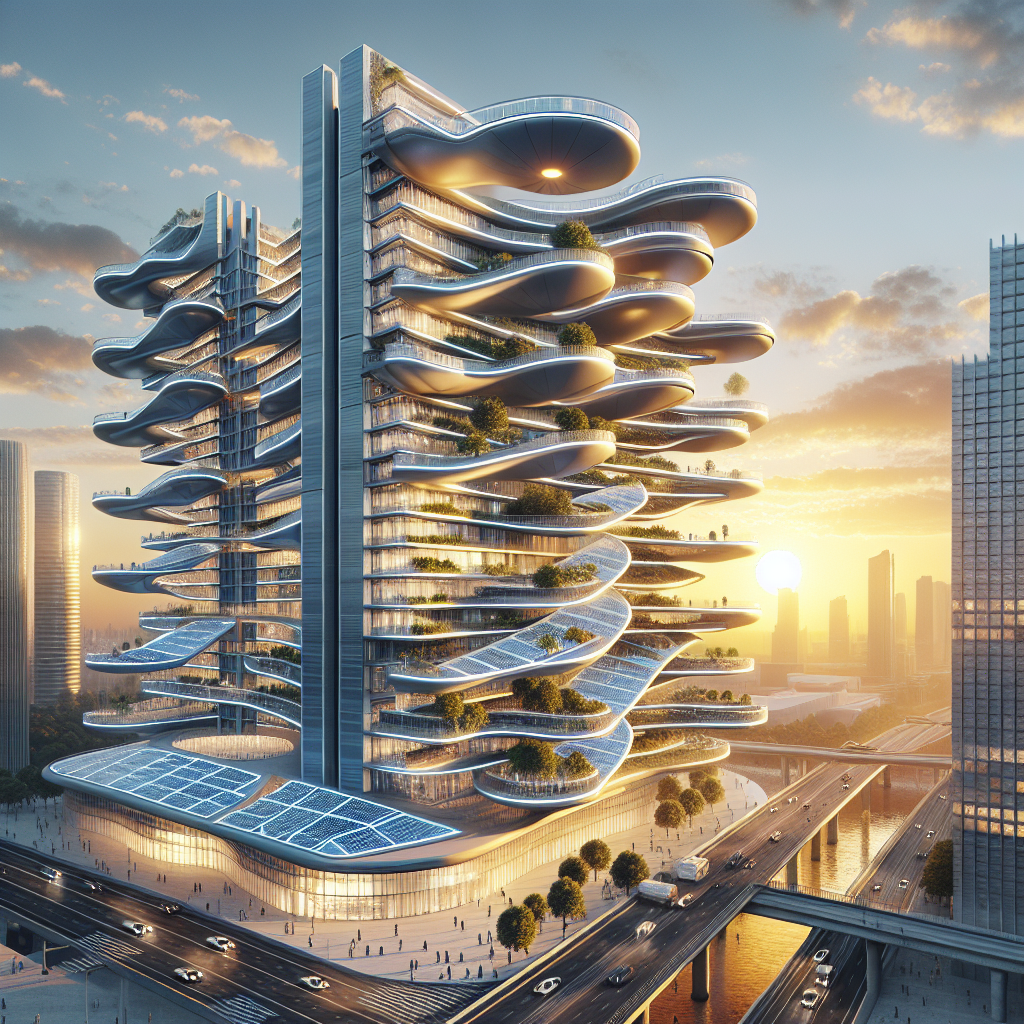
In Madrid, the experimental housing complex Casa Orbitale by Atelier Luma features a series of semi-circular balconies that pivot outward during the day to capture sunlight and retract at night for thermal efficiency. The parabolic trajectory ensures that each balcony maintains a consistent visual relationship with the skyline, while still allowing residents to “tune” their view. The system is powered by low-energy servo motors, integrated with photovoltaic panels embedded in the balcony’s floor plates—a nod to the principles explored in solar-powered design.
Urban Poetics: The Balcony as an Interface
Architecturally, the balcony has always been a threshold—a liminal space between interior and exterior, private and public. The pivoting balcony amplifies this role, transforming it into an active mediator of experience. Imagine a resident in Tokyo adjusting their balcony to face the morning sun for breakfast, then reorienting it toward the neon-lit skyline by evening. This capacity for transformation turns the balcony into a performative stage, a personal observatory, and a climatic regulator all at once.
As urban design increasingly prioritizes flexibility and well-being, these kinetic elements resonate with the ethos of biophilic design. By enabling residents to modulate their exposure to natural elements—light, air, and view—parabolic balconies contribute to psychological comfort and a sense of agency within dense urban fabrics. They invite users to participate in the choreography of their environment, blurring the boundary between architecture and lifestyle.
Case Studies: Cities in Motion
In Dubai, the Sky Arc Residences by OMA Middle East features elliptical balconies that pivot along parabolic tracks embedded in the façade. Each balcony can rotate up to 60 degrees, offering residents panoramic views of the desert horizon or the bustling marina. The system is synchronized with a central control algorithm that distributes movement across the building’s elevation, creating a mesmerizing kinetic façade that changes throughout the day. The effect recalls the dynamic shading systems explored in kinetic façade design, yet scaled to the intimacy of residential life.
Meanwhile, in Copenhagen, the Turning Courtyard project by BIG integrates pivoting balconies within a social housing complex. Here, the movement is manual rather than automated—residents can physically rotate their balcony platforms using a counterweighted lever system. The design encourages interaction and community engagement, as neighbors adjust their balconies to face one another during shared events or pivot outward for solitude. This interplay of mechanics and social behavior encapsulates the future of participatory architecture.
Material Innovation and Structural Integrity
Engineering a moving balcony demands a delicate balance between strength, weight, and flexibility. Lightweight alloys such as aluminum and titanium are increasingly favored for their durability and resistance to corrosion. Some experimental models employ carbon-fiber composites, echoing the lightweight structural strategies seen in aerospace design. The pivot mechanisms—often concealed within the balcony’s base—rely on precision bearings and dampers to ensure smooth, silent motion.
Architectural firms are also exploring sustainable materials for the decking and railing systems. Recycled composites, bamboo laminates, and thermally modified wood offer both aesthetic warmth and environmental responsibility. The integration of smart sensors and IoT-enabled controls allows for predictive maintenance, ensuring long-term reliability—an approach consistent with the ethos of net-zero architecture.
Environmental and Social Implications
Beyond their visual allure, parabolic balconies contribute to the broader discourse on sustainable urban living. By enabling dynamic shading and ventilation, they reduce reliance on mechanical cooling systems. A 2025 study by the European Institute of Building Performance found that adaptive balcony systems can cut residential energy consumption by up to 18% annually in temperate climates. Moreover, the ability to reorient balconies fosters microclimatic diversity within a single building, enhancing both comfort and biodiversity.
Socially, these kinetic structures redefine how residents engage with their surroundings. They promote a sense of individuality within collective housing, allowing each occupant to curate their own relationship with the city. In a time when urban living often feels homogenized, the pivoting balcony reintroduces personal agency and spatial playfulness—a small yet profound act of architectural empowerment.
Designing for the Future: From Prototype to Mainstream
While still largely experimental, the trajectory of parabolic balcony design suggests a future where kinetic elements become standard in high-density housing. Advances in lightweight materials, compact motor systems, and AI-driven environmental controls are making these concepts increasingly feasible. As architects continue to explore the intersection of movement and form, the balcony may emerge as a new frontier for architectural expression—one that harmonizes aesthetics, sustainability, and human experience.
Much like the rotating observation decks of mid-century modernism, today’s pivoting balconies symbolize optimism and adaptability. They remind us that architecture need not be static; it can breathe, respond, and evolve. In an age defined by rapid urban transformation, the parabolic vantage point offers not just a new way to see the city—but a new way to live within it.
Keywords for Discovery
Parabolic balconies, kinetic architecture, pivoting balconies, adaptive design, urban architecture trends, responsive architecture, sustainable urban living, dynamic façades.
Get the Mainifesto weekly — curated design debates, speculative ideas and the week's best articles every Saturday.