
Velvet and stone: juxtapositions plush textures meeting polished marble
Velvet and Stone: Juxtapositions of Plush Textures Meeting Polished Marble
In the evolving lexicon of interior design, few material pairings embody the duality of softness and strength as eloquently as velvet and marble. This union—where tactile opulence meets geological permanence—has emerged as a defining motif in high-end interiors and contemporary architecture. Designers are increasingly exploring this textural dialogue to craft spaces that feel both sensuous and sculptural, inviting touch while commanding visual gravitas. The interplay between these two materials transcends mere aesthetic contrast; it is a study in sensory balance, emotional resonance, and material storytelling.
The Allure of Contradiction: Why Velvet and Marble Work
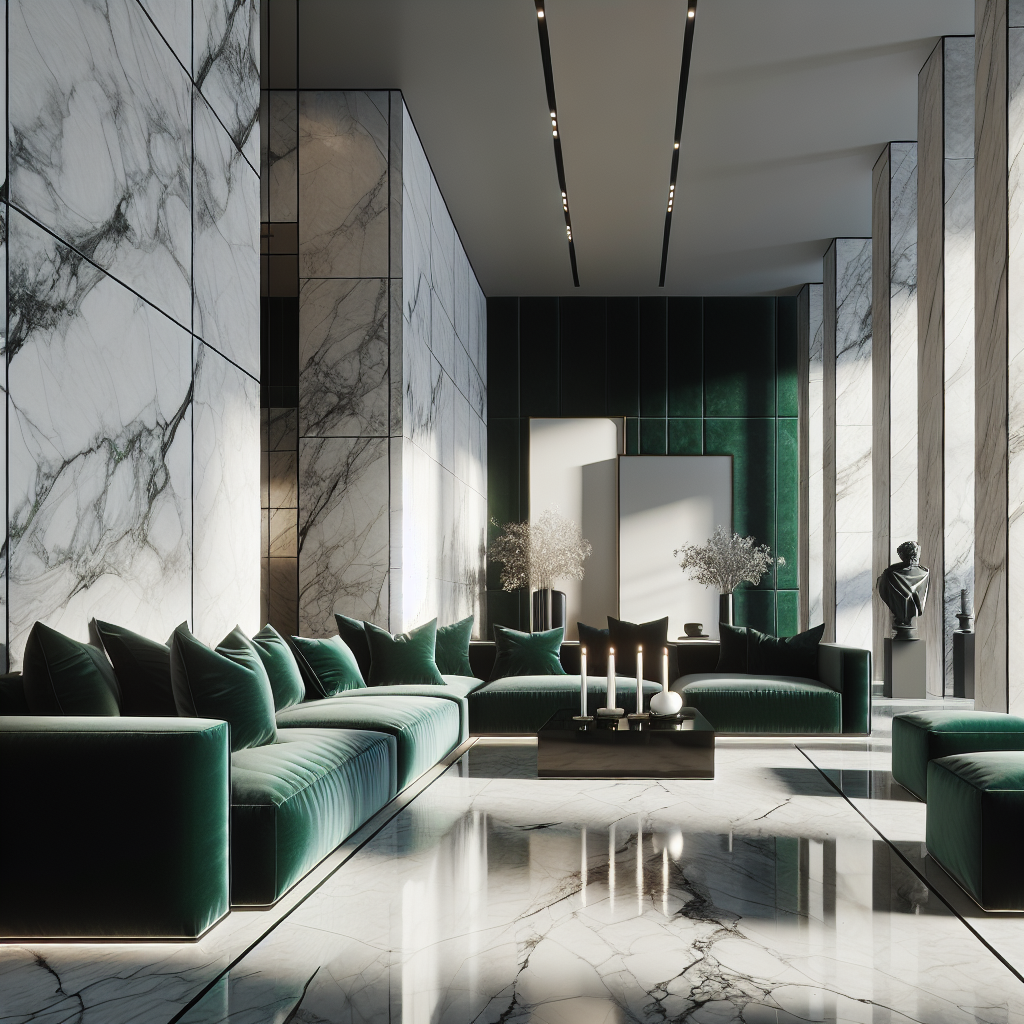
Velvet, with its lustrous pile and depth of color, has long been associated with intimacy and indulgence. Marble, conversely, conveys permanence, coolness, and classical restraint. When juxtaposed, they form a dialogue between warmth and chill, softness and solidity, intimacy and monumentality. This contrast is not accidental—it is psychological. Studies in environmental psychology suggest that humans are drawn to multisensory environments where materials stimulate both tactile and visual perception. Velvet and marble, in tandem, achieve precisely that equilibrium.
In the words of Milan-based designer Cristina Celestino, “The key to modern luxury lies in tension—in the meeting of opposites.” Her interiors for boutique hotels such as Palazzo Avino’s Pink Closet in Ravello demonstrate this philosophy: plush rose-hued velvet banquettes set against veined Calacatta marble floors, where the eye and hand are equally engaged.
Material Narratives: From Palatial to Postmodern
The pairing of velvet and stone is not new. In Renaissance palazzi, marble columns often framed rooms draped in velvet tapestries, symbolizing both wealth and refinement. Yet, in the 21st century, this combination has been reinterpreted through a minimalist lens. Designers now employ monochromatic palettes and geometric precision to temper the inherent drama of these materials.
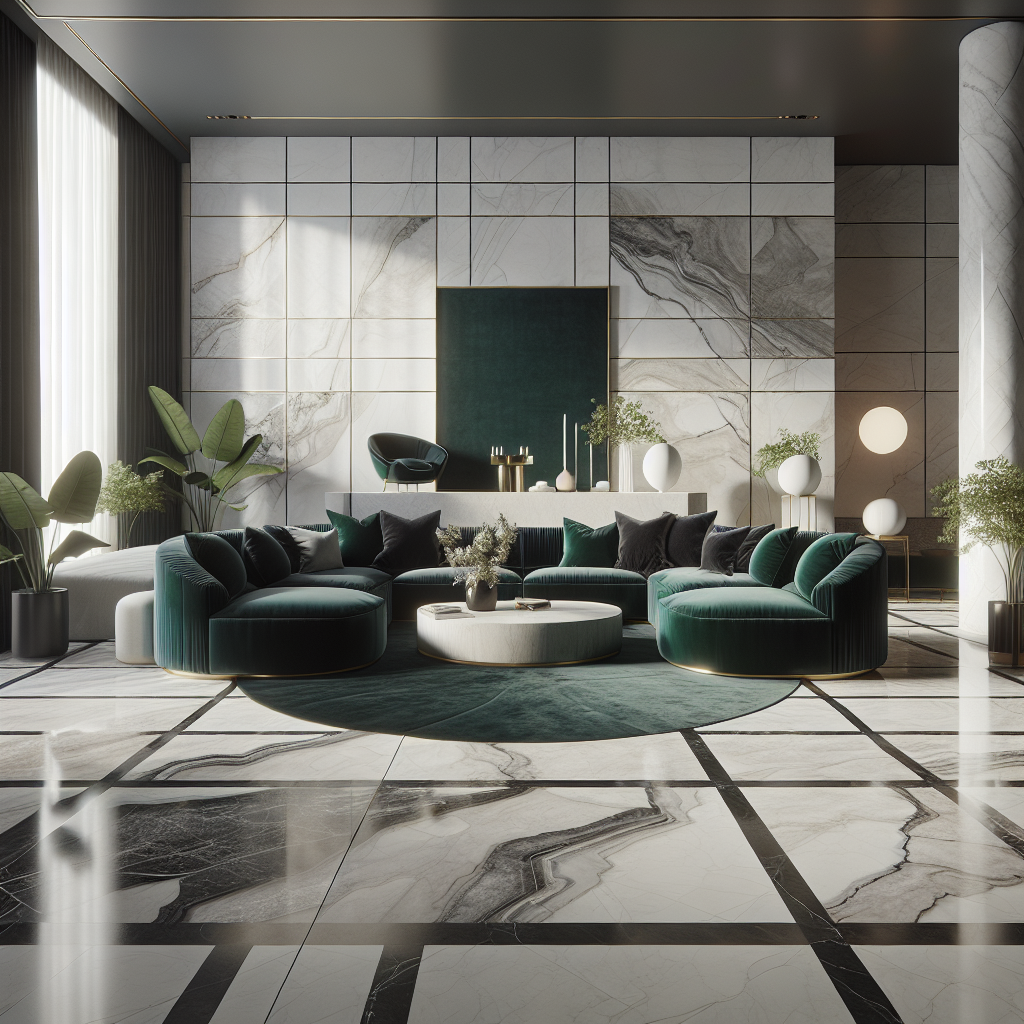
In contemporary residential projects, such as the Parisian apartment designed by Pierre Yovanovitch, emerald velvet upholstery softens the linearity of white Carrara marble fireplaces. The result is a space that feels simultaneously timeless and forward-looking—a quality shared by many of today’s interiors that embrace contemporary architectural trends while paying homage to classical craft.
Craftsmanship and Technology: A New Material Dialogue
Advancements in fabrication have expanded the creative potential of both materials. Marble, once limited by its weight and fragility, can now be milled into ultra-thin panels or sculpted with CNC precision, enabling designers to achieve forms previously unimaginable. Velvet, too, has evolved—high-performance synthetic blends now offer durability suitable for hospitality and commercial applications without sacrificing the signature tactile allure.
This convergence of tradition and innovation mirrors the ethos explored in craftsmanship-driven design, where technology amplifies, rather than replaces, artisanal expertise. The result is a material language that feels both rooted and radical—a fitting metaphor for design’s current trajectory.
Color, Light, and Sensory Depth
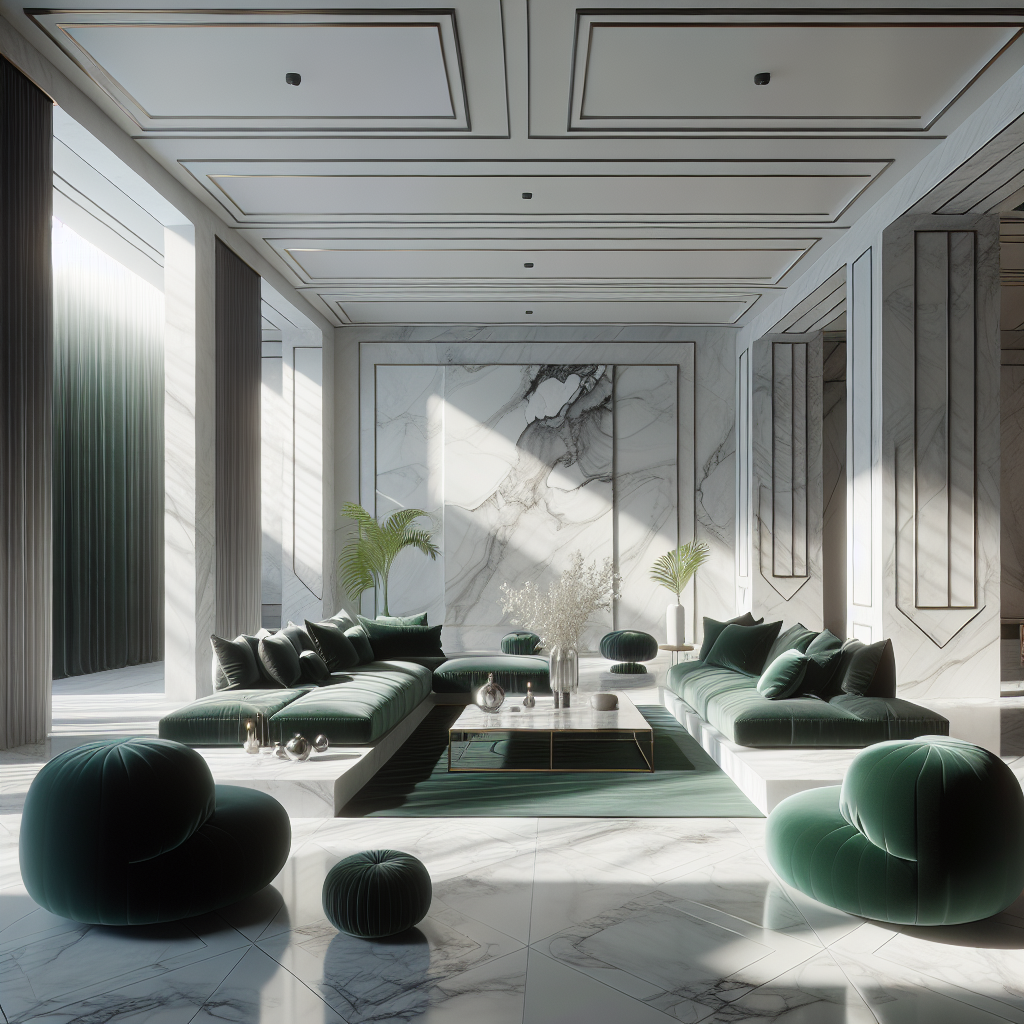
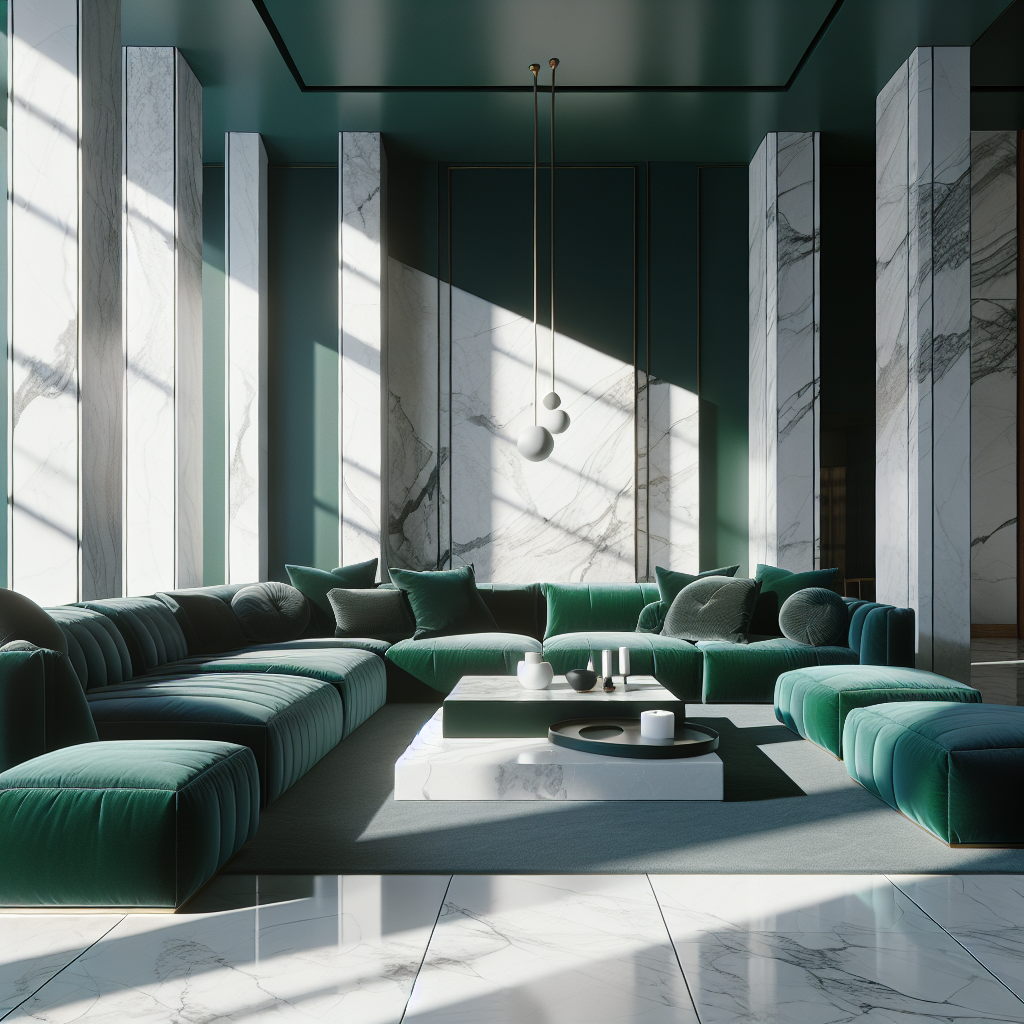
When pairing velvet and marble, color theory becomes paramount. Designers often use tonal harmonies—deep forest greens with pale grey stone, or blush pinks with creamy travertine—to maintain cohesion while emphasizing contrast in texture. Lighting, too, plays a crucial role. Diffused light accentuates the matte softness of velvet, while directional beams highlight marble’s reflective veins, creating a choreography of light and shadow reminiscent of chiaroscuro painting techniques.
In retail environments, this interplay has been elevated to theatrical effect. The flagship stores of fashion houses such as Valentino and Bottega Veneta use velvet-lined alcoves set within marble-clad walls to frame products like art pieces. The materials themselves become part of the brand narrative—sensual yet enduring, tactile yet architectural.
Emotional Architecture: Designing for Touch
As the design world continues to embrace sensory design, the velvet-marble dialogue resonates with a broader cultural shift toward emotional materiality. In an era dominated by screens and digital interfaces, physical tactility has become a form of luxury. Velvet invites touch; marble invites contemplation. Together, they encourage occupants to slow down, to feel, to inhabit space more consciously.
Architectural theorist Juhani Pallasmaa, in his seminal work *The Eyes of the Skin*, argued that architecture must engage all senses to be truly human. The resurgence of plush-meets-polished interiors exemplifies this philosophy, reasserting the primacy of the hand and the body in spatial experience.
Case Studies: Global Expressions of the Velvet-Marble Aesthetic
1. The Edition Madrid Hotel – Designed by John Pawson, this project juxtaposes cool Spanish marble with deep aubergine velvet in its lounges. The effect is monastic yet decadent, balancing restraint with sensory richness.
2. Private Residence, Tokyo – Architect Keiji Ashizawa integrates green velvet seating within a minimalist marble kitchen island, creating a domestic landscape that merges softness with structure—an echo of Japan’s wabi-sabi ethos of balanced imperfection.
3. The London Members’ Club, Mayfair – Here, the designer employs crushed sapphire velvet drapery cascading beside Nero Marquina marble columns. The result is cinematic: a chiaroscuro of materiality that transforms social space into stagecraft.
Sustainability and the Ethics of Luxury
While both materials exude opulence, their environmental impact demands scrutiny. Marble quarrying remains energy-intensive, though innovations in recycled stone aggregates and locally sourced materials are reducing its footprint. Velvet, traditionally made from silk or cotton, is being reimagined through eco-conscious fibers such as bamboo viscose and recycled polyester.
This evolution aligns with the broader movement toward circular design and sustainable luxury. As architects and designers seek to reconcile beauty with responsibility, the velvet-marble pairing offers a model for mindful materiality—where sensory pleasure coexists with ethical awareness.
Beyond Interiors: The Architectural Implications
The dialogue between plush and polished surfaces is beginning to influence architecture itself. In hospitality and retail design, facades now mimic the tactile layering once reserved for interiors. Marble cladding with textile-like patterns, achieved through laser etching, creates façades that appear soft to the eye. Conversely, velvet-inspired acoustic panels are being used in public lobbies and auditoriums to soften acoustics while maintaining visual sophistication.
This trend echoes the principles of biophilic design, where sensory engagement enhances well-being. The fusion of velvet and stone extends this philosophy into the realm of material emotion—spaces that not only function but also feel.
The Future of Material Juxtaposition
As we move further into an era defined by experiential design, the marriage of velvet and marble will likely evolve beyond surface aesthetics. Expect to see hybrid materials—marble dust embedded in textile fibers, or velvet-printed stone veneers—that blur the line between the two. These innovations signal a future where contrast becomes cohesion, and opposites form the foundation of harmony.
Ultimately, the velvet-and-stone aesthetic is more than a trend; it is a meditation on duality. It reminds us that design thrives not in uniformity, but in the spaces where contradictions meet—where the soft yields to the strong, and the cold learns to glow.
Velvet and marble are not merely materials—they are metaphors for the human condition: tactile, resilient, and endlessly evolving.
Keywords: velvet and marble interiors, luxury material contrast, tactile design, sensory architecture, contemporary interior trends, sustainable luxury materials
Published on 01/11/2026
Get the Mainifesto weekly — curated design debates, speculative ideas and the week's best articles every Saturday.