
Micro-living illusions using: forced perspective to enlarge tiny apartments
Micro-Living Illusions: Using Forced Perspective to Enlarge Tiny Apartments
In the densest cities of the world—Tokyo, Paris, New York—where square meters are traded like gold, architects and interior designers are reimagining the art of spatial perception. The new frontier of micro-living design is not about adding more space, but about creating the illusion of it. Through the strategic use of forced perspective, designers are bending visual logic to make compact apartments feel expansive, fluid, and even theatrical. This technique, borrowed from classical architecture and cinematic set design, is fast becoming a sophisticated tool in the arsenal of contemporary urban living.
The Psychology of Space and Perception
Humans perceive space not only through physical dimensions but through light, proportion, and the interplay of visual cues. The concept of forced perspective—an optical illusion that manipulates scale and depth—has long been used in architecture, from the Baroque corridors of the Vatican to the colonnades of Versailles. In modern interiors, this principle is being refined to suit the demands of micro-living spaces, where every centimeter counts.
By subtly tapering walls, adjusting ceiling heights, or aligning sightlines toward vanishing points, designers can make a 25-square-meter apartment appear twice its size. The brain, eager to interpret depth, fills in the illusion of distance, creating a psychological expansion that transcends the physical limits of the room.
Architectural Sleight of Hand: Techniques of Spatial Deception
In the realm of micro-apartment design, forced perspective functions as a kind of architectural magic. Designers employ a variety of methods to manipulate perception:
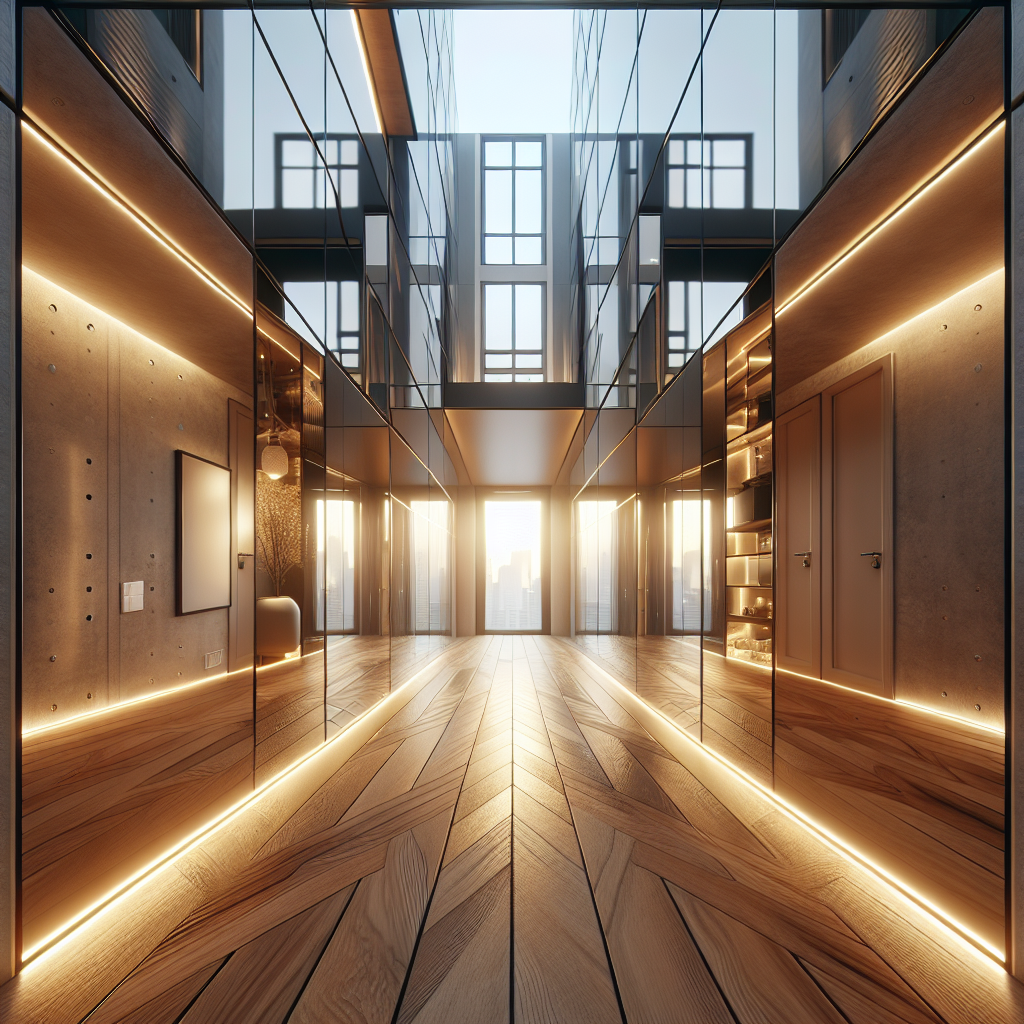
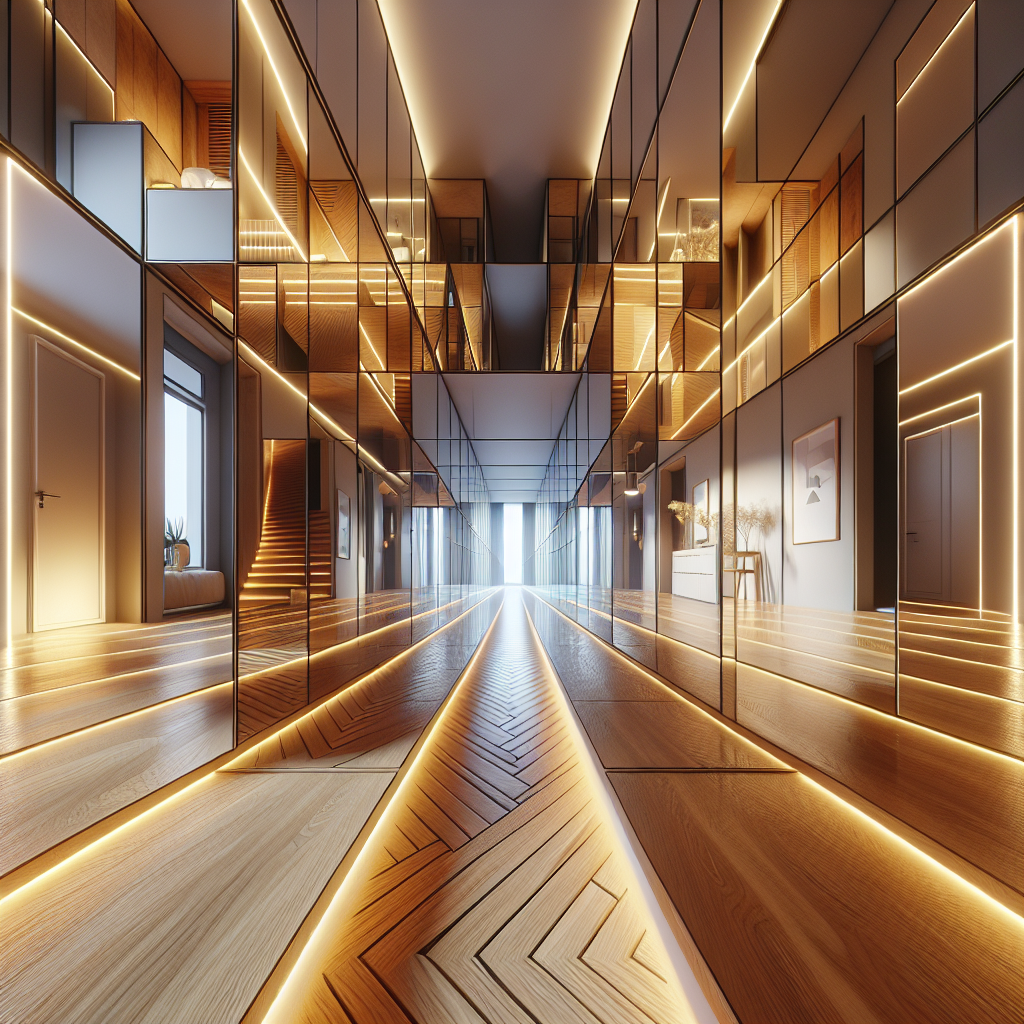
- Converging lines: Flooring patterns or ceiling beams that narrow toward the far end of a room create a vanishing point, elongating the perceived depth.
- Graduated scale: Furniture that subtly decreases in size as it recedes from view tricks the eye into reading greater distance.
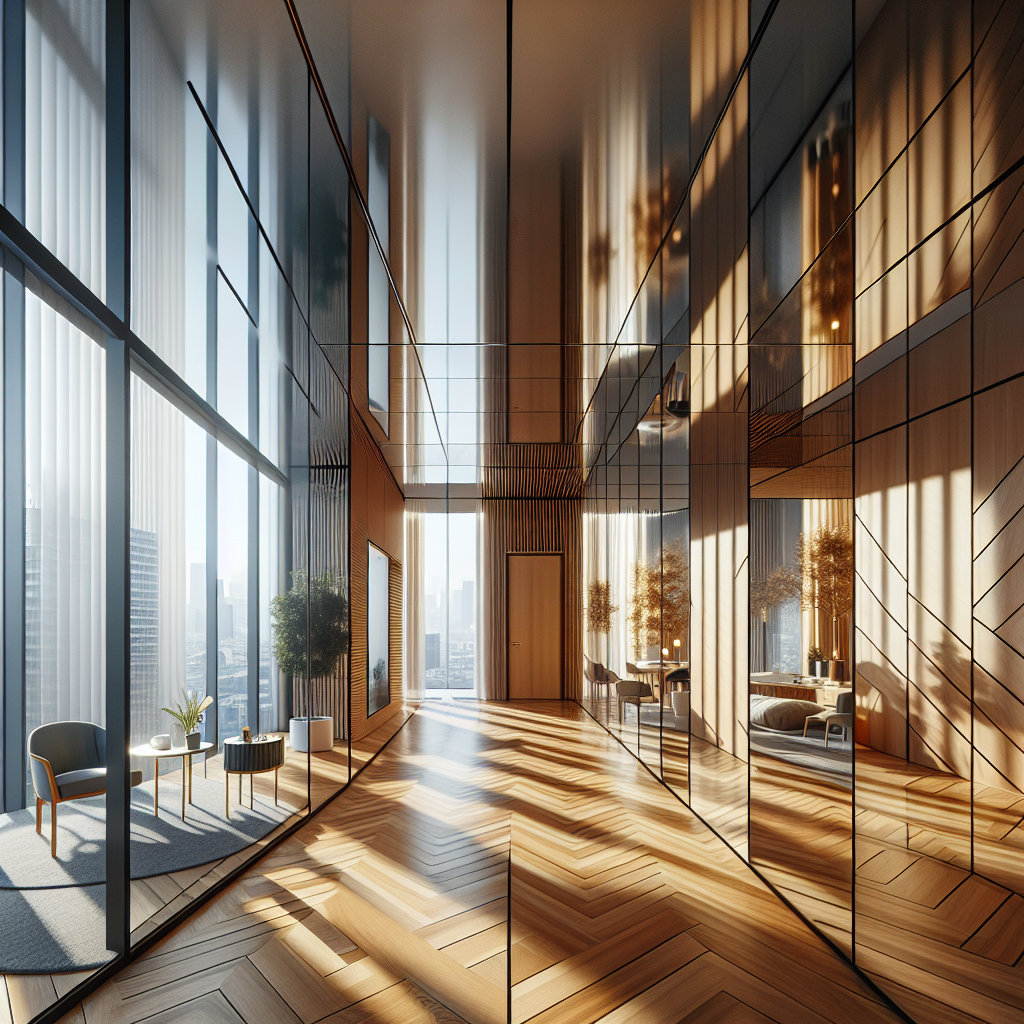
- Layered transparency: The use of glass partitions, mirrored panels, and semi-reflective surfaces allows light to flow freely, blurring spatial boundaries.
- Strategic lighting: Light gradients—brighter near the entrance, dimmer toward the back—enhance the illusion of receding space.
These techniques, when orchestrated with precision, transform a compact studio into a dynamic environment that feels both intimate and infinite. As seen in the space-saving furniture innovations emerging from Scandinavian and Japanese studios, the line between architecture and illusion is increasingly porous.
Case Study: The Parisian Perspective Apartment
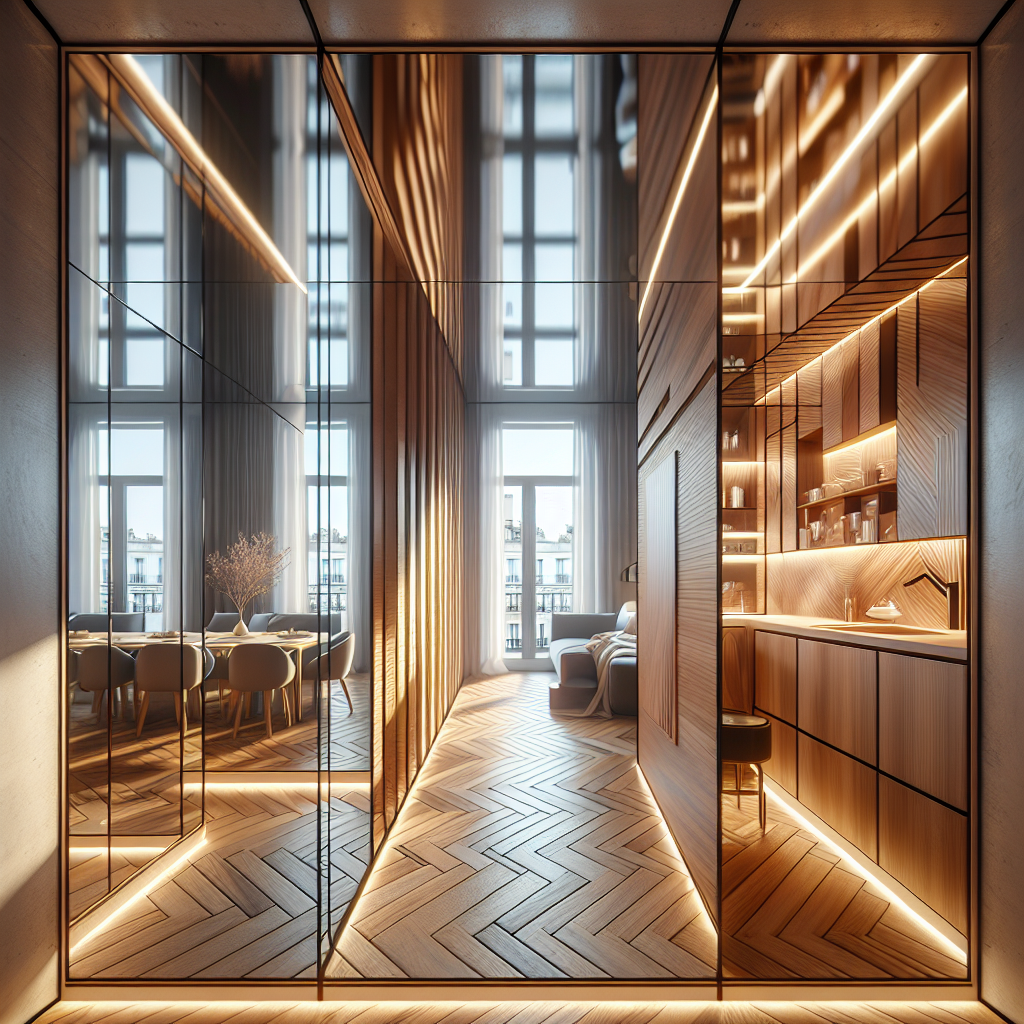
In the Marais district of Paris, interior designer Camille Dufresne recently completed a 28-square-meter apartment that epitomizes the elegance of forced perspective. The design features a narrow corridor leading to a window framed by angled walls that subtly converge, creating a cinematic vanishing point. The flooring transitions from wide oak planks near the entrance to narrower boards toward the window, amplifying the sense of depth. A full-height mirror adjacent to the window doubles the perceived distance, while concealed LED strips wash the walls in a gradient of warm light, simulating the soft diffusion of daylight.
The result is a space that feels like a visual narrative—one that unfolds as the occupant moves through it. Dufresne describes it as “a choreography of perception,” where every line and reflection contributes to a carefully composed illusion of grandeur.
Learning from Cinema and Stage Design
The lineage of forced perspective in design owes much to the worlds of film and theater. From the exaggerated streetscapes of Fritz Lang’s Metropolis to the meticulously scaled sets of Stanley Kubrick, cinematic designers have long mastered the art of spatial deceit. Architects are now borrowing these techniques to create interiors that feel immersive and narrative-driven.
In Tokyo, for instance, the firm Atelier Bow-Wow has experimented with “architectural scenography,” using layered thresholds and visual framing to evoke depth in apartments scarcely larger than a hotel room. Their approach aligns with the broader trend of immersive visualization in architecture, where digital modeling tools allow designers to simulate and refine optical illusions before construction begins.
Light, Reflection, and the Mirage of Space
Light remains the most potent instrument in crafting spatial illusions. Natural light, when channeled through clerestory windows or diffused via translucent panels, expands perception by dissolving hard edges. Artificial lighting, too, plays a critical role. Designers are increasingly integrating programmable LED systems that shift in color temperature and intensity throughout the day, subtly reshaping the room’s visual proportions.
Mirrors, long a staple of illusionistic design, are being reinterpreted with new materials and technologies. Semi-transparent mirrored glass, for instance, allows partial reflection while maintaining visual continuity between zones. In Milan’s latest micro-apartment prototypes, reflective ceilings and mirrored alcoves create the impression of vertical expansion—an effect reminiscent of the infinite reflections found in Yayoi Kusama’s installations.
Material Gradients and Textural Depth
Beyond geometry and light, materiality contributes profoundly to the illusion of space. Designers are embracing textural gradients—surfaces that transition from coarse to smooth, dark to light, or matte to glossy—to guide the eye and evoke depth. This technique, akin to atmospheric perspective in painting, manipulates how light interacts with surfaces, making distant areas appear softer and farther away.
In compact kitchens and bathrooms, for example, designers are pairing dark stone countertops with pale ceramic backsplashes that recede visually. The contrast creates a layered effect, expanding the perceived volume of the space. Such tactile illusions echo the philosophies of biophilic design, where sensory engagement enhances well-being and spatial comfort.
Digital Tools and the New Optics of Design
Advancements in digital modeling and rendering have made it possible to test forced perspective with scientific precision. Programs like Rhino and Unreal Engine allow designers to simulate human sightlines, adjusting proportions and lighting in real time. This integration of digital fabrication and perceptual psychology represents a paradigm shift in how interiors are conceived.
As noted in recent research by the American Institute of Architects, the global micro-living market is projected to grow by over 20% by 2030, driven by urban densification and shifting lifestyle patterns. In this context, the ability to manipulate perception becomes not just an aesthetic pursuit but a functional necessity—an ethical response to the spatial constraints of modern cities.
Beyond the Apartment: The Future of Perceptual Architecture
The principles of forced perspective are beginning to influence larger architectural typologies as well. From boutique hotels to co-living complexes, designers are exploring how optical illusions can foster emotional spaciousness and social connectivity. The same techniques that make a studio apartment feel generous can make a communal lounge feel more intimate or a corridor more inviting.
Projects such as Sou Fujimoto’s “House NA” in Tokyo or the mirrored façades of Olafur Eliasson’s installations demonstrate how perception can redefine our relationship with built space. These explorations resonate with the ethos of contemporary architecture trends that privilege experience over form, perception over permanence.
The Art of Living in Illusion
Micro-living, once a symbol of compromise, is evolving into a laboratory of innovation. Forced perspective transforms these compact dwellings into poetic expressions of human adaptability—a reminder that architecture is as much about perception as it is about construction. In a world where urban density continues to rise, the mastery of illusion may become one of the most sustainable forms of design ingenuity.
Ultimately, the success of these interiors lies not in their square footage but in their ability to evoke a sense of freedom. Through the calibrated interplay of geometry, light, and material, designers are proving that even the smallest apartment can feel boundless—if only we learn to see it differently.
Keywords: micro-living design, forced perspective, spatial illusion, compact apartments, interior architecture, optical design, urban living, small space design
Get the Mainifesto weekly — curated design debates, speculative ideas and the week's best articles every Saturday.