
Interactive water walls: responding to gestures with changing flows
Interactive Water Walls: Responding to Gestures with Changing Flows
In the evolving landscape of interactive architecture, few elements captivate the senses as profoundly as interactive water walls—installations where cascading water becomes a responsive medium, shifting its flow in real time to human gestures. These kinetic surfaces blur the boundaries between art, technology, and architecture, offering an experience that is both meditative and dynamic. As designers increasingly explore the intersection of digital interactivity and natural elements, water walls are emerging as a poetic symbol of this synthesis: tactile, fluid, and alive.
The Emergence of Responsive Water Architecture
Water has long been a cornerstone of architectural expression—from the reflective pools of Mughal gardens to the choreographed fountains of Baroque palaces. Yet, the 21st century has redefined this relationship. With the integration of motion sensors, computer vision, and real-time data processing, water can now behave as an intelligent material—one that reacts to proximity, movement, and emotion. This evolution parallels the rise of responsive design, where buildings and interiors adapt dynamically to their occupants.
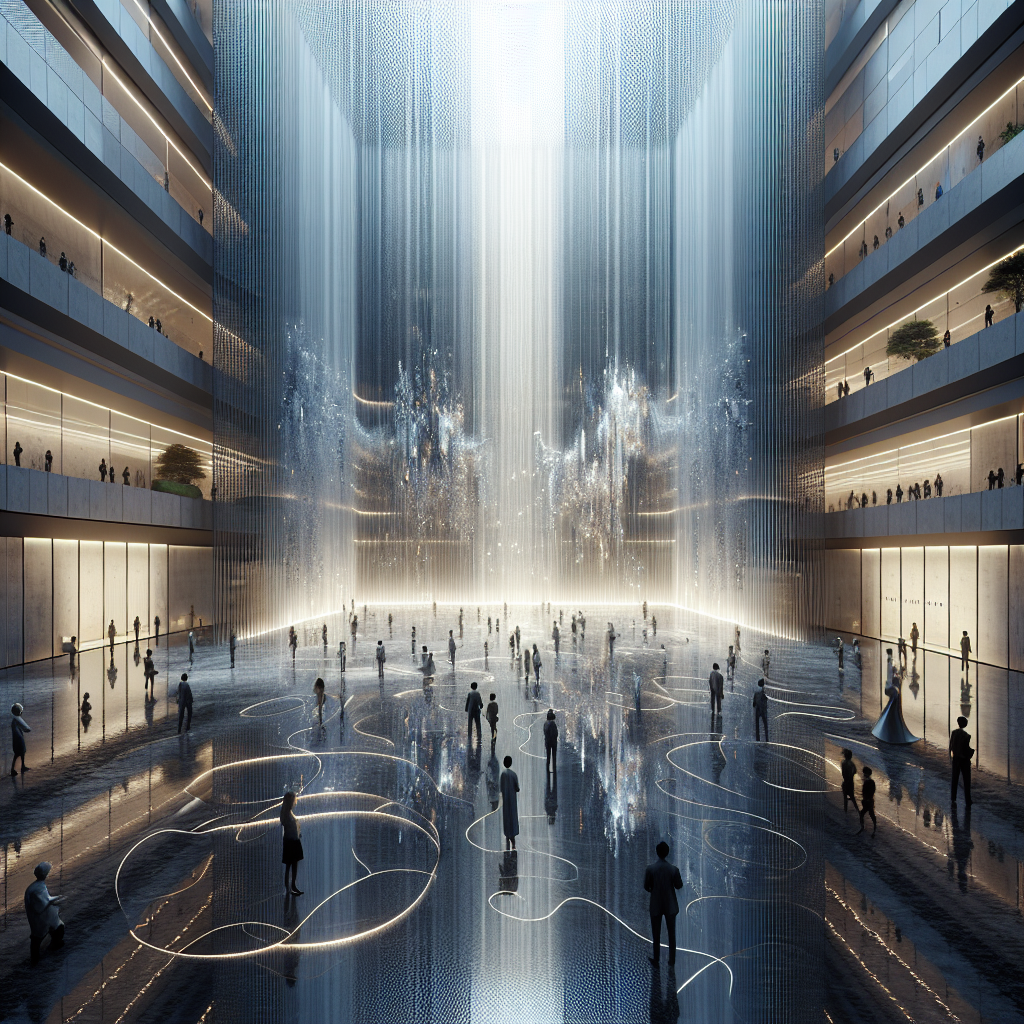
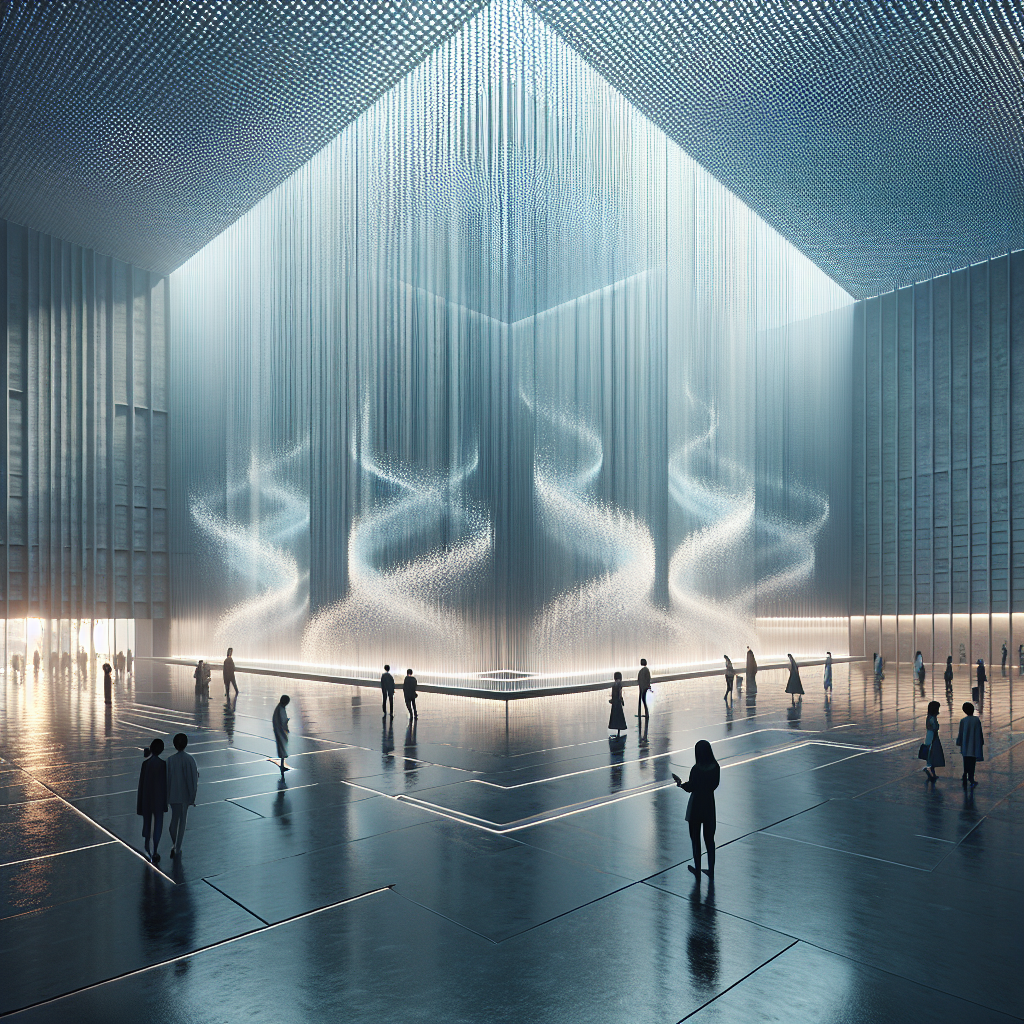
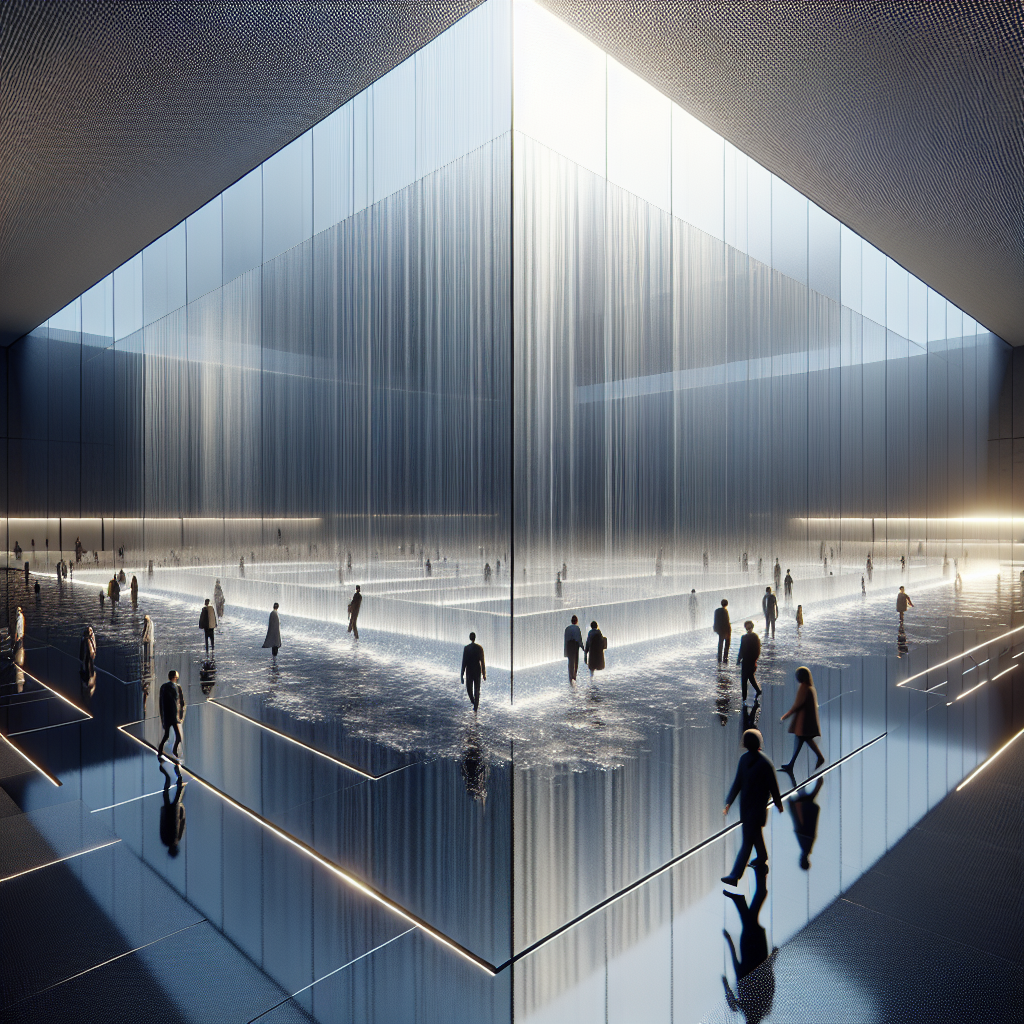
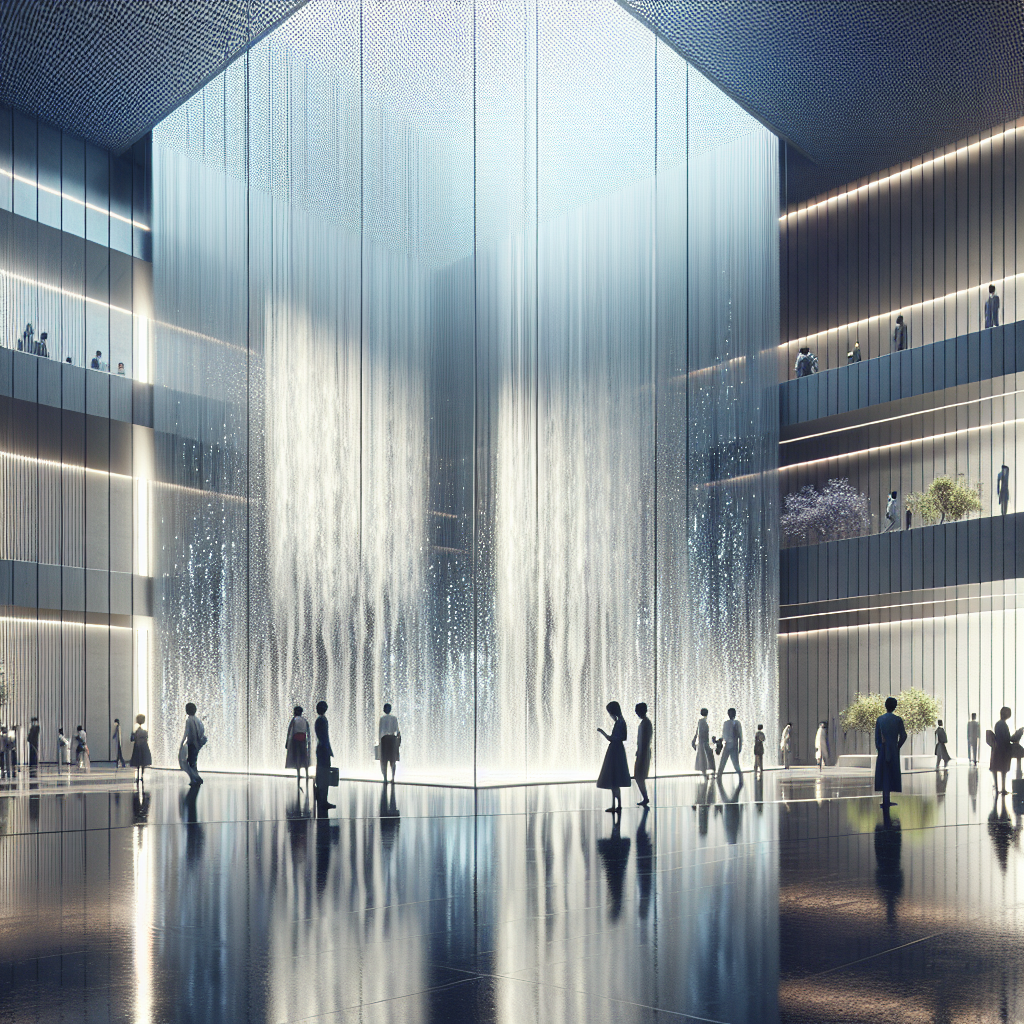
Interactive water walls are typically composed of a vertical plane—often glass or polished stone—over which water flows in a controlled sheet. Embedded sensors detect gestures or body movement, prompting the system to alter flow patterns, pressure, or illumination. The result is a constantly shifting façade that engages users in a silent dialogue. It’s architecture that listens and responds, turning the viewer into a participant.
Technology Meets Tranquility
At the heart of these installations lies a sophisticated interplay of hardware and software. Infrared cameras or LiDAR sensors track human motion, while microcontrollers regulate pumps and valves to redirect water streams. LED lighting systems—often integrated behind translucent panels—amplify the sensory impact, casting rippling reflections across surrounding surfaces. This convergence of digital precision and organic flow embodies the ethos of augmented reality in design: blending the virtual and the physical to create immersive environments.
Designers such as Random International, known for their iconic “Rain Room,” have demonstrated how responsive water installations can evoke deep emotional resonance. Visitors walking through a downpour that parts around them experience a profound sense of control over nature—an illusion both empowering and humbling. The technology underpinning such experiences draws from principles of kinetic art and interactive art, reinterpreted through the lens of environmental design.
Architectural Applications and Aesthetic Potential
In contemporary architecture, interactive water walls are being embraced across diverse typologies—from luxury hotels and wellness spas to corporate lobbies and urban plazas. Their appeal lies not only in visual drama but also in their ability to shape atmosphere. The gentle murmur of falling water introduces a natural acoustic buffer, softening ambient noise and enhancing spatial serenity. In this sense, they align closely with the principles of biophilic design, which emphasizes sensory connection to nature as a pathway to well-being.
Imagine entering a hotel atrium where a translucent water wall stretches from floor to ceiling. As guests pass, their gestures carve temporary paths through the flow, revealing embedded lighting that traces their movement like liquid calligraphy. The space feels alive—its surface a canvas of perpetual transformation. In corporate environments, such installations serve as both statement pieces and stress-relief mechanisms, subtly reinforcing brand identity through multisensory engagement.
Case Studies: Fluid Interaction in Practice
One of the most striking examples of this trend is the Digital Water Pavilion in Zaragoza, Spain, designed by Carlo Ratti Associati. Constructed for Expo 2008, the pavilion’s walls were composed entirely of digitally controlled water droplets that could open, close, or display text in response to human presence. The project demonstrated how programmable water could redefine architectural boundaries—creating spaces that are both ephemeral and functional.
In Singapore’s Changi Airport, an interactive waterfall installation uses gesture recognition to allow travelers to “paint” with water, forming patterns that dissolve and reform with each movement. Meanwhile, boutique wellness centers in Tokyo and Copenhagen are incorporating smaller-scale water walls into meditation rooms, where subtle shifts in flow correspond to biometric feedback such as heart rate or breathing rhythm. These projects exemplify how responsive water design can merge aesthetics, interactivity, and mindfulness.
Material Innovation and Sustainability
Beyond spectacle, the new generation of interactive water walls is increasingly aligned with sustainable design imperatives. Closed-loop filtration systems minimize water waste, while energy-efficient pumps and smart sensors optimize resource use. Some installations even integrate rainwater harvesting or greywater recycling systems, transforming decorative features into functional components of building ecology. This approach resonates with the growing movement toward circular design and environmental responsibility in architecture.
Materiality plays a crucial role in achieving both performance and aesthetic goals. Polished basalt, etched glass, and anodized aluminum are favored for their durability and ability to highlight the play of light and water. Designers are also experimenting with hydrophobic coatings and micro-textured surfaces to control flow behavior, enabling intricate patterns that shift seamlessly between laminar and turbulent states. The tactile quality of these materials invites touch, reinforcing the human-centered nature of the experience.
Psychological and Sensory Dimensions
Interactive water walls operate on a deeply sensory level. The combination of movement, sound, and reflection engages multiple perceptual channels simultaneously, creating a meditative rhythm that slows the pace of urban life. Studies in environmental psychology suggest that proximity to moving water can reduce stress and enhance cognitive restoration—an effect amplified when users can influence the flow directly. This dynamic interaction transforms passive observation into active participation, fostering a sense of agency and connection.
Architecturally, the reflective properties of water introduce a layer of visual complexity. The surface becomes a living mirror, distorting and refracting light to create ever-changing compositions. When integrated with programmable lighting, these reflections can evoke phenomena reminiscent of Op Art, where perception itself becomes part of the design narrative.
Challenges and Future Directions
Despite their allure, interactive water walls present technical and maintenance challenges. Ensuring consistent flow across large surfaces requires precise calibration, while humidity control and water treatment demand ongoing attention. Designers must also consider accessibility and safety, particularly in public installations where moisture can affect flooring and air quality. Yet, advances in sensor miniaturization, predictive maintenance algorithms, and sustainable water management are rapidly mitigating these concerns.
Looking ahead, the integration of AI-driven systems promises to elevate interactivity to new heights. Imagine water walls that learn from user behavior—anticipating gestures, adapting flow intensity to crowd density, or synchronizing with ambient music. Such possibilities align with broader explorations of AI in architecture, where built environments evolve through continuous feedback loops.
Water as a Medium of Connection
In an era increasingly defined by digital interfaces, interactive water walls offer a rare form of analog intimacy. They remind us that technology need not sever our bond with nature—it can amplify it. By transforming water into a responsive architectural element, designers are crafting spaces that breathe, listen, and respond. These installations invite us to engage not just with our surroundings, but with the elemental forces that shape them.
Ultimately, the allure of interactive water walls lies in their paradox: they are both ephemeral and enduring, mechanical yet organic. They embody the future of experiential design—where architecture transcends static form to become a living system, attuned to the gestures of those who inhabit it.
As cities continue to seek balance between technology and tranquility, the whispering shimmer of a responsive water wall may well become the new language of urban serenity—a kinetic poem written in liquid light.
Get the Mainifesto weekly — curated design debates, speculative ideas and the week's best articles every Saturday.