Sonic illusions mirrored: corridors for disorienting gallery experiences

Sonic Illusions Mirrored: Corridors for Disorienting Gallery Experiences
In the evolving landscape of experiential architecture, few spatial typologies are as psychologically charged as the corridor. Once a mere conduit between rooms, the corridor has become a stage for sensory manipulation—a place where sound, reflection, and perception converge. In recent years, architects and installation artists have begun transforming these transitional spaces into sonic illusions mirrored: immersive environments that challenge the visitor’s sense of orientation through the interplay of acoustics, light, and reflective surfaces. The result is a new genre of disorienting gallery experiences that redefine how we perceive movement, distance, and even our own presence within space.
The Corridor as Psychological Instrument
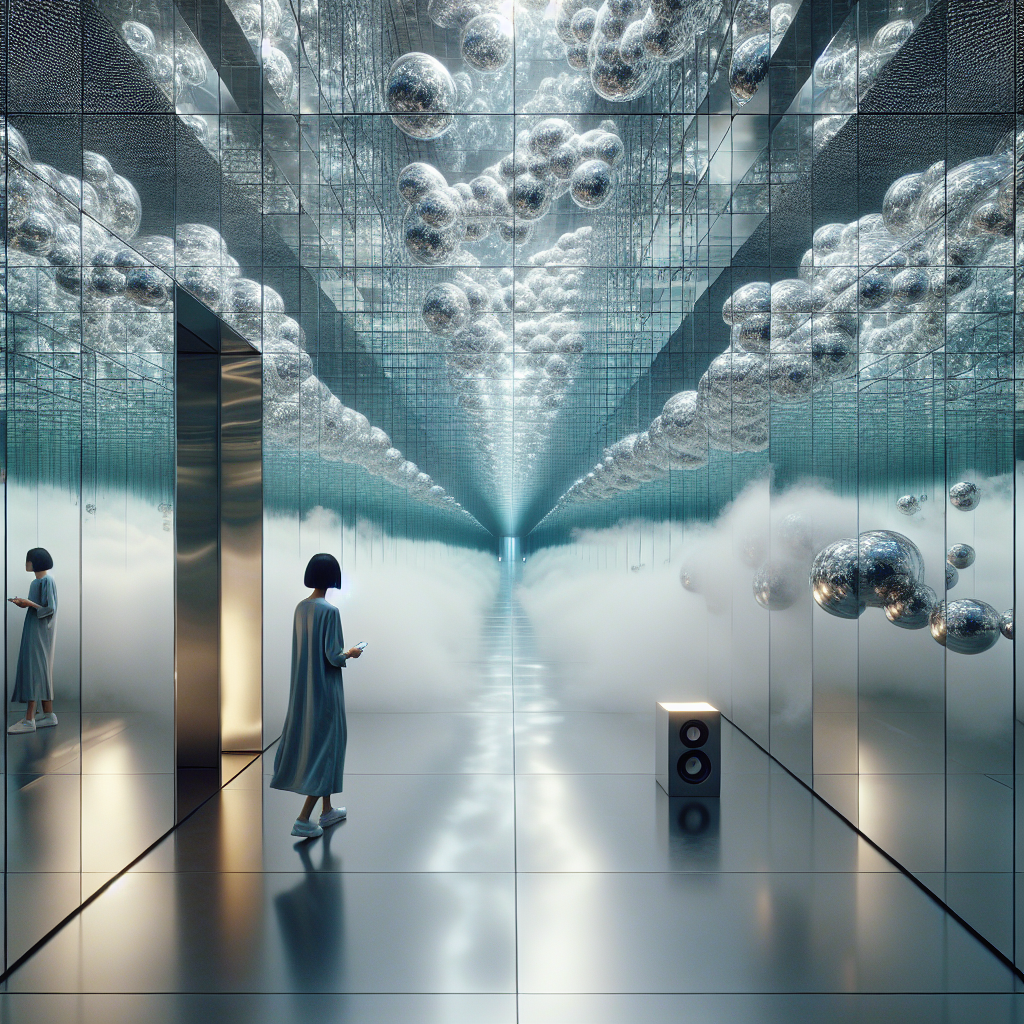
Architectural theorists have long recognized the corridor as a liminal zone—neither here nor there, yet essential to spatial continuity. When reimagined through the lens of psychoacoustics, the corridor becomes a tool for cognitive disruption. Designers are now leveraging sound reflection, echo delay, and frequency modulation to create acoustic illusions that alter spatial perception. In mirrored corridors, the boundaries between sound and sight blur: footsteps multiply, whispers ricochet, and ambient tones seem to emanate from invisible sources.
These environments often draw from the principles of sound art and spatial design, merging disciplines to craft experiences that are both architectural and performative. The mirrored surfaces—polished stainless steel, dichroic glass, or even liquid mercury-like films—amplify this effect, creating a visual feedback loop that destabilizes the viewer’s sense of direction. The corridor ceases to be a passage and becomes a perceptual labyrinth.
Architectural Case Studies: The Art of Disorientation
One of the most striking examples of this phenomenon is Olafur Eliasson’s Your Sound Galaxy installation, where suspended mirrored spheres respond to sonic frequencies, creating a constellation of light and echo. Similarly, the Infinity Mirror Rooms by Yayoi Kusama, though primarily visual, inspired a generation of architects to explore how repetition and reflection could be extended into the auditory realm. Contemporary projects such as the twisting labyrinthine corridors in progressive museums now integrate soundscapes that evolve as visitors move, generating a living dialogue between architecture and acoustics.
At the 2024 Venice Architecture Biennale, several pavilions experimented with sonic architecture—a concept explored in depth in spaces designed based on rhythmic vibrations. One installation, “Echo Corridor,” by the Berlin-based collective Studio Anaphora, used directional speakers embedded behind mirrored panels to produce localized sound zones. As visitors walked through, they experienced the uncanny sensation of sound moving independently of their bodies, an auditory mirage that evoked both curiosity and unease.
Materiality and the Mirror: The Science of Reflection
The mirrored corridor operates on two levels of reflection—optical and acoustic. From a technical standpoint, materials such as polished aluminum composites and acoustic glass laminates are favored for their ability to both reflect and diffuse sound. Architects are increasingly collaborating with acoustic engineers to calibrate reverberation times and frequency absorption rates, ensuring that the space maintains its disorienting quality without overwhelming the visitor.
In some galleries, designers have integrated parametric modeling to fine-tune the geometry of reflective panels, producing calculated distortions that alter sound propagation. This computational approach echoes the principles discussed in parametric design, where algorithms shape both form and experience. The corridor thus becomes a living algorithm—a spatial equation of light, sound, and motion.
The Sensory Choreography of Movement
Walking through a mirrored sonic corridor is less a linear journey than a choreographed encounter. Each step activates a cascade of sensory responses: the echo of footsteps arrives a fraction too late, reflections multiply endlessly, and the visitor’s silhouette fractures into spectral fragments. The architecture seems to breathe, pulse, and respond. This is the essence of experiential design—to create spaces that are not merely seen but felt.
Designers are increasingly drawing from neuroscience and cognitive psychology to understand how humans navigate such environments. Studies in spatial cognition suggest that when visual and auditory cues conflict, the brain experiences a momentary recalibration, heightening awareness and emotional engagement. This phenomenon, known as sensory conflict, is precisely what makes mirrored sonic corridors so compelling. They provoke the mind to question the reliability of perception itself.
From Art Installation to Architectural Typology
What began as an artistic experiment is now influencing mainstream architectural practice. Museums, retail environments, and even corporate lobbies are adopting elements of sonic illusion design to create memorable spatial experiences. The trend aligns with the broader movement toward multi-sensory architecture, where light, sound, scent, and texture converge to shape emotional responses.
In Tokyo’s Mori Art Museum, a recent exhibition corridor used embedded subwoofers beneath the floor to transmit low-frequency vibrations, creating a subtle sense of instability. Meanwhile, in Copenhagen, the “Mirror Passage” at the DAC (Danish Architecture Center) employs angled glass panels and directional sound beams to simulate shifting dimensions. These interventions transform passive circulation zones into immersive narratives, blurring the boundary between architecture and performance art.
Technology as an Enabler of Sonic Illusion
Advancements in spatial audio technology and interactive lighting systems have made it possible to orchestrate complex sensory environments with precision. Using LiDAR sensors and AI-driven sound mapping, designers can now track visitor movement and adjust acoustic feedback in real time. This dynamic responsiveness mirrors the principles of responsive design, extending adaptability from visual aesthetics to the auditory realm.
Emerging materials—such as nano-coated mirrors that modulate reflectivity based on temperature or humidity—further enhance the illusion. When combined with programmable LED arrays, these corridors can shift from crystalline brightness to shadowy opacity within seconds, echoing the fluctuating rhythm of the soundscape. The result is a synesthetic architecture—a space that feels alive, unpredictable, and deeply human.
The Emotional Dimension of Disorientation
Disorientation, when designed with intent, can be profoundly emotional. It evokes wonder, vulnerability, and introspection. In mirrored sonic corridors, visitors often describe a sense of dissolution—of becoming part of the architecture itself. This emotional resonance is what distinguishes such environments from mere spectacle. They are not designed to confuse but to awaken perception.
In an era where digital overstimulation often dulls sensory awareness, these spaces act as antidotes—forcing the body and mind to re-engage with the physical world. The interplay of reflection and resonance invites a kind of mindful presence, echoing the principles of biophilic design in its emphasis on sensory connection, albeit through an artificial medium.
Future Directions: Toward a Sonic Minimalism
As the trend matures, designers are moving away from overt spectacle toward a more restrained, sonic minimalism. Future corridors may rely less on visual dazzle and more on subtle shifts in tone, texture, and resonance. The ambition is not to overwhelm but to fine-tune the visitor’s awareness—to create architecture that listens as much as it speaks.
In this sense, the mirrored sonic corridor represents a microcosm of contemporary design’s evolution: from object to experience, from static form to dynamic perception. It is a testament to how architecture, when intertwined with sound and reflection, can transcend its physical boundaries and become an instrument of consciousness.
For architects and designers seeking to push the boundaries of spatial experience, the message is clear: the future of immersive design lies not in adding more stimuli, but in orchestrating them with precision and empathy. The corridor, once a symbol of transition, has become a destination in itself—a place where illusion and reality converge in perfect resonance.
Keywords: sonic illusions, mirrored corridors, disorienting gallery experiences, sensory architecture, spatial acoustics, reflective design, experiential architecture


Get the Mainifesto weekly — curated design debates, speculative ideas and the week's best articles every Saturday.