
Floating labyrinth walkways: bridging multiple exhibits with winding paths
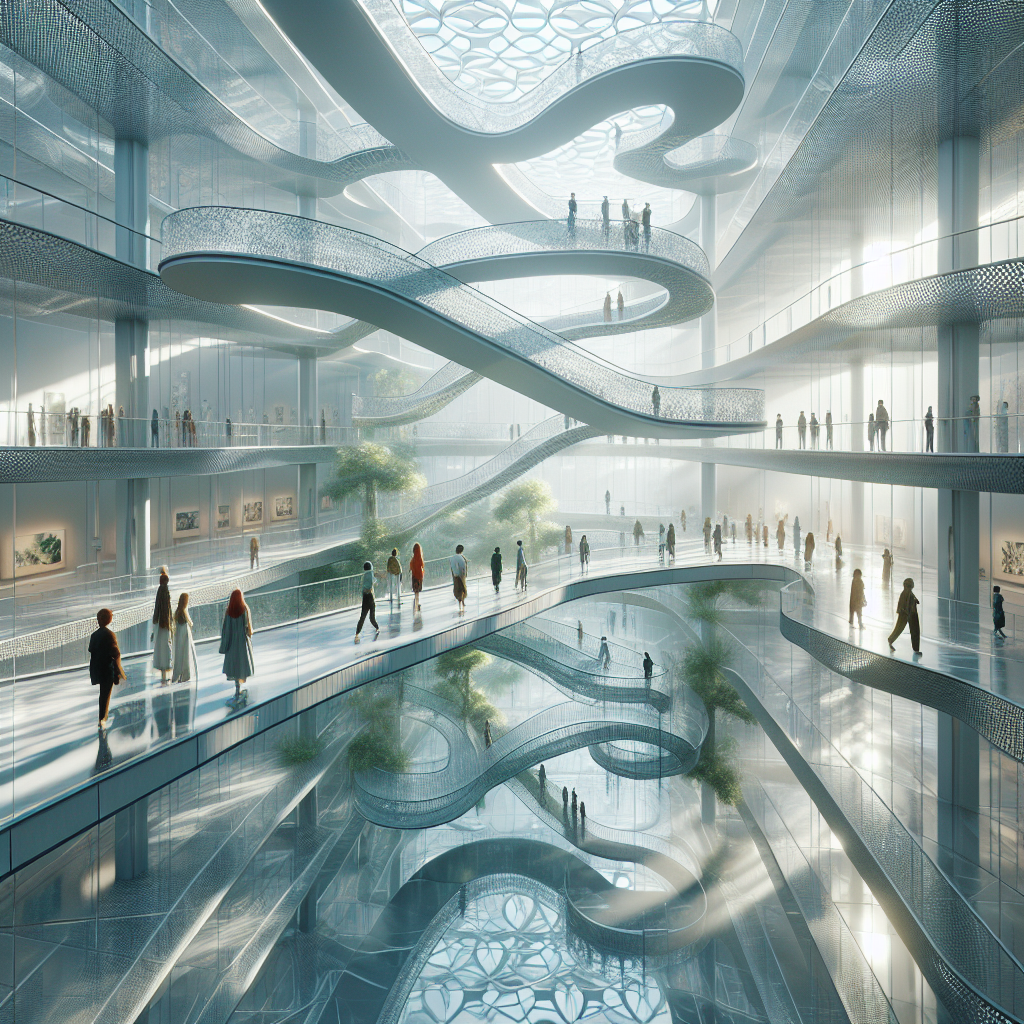
Floating Labyrinth Walkways: Bridging Multiple Exhibits with Winding Paths
In the evolving world of museum and exhibition design, floating labyrinth walkways have emerged as a poetic intersection between architecture, narrative, and movement. These elevated, meandering paths—suspended in air or appearing to hover over voids—invite visitors to traverse space as if drifting through a dream. More than mere circulation routes, they redefine how audiences engage with art, architecture, and each other. By merging engineering precision with sculptural fluidity, these walkways are reshaping the experiential core of cultural institutions worldwide.
The Rise of the Floating Walkway
The concept of the floating walkway is not entirely new. From the High Line in Manhattan to the Ponte Vecchio in Florence, elevated paths have long been used to connect people and places. Yet, the contemporary iteration—defined by labyrinthine geometry and structural lightness—marks a significant evolution. Today’s floating labyrinths are not simply connectors; they are curators of experience, choreographing the visitor’s journey through space.
Museums and galleries increasingly view circulation as a storytelling tool. Rather than linear progressions from one exhibit to another, designers are crafting serpentine, suspended routes that encourage discovery and reflection. The labyrinthine form—once symbolic of myth and introspection—has become a spatial metaphor for exploration in the age of information overload.
Architectural Poetry in Motion
A defining characteristic of these walkways is their sense of weightless continuity. Using materials such as tempered glass, tensile steel, and carbon fiber composites, architects create the illusion of floating ribbons that twist and turn midair. Light becomes an integral design element—diffused through translucent floors or refracted by mirrored balustrades, producing a kinetic interplay of shadow and reflection.
At the Louisiana Museum of Modern Art in Denmark, for instance, the new “Sky Loop” extension allows visitors to glide above the sculpture garden, with transparent flooring revealing the landscape below. The sensation is both thrilling and meditative—a reminder that architecture can evoke emotion through motion. Similarly, the integration of architectural design with exhibition curation has transformed how institutions frame their collections, emphasizing the journey as much as the destination.
Designing the Labyrinth: Complexity Meets Clarity
The architectural challenge lies in balancing complex geometry with intuitive navigation. The labyrinth must intrigue without disorienting. Designers employ parametric modeling to simulate visitor flow, ensuring that each curve and junction contributes to both aesthetic harmony and functional clarity. The result is a spatial choreography that guides movement organically—akin to the rhythm of a musical composition.
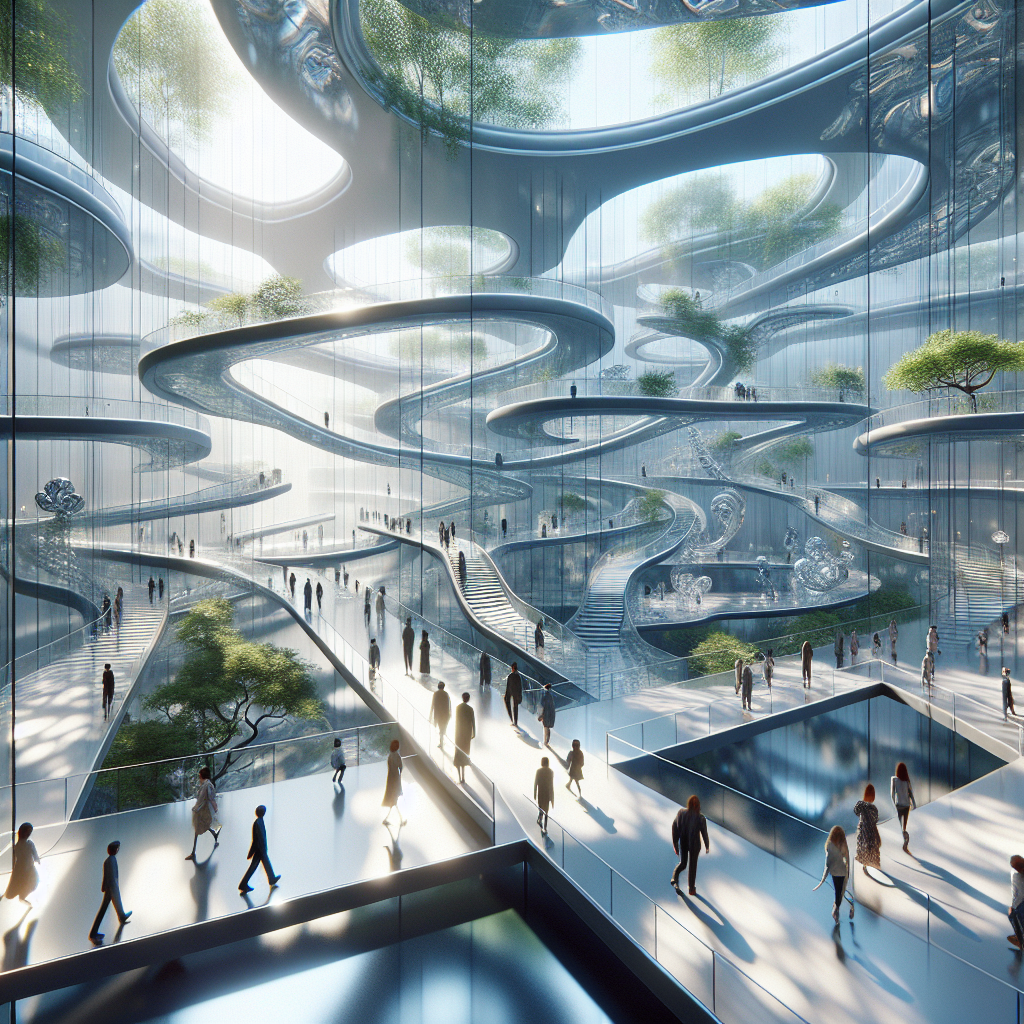
In the Chengdu Science and Innovation Center, designed by MAD Architects, a series of floating bridges weave through multiple exhibition halls, each suspended at varying heights. The undulating paths are lined with perforated aluminum panels that filter daylight, creating a dappled, almost aquatic atmosphere. This interplay of light and structure recalls the principles of biophilic design, reinforcing the connection between built environments and natural rhythms.
Engineering the Impossible
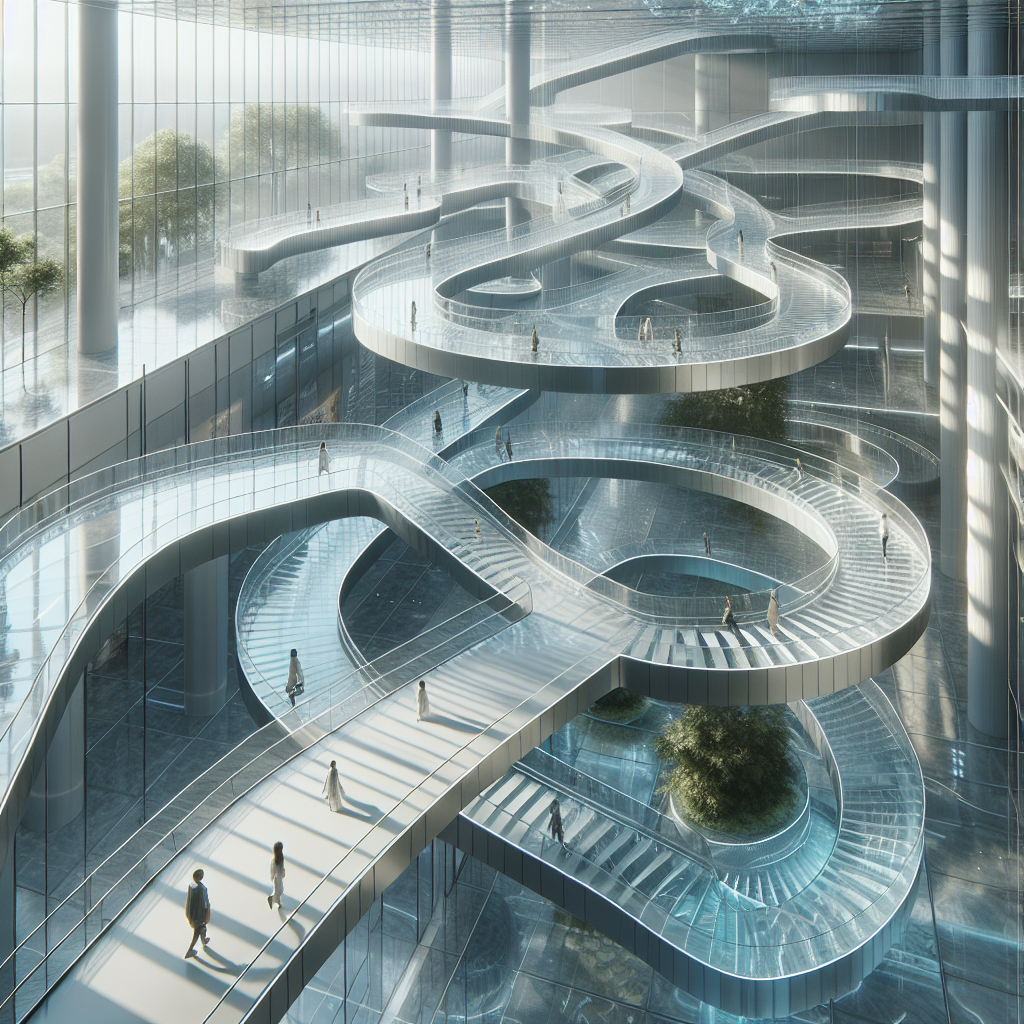
Behind the poetic elegance of these floating labyrinths lies a foundation of advanced engineering. Lightweight structural systems—often employing post-tensioned cables or cantilevered trusses—allow for long spans with minimal visual intrusion. The use of high-strength glass and composite decking ensures both transparency and safety, while vibration dampers and motion sensors maintain stability under dynamic loads.
The integration of floating architectural principles into interior environments represents a convergence of maritime and terrestrial design thinking. In some cases, architects even draw inspiration from suspension bridge engineering, adapting techniques traditionally used for large-scale infrastructure to the delicate scale of interior walkways.
Spatial Storytelling and Emotional Resonance
What distinguishes the floating labyrinth from conventional circulation design is its capacity for emotional storytelling. The winding path slows the visitor’s pace, encouraging mindfulness and curiosity. Each turn reveals a new perspective—of the artwork, the architecture, or the people sharing the space. The experience becomes participatory, almost performative.
In the Tokyo Art Nexus, a recently completed museum complex, the architects designed a network of suspended corridors that loop around a central atrium. As visitors ascend, the soundscape changes—from soft ambient tones near the ground floor to a hushed silence at the top. This sensory layering transforms the act of walking into a meditative ritual, aligning with broader trends in sensory design and experiential architecture.
Floating Labyrinths as Urban Connectors
Beyond museum interiors, the concept is expanding into urban contexts. Floating labyrinth walkways are being used to connect multiple buildings, public plazas, and even entire districts. In Rotterdam, the “Sky Weave” project links three cultural institutions via a series of elevated, curved bridges clad in perforated brass. The network functions as both infrastructure and public art, redefining the skyline with a sense of dynamic continuity.
Such projects resonate with the global shift toward walkable urbanism and multi-sensory public spaces. As cities densify, architects are reimagining circulation not as a means of transit but as an opportunity for engagement. The floating labyrinth becomes a civic gesture—an elevated promenade that celebrates movement, connection, and perspective.
Material Innovation and Sustainability
Material experimentation plays a crucial role in the evolution of these walkways. Designers are increasingly turning to recycled composites, bio-based resins, and modular construction techniques to minimize environmental impact. The lightweight nature of these materials reduces structural demands, allowing for more daring geometries and smaller carbon footprints.
Some installations incorporate photovoltaic glass panels or embedded LED systems that illuminate pathways at night, transforming them into glowing ribbons of light. This integration of sustainability and spectacle aligns with the broader movement toward circular design in architecture, where form, function, and environmental responsibility coalesce seamlessly.
The Future of Experiential Architecture
As museums and cultural institutions continue to evolve, the floating labyrinth walkway is poised to become a defining feature of 21st-century experiential architecture. It embodies a shift from static observation to active participation—from viewing art to inhabiting it. These structures invite us to lose ourselves in space, to wander, to reflect, and to reconnect with the act of exploration itself.
The labyrinth, once a symbol of complexity and confusion, has been reimagined as a metaphor for clarity through movement. In an age dominated by digital immersion, the tactile, physical experience of walking through a floating maze offers a rare form of grounding—a reminder that architecture, at its best, is not just built but felt.
Bridging the Physical and the Poetic
Ultimately, floating labyrinth walkways represent a profound synthesis of art, engineering, and emotion. They bridge not only exhibits but also disciplines—architecture and storytelling, structure and sensation, material and metaphor. Whether suspended within a museum atrium or stretching across a cityscape, these winding paths embody the timeless human desire to wander and wonder.
In their fluid lines and hovering grace, we glimpse the future of spatial design: one that celebrates ambiguity, embraces movement, and transforms the simple act of walking into an architectural journey of discovery.

Get the Mainifesto weekly — curated design debates, speculative ideas and the week's best articles every Saturday.